

Your Blueprint for Success in Achieving Fitness Goals

Why Setting the Right Goals Is Your Key to Fitness Success
Achieve fitness goals successfully by following a structured approach: set SMART goals, create a balanced exercise routine, track your progress, and adapt your plan when life gets in the way.
Quick Action Steps to Achieve Fitness Goals:
- Set SMART goals – “Run 5K in 12 weeks” vs “get fit”
- Start with your baseline – Record current fitness level and measurements
- Plan your routine – Combine cardio, strength training, and flexibility work
- Track everything – Use a training diary or fitness app
- Stay flexible – Adjust goals when circumstances change
- Celebrate wins – Acknowledge every milestone, no matter how small
Many people start their fitness journey with enthusiasm, only to land back at square one. The difference between success and failure isn’t willpower—it’s having the right blueprint.
Research shows that clear, structured goals significantly increase the likelihood of sticking with a fitness routine long-term. As one fitness expert notes, “Making any lifestyle change can be challenging. Many people find that having a goal in mind gives them something to work towards, motivates them to stay on track and provides a measure of how well they are doing.”
The secret is breaking down big fitness dreams into manageable steps that fit your busy life. Whether you want to lose weight, build strength, or simply feel more energetic, this proven framework works.

Laying the Foundation: Preparing for Success
Think of this as a pre-flight check. Before diving into workouts, building the right foundation is what separates those who achieve fitness goals from those who burn out. Most fitness journeys fail not from a lack of willpower, but from skipping this crucial preparation. People jump into intense workouts without knowing their starting point or their ‘why’.
Understanding Your Starting Point
Just as you need a starting point for a road trip, you need one for fitness. Getting an honest baseline assessment isn’t about judgment; it’s about creating a realistic roadmap.
Here’s what matters when establishing your starting point: your current fitness level, body measurements beyond just weight, your resting pulse rate, and what exercises you can comfortably perform right now.
Take a simple test: Record your pulse rate before and after a one-mile walk for insight into your cardiovascular fitness. Notice how your clothes fit rather than obsessing over the scale—it’s often a better indicator of progress.
Being honest about your current abilities is empowering, not discouraging. Knowing where you are lets you set goals that challenge you without causing failure.
The Power of a Positive Mindset
Fitness is as much a mental game as a physical one. Your mindset can make or break your journey.
Missing a workout can trigger an inner critic, our biggest obstacle. Self-compassion isn’t just nice to have; it’s essential for long-term success.
Instead of an all-or-nothing mentality, accept flexibility. Life happens. Adapt rather than abandoning your goals. Can’t make it to your usual workout? Take a walk during lunch. Dealing with an injury? Focus on nutrition while you recover.
Celebrate the small wins—they’re more powerful than you think. These “non-scale victories” keep you motivated when the numbers don’t move as quickly as you’d like.
Before starting any new fitness program, especially if you’re over 40 or have health concerns, getting medical clearance is crucial. This ensures your journey is both safe and effective. You can use this pre-exercise self-screening tool as a starting point.
Most importantly, find your deep “why.” What truly drives you? Playing with your kids without getting tired? Feeling confident? When your goals align with your core values, you’ll find the strength to push through challenges.
This foundation phase is your secret weapon for lasting success.
The SMART Framework: How to Set Goals You’ll Actually Achieve
Once you understand your starting point and have a positive mindset, it’s time to transform your fitness dreams into something concrete. The difference between wishful thinking and real results? SMART goals.
The SMART framework is a proven tool from behavioral psychology. It provides the clarity to turn a vague wish like “get in shape” into a concrete plan like “run a 5K in 12 weeks.” Research shows SMART goals help focus intentions and measure success, giving you a clear roadmap.
Think of SMART goals as your fitness GPS; they tell you exactly where you’re going and how to get there.
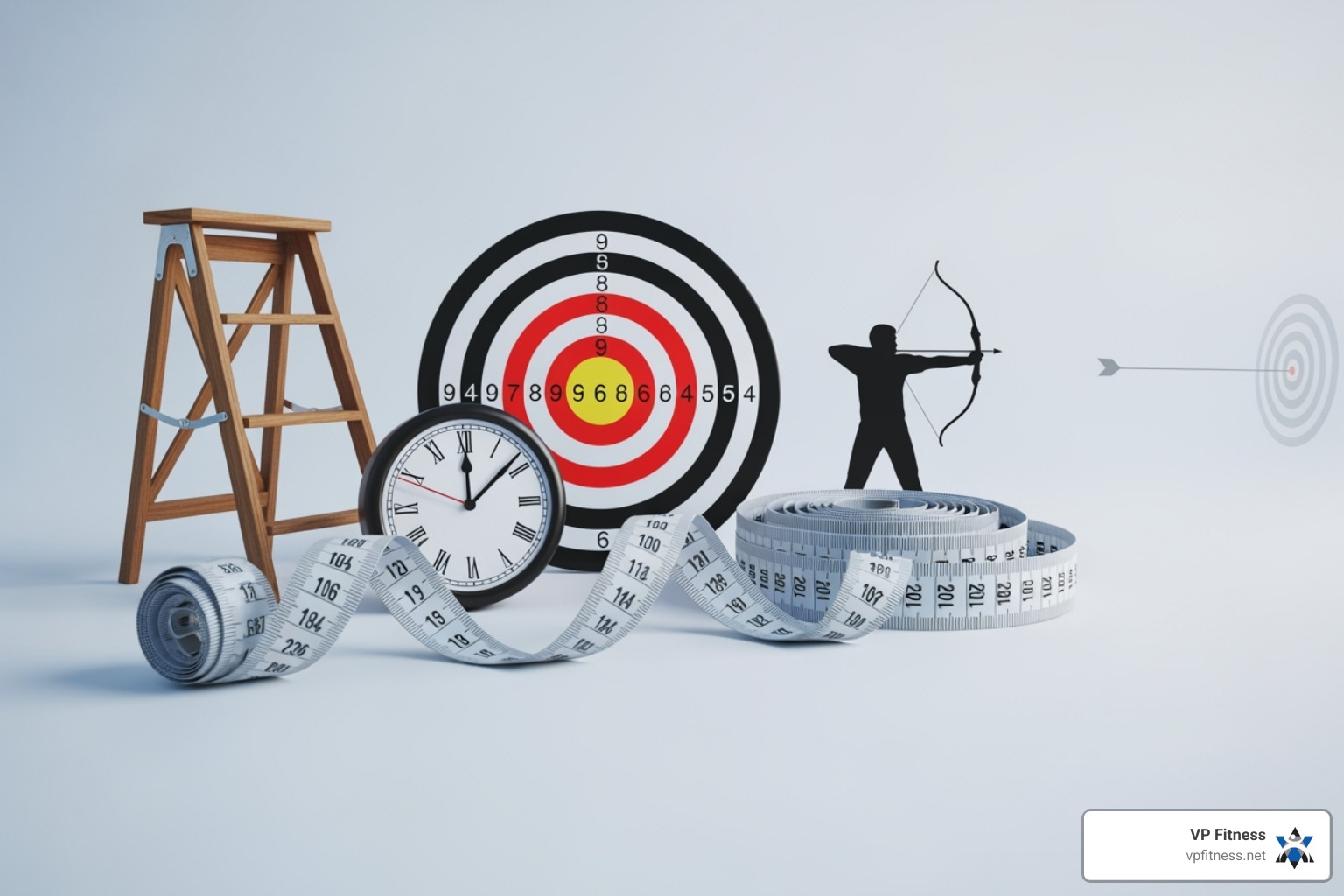
How to Set SMART Goals to Achieve Fitness Goals
Let’s break down what makes a goal truly SMART.
Specific goals cut through vague intentions. Instead of “get fit,” try “run a 5K race without stopping.” The more specific you are, the clearer your path becomes, allowing your brain to map out the steps.
Measurable progress keeps you motivated. Whether it’s “lose 2 pounds this month” or “hold a plank for 60 seconds,” concrete metrics let you see how far you’ve come.
Attainable doesn’t mean easy—it means realistic for your current situation. If you haven’t exercised in years, aiming for “complete 10 bodyweight squats with proper form in 4 weeks” is challenging yet doable. Your goal should stretch you without breaking you.
Relevant goals connect to what matters in your life. If you love hiking, make your goal about conquering a trail, not running a 5K. When your goal aligns with your life, motivation comes naturally.
Time-bound goals create healthy pressure and prevent procrastination. “Someday” becomes “I’ll perform my first unassisted pull-up in 16 weeks.” Deadlines make things real, and 1-3 month timeframes are often most effective.
Examples of SMART goals: “Run a 5K race in 12 weeks,” “perform 10 consecutive push-ups in 8 weeks,” or “lose 8 pounds in 2 months through exercise and nutrition.”
Breaking Down Large Goals into Manageable Steps
A big goal can feel overwhelming. The secret is to break it into bite-sized pieces that build momentum instead of stress.
If you want to lose 20 kg, focus on losing 1 kg every week or two. Suddenly, you’re not facing a mountain; you’re taking manageable steps up a hill.
These mini-goals become weekly victories: “Exercise 4 times this week.” “Drink 8 glasses of water daily.” Each small win builds confidence and carries you toward your bigger objective.
This approach also gives you regular opportunities to celebrate and adjust. The key is maintaining progress, not perfection.
When you achieve fitness goals this way, you’re not just changing your body—you’re building confidence and habits for life.
Building Your Action Plan: Exercise, Nutrition, and Consistency
With SMART goals in place, it’s time to build the practical roadmap. This section focuses on the pillars of any successful fitness journey: a balanced exercise routine and crucial nutrition. Consistency here is what allows us to achieve fitness goals.
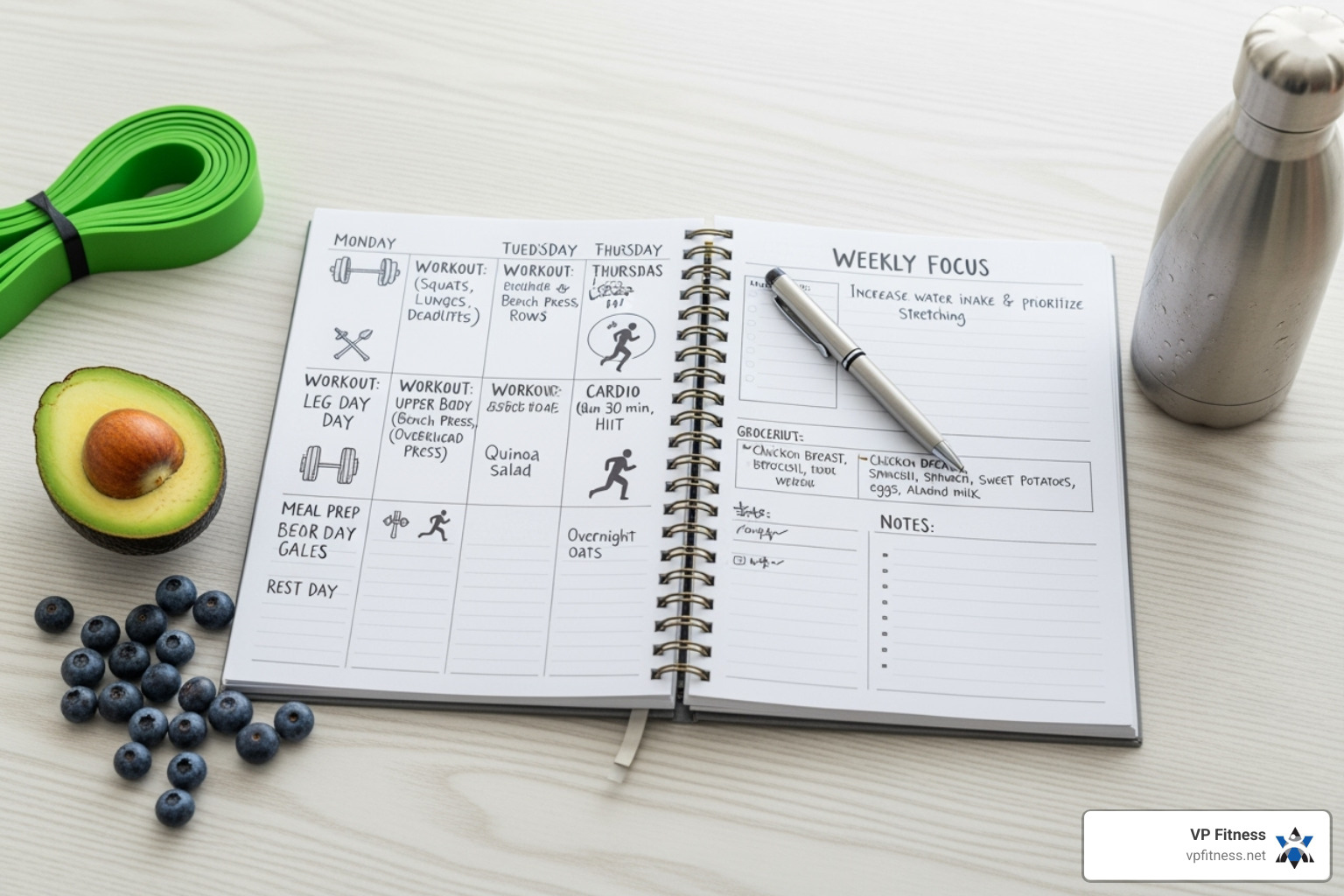
Integrating a Balanced Exercise Routine
A balanced fitness plan targets all aspects of health. General guidelines for adults recommend 150 minutes of moderate or 75 minutes of vigorous aerobic activity weekly, plus strength training for all major muscle groups twice a week. These recommendations are supported by health organizations like the Australian government and the CDC.
Here’s how to incorporate different types of exercise:
- Cardio (Aerobic Activity): Strengthens your heart and lungs. Examples include brisk walking, jogging, cycling, or HIIT. You can break up your 150 minutes throughout the week.
- Strength Training: Essential for building muscle and improving metabolism. Work all major muscle groups (legs, hips, back, abdomen, chest, shoulders, and arms) with weights, bands, or bodyweight exercises. Aim for a resistance that tires your muscles after 12-15 repetitions.
- Flexibility & Mobility: Crucial for preventing injuries and improving range of motion. Include stretching after workouts, and consider activities like yoga or Pilates.
Start slow and increase your activity by no more than 10% weekly to prevent injury. Consistency is key, so schedule workouts like important appointments.
The Crucial Role of Nutrition
You can’t out-train a bad diet. Nutrition is paramount to achieve fitness goals like weight loss or muscle gain. It’s about fueling your body for optimal performance and recovery.
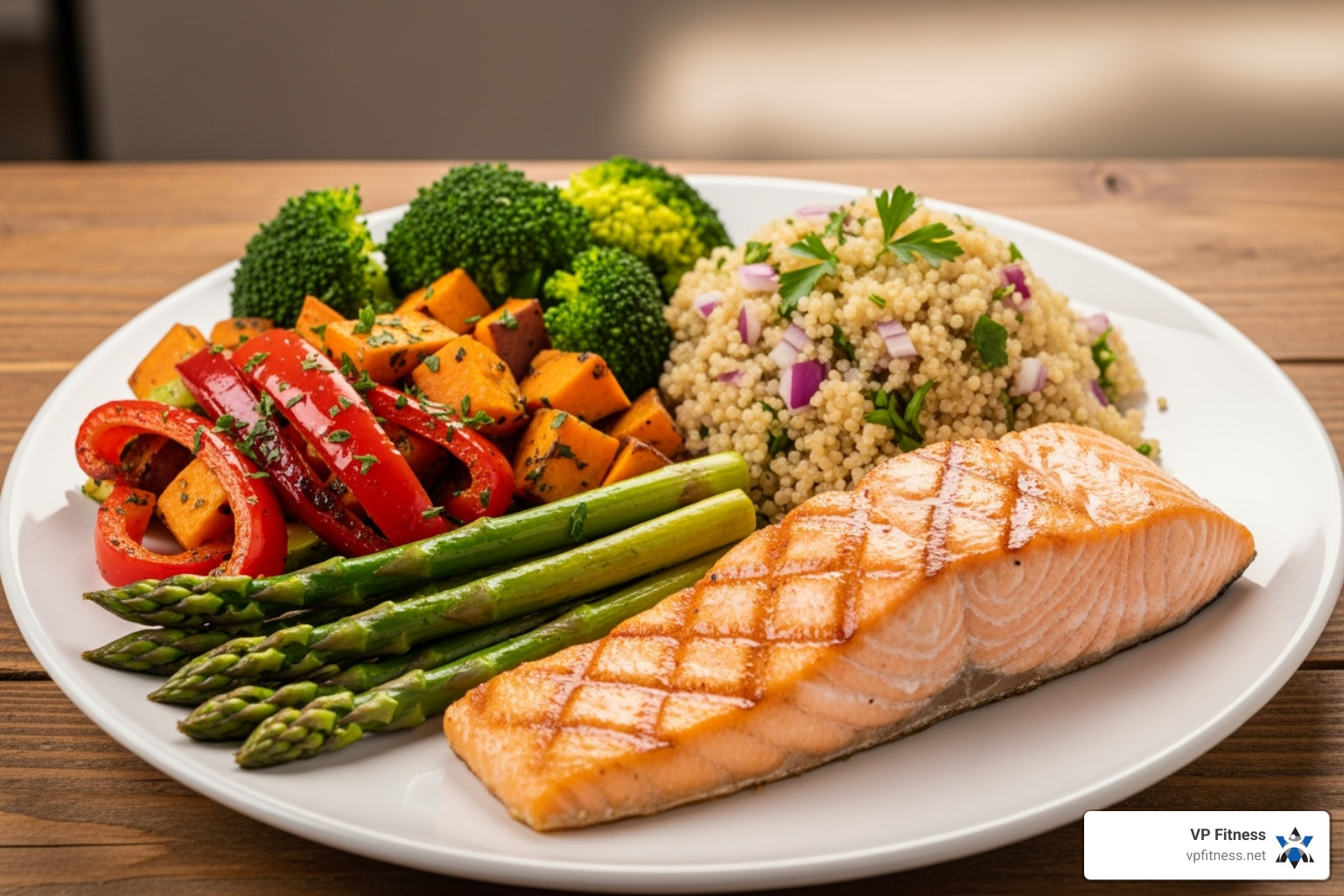
Here are the basics:
- Caloric Intake: For weight loss, you need a caloric deficit. For muscle gain, you’ll need a slight surplus.
- Macronutrients: Balance is key. Aim for lean protein at every meal for muscle repair. Choose complex carbohydrates (whole grains, fruits) for energy. Include healthy fats (avocados, nuts) for hormone production. A balanced plate is half veggies, a quarter protein, and a quarter carbs.
- Hydration: Drink 2-3 liters of water daily, adjusting for activity level.
- Meal Timing: Eating smaller, frequent meals can help stabilize energy levels. Don’t skip breakfast!
- Healthy Snacks: Keep healthy snacks handy to avoid unhealthy cravings.
Integrating nutrition means making conscious, sustainable choices.
Tracking, Adapting, and Overcoming Obstacles to Achieve Fitness Goals
Fitness journeys are rarely a straight line. Life will throw curveballs like work deadlines or low motivation. This isn’t failure; it’s human. Those who successfully achieve fitness goals don’t avoid obstacles—they learn to steer them with flexibility.
Progress monitoring is your compass, helping you stay oriented. It’s not about perfectionism, but awareness and celebration.
Monitoring Progress and Maintaining Motivation
A training diary is invaluable. Beyond sets and reps, note how you feel. Did you have more energy? Feel stronger? These insights reveal progress beyond physical changes and help you spot patterns.
Fitness apps and devices can automatically track steps, heart rate, and sleep, giving you real-time feedback. They are tools to support your journey, not judge it.
Simple checklists work wonders for daily habits. There’s deep satisfaction in checking off “drank 8 glasses of water” or “took a 10-minute walk.”
Celebrating milestones is essential psychology. Your brain needs positive reinforcement to build new habits. Acknowledge every victory, from completing a week of workouts to sleeping better. These wins matter.
Adapting Your Plan and Handling Setbacks
Flexibility is smart sustainability. The question isn’t if setbacks will happen, but how you’ll respond.
When life interruptions occur, ask, “What’s possible today?” A 15-minute workout is better than none. A walk during travel or taking the stairs at work keeps you moving forward.
Injuries and illness require rest. This is a good time to focus on other aspects of health, like nutrition or stress management. Listen to your body.
Adjusting timeframes isn’t failure; it’s realistic planning. If a 12-week goal becomes a 16-week goal, that’s normal. Progress isn’t always linear.
The key is getting back on track with your next scheduled workout. One missed session doesn’t erase weeks of progress. It’s the pattern over time that matters.
Common Pitfalls and How to Avoid Them
Recognizing these common traps helps you steer around them.
- Unrealistic goals set you up for disappointment. Start with what’s challenging but doable, like three workouts a week, and build from there.
- Overtraining risks injury and burnout. Rest days are productive days for muscle growth and recovery.
- Poor nutrition can undermine your hard work. If you’re not seeing results, take an honest look at your diet.
- Lack of patience is a major challenge. Real, lasting changes take time. Trust the process.
- Comparing to others steals joy from your journey. Your progress is yours alone and worth celebrating.
Leveraging Support Systems for Long-Term Success
Those who achieve fitness goals long-term rarely do it alone. While discipline matters, a strong support system can be the difference between giving up and creating lasting change. When you’re tired or hit a plateau, your network is there to help you push through.
The Value of Professional Guidance
Working with fitness professionals is one of the smartest investments you can make in your health, especially when you’re serious about results.
- Personal trainers save you months of trial and error. They assess your fitness, design custom workouts, and teach proper form to prevent injury, pushing you safely beyond your comfort zone.
- Exercise physiologists are valuable for chronic conditions or past injuries, creating safe programs that work with your body’s needs.
- Nutritionists and dietitians cut through conflicting information to create a personalized eating plan for your lifestyle. They clarify what, when, and how much to eat, removing the guesswork from fueling your body.
- Your doctor can give you medical clearance to exercise safely, especially if you’re over 40 or have health conditions.
Professional guidance ensures your plan is safe and effective.
Finding Your Fitness Community
Fitness is more enjoyable and sustainable when you’re part of a supportive community.
- Workout partners are game-changers for accountability. It’s harder to skip a session when someone is counting on you. You can celebrate wins and offer support on tough days.
- Group classes offer a unique, motivating energy. The instructor provides guidance while the group dynamic pushes you to work harder.
- Online communities provide incredible support if your schedule is tight. Forums and virtual groups offer encouragement and a sense of shared journey.
A fitness community understands the struggles and celebrates the victories. Building these support systems takes effort, but the payoff is enormous.
Conclusion
You now have a blueprint to achieve fitness goals that last. This isn’t about quick fixes; it’s about building a sustainable plan that works with your real life.
We’ve covered it all: understanding your baseline, cultivating a positive mindset, and setting meaningful SMART goals. We built an action plan with balanced exercise routines and nutrition, and learned how to track progress and bounce back from setbacks.
The magic happens when you combine consistency with self-compassion. You’re not aiming for perfection; you’re building habits that stick. Some days you’ll crush your workout, other days you’ll manage a 10-minute walk. Both count.
Remember the small victories—the extra energy, sleeping better, or feeling stronger. These moments remind you why you started.
The path to better health doesn’t have to be overwhelming. It just needs to be yours.
Your journey starts with a single step. Take it today. Your future self will thank you.