

Flex Appeal Your Ultimate Guide to Effective Muscle Exercises

The Foundation of Muscle Growth
The best muscle exercises are the cornerstone of any effective fitness program. Whether you’re a busy professional or someone looking to transform their physique, the right exercises deliver remarkable results in surprisingly little time.
Quick Answer: Top Muscle-Building Exercises
- Squats – Works legs, glutes, and core
- Deadlifts – Targets back, legs, and entire posterior chain
- Pull-ups – Builds back, biceps, and grip strength
- Bench Press – Develops chest, shoulders, and triceps
- Overhead Press – Strengthens shoulders and core
- Rows – Improves posture and back strength
Building muscle is about creating a foundation for long-term health. Lean muscle mass leads to an increased metabolism, burning more calories at rest. It also promotes improved posture to counteract hours at a desk and builds stronger bones for healthy aging.
Research confirms these benefits. For instance, studies show full-body workouts can result in superior muscle growth compared to traditional splits. The Physical Activity Guidelines for Americans recommends strength training at least twice weekly for optimal health.
Consistency beats perfection. Regular workouts focused on high-impact exercises are more important than complex, time-consuming routines.
I’m Joseph Depena. With over a decade of experience, I’ve seen how focusing on the best muscle exercises can transform lives. I’m excited to share these proven strategies with you.
The Core Principles of Building Muscle
To get the most out of the best muscle exercises, it’s crucial to grasp the principles that drive muscle growth. It’s not just about lifting heavy; it’s about smart, consistent effort.
Progressive Overload: The Key to Continuous Gains
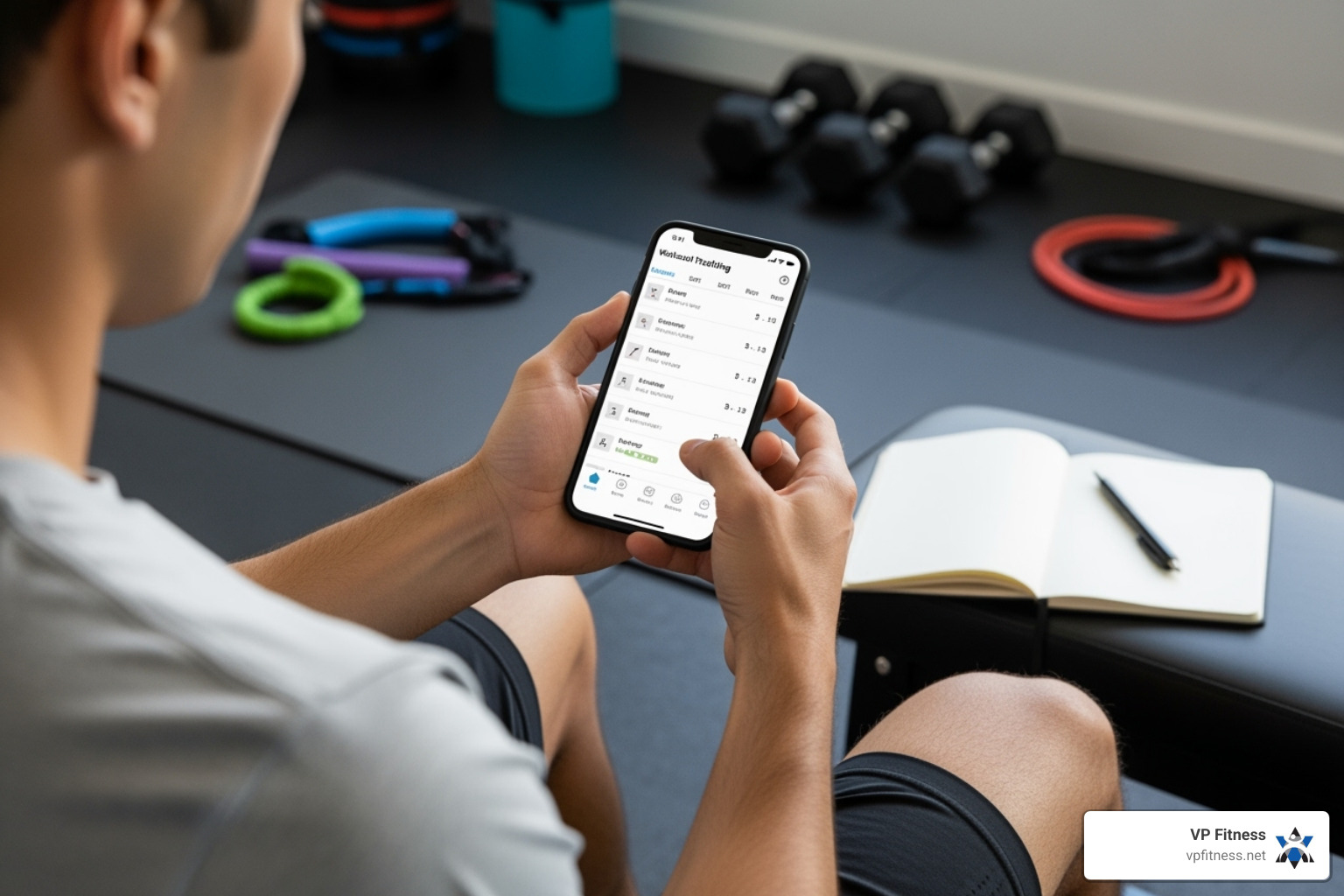
Your muscles adapt to stress. If you don’t continually challenge them, they have no reason to grow. Progressive overload is the principle of gradually increasing the demands placed on your muscles over time.
Without it, your progress will stall. You can apply progressive overload in several ways:
- Increasing weight: The most direct method. If you squatted 100 pounds for 8 reps, aim for 105 pounds.
- Increasing reps or sets: When you can’t add weight, do more repetitions or an extra set with the same load.
- Improving form: Performing an exercise with stricter technique or a greater range of motion increases its effectiveness.
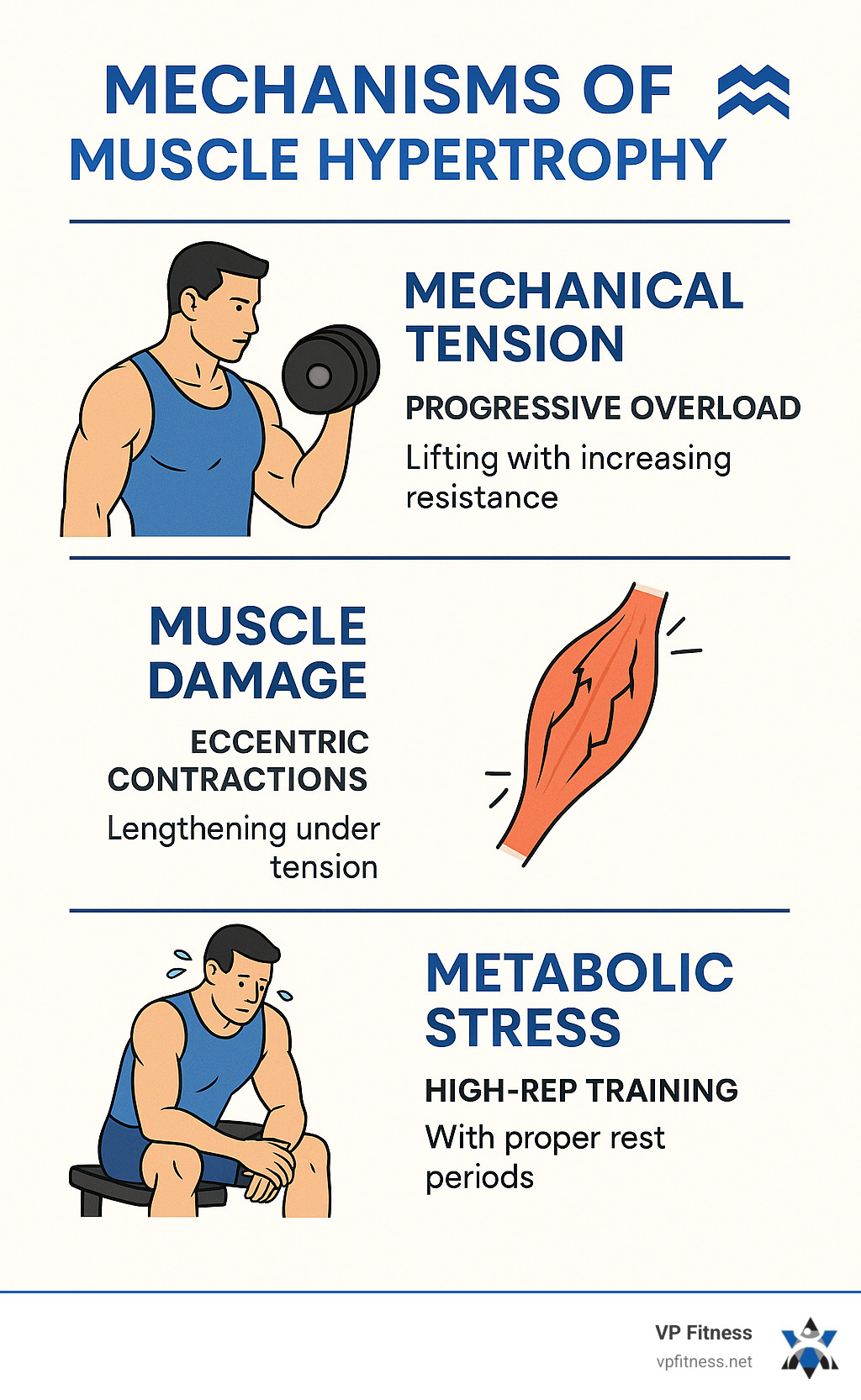
Research on the mechanisms of muscle hypertrophy shows that this process activates the key mechanisms for building muscle: mechanical tension, muscle damage, and metabolic stress.
Fueling Your Gains: The Critical Role of Nutrition
Your muscles can’t grow without proper nutrition. The best muscle exercises are ineffective if your body lacks the raw materials to build new tissue.
Building muscle requires a calorie surplus—eating more energy than you burn. A modest surplus of 200-500 calories above maintenance is ideal. Protein intake is also vital, as it provides the amino acids for muscle repair. The International Society of Sports Nutrition recommends 1.4-2.0 grams of protein per kilogram of body weight for active individuals. Carbohydrates fuel your workouts and replenish energy stores, while proper hydration supports performance and recovery.
Training Frequency and Recovery: How Often Should You Work Out?
More isn’t always better. Research suggests that training each muscle group at least twice per week provides optimal results for most people. This frequency provides enough stimulus for growth without leading to overtraining.
Muscles grow during recovery, not during the workout. It can take up to 48 hours for muscles to fully recover from resistance training, which is why smart programs include rest days.
Rest days are when your body repairs and rebuilds stronger muscle tissue. Quality sleep is crucial, as your body releases growth hormones during this time. Aim for 7-9 hours per night. Active recovery, like walking or gentle stretching on off days, can also boost blood flow and reduce soreness.
Free Weights vs. Machines: Which Is Better for You?
Both free weights and machines have a place in a well-rounded program. The best choice depends on your experience and goals.
Free weights (barbells, dumbbells) are excellent for engaging stabilizer muscles and building functional strength. They allow natural movement but require more attention to form.
Machines offer safety and are great for isolating specific muscles. They are ideal for beginners or when you’re fatigued, but they offer less stabilizer engagement and use fixed motion paths.
| Free Weights | Machines |
|---|---|
| Pros: Functional strength, more muscle activation, natural movement patterns | Pros: Safety, easy to learn, excellent for isolation work |
| Cons: Higher learning curve, increased injury risk if form breaks down | Cons: Less stabilizer muscle work, fixed motion paths |
Research shows that both free weights and machines can produce similar muscle growth when training volume is matched. A good strategy is to use both: start with machines to learn movements safely, then incorporate free weights as your skill develops.
The Best Muscle Exercises: A Focus on Compound Movements
When we talk about the best muscle exercises, we’re referring to compound movements. These exercises recruit multiple muscle groups at once, like the squat, which works your quads, hamstrings, glutes, and core simultaneously. This efficiency is what makes them so powerful.
Compound exercises offer superior time efficiency. Instead of performing multiple isolation exercises, you can work several muscles with one compound lift. They also trigger a greater hormonal response, prompting the release of testosterone and growth hormone. These multi-joint movements build functional strength that translates to real-life activities. Finally, they provide a cardiovascular benefit by engaging many muscles at once, elevating your heart rate.
The Best Muscle Exercises for Foundational Strength: The “Big Three”
These three powerlifts are the foundation of any serious strength program.
- The Barbell Back Squat is the “King of Exercises,” working the quadriceps, hamstrings, glutes, calves, and core. It builds explosive power and teaches the body to work as a coordinated unit. Mastering proper squat form is a priority.
- The Bench Press is the classic upper-body strength builder, targeting the chest, front shoulders, and triceps. It develops powerful pushing strength applicable to many activities.
- The Deadlift is the ultimate full-body test, engaging the hamstrings, glutes, lower back, lats, traps, and core. It builds immense raw strength and improves posture.
Essential Upper Body Compound Lifts
Beyond the bench press, these lifts are key for a balanced upper body.
- Overhead Press: Builds powerful shoulders (deltoids, triceps, upper chest) and challenges core stability.
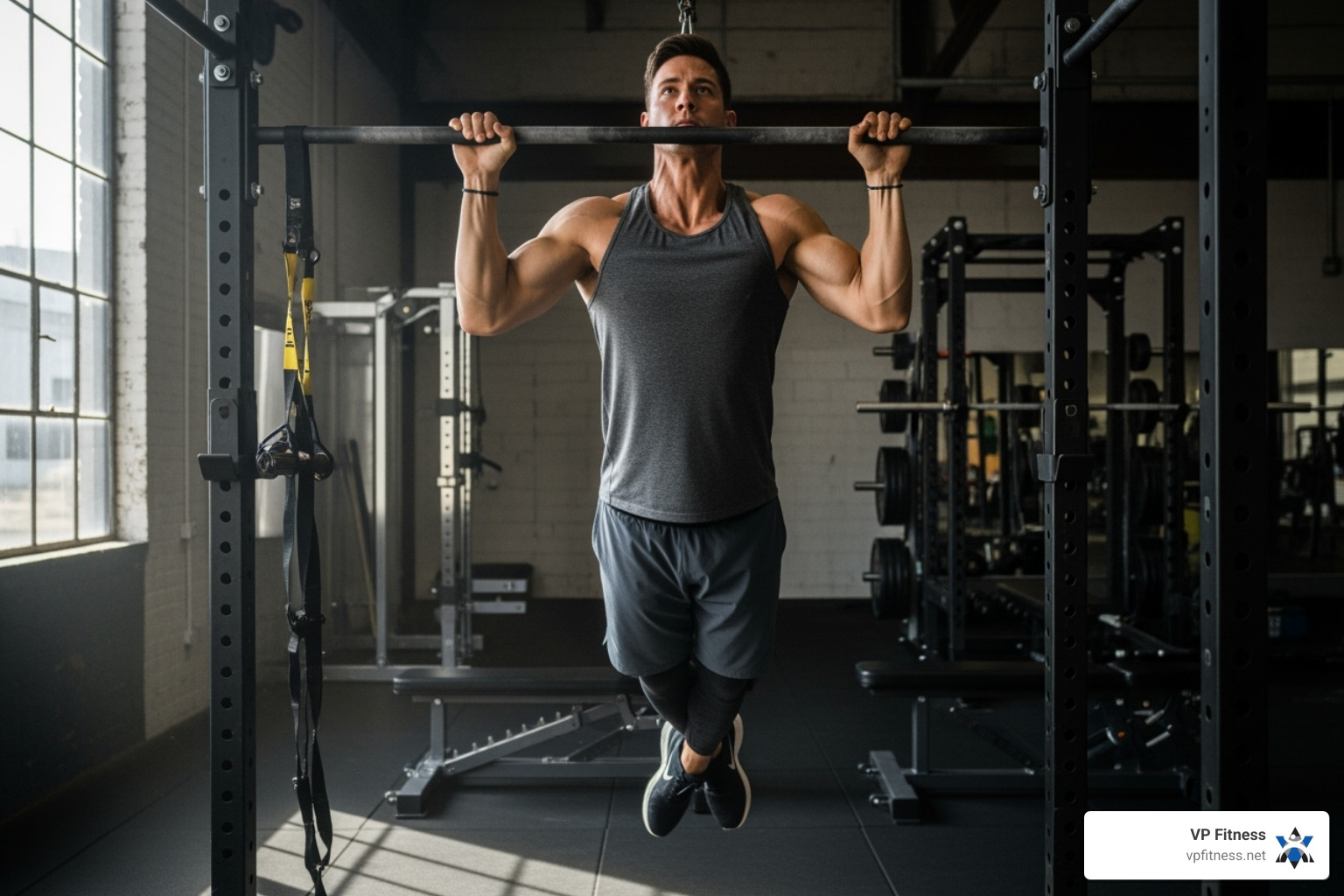
- Pull-ups and Chin-ups: The ultimate test of relative strength, targeting the lats, biceps, and rhomboids to build a V-taper back.
- Bent-Over Rows: Crucial for back thickness and posture, working the lats, rhomboids, traps, and biceps.
- Dips: Known as the “upper body squat,” this exercise builds mass in the triceps, lower chest, and front shoulders.
Powerful Lower Body and Full-Body Movements
These exercises round out your training toolkit.
- Lunges: A unilateral exercise that corrects muscle imbalances and improves coordination, targeting the quadriceps, hamstrings, and glutes.
- Kettlebell Swings: An explosive movement for building power and cardio fitness, working the glutes, hamstrings, lower back, and core.
- Dumbbell Thrusters: A full-body combination of a squat and overhead press, working the quads, glutes, shoulders, and triceps.
- Renegade Rows: A multitasking exercise that combines a plank with a row, building core stability and back strength.
Structuring Your Workouts for Maximum Results
Knowing the best muscle exercises is one thing; assembling them into a coherent plan is another. The structure of your workout program is just as important as the exercises themselves.
Full-Body Workouts vs. Split Routines: What’s the Difference?
Both full-body and split routines are effective; the best choice depends on your schedule and preferences.
- A full-body workout trains all major muscle groups in a single session. This is ideal for those training 2-3 times per week, as it ensures frequent muscle stimulation. Research suggests this approach can have superior hypertrophic effects.
- A split routine divides training by muscle group (e.g., push day, pull day, leg day). This works well if you can train 4+ times per week, as it allows for more volume and intensity per muscle group.
Sample Workout Plans for Your Goals
Here are two proven structures to get you started.
3-Day Full-Body Plan (A/B Structure)
Alternate between these two workouts.
- Workout A:
- Barbell Back Squats: 3 sets of 8-12 reps
- Bench Press: 3 sets of 8-12 reps
- Bent-Over Rows: 3 sets of 8-12 reps
- Overhead Press: 3 sets of 8-12 reps
- Plank: 3 sets, 30-60 second hold
- Workout B:
- Deadlifts: 3 sets of 5-8 reps
- Pull-ups or Lat Pulldowns: 3 sets of 8-12 reps
- Dumbbell Thrusters: 3 sets of 10-15 reps
- Push-ups: 3 sets to failure
- Renegade Rows: 3 sets of 8-12 per side
4-Day Upper/Lower Split Plan
- Upper Body (2x per week):
- Bench Press: 4 sets of 6-10 reps
- Bent-Over Rows: 4 sets of 6-10 reps
- Overhead Press: 3 sets of 8-12 reps
- Pull-ups: 3 sets of 8-12 reps
- Dumbbell Bicep Curls: 3 sets of 10-15 reps
- Triceps Pushdowns: 3 sets of 10-15 reps
- Lower Body (2x per week):
- Barbell Back Squats: 4 sets of 6-10 reps
- Romanian Deadlifts: 3 sets of 8-12 reps
- Lunges: 3 sets of 10-12 per leg
- Leg Press: 3 sets of 10-15 reps
- Calf Raises: 3 sets of 15-20 reps
Versatile Workouts: At Home, Outdoors, and With Dumbbells
The best muscle exercises are adaptable. You don’t always need a gym.
- Bodyweight: Master push-ups, squats, planks, and burpees for a foundation of strength.
- Dumbbells: A pair of dumbbells allows for a full-body workout with exercises like dumbbell deadlifts, rows, floor presses, overhead presses, and lunges.
- Outdoors: Use park benches for dips and incline push-ups. Find a pull-up bar. Use open space for sprints and burpees. Resistance bands are also a great portable option.
Are Isolation Exercises Necessary for Muscle Gain?
While compound exercises are sufficient for building significant mass and strength, isolation exercises have their place. A study found no major difference in gains between groups using only compound exercises versus those who added isolation work.
However, isolation movements are excellent for:
- Targeting weak points and lagging muscle groups.
- Correcting imbalances that could hinder performance or lead to injury.
- Aesthetic focus to sculpt and define individual muscles.
Prioritize compound lifts, then add isolation movements as accessory work if your goals and schedule permit.
Frequently Asked Questions About Muscle Building
Starting a muscle-building journey can bring up a lot of questions. Here are answers to some of the most common ones.
What are the best muscle exercises for beginners?
For beginners, the best muscle exercises are those that teach proper movement patterns safely.
- Start with bodyweight exercises: Master push-ups (on knees or against a wall if needed), bodyweight squats, planks, and lunges to build a foundation of strength and coordination.
- Use machine-based exercises: The leg press, chest press, and lat pulldown machines have a fixed movement path, reducing injury risk while you learn to feel the target muscles work.
- Move to free weights carefully: Start with light weight on compound lifts like goblet squats, dumbbell rows, and the dumbbell bench press. Focus on perfecting the movement before adding significant weight.
Can you build muscle while losing fat?
Yes, this process is called body recomposition. It’s especially effective for beginners or those returning to training. The strategy involves combining a high-protein diet and consistent resistance training with a slight calorie deficit. The strength training signals your body to build muscle, while the calorie deficit encourages fat loss. You may notice your body shape changing even if the scale doesn’t move much.
What is the role of cardio in a muscle-building plan?
Smartly programmed cardio can support your muscle-building goals. A healthy cardiovascular system delivers nutrients to your muscles more efficiently, which can aid recovery. Light cardio can increase blood flow and help clear metabolic waste from muscles after a tough workout.
The key is moderation. One to two short cardio sessions per week (20-30 minutes at a moderate intensity) will not interfere with muscle gains and can improve your overall fitness.
How long does it typically take to see muscle gains?
Results vary based on genetics, diet, sleep, and consistency, but there are some general timelines. Beginners often experience rapid “newbie gains,” noticing changes in strength and muscle tone within 6-12 weeks of consistent training.
Visible changes in muscle size that others might notice typically appear within 2-3 months. Consistency is the most critical factor. Muscle building is a long-term process. Stick with your program, and the results will follow. Every workout is an investment in your future self.
Conclusion: Your Path to a Stronger You
You now have a comprehensive guide to building muscle. By understanding the core principles and mastering the best muscle exercises, you have the tools to build lasting strength.
Let’s recap the essentials:
- Progressive Overload: Continuously challenge your muscles to stimulate growth.
- Compound Exercises: Focus on efficient, multi-joint movements like squats, deadlifts, and presses for the biggest impact.
- Nutrition: Fuel your body with a slight calorie surplus and adequate protein to build new muscle tissue.
- Consistency: Regular, sustained effort is the true secret to long-term success.
Building muscle is a straightforward process, but it requires patience and dedication. The principles are simple, but the challenge lies in applying them consistently.
Sometimes, professional guidance can make all the difference in breaking through plateaus and ensuring proper form. That’s where personal training becomes invaluable—having an expert in your corner can accelerate your progress and keep you accountable.
Your journey to a stronger you starts now. The best muscle exercises are at your fingertips; the real magic happens when you put them into action. The stronger version of yourself is waiting.