

Beyond the Bulk: Your Guide to Size and Definition

best workout for size and definition 2025: Perfect
Why the Best Workout for Size and Definition Requires a Strategic Approach
The best workout for size and definition combines progressive resistance training, strategic nutrition, and adequate recovery. It’s not about choosing size or definition, but understanding how to achieve both.
Key Principles:
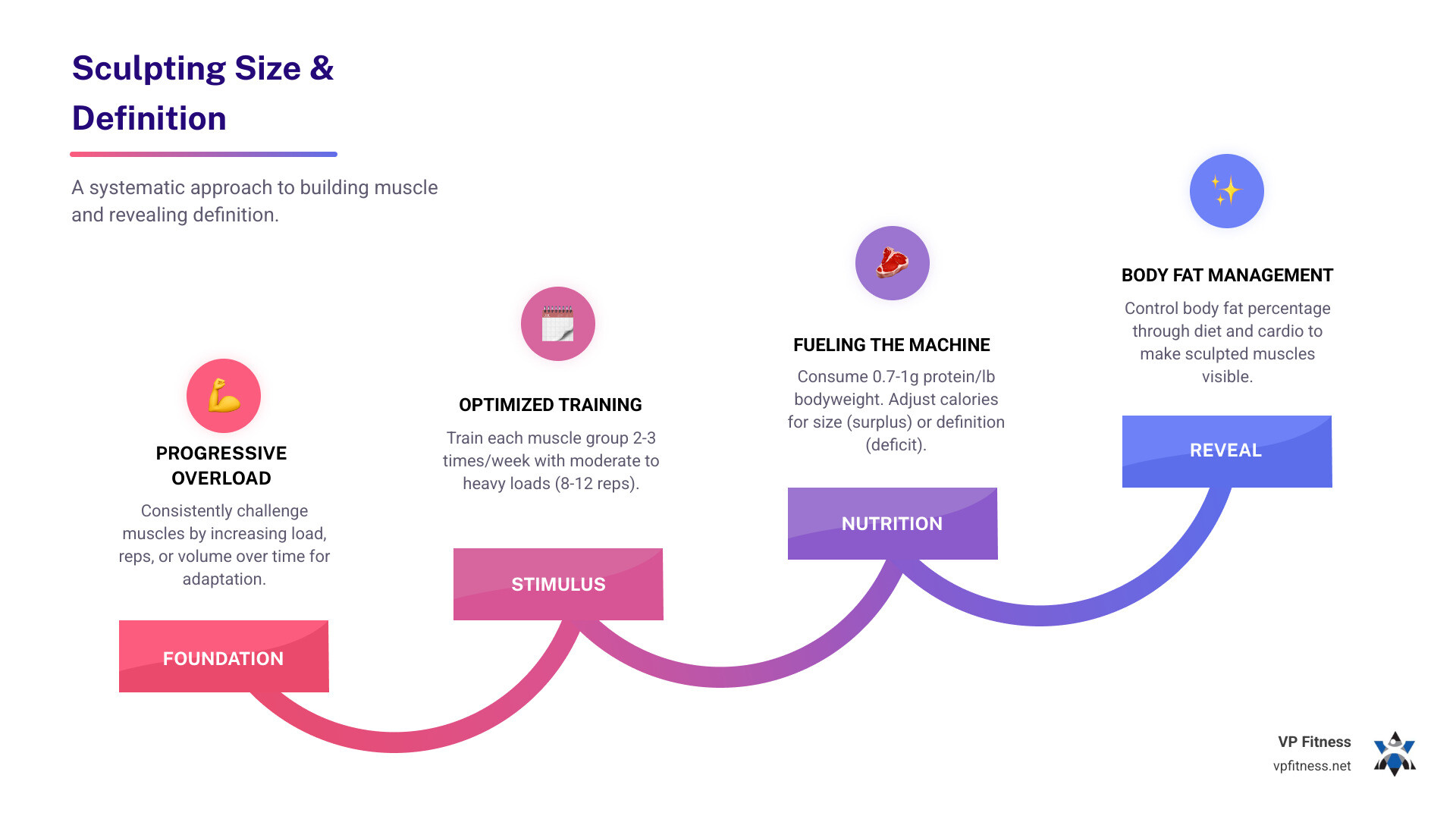
- Training: Prioritize compound exercises (squats, deadlifts) for mass, using 3-4 sets of 8-12 reps. Train each muscle group 2-3 times per week and consistently apply progressive overload.
- Nutrition: Eat 0.7-1 gram of protein per pound of bodyweight daily. Use a slight calorie surplus for size and a controlled deficit for definition.
- Recovery: Get 7-8 hours of quality sleep, take rest days, and use active recovery like light cardio.
Scientific studies confirm that muscles need to be worked at least twice a week for meaningful growth. The key is balancing heavy lifting, metabolic stress (the “pump”), and muscle damage through smart programming. Instead of getting stuck in separate “bulking” or “cutting” phases, the most effective approach integrates both goals.
Master trainers have refined the best workout for size and definition into a science-based system that delivers results for busy professionals seeking both muscle mass and a lean appearance.
The Science of Sculpting: Size vs. Definition
Achieving both muscle size and sharp definition means working on two connected goals: muscle hypertrophy (the growth of muscle tissue) and managing your body fat percentage to reveal that muscle. Understanding this synergy is key to creating the best workout for size and definition.
Muscle hypertrophy occurs when your body builds new muscle proteins faster than it breaks them down. Lifting weights creates tiny tears in muscle fibers, and your body overcompensates by rebuilding them bigger and stronger. Research shows that training each muscle group two to three times per week is ideal for growth. The sweet spot for hypertrophy is typically 3-4 sets of 8-12 reps per exercise, using a weight that creates mechanical tension, metabolic stress (the “pump”), and muscle damage to trigger repair.
Building muscle requires energy, which is why a caloric surplus is often recommended during bulking phases. Your body needs extra calories and protein to fuel muscle protein synthesis.
Definition, on the other hand, isn’t about specific “toning” exercises. It’s the result of having sufficient muscle mass and a low enough body fat percentage to see it clearly. This is achieved through a caloric deficit, where you eat fewer calories than you burn, forcing your body to use stored fat for energy. The goal is to lose fat while maintaining muscle by continuing to lift heavy.
The best approach treats these not as opposing goals, but as phases of the same journey. You build muscle with progressive training and proper nutrition, then reveal it by managing your body composition.
The Pillars of Muscle Growth: Training, Nutrition, and Recovery
To sculpt a physique with both size and definition, you must balance three pillars: training, nutrition, and recovery. Neglecting one will compromise your results.
Progressive Overload: The Engine of Muscle Growth
The golden rule of muscle building is progressive overload: to get bigger and stronger, you must continually challenge your muscles more than before. Since our bodies adapt quickly, this ongoing challenge is what stimulates growth. You can apply progressive overload by:
- Increasing weight
- Increasing reps or sets
- Decreasing rest time
- Improving form for better muscle engagement
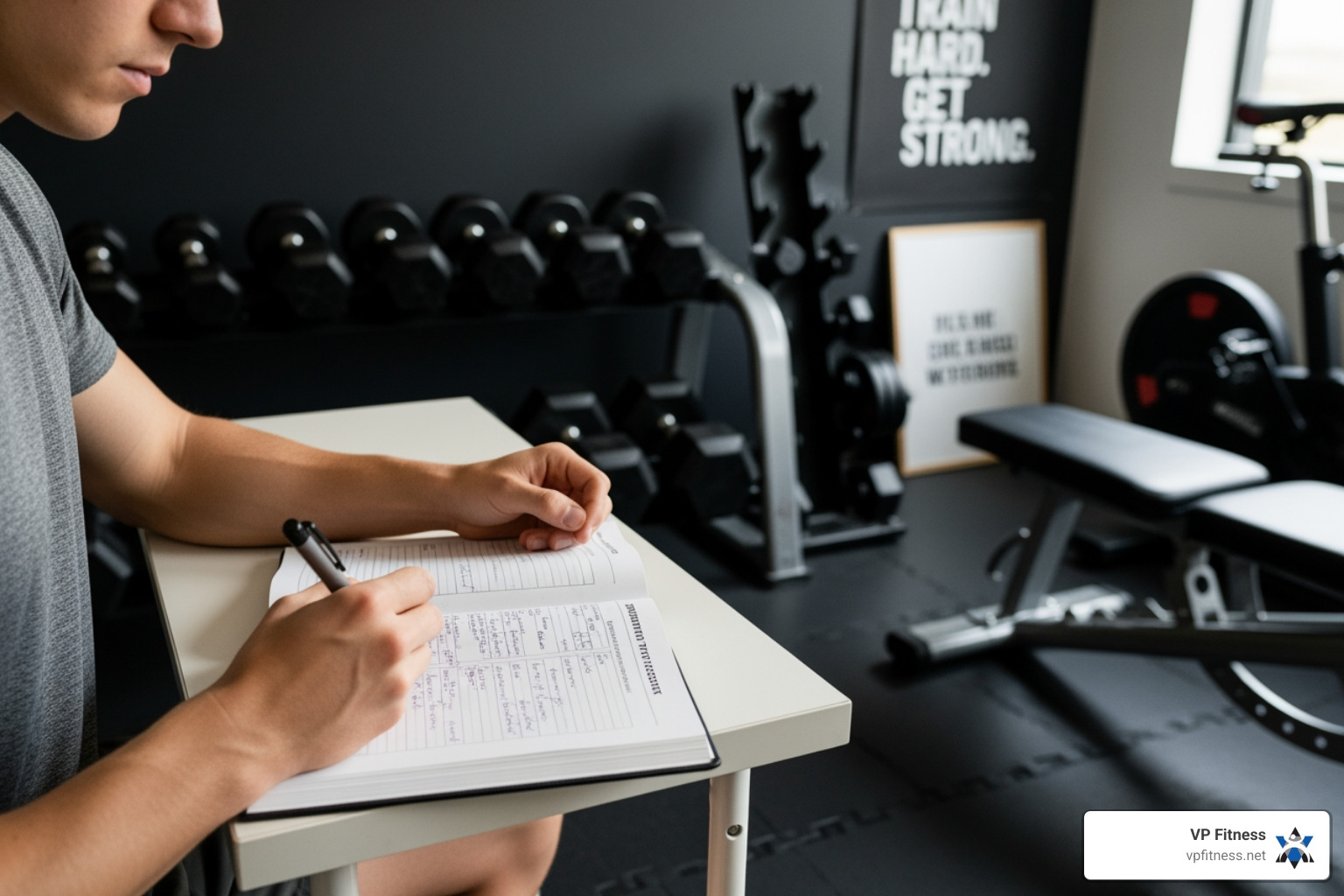
Each method increases mechanical tension and forces adaptation. A training log is your best tool to track progress and ensure you’re consistently applying this principle. This systematic approach is crucial for any workout focused on hypertrophy.
Fueling the Machine: Nutrition for Size and Definition
Even the best workout is ineffective without proper nutrition. Your diet provides the raw materials to repair, rebuild, and grow muscle while managing body fat.
- Protein Intake: Protein provides the amino acids essential for muscle repair. The International Society of Sports Nutrition suggests 0.6 to 1 gram per pound of body weight daily for active individuals.
- Carbohydrates and Fats: Complex carbs (oats, quinoa) fuel your workouts and replenish energy stores. Healthy fats (avocados, nuts) are vital for hormone production, including testosterone.
- Calorie Tracking: For size, a slight calorie surplus is needed. For definition, a controlled calorie deficit is required to promote fat loss.
- Hydration: Water is crucial for nutrient transport, temperature regulation, and joint health, all of which are essential for muscle function. A study on hydration confirms its importance.
The Growth Phase: Why Rest and Recovery are Non-Negotiable
Muscle growth happens during recovery, not in the gym. This is when your body repairs the microscopic damage from workouts, making muscles bigger and stronger.
Quality sleep is a cornerstone of muscle repair. During deep sleep, your body releases peak amounts of growth hormone, which is critical for repairing exercise-induced damage. Aim for 7-8 hours nightly. Research shows that quality sleep is essential for muscle growth.
Pushing too hard without enough rest can lead to overtraining symptoms like fatigue, decreased performance, and injury. Listen to your body and schedule rest days. On these days, active recovery—such as light walking or stretching—can promote blood flow and reduce soreness without adding stress.
The Best Workout for Size and Definition: Structure and Splits
How you structure your training week—your workout split—is a blueprint for success. The right split depends on your goals, schedule, and experience.
Choosing Your Blueprint: Popular Workout Splits
When creating the best workout for size and definition, consider these popular splits:
- Full-body workouts: Train all major muscle groups in one session, 2-3 times per week. This is highly efficient and great for beginners or those with limited time.
- Upper/Lower split: Divides training into upper and lower body days, allowing you to train each muscle group twice a week with more volume per session than a full-body routine.
- Push/Pull/Legs (PPL): A highly popular split that organizes workouts by movement pattern: push (chest, shoulders, triceps), pull (back, biceps), and legs. This allows for high frequency and volume, making it ideal for hypertrophy.
Here’s a quick comparison:
| Workout Split | Training Frequency (per muscle group) | Volume (per session) | Suitability |
|---|---|---|---|
| Full-Body | High (2-3x/week) | Moderate | Beginners, time-crunched |
| Upper/Lower | Moderate (2x/week) | Moderate to High | Intermediate, time-flexible |
| Push/Pull/Legs | High (2x/week) | High | Intermediate, Advanced |
Choose the split that best fits your lifestyle and recovery capacity.
The best workout for size and definition: Bulking vs. Cutting Phases
For many lifters, achieving both size and definition involves cycling between two strategic phases: bulking and cutting.
In a bulking phase, the goal is to build muscle by eating in a calorie surplus (300-500 calories above maintenance). This provides the energy for growth. Training intensity remains high, focusing on progressive overload in the 8-12 rep range for hypertrophy. Some fat gain is normal.
In a cutting phase, the goal is to lose body fat by eating in a calorie deficit (300-500 calories below maintenance). It’s crucial to continue lifting heavy to signal your body to preserve muscle mass while shedding fat. You might add more cardio to increase calorie burn. Understanding the roles of cardio versus strength training is key here.
While beginners can often build muscle and lose fat simultaneously (“body recomposition”), experienced lifters usually find it more effective to focus on one goal at a time.
Scaling for Success: Beginner vs. Advanced Lifters
The best workout for size and definition evolves with your experience level.
Beginners should focus on building a strong foundation by mastering proper form. Start with lighter weights and prioritize movement quality before adding load. A full-body routine 2-3 times a week is ideal for frequent practice.
Advanced lifters need to introduce new challenges to continue progressing. This often means higher training volumes, more complex exercises, and advanced techniques like drop sets (reducing weight mid-set to add reps), supersets (two exercises back-to-back), or tempo sets (controlling repetition speed). These methods increase intensity and time under tension, stimulating new growth.
The Ultimate Exercise Arsenal for a Sculpted Physique
Building an impressive physique requires a strategic mix of exercises: compound lifts to build the foundation and isolation exercises to add the fine details.
Compound Lifts: The Foundation of Mass
Compound exercises are multi-joint movements that recruit several muscle groups at once, making them highly efficient for building overall strength and size. They trigger a significant hormonal and metabolic response essential for growth.
- Squats: The king of lower body exercises, engaging the quads, hamstrings, glutes, and core.
- Deadlifts: A total-body strength builder focusing on the posterior chain (back, glutes, hamstrings).
- Bench Press: The cornerstone for upper body mass, targeting the chest, shoulders, and triceps.
- Overhead Press: Builds powerful, rounded shoulders and strong triceps, contributing to the V-taper look.
- Barbell Rows and Pull-ups: Essential for developing a thick, wide back and strong biceps. These pulling movements are key to an impressive physique.
For a complete list of effective movements, explore guides on the best muscle-building exercises.

Isolation Exercises: The Sculptor’s Tools
Isolation exercises are single-joint movements that target specific muscles. They are perfect for refining shape, addressing lagging body parts, and improving the mind-muscle connection.
- Bicep Curls & Tricep Extensions: Build full, muscular arms. Triceps make up two-thirds of arm mass, so don’t neglect them.
- Lateral Raises: The key to building wide, capped shoulders that create the illusion of a smaller waist.
- Leg Curls & Leg Extensions: Add detail and separation to the hamstrings and quadriceps.
- Calf Raises: Essential for balanced lower body development. Consistent work with both standing and seated variations will yield results.
The best workout for size and definition: Integrating Cardio for a Lean Look
Strategically used cardio is essential for achieving the best workout for size and definition. It helps manage body fat, improves cardiovascular health, and aids recovery without sacrificing muscle.
- HIIT (High-Intensity Interval Training): Involves short bursts of intense effort followed by brief recovery (e.g., 30 seconds sprinting, 90 seconds walking). HIIT is time-efficient and boosts metabolism for hours afterward due to the EPOC effect (afterburn).
- LISS (Low-Intensity Steady State): Gentler cardio like a brisk walk or light cycling. LISS is great for active recovery, as it promotes blood flow to sore muscles without taxing the nervous system.
The key is timing and moderation. Perform cardio on separate days from heavy lifting, or several hours apart. Keep it minimal during a bulk and increase it gradually during a cut to support fat loss while preserving muscle. Used intelligently, cardio is a powerful tool.
Common Pitfalls and How to Avoid Them
Even with a solid plan for the best workout for size and definition, common traps can derail progress. Recognizing these pitfalls is the first step to avoiding them.
- Ego Lifting: Using more weight than you can handle with proper form is a recipe for injury and reduces the exercise’s effectiveness. Prioritize perfect form over the number on the plate.
- Poor Form: Incorrect technique increases injury risk and prevents target muscles from getting the full benefit. If your form breaks down, lighten the load.
- Overtraining: More is not always better. Muscles grow during recovery, not during the workout. Pushing too hard without adequate rest leads to fatigue, poor performance, and illness. Listen to your body.
- Undereating: Building muscle requires energy. Without enough calories and protein, your body lacks the raw materials to repair and grow, especially during a bulking phase.
- Inconsistency: Life gets busy, but consistency is the cornerstone of all progress. A good program only works if you stick to it.
- Neglecting Recovery: Sleep is when your body performs critical repair and growth. Don’t treat it as an option. Active recovery and stress management are also vital parts of the muscle-building recipe.
Many of these issues stem from common fitness misconceptions. Finally, consider working with a coach. A certified professional can offer personalized guidance and help you avoid these common mistakes.
Frequently Asked Questions about Building Size and Definition
Here are answers to some of the most common questions about achieving muscle size and definition.
How long does it take to see results?
Patience and consistency are key. Visible muscle gains can typically be seen within 6 to 12 weeks of dedicated training and nutrition.
Beginners often experience “newbie gains,” seeing changes even faster as their nervous system becomes more efficient at recruiting muscle fibers. For experienced lifters, progress may be slower but is still achievable with consistent progressive overload. Factors like genetics, training history, diet, and sleep all influence your rate of progress. Focus on steady, long-term improvement.
Do I need supplements to build muscle and get defined?
Supplements are not essential but can be helpful. We advocate a “food first” approach, as a well-balanced diet is the foundation for muscle growth and fat loss.
Once your nutrition is solid, certain supplements can support your efforts:
- Protein powder: A convenient way to meet your daily protein targets if you struggle to do so with whole foods alone. It provides the building blocks for muscle recovery and growth.
- Creatine: One of the most researched supplements, creatine monohydrate is proven to improve strength, power, and muscle mass by boosting energy production during intense exercise.
Supplements complement your efforts; they don’t replace them. Focus on training, nutrition, and recovery first.
Can I build muscle and lose fat at the same time?
Yes, this process, known as “body recomposition,” is possible, especially for those new to training or returning after a break. It involves building muscle while simultaneously reducing body fat.
Key strategies for successful body recomposition include:
- A high protein diet: Preserves muscle mass during a calorie deficit and promotes satiety.
- A controlled calorie deficit: A slight reduction in calories encourages your body to use fat for fuel.
- Consistent strength training: Provides the stimulus for muscles to grow, even with fewer calories.
For advanced lifters, this process is slower and more challenging than distinct bulking and cutting phases, but it is achievable with a precise strategy and patience.
Conclusion
Achieving the best workout for size and definition is not about a single secret, but a synergistic approach. It’s a journey that combines consistent, intelligent training with smart nutrition and dedicated recovery. By understanding the science of muscle growth, choosing the right exercises, and avoiding common pitfalls, you can build an impressive physique.
Every rep, every meal, and every night of quality sleep is a step toward your goal. The key is to stay consistent, listen to your body, and continue to challenge yourself. With patience and effort, you will build the size and definition you’re working for.