

Beyond the Bulk: A Deep Dive into Hypertrophy Meaning

Beyond the Bulk: A Deep Dive into Hypertrophy Meaning
Understanding Muscle Growth: What Hypertrophy Really Means
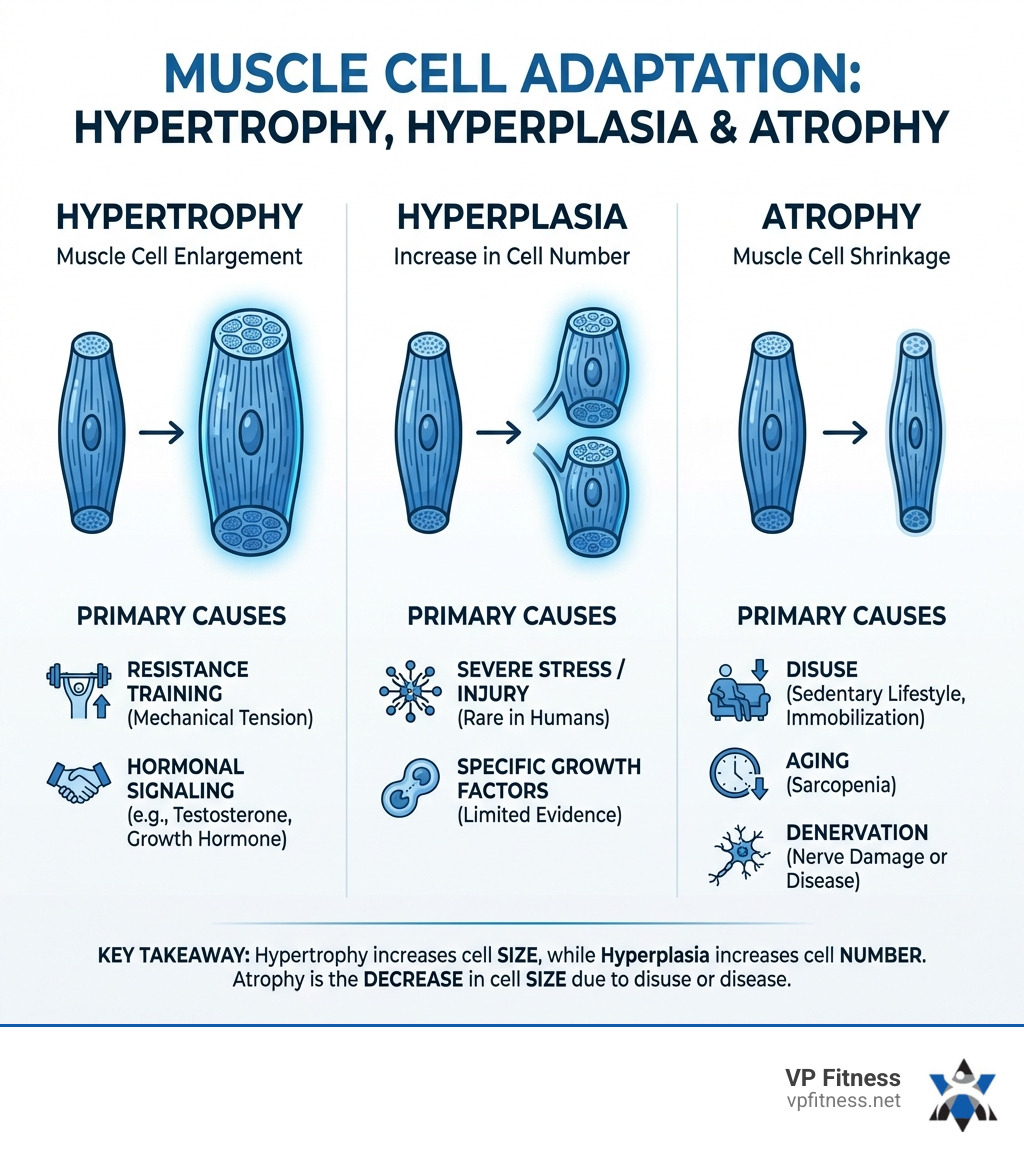
Hypertrophy definition: Hypertrophy is the increase in the size of muscle cells through the enlargement of their component fibers. In simpler terms, it’s the scientific name for muscle growth—when your muscles get bigger from training.
Quick Definition Summary:
- In Fitness: The process of building larger muscles through resistance training
- In Medicine: The enlargement of any organ or tissue due to increased cell size
- Opposite of: Atrophy (muscle wasting or shrinkage)
- Key Point: Hypertrophy increases cell size, not cell number (that’s hyperplasia)
Walk past any gym and you’ll see people working toward hypertrophy, whether they know the term or not. Some want bigger arms for the beach. Others chase the strength that comes with added muscle mass. But here’s what most people miss: understanding the hypertrophy definition is the first step to training smarter, not just harder.
The word itself comes from the Greek prefix hyper- (meaning “above” or “beyond”) and -trophy (meaning “nourishment” or “growth”). When you lift weights consistently, you’re literally signaling your muscle cells to grow beyond their current size.
But hypertrophy isn’t just about aesthetics. Research shows that building muscle helps you burn more calories at rest, strengthens bones, reduces injury risk, and even combats age-related muscle loss (sarcopenia). For busy professionals juggling work and wellness, knowing how muscle growth actually works can transform scattered gym sessions into a focused strategy.
This guide breaks down everything you need to know about hypertrophy—from the cellular mechanisms to practical training tips. You’ll learn the difference between training for size versus strength, what actually triggers muscle growth, and how to structure your workouts for real results.
I’m Joseph DePena, a fitness professional with over a decade of experience helping clients transform their bodies through science-based training. Throughout my career in powerlifting and personal training, I’ve helped hundreds of people cut through the confusion around the hypertrophy definition and apply proven principles to achieve their muscle-building goals.
Hypertrophy definition vocab explained:
- arm workout for size and definition
- best workout for size and definition
What is Hypertrophy? A Complete Definition and Guide
At its core, hypertrophy definition refers to the enlargement of an organ or tissue due to the increase in size of its constituent cells. Think of it like inflating a balloon – the balloon itself gets bigger, but you’re not adding more balloons. This is a crucial distinction from hyperplasia, which is an increase in cell number. While some tissues can experience both, muscle hypertrophy primarily involves existing muscle fibers growing larger.
The word “hypertrophy” hails from ancient Greek, combining “hyper” (meaning “over” or “beyond”) and “trophē” (meaning “nourishment” or “growth”). This etymology perfectly captures the essence of the process: cells growing beyond their typical nourished size. It’s the direct opposite of atrophy, where cells shrink due to lack of use or nourishment.
In a medical context, hypertrophy can occur in various organs. For example, the uterus naturally undergoes hypertrophy during pregnancy. However, medical professionals often encounter hypertrophy as a sign of underlying conditions. For instance, cardiac hypertrophy, or an enlarged heart, is often considered a negative sign, potentially indicating stress, hypertension, or heart disease.
In fitness, the hypertrophy definition is almost exclusively associated with skeletal muscle growth. When we talk about “building muscle” or “getting bigger,” we’re generally referring to muscle hypertrophy. This process is a direct adaptation to the stress of resistance training, where muscle cells increase in size to better handle future demands. Understanding this fundamental concept is key to designing effective training programs. We dig deeper into skeletal muscle hypertrophy explained in our comprehensive guides.
Myofibrillar vs. Sarcoplasmic Hypertrophy
Not all muscle growth is created equal. The scientific community generally recognizes two primary types of muscle hypertrophy, each contributing to muscle size in a distinct way:
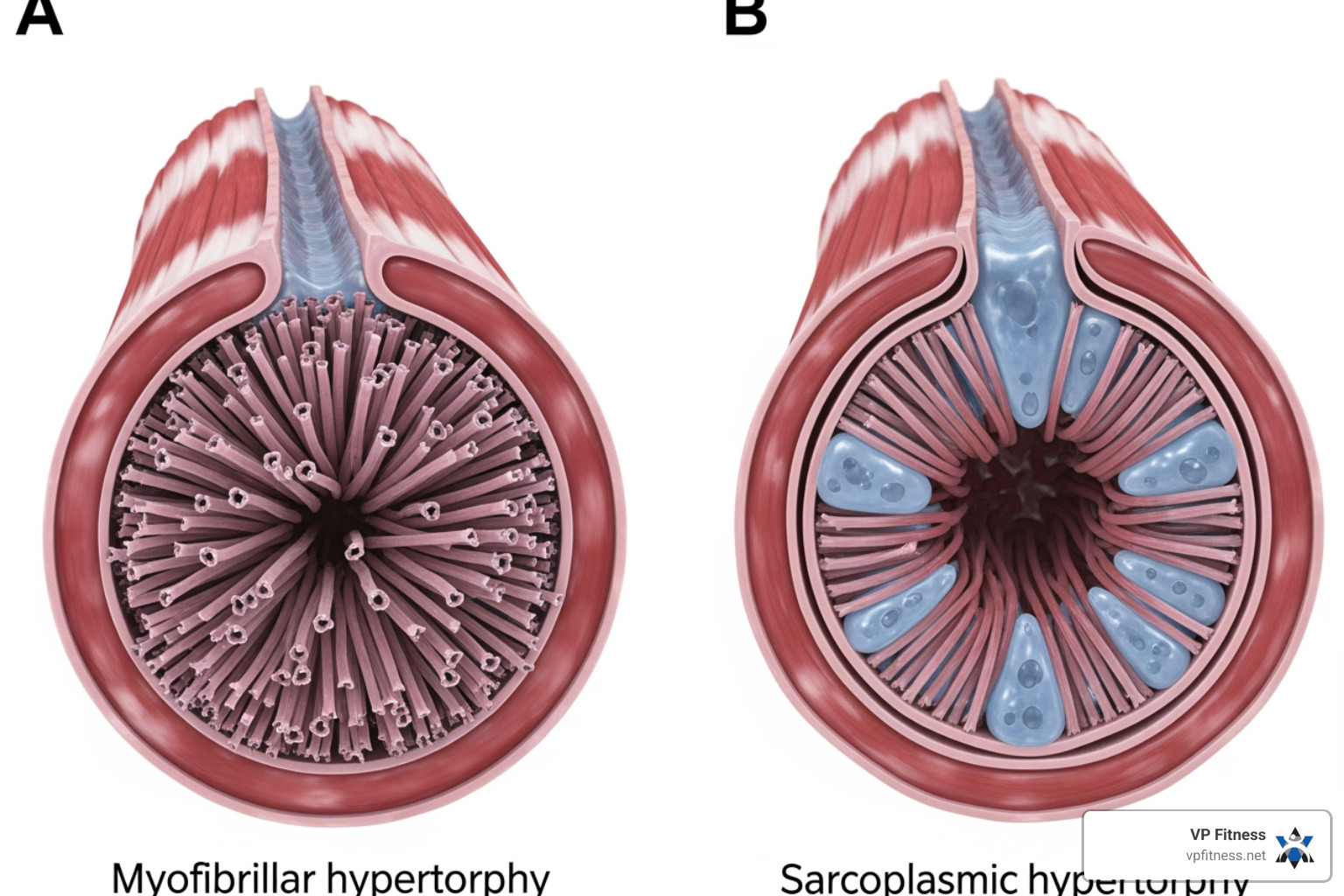
Myofibrillar Hypertrophy: This type of growth focuses on the myofibrils, which are the contractile protein filaments (actin and myosin) within your muscle fibers. When you experience myofibrillar hypertrophy, your muscle fibers increase in density and strength due to a greater number and size of these contractile proteins. This leads to a more “dense” and stronger muscle. Bodybuilders and strength athletes often seek this type of growth for increased force production.
Sarcoplasmic Hypertrophy: This refers to an increase in the volume of the sarcoplasm, the fluid surrounding the myofibrils, which contains non-contractile elements like glycogen, water, and minerals. While it doesn’t directly increase strength to the same degree as myofibrillar hypertrophy, sarcoplasmic growth significantly increases overall muscle volume, contributing to a “fuller” and larger appearance. This is often associated with the “pump” experienced during training and is a significant contributor to aesthetic goals.
Often, both types occur simultaneously during resistance training, but specific training protocols can emphasize one over the other. Functional hypertrophy, for instance, aims to balance both types of growth to improve athletic performance, where both strength and a degree of muscle volume are beneficial.
Pathological vs. Physiological Hypertrophy
While we often celebrate muscle growth in the gym, it’s important to understand that hypertrophy isn’t always a good thing. We distinguish between two broad categories:
Physiological Hypertrophy: This is the beneficial, adaptive increase in cell size that occurs in response to increased functional demand. A prime example is the “athlete’s heart,” where consistent aerobic training leads to an enlargement of the heart muscle. This type of cardiac hypertrophy improves the heart’s pumping efficiency, making it stronger and healthier. Similarly, the muscle growth we aim for in strength training is physiological hypertrophy – our muscles adapt to become stronger and more capable.
Pathological Hypertrophy: This is a maladaptive increase in cell size that often occurs due to disease or excessive stress, leading to organ dysfunction. As mentioned, cardiac hypertrophy can also be pathological. For example, chronic high blood pressure can cause the heart’s left ventricle to thicken (concentric hypertrophy, where sarcomeres are added in parallel) to pump against increased resistance. This initially helps, but over time, it can lead to stiffness, reduced pumping capacity, and ultimately heart failure. Another type, eccentric hypertrophy (where sarcomeres are added in series), can occur in conditions like dilated cardiomyopathy, leading to an enlarged but weaker heart.
It’s also worth noting that extreme muscle hypertrophy, particularly when achieved through the abuse of anabolic steroids, can have severe health consequences, causing significant damage to the body and disrupting normal organ function. The key takeaway here is that while muscle growth from exercise is generally a sign of good health and adaptation, hypertrophy can be harmful when it occurs from overtraining, steroid use, or certain diseases.
A Clearer Hypertrophy Definition: Strength vs. Size
Many people use “strength training” and “hypertrophy training” interchangeably, but while they overlap significantly, their primary goals and methodologies subtly differ. Understanding this distinction is crucial for optimizing your workouts.
Strength training focuses on increasing the maximum force your muscles can produce. The goal is to lift heavier weights, even if the visual size increase isn’t the primary outcome. Hypertrophy training, on the other hand, prioritizes increasing the size of your muscle fibers, making them look bigger, even if maximum strength gains are secondary.
Here’s a breakdown of how these two training approaches typically differ:
| Training Variable | Hypertrophy Training | Strength Training |
|---|---|---|
| Primary Goal | Increase muscle size (volume) | Increase maximum force (strength) |
| Rep Range | 6-12 repetitions per set | 1-6 repetitions per set |
| Load (% of 1RM) | 67%-85% of your 1-Rep Max (1RM) | >85% of your 1-Rep Max (1RM) |
| Rest Periods | 30-90 seconds between sets | 2-5 minutes between sets |
While you can gain strength from hypertrophy training and some size from strength training, optimizing for one requires a specific approach. For instance, clients often come to fitness professionals with specific goals, and understanding this table helps tailor their programs, whether they’re aiming for a physique competition or to boost their powerlifting total.
The Science of How Muscles Grow
Muscle growth isn’t magic; it’s a complex, adaptive process driven by specific biological signals. When we challenge our muscles through resistance training, we initiate a cascade of events that ultimately leads to them getting bigger and stronger. At the heart of this process is the principle of progressive overload.
Progressive overload means consistently increasing the demands placed on your muscles over time. This could involve lifting heavier weights, performing more repetitions or sets, reducing rest times, or increasing the frequency of your workouts. Without this progressive challenge, your muscles have no reason to adapt and grow. They’re quite clever, you see; they only build what they need!
This consistent challenge triggers muscle adaptation. Your body senses the stress and responds by initiating repair and growth processes to ensure it’s better equipped for the next challenge. A crucial part of this adaptation involves hormonal responses. Hormones like testosterone, growth hormone, and insulin-like growth factor 1 (IGF-1) play vital roles in muscle repair and protein synthesis, which is the process of creating new muscle proteins.
The Three Primary Triggers for Growth
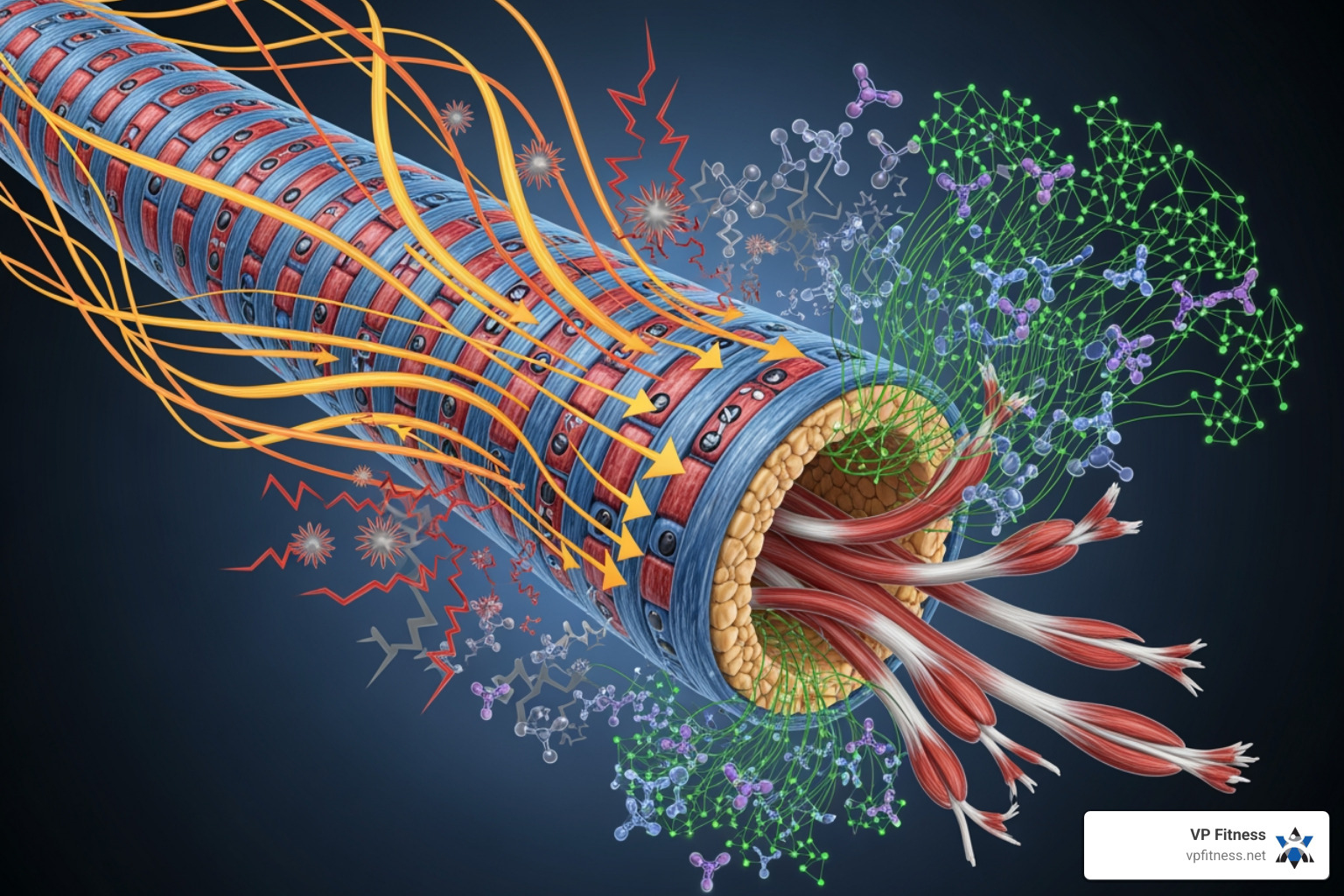
Scientific research points to three main mechanisms that stimulate muscle hypertrophy:
Mechanical Tension: This is widely considered the most important factor. It’s the force generated by the muscle fibers when they contract and stretch under load. When you lift a heavy weight, your muscles experience significant mechanical tension. This tension activates specific pathways within the muscle cells (like mTOR), signaling them to increase protein synthesis and ultimately grow. Think of it as your muscles saying, “Whoa, that was heavy! We need to get bigger to handle that next time!”
Muscle Damage (Micro-tears): Resistance training, especially with new or intense movements, causes microscopic damage (micro-tears) to muscle fibers. This damage isn’t necessarily a bad thing; it initiates an inflammatory response and a repair process. While muscle damage itself doesn’t directly cause hypertrophy, the subsequent repair process involves increased protein synthesis, which contributes to muscle growth. It’s like a tiny construction crew coming in to fix and reinforce the structure after a minor tremor.
Metabolic Stress: This refers to the accumulation of metabolites (like lactate, hydrogen ions, and inorganic phosphate) within the muscle during exercise, often associated with the “burn” you feel during high-repetition sets. This stress leads to cellular swelling and can promote hypertrophy by increasing anabolic signaling and cell hydration. The temporary increase in muscle size and fullness you get during a workout, often called “the pump” or transient hypertrophy, is largely due to metabolic stress causing increased blood flow and fluid accumulation in the muscles. It’s temporary, but it’s a good sign you’re creating the right environment for growth.
Factors That Influence Your Hypertrophy Potential
While the principles of hypertrophy apply to everyone, the extent and speed of muscle growth can vary significantly from person to person. Several factors play a role in your individual hypertrophy potential:
Genetics: Let’s be honest, some people just seem to build muscle by looking at a dumbbell. Genetics play a substantial role. A classical twin study estimated that about 53% of the variance in lean body mass is heritable, and roughly 45% of the variance in muscle fiber proportion is also genetically determined. This means your genetic blueprint influences how easily you build muscle and the type of muscle fibers you predominantly have.
Hormones: Hormones are powerful chemical messengers. Testosterone, for instance, significantly influences muscle hypertrophy, which is why males, on average, have about 60% more muscle mass than women. Growth hormone and IGF-1 also play critical roles in muscle repair and growth. Managing stress to keep cortisol (a hormone that can inhibit protein synthesis) in check is also beneficial.
Age: Our ability to build muscle tends to decrease with age. This is partly due to sarcopenia, the age-related loss of muscle mass, which disproportionately affects fast-twitch (Type II) muscle fibers. However, it’s never too late to start building muscle; older adults can still achieve significant gains with consistent training.
Sex Differences: As noted, biological sex influences muscle mass potential, largely due to hormonal differences. However, women can and do achieve impressive hypertrophy, albeit often at a different rate or to a different absolute degree than men. The principles of effective training remain the same for all.
Muscle Fiber Types: Our muscles are composed of different fiber types: Type I (slow-twitch) and Type II (fast-twitch). Type II fibers, particularly Type IIx, have the highest potential for hypertrophy and are crucial for explosive, powerful movements. While Type I fibers are generally associated with endurance, recent research suggests they can also contribute to muscle gain, especially with low-load training.
Effective Strategies for Hypertrophy Training
Now that we understand the hypertrophy definition and the science behind it, let’s talk about how to apply this knowledge to your workouts. Effective hypertrophy training isn’t just about showing up; it’s about intelligent workout structure, manipulation of training variables, and unwavering consistency.
Consistency is truly the unsung hero. You can have the perfect program, but if you’re not executing it regularly, your muscles won’t receive the consistent signals they need to adapt and grow.
Applying the Hypertrophy Definition to Your Workouts
Here are key training principles we emphasize for maximizing muscle growth:
Volume (Sets x Reps x Weight): This is arguably the most critical variable. For hypertrophy, aim for a moderate-to-high training volume. This typically means performing multiple sets (3-5) of 6-12 repetitions per exercise. The total amount of work you do is paramount.
Frequency: Training a muscle group 2-3 times per week is generally optimal for hypertrophy. This allows for repeated stimulation of muscle protein synthesis while also providing adequate recovery time between sessions.
Exercise Selection: Incorporate a mix of compound exercises (movements that involve multiple joints and muscle groups, like squats, deadlifts, bench presses) and isolation exercises (movements that target a single muscle group, like bicep curls, tricep extensions). Compound movements build a strong foundation and allow for heavier loads, while isolation exercises help fine-tune specific muscles.
Time Under Tension (TUT): TUT refers to the duration the muscle is under strain during a set. Instead of just “getting reps in,” focus on controlling the movement throughout the entire range of motion, both the lifting (concentric) and lowering (eccentric) phases. Moderate tempos (between 2 and 8 seconds per repetition) tend to yield the best results for hypertrophy.
Rep Tempo: Avoid extremely fast or slow tempos. A controlled pace, often described as 2 seconds up, a brief pause, and 2-3 seconds down, ensures the muscle is working effectively and prevents momentum from taking over. Focusing on the eccentric (lowering) phase, where the muscle lengthens under tension, can be particularly effective for hypertrophy.
Fueling for Growth: The Role of Nutrition
You can train like a beast, but if your nutrition isn’t dialed in, your muscles simply won’t grow. Think of your body as a construction site: training provides the blueprint and the demolition, but nutrition provides the building materials.
Muscle Protein Synthesis (MPS): This is the process where your body repairs and rebuilds muscle proteins, leading to growth. Resistance training stimulates MPS, but it requires a constant supply of amino acids from dietary protein to work efficiently.
Caloric Surplus: To build new tissue, your body needs more calories than it burns. This is known as a caloric surplus. Without enough energy, your body will struggle to recover and grow.
Macronutrients: All three macronutrients are crucial:
- Protein: The building block of muscle. A key statistic from research indicates that protein intakes up to 1.6 grams per kilogram of body weight per day help increase gains in strength and muscle size from resistance training. Some sources recommend a minimum of 1.6 g/kg to 2.2 g/kg, though intakes above 1.8 g/kg show diminishing returns. Spreading protein intake throughout the day is also beneficial. For more insights, check out the effect of protein supplementation on muscle growth.
- Carbohydrates: Your body’s primary energy source. They fuel your workouts and help replenish glycogen stores, which are essential for muscle performance and recovery.
- Healthy Fats: Important for hormone production (including anabolic hormones) and overall health.
Hydration: Don’t underestimate water! Muscles are largely composed of water, and proper hydration is essential for nutrient transport, performance, and muscle fullness.
The Unsung Hero: Why Recovery is Essential
Training breaks muscles down; recovery builds them up. This simple truth is often overlooked in the pursuit of gains. Without adequate recovery, you risk overtraining, injury, and stalled progress.
Sleep: This is when your body does most of its repair work. Aim for 7-9 hours of quality sleep per night. During deep sleep, growth hormone is released, which is vital for muscle repair and growth.
Rest Days: Give your muscle groups sufficient time to recover. A general guideline is 24-48 hours before working the same muscle group again. Personalized plans often factor in these crucial rest periods.
Muscle Repair Process: After a challenging workout, your body mobilizes resources to repair the micro-tears in your muscle fibers. This repair process, fueled by good nutrition and rest, is what leads to hypertrophy.
Cortisol Management: Chronic stress and overtraining can lead to liftd cortisol levels. Cortisol is a catabolic hormone, meaning it can break down muscle tissue and inhibit protein synthesis. Prioritizing recovery helps keep cortisol in check.
Active Recovery: Light activities like walking, stretching, or foam rolling on rest days can improve blood flow and aid in recovery without adding excessive stress.
Frequently Asked Questions about Hypertrophy
We get a lot of questions about muscle growth, and for good reason! Here are some of the most common ones:
How long does it take to see muscle growth from hypertrophy?
This is the golden question! The timeline for seeing results from hypertrophy training varies, but here’s what you can generally expect:
Initial Gains (Neurological): Within the first 2-4 weeks of starting a new resistance training program, you’ll likely experience significant strength increases. These early gains are primarily due to neurological adaptations – your brain and nervous system are becoming more efficient at recruiting and coordinating your existing muscle fibers. You’re not necessarily bigger yet, but you’re better at using what you’ve got!
Visible Changes (4-8 weeks): Actual muscle growth, where your fibers physically enlarge, typically becomes noticeable after about 4-8 weeks of consistent, progressive training. This is when your clothes might start fitting differently, or you’ll see more definition in the mirror.
Consistency is Key: Hypertrophy is a long-term process. Consistent application of progressive overload, proper nutrition, and adequate recovery over months and years is what truly transforms your physique.
Individual Variation: Everyone is different. Factors like genetics, age, and training experience will influence how quickly you see results. Don’t compare your journey to anyone else’s!
Can you achieve hypertrophy with bodyweight exercises?
Absolutely! While lifting heavy weights is often associated with hypertrophy, you can certainly build muscle effectively using just your bodyweight, especially if you apply the principles of progressive overload.
Here’s how:
Progressive Overload Principle: The key is to make bodyweight exercises progressively harder. This could mean:
- Increasing repetitions (e.g., more push-ups).
- Increasing sets.
- Decreasing rest times.
- Using more challenging variations (e.g., liftd push-ups, one-arm push-ups, pistol squats).
- Slowing down the tempo to increase time under tension.
Advanced Calisthenics: Many advanced bodyweight movements (like pull-ups, dips, handstands, and various planche progressions) are incredibly effective at building muscle and strength.
Using Resistance Bands: Resistance bands are a fantastic tool to add external resistance to bodyweight exercises, making them more challenging and stimulating for hypertrophy. They are portable and can be used anywhere, including at home.
High-Rep Training to Failure: Lifting lighter weights or using bodyweight for a higher number of repetitions, taking the set close to or to muscular failure, can create significant metabolic stress, which is a powerful trigger for hypertrophy.
Is muscle soreness (DOMS) necessary for hypertrophy?
No, muscle soreness, or Delayed Onset Muscle Soreness (DOMS), is not a prerequisite for muscle growth. While often experienced after a challenging workout, especially when trying new exercises or increasing intensity, it’s not a direct indicator of effective hypertrophy.
Delayed Onset Muscle Soreness: DOMS typically appears 12-72 hours after exercise and is thought to be caused by microscopic damage to muscle fibers and connective tissue, leading to inflammation.
Muscle Damage Indicator: While muscle damage is one of the triggers for hypertrophy, it’s not the only one, nor is more soreness necessarily indicative of more growth. In fact, excessive muscle damage can hinder recovery and subsequent training performance.
Not a Direct Measure of Growth: You can have highly effective, muscle-building workouts without experiencing significant soreness. Conversely, being extremely sore doesn’t guarantee superior gains. As your body adapts to a training stimulus, you’ll likely experience less DOMS over time, even as you continue to make progress.
Focus on Performance Progression: Instead of chasing soreness, focus on progressive overload: lifting more weight, performing more reps, or improving your form over time. These are the true indicators that your muscles are adapting and growing.
Conclusion: Putting Your Knowledge into Action
Understanding the hypertrophy definition is more than just knowing a fancy fitness term; it’s empowering yourself with the knowledge to train smarter, achieve your goals, and open up your full potential. We’ve explored the cellular mechanisms, the different types of muscle growth, the triggers that make your muscles adapt, and the critical role of training variables, nutrition, and recovery.
The long-term benefits of pursuing hypertrophy extend far beyond aesthetics. Building muscle improves your metabolism, strengthens your bones, improves functional movement, and helps combat age-related decline. It’s an investment in a healthier, stronger future.
Proper form and a well-structured plan are paramount to achieving sustainable results and preventing injury. Individualized training and nutrition guidance can also be invaluable.
Ready to put this knowledge into action and start building the physique you’ve always wanted? You now have the foundation to craft a strategy that works for you.