

Beyond the Burn: Understanding How Muscle Mass Impacts Fat Loss

Does Building Muscle Burn Fat: The #1 Secret 2026
Why Building Muscle Is Your Secret Weapon for Fat Loss
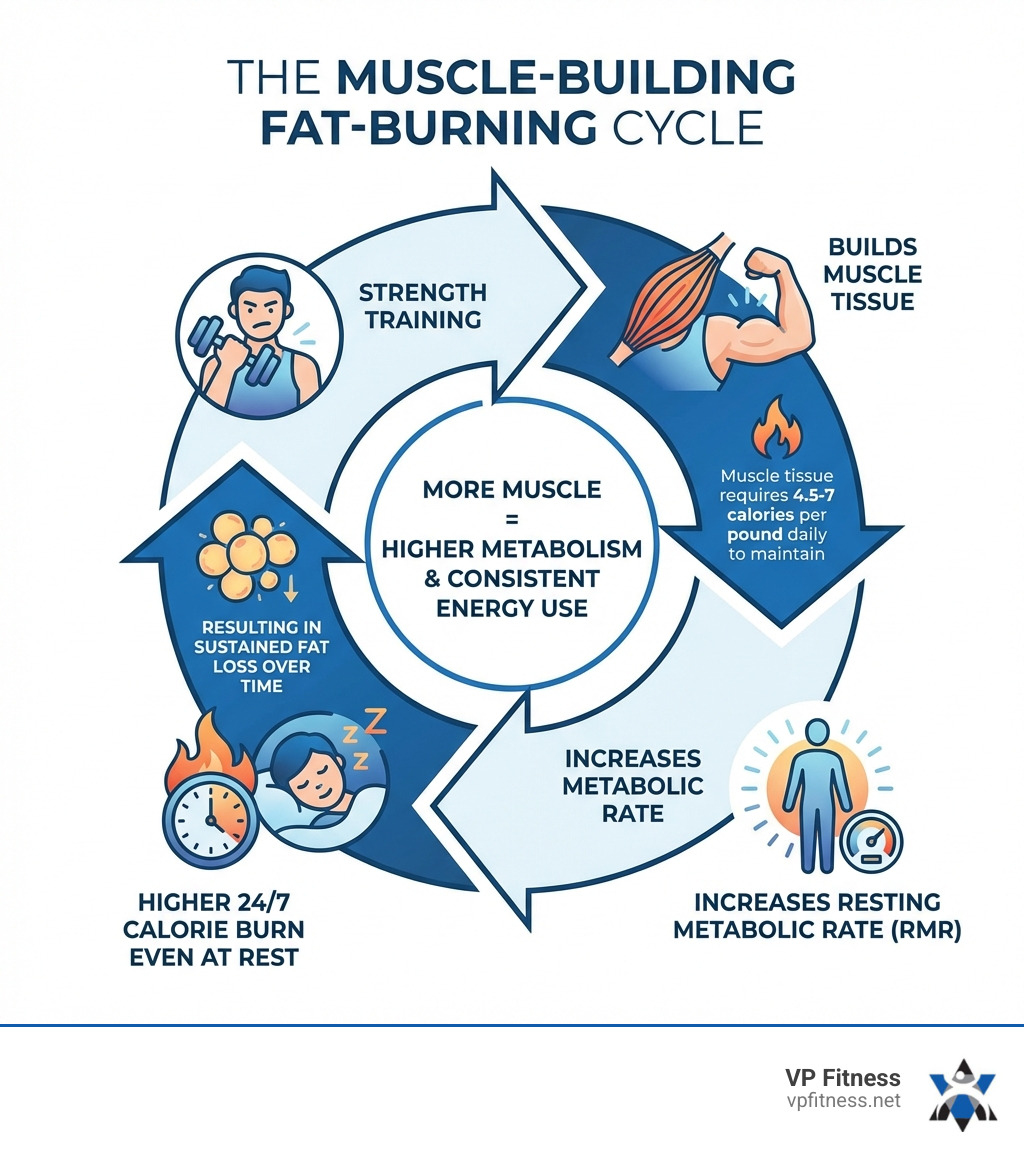
Does building muscle burn fat? Yes. Building muscle is one of the most effective long-term strategies for fat loss. It increases your resting metabolic rate (RMR) and triggers the “afterburn effect” following strength training sessions. Muscle is metabolically active, burning roughly 4.5 to 7.0 calories per pound per day just to maintain itself, while fat tissue burns very little. More muscle means you burn more calories around the clock.
Many people rely on cardio alone for weight loss, but research (including a UNSW Sydney-led study in Sports Medicine) shows that strength training can be just as effective for reducing body fat. The real advantage is body recomposition: losing fat while gaining muscle. Your body looks leaner and feels stronger, even if the scale does not change dramatically.
The Metabolic Secret: How More Muscle Torches Fat
When discussing the body’s ability to burn calories, we’re really talking about metabolism. Muscle is far more metabolically active than fat, which is why does building muscle burn fat is such an important question.
Your Resting Metabolic Rate (RMR) is the number of calories you burn just to keep essential functions running. The more muscle mass you have, the higher your RMR, because muscle tissue requires more energy to maintain than fat tissue.
Think of muscle cells as tiny factories needing constant fuel, while fat cells are storage units requiring much less energy. Muscle tissue burns about 4.5 to 7.0 calories per pound per day at rest. Someone with more muscle mass naturally burns more calories over 24 hours than another person of the same weight with less muscle.
Strength training adds a second benefit: the Afterburn Effect (EPOC). After a challenging workout, your body continues burning extra calories for hours, sometimes up to 72 hours, as it repairs muscle tissue.
So, how does building muscle burn fat even at rest?
Muscle is metabolically active tissue constantly involved in energy-demanding processes like protein synthesis and maintaining cellular activities. Each requires calories.
While the claim that a pound of muscle burns 50 calories daily is overstated, even 4.5 to 7.0 calories per pound adds up. Extra muscle pounds can increase daily energy expenditure enough to support steady fat loss over time.
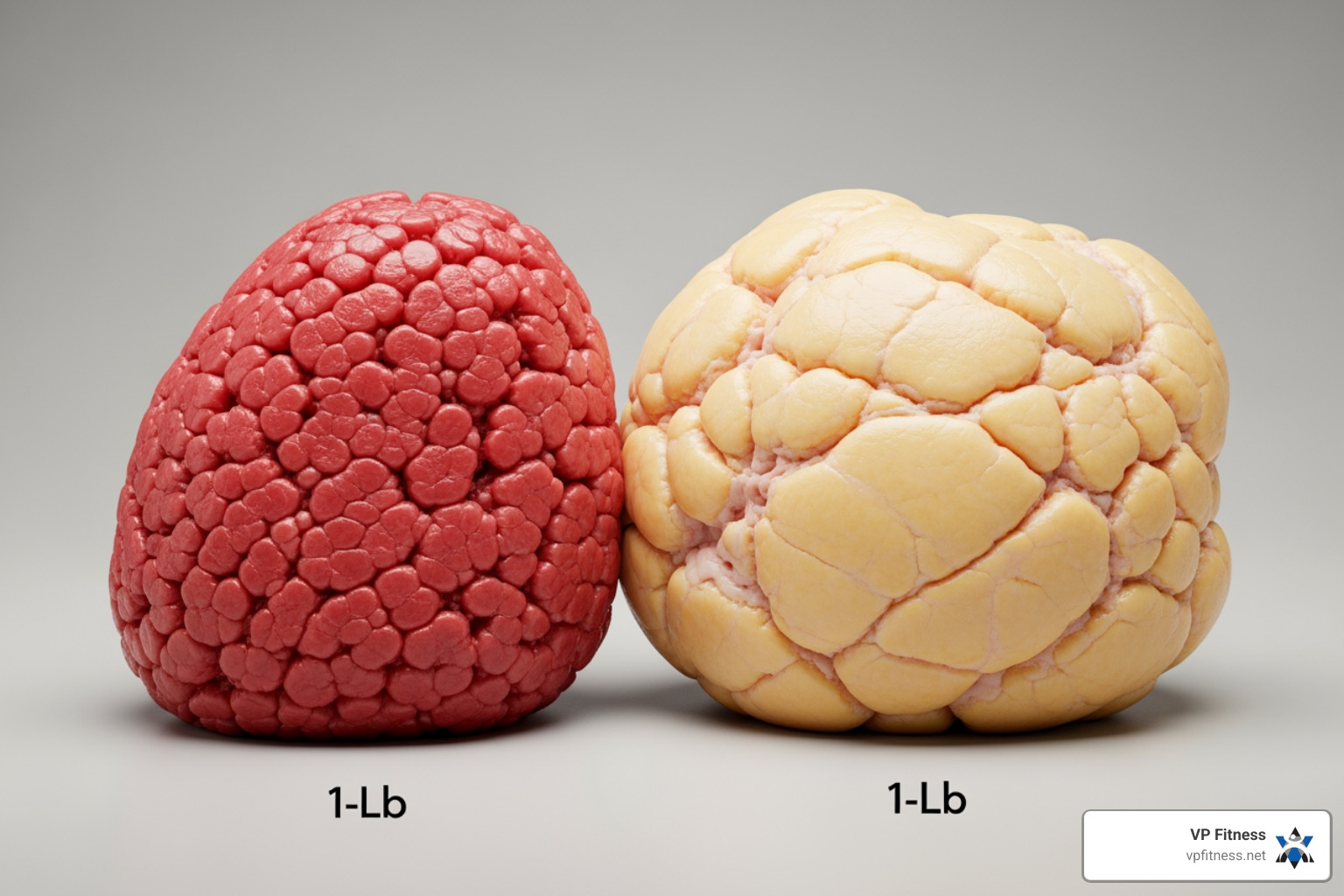
By increasing muscle mass, you raise baseline calorie needs. To meet this demand, your body taps into stored energy, including body fat.
Does Building Muscle Burn Fat? Your Guide to Body Recomposition
Body recomposition involves changing your ratio of fat mass to lean mass. The goal is losing body fat while gaining or preserving muscle mass. With smart training, nutrition, and recovery, you can achieve both simultaneously.
The Right Training Mix: Does building muscle burn fat better than cardio?
Cardio has long been the default for fat loss, but research shows strength training is equally powerful. A UNSW study in Sports Medicine found strength training alone can reduce total body fat by about 1.4%, similar to cardio.
Strength training’s advantage is directly building muscle, which boosts RMR and increases the afterburn effect. Prioritize compound exercises: squats, deadlifts, bench presses, overhead presses, rows, and lunges. These multi-joint movements recruit more muscle mass and burn more calories.
When adding cardio, consider recovery and goals. Low-Intensity Steady-State (LISS) like brisk walking is easier to recover from. High-Intensity Interval Training (HIIT) can be effective but may interfere with strength gains if overdone.
For many, 2-4 days of strength training weekly plus light daily movement and 1-3 cardio sessions works well.

Fueling the Fire: Nutrition for Body Recomposition
Nutrition is critical for building muscle and losing fat:
- Prioritize Protein: Aim for about 1 gram per pound of body weight daily
- Manage Calories: Use a moderate deficit or calorie cycling
- Balance Carbs and Fats: Complex carbohydrates fuel workouts; healthy fats support hormones
- Stay Hydrated: Water supports metabolism, digestion, and performance
More Than Just Aesthetics: The Full-Body Benefits of Building Muscle
Many ask “does building muscle burn fat” for appearance, but benefits extend far beyond looks:
- Bone Density: Strength training encourages bones to become denser and stronger
- Metabolic Health: More muscle improves insulin sensitivity and blood sugar management
- Functional Strength: Everyday activities become easier with stronger muscles
- Quality of Life: Regular strength training links to higher energy, better sleep, and improved mood. The NIH National Institute on Aging highlights these real-life benefits of exercise and physical activity.
Ditch the Scale: How to Track Your Progress Correctly
When building muscle and losing fat simultaneously, the scale can be misleading. Because muscle is denser than fat, your body can get smaller and stronger even if weight barely moves.
Better tracking methods:
- Body Measurements: Track waist, hips, chest, arms, and thighs
- Progress Photos: Take photos every 4-6 weeks in similar conditions
- Clothing Fit: Notice how clothes feel at different body areas
- Strength Gains: Track weights lifted and reps performed
For detailed data, DEXA scans can provide body composition estimates, but combining measurements, photos, and performance tracking usually suffices.
Why Building Muscle Is Your Secret Weapon for Fat Loss
Does building muscle burn fat? Yes, building muscle actively supports fat loss through two key mechanisms: a higher resting metabolic rate and the afterburn effect from strength training. Muscle tissue is metabolically active and requires roughly 4.5 to 7.0 calories per pound per day to maintain, while fat tissue burns very little at rest.
Here is how it works:
- More muscle = higher metabolism – Muscle tissue contributes a significantly larger share of your total daily calorie burn than fat tissue.
- 24/7 calorie burning – Your body expends more energy maintaining muscle even when you are not exercising.
- Strength training creates an afterburn – Your metabolism can stay liftd for hours, and in some cases up to about 72 hours, after a demanding workout.
- Body recomposition is possible – Research indicates that strength training alone can reduce body fat by an amount similar to cardio-focused programs.
Many people assume running or traditional cardio is the only way to lose fat, but a UNSW Sydney-led study published in Sports Medicine found that strength training can be just as effective as cardio for fat loss, even without extreme dieting.
The real advantage appears when you focus on changing body composition instead of just chasing a lower scale weight. Building muscle while losing fat can dramatically change how your body looks and feels, even if total body weight does not drop as much as you expect.
The Metabolic Secret: How More Muscle Torches Fat
Your metabolism is the engine that burns calories, and muscle is its high-octane fuel. The main reason building muscle burns fat is that muscle tissue is more metabolically active than fat tissue. It demands more energy (calories) just to exist, which raises your Resting Metabolic Rate (RMR), the calories you burn at rest.
Muscle cells act like small factories that are always running, while fat cells are more like passive storage. Muscle tissue is estimated to burn around 4.5 to 7.0 calories per pound per day at rest. Over time, adding several pounds of muscle can meaningfully increase how many calories you burn each day.
Strength training also creates a temporary metabolic boost known as the “afterburn effect,” or Excess Post-exercise Oxygen Consumption (EPOC). After a challenging session, your body burns extra calories for hours as it repairs muscle fibers and restores normal function. For more on how the body burns calories, you can review resources like the Mayo Clinic’s guide on metabolism and weight loss.
So, how does building muscle burn fat even at rest?
Because muscle is metabolically active tissue, it constantly uses energy for processes such as protein synthesis, maintaining ion gradients, and other cellular tasks. These processes occur all day, not just when you are working out.
By increasing your muscle mass, you increase total daily energy demand. To meet that demand, especially when your diet is well managed, your body turns more often to stored fat for energy. Over time, this is a powerful driver of fat loss.
Does Building Muscle Burn Fat? Your Guide to Body Recomposition
Body recomposition is the process of losing body fat while gaining or maintaining muscle mass. Rather than focusing only on the number on the scale, you are aiming to improve how much of your body is lean tissue versus fat.
This is challenging but achievable with the right approach. Fat loss generally calls for a calorie deficit, while muscle growth requires adequate protein and enough overall energy to support repair and adaptation. A balanced plan that emphasizes strength training, sufficient protein, and smart calorie control can move both goals forward together.
The Right Training Mix: Does building muscle burn fat better than cardio?
Cardio has its place for health and calorie burn, but it is not the only path to fat loss. A UNSW study in Sports Medicine showed that strength training alone can lead to a roughly 1.4% reduction in total body fat, comparable to cardio-focused programs. You can read more about this study on strength training for fat loss here.
Strength training increases muscle mass, boosts RMR, and creates an afterburn effect (EPOC). To get the most out of it, focus on compound exercises like squats, deadlifts, presses, and rows. These movements involve multiple joints and muscle groups, leading to efficient workouts that support both strength and body composition improvements.
A practical schedule for many people is 2-4 strength-training sessions per week, plus additional movement like walking, light cycling, or modest amounts of HIIT. The key is to push hard enough to progress, while still allowing time for recovery.
Fueling the Fire: Nutrition for Body Recomposition
You cannot out-train an unbalanced diet. Nutrition is just as important as training when combining muscle gain with fat loss.
- Prioritize Protein: Aim for about 1 gram of protein per pound of body weight per day to support muscle repair and retention, especially when calories are not very high.
- Manage Calories: Use a modest deficit overall, or consider calorie cycling (eating slightly more on training days, slightly less on rest days) to fuel your workouts while still allowing for fat loss.
- Balance Carbohydrates and Fats: Use complex carbohydrates for energy around workouts and include healthy fats for hormones and health.
- Stay Hydrated: Adequate water intake supports metabolism, digestion, and performance.
With consistent strength training and thoughtful nutrition, you can reshape your body composition in a sustainable way.
More Than Just Aesthetics: The Full-Body Benefits of Building Muscle
While looking leaner is a common goal, building muscle provides benefits that extend to long-term health and everyday function.
- Stronger Bones: Strength training increases bone density, helping reduce the risk of osteoporosis and fractures over time.
- Improved Metabolic Health: More muscle helps regulate blood sugar and improves insulin sensitivity, which can lower the risk of type 2 diabetes and support cardiovascular health.
- Improved Functional Strength: Daily tasks like lifting, carrying, and climbing stairs become easier as your muscles get stronger and your joints are better supported. The NIH National Institute on Aging highlights these real-life benefits of exercise and physical activity.
- Better Quality of Life: Consistent strength training is associated with improved mood, better sleep, higher energy, and support in managing conditions such as arthritis, back pain, and heart disease.
Ditch the Scale: How to Track Your Progress Correctly
When you are building muscle while losing fat, the scale alone is not the best way to measure success.
- Body Measurements: Track key areas like waist, hips, chest, arms, and thighs to see where you are losing inches.
- Progress Photos: Take photos every 4-6 weeks in similar lighting and clothing to spot visual changes.
- Clothing Fit: Notice whether your clothes feel looser in some areas and more fitted in others.
- Strength Gains: Increases in weight lifted or reps completed are strong indicators that you are building muscle.
For those who want more detailed information, body composition tests can estimate fat and lean mass. However, combining the methods above typically gives a clear picture of your progress.
Does Building Muscle Burn Fat? Your Guide to Body Recomposition
The journey to a stronger, leaner physique often involves body recomposition. Rather than focusing solely on dropping pounds, body recomposition looks at shifting your ratio of fat mass to lean mass.
To lose fat, you generally need a calorie deficit. To build or maintain muscle, you need sufficient protein and a training stimulus. With careful planning, you can meet in the middle: lose fat at a reasonable pace while holding onto or gradually increasing muscle.
A 2020 meta-analysis from the Strength and Conditioning Journal suggests that, under the right conditions, body recomposition is possible, especially when training, nutrition, and recovery are aligned.
The Right Training Mix: Does building muscle burn fat better than cardio?
Cardio has long been seen as the main route to fat loss, but newer research highlights how effective strength training can be. A UNSW study in Sports Medicine found that strength training alone can reduce body fat by about 1.4%, similar to reductions seen with cardio. You can read more about this study on strength training for fat loss here.
In practice, it does not need to be strength training versus cardio. Strength training builds muscle and supports a higher RMR, while cardio can help increase total calorie burn and improve heart health. Compound lifts like squats, deadlifts, bench presses, overhead presses, and rows should form the backbone of your strength program because they recruit a lot of muscle mass and are time-efficient.
When you add cardio, adjust the intensity and frequency so it does not interfere with your recovery from strength sessions. Many people do well with a blend of 2-4 strength workouts each week plus some combination of LISS (like brisk walking) and limited HIIT.
Fueling the Fire: Nutrition for Body Recomposition
Nutrition is where many recomposition efforts succeed or stall.
- Emphasize Protein: Aim for around 1 gram of protein per pound of body weight per day to support muscle repair and maintain lean tissue while you lose fat.
- Smart Calorie Management: Use a small to moderate deficit overall, or use calorie cycling to better match intake to your training days.
- Macronutrient Balance: Include complex carbohydrates for training energy and healthy fats for hormones and overall health.
- Hydration: Drink water regularly throughout the day to support metabolic and recovery processes.
Combined with consistent training, this approach helps answer “does building muscle burn fat” with real-world, visible results.
More Than Just Aesthetics: The Full-Body Benefits of Building Muscle
While the question “does building muscle burn fat” often starts with appearance, the advantages of gaining muscle go well beyond looks.
Building muscle supports:
- Bone Density: Strength training stresses bones in a way that encourages them to stay strong and dense, lowering fracture risk.
- Insulin Sensitivity: More muscle helps your body manage blood sugar and can reduce the risk of metabolic diseases.
- Functional Strength and Injury Prevention: Stronger muscles stabilize your joints and make everyday movements easier and safer.
- Quality of Life: People who train regularly often report better mood, sleep, and energy, plus improved ability to handle daily physical tasks. The NIH National Institute on Aging highlights real-life benefits of exercise and physical activity, including better balance and reduced fall risk.
Ditch the Scale: How to Track Your Progress Correctly
Because muscle is denser than fat, body weight alone can be misleading when you are improving your body composition. It is common to gain muscle, lose fat, and see only small changes on the scale.
Instead of relying only on that number, consider these tools:
- Body Measurements: A tape measure around your waist, hips, chest, arms, and legs can reveal inch loss even when weight is stable.
- Progress Photos: Regular photos in consistent conditions allow you to see visual changes over time.
- Clothing Fit: Changes in how your clothes sit at the waist, hips, and shoulders are practical signs of progress.
- Strength Gains: Increases in your performance during workouts indicate that you are building muscle and improving fitness.
For a more technical view, you can also use body composition assessments like DEXA, but most people will see clear trends using the simple methods above.
The Importance of Recovery and Avoiding Common Pitfalls
Building muscle and losing fat isn’t just about workouts. Recovery is where your body adapts. When lifting weights, you create micro-tears in muscle fibers. During rest, your body repairs these fibers, making them stronger.
The Role of Sleep in Muscle Growth and Fat Loss
Sleep is crucial for recovery. During deep sleep, your body releases Human Growth Hormone (HGH) supporting muscle repair. Poor sleep can raise cortisol levels, associated with increased fat storage. Aim for 7-9 hours nightly. Research on sleep and muscle-building proteins, like work summarized in this PubMed article, underscores sleep’s importance.
Active Recovery and Rest Days
Rest days aren’t wasted. Light movement like walking or stretching boosts blood flow without overtaxing your system. Schedule at least one or two rest days weekly.
Common Mistakes to Avoid
- Not Eating Enough Protein: Insufficient protein hinders muscle repair
- Doing Too Much Cardio: Excessive cardio can make maintaining muscle harder
- Neglecting Sleep: Poor sleep undermines muscle growth hormones
- Focusing Only on the Scale: Ignoring other progress markers misses real improvements
- Inconsistent Training: Sporadic workouts prevent progressive overload
- Poor Exercise Form: Improper technique limits gains and risks injury
Frequently Asked Questions
How long does it take to see results from body recomposition?
Timelines vary by starting point and consistency. Many notice strength improvements within weeks. Visible changes often become obvious after 8-12 weeks of consistent training and nutrition.
As a woman, will strength training make me “bulky”?
This is a myth. Most women don’t have the testosterone levels to add large amounts of muscle quickly. Strength training typically creates a leaner, more defined look.
Can I build muscle and lose fat without going to a gym?
Yes. Bodyweight movements, resistance bands, and dumbbells can create progressive overload at home. The Physical Activity Guidelines for Americans recommend muscle-strengthening activities at least two days weekly, achievable at home with structured workouts.
Conclusion: Your Blueprint for a Stronger, Leaner Body
So, does building muscle burn fat? Yes. Increasing muscle mass raises your resting metabolic rate, improves the afterburn effect after workouts, and supports healthier blood sugar control and overall metabolic health. Combined, these changes make your body more efficient at using fat for fuel.
The process of body recomposition—losing fat while gaining or maintaining muscle—relies on three pillars:
- Consistent, progressive strength training
- Supportive nutrition with adequate protein and smart calorie control
- Solid recovery habits, including quality sleep and planned rest
This is not a quick fix, but a sustainable, long-term strategy that improves appearance, health, and daily function.
Creating a plan that balances training, nutrition, and recovery can be complex. Working with knowledgeable fitness professionals and using a personalized approach to exercise and nutrition can make a significant difference in your results and help you stay consistent.