

Unlock Your Vitality: Reliable Ways to Boost Energy Naturally

Boost energy levels: Unlock Vitality 2025
Why Energy Matters More Than Ever
Boosting your energy isn’t just about feeling awake—it’s about reclaiming your day. If you’re dragging through afternoons or skipping workouts because you’re too drained, you’re not alone. Many people report not having the energy they need to get things done.
Quick Ways to Boost Energy Levels:
- Eat small, balanced meals every 3-4 hours to stabilize blood sugar
- Stay hydrated—even mild dehydration causes fatigue
- Move your body regularly, even just 10-minute walks
- Get 7-9 hours of quality sleep each night
- Manage stress through relaxation techniques like yoga or meditation
- Limit caffeine after 2 PM and reduce alcohol intake
Many people reach for quick fixes like coffee or sugary snacks. These provide a temporary jolt but lead to a crash, leaving you more exhausted. The real solution is addressing the root causes of fatigue with sustainable lifestyle changes.
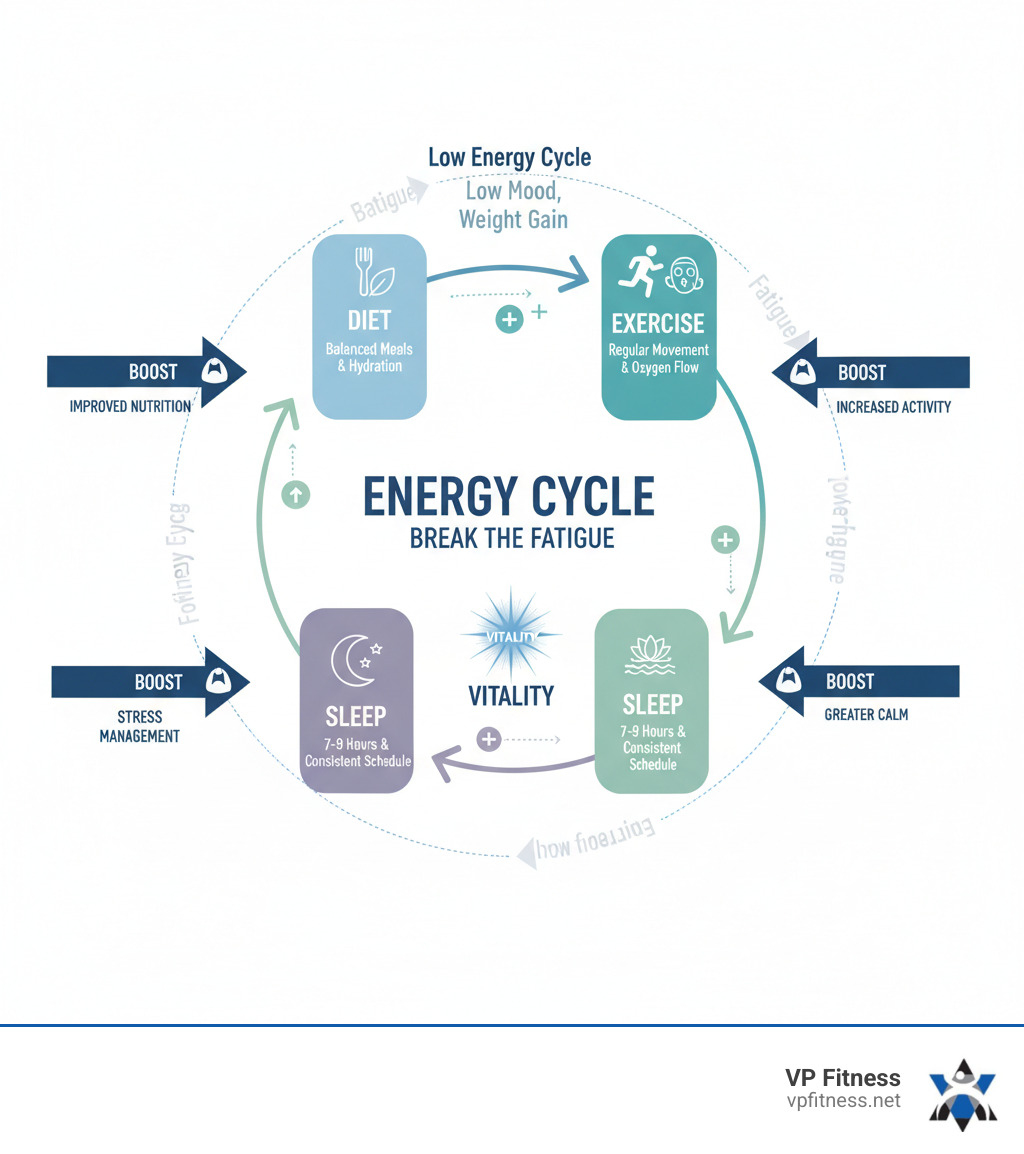
Your energy is controlled by four pillars: diet, exercise, sleep, and stress management. When one weakens, the others suffer. Strengthening all four creates a foundation for lasting vitality.
I’m Joseph DePena, and I’ve spent over a decade helping clients boost energy levels with strategic fitness and nutrition. I’ve seen that addressing these foundational pillars—rather than chasing quick fixes—is the key to sustainable energy through consistent, smart lifestyle choices.
Fuel Your Body: How Diet and Hydration Impact Energy

Your body runs on fuel. The food you eat and the water you drink are the foundation of your energy, and getting them right makes all the difference.
Eating smaller, frequent meals works better than three large ones. A huge meal requires significant energy to digest, causing sluggishness. Aim for small, balanced meals every three to four hours to keep your blood sugar stable and avoid mid-afternoon crashes.
Hydration is also critical. Even mild dehydration can make you feel tired and foggy-headed, as the CDC notes it’s a common cause of exhaustion. When you’re low on water, less blood reaches your brain. Check your urine—it should be a light straw color. If it’s darker, drink more water, especially after a workout to replace lost fluids.
Choose the Right Fuel for Sustained Power
Not all foods affect your energy the same way. Some provide a quick burst followed by a crash, while others offer steady fuel.
Complex carbohydrates from sources like whole grains, legumes, and vegetables provide steady, reliable fuel. As The Harvard T.H. Chan School of Public Health explains, their fiber content slows digestion, preventing the energy spikes and crashes associated with simple sugars.
Lean protein aids muscle recovery and stabilizes energy. Including protein in your meals helps prevent energy dips. The NIH notes that protein provides the building blocks for lasting vitality.
Healthy fats from nuts, seeds, and avocados are essential for long-lasting energy. The American Heart Association states that fats release energy more slowly than carbs, keeping you fueled and satisfied between meals without the crashes.
To optimize your nutrition and boost energy levels, a personalized approach is key.
Top Energy-Boosting Foods
Some foods are particularly powerful for fighting fatigue:
- Oatmeal: A breakfast champion packed with fiber for slow-release energy.
- Nuts and seeds: Almonds, cashews, and pumpkin seeds deliver healthy fats, protein, and magnesium for energy conversion. Walnuts are notable for their omega-3s.
- Leafy greens: Spinach and kale are iron powerhouses. The Mayo Clinic highlights their role in maintaining energy.
- Berries: Blueberries and strawberries are full of antioxidants that reduce inflammation and boost energy without a sugar crash.
- Beans: They offer a triple threat of protein, fiber, and magnesium to keep you full and support energy production.
- Fatty fish: Salmon, sardines, and mackerel provide lean protein and omega-3s for long-lasting energy.
The bottom line: Focusing on nutrient-dense whole foods and ample water intake will naturally boost your energy, no stimulants required.
Get Moving to Boost Energy Levels

It may sound backward, but when you feel exhausted, one of the best things you can do is move. This “exercise paradox” is a powerful, natural way to boost energy levels.
Exercise triggers the release of endorphins, natural mood elevators that make you feel more energized. As the Cleveland Clinic notes, this leaves you ready to roll. Movement also improves circulation, sending oxygen-rich blood to your brain and muscles, which delivers nutrients and clears waste more efficiently.
At the cellular level, consistent exercise increases mitochondria, the powerhouses that convert food into energy. You’re essentially training your body to be more efficient at producing energy. Exercise also leads to improved sleep quality, creating a positive cycle of energy restoration.
When starting, start small. You don’t need an intense program. A simple 10-minute walk can provide a noticeable energy boost. Consistency over intensity is key; a short daily walk is more effective for energy than one exhausting weekly workout.
Finding Your Energy-Boosting Activity
The best exercise to boost energy levels is one you’ll stick with, but some types are especially effective.
Moderate-intensity aerobic exercise like brisk walking, cycling, or swimming is a great start. It improves cardiovascular fitness and stamina, giving you more energy. For a dynamic option, indoor cycling can boost energy levels in an engaging way.
Strength training is crucial for long-term energy. Building muscle increases your resting metabolism, meaning you burn more calories even at rest. As the American College of Sports Medicine notes, this helps maintain energy levels. Everyday tasks also become less exhausting. If you’re new to exercise, it’s important to start safely.
How Much Exercise is Enough?
How much exercise is enough? The NHS recommends at least 150 minutes of moderate-intensity aerobic exercise each week. This breaks down to about 30 minutes, five days a week, and you don’t have to do it all at once.
Even short bursts of activity make a difference. The Cleveland Clinic found that five-minute “microbursts” of walking throughout the day boosted energy and mood. If you have a desk job, stand up and move for 5-10 minutes every hour. A quick walk or some stretches can interrupt prolonged sitting and provide an immediate energy lift.
Movement creates a positive feedback loop: the more you do, the more energy you have. Giving your body the chance to move, even in small doses, rewards you with sustained energy.
Master Your Rest: The Critical Role of Sleep and Stress

To truly boost energy levels, you must address sleep and stress, which are deeply intertwined. Poor sleep worsens stress, and high stress ruins sleep—a vicious cycle that drains energy.
Sleep is your body’s nightly maintenance. It repairs muscles, clears waste from the brain, consolidates memories, and restores energy. Without it, you’re running on empty. Similarly, chronic stress is an energy leak. It floods your body with cortisol, which in the long term becomes an energy thief, leaving you exhausted and unable to sleep well, perpetuating the cycle.
Prioritize Quality Sleep to Recharge Your Body
Most adults need seven to nine hours of sleep nightly. As the National Sleep Foundation emphasizes, this is not optional; it’s essential for physical and mental performance.
- Keep a consistent sleep schedule, even on weekends. This regulates your body’s internal clock, making it easier to fall asleep and wake up refreshed.
- Practice good sleep hygiene. Make your bedroom a dark, quiet, and cool sanctuary for rest. These conditions signal your brain that it’s time to sleep.
- Avoid screens for at least an hour before bed. The blue light interferes with melatonin, the sleep hormone, and can dramatically improve your sleep quality.
- Develop a relaxing bedtime routine. Try a warm bath, reading a physical book, gentle stretching, or listening to calm music.
- Avoid napping during the day. As recommended by The Royal College of Psychiatrists, long or late naps can disrupt nighttime sleep.
Manage Stress to Stop Energy Drain
Stress actively drains your energy by keeping your body in a state of high alert. Managing stress is about protecting your energy, not just feeling calmer.
- Relaxation techniques like meditation and deep breathing lower stress hormones. Just five minutes of focused breathing can reset your nervous system.
- Yoga is highly effective for managing stress and boosting energy by combining movement, breathing, and mindfulness.
- Spending time with friends is a powerful stress-reliever. Positive social connections release oxytocin, which counteracts stress hormones. As the Cleveland Clinic notes, spending time with upbeat friends can genuinely boost your energy.
- Make time for hobbies and activities you enjoy. These provide a mental break from stress and replenish your emotional energy.
Fine-Tune Your Habits: Navigating Stimulants, Supplements, and Weight
Beyond the four pillars, other habits shape our energy, including our use of stimulants, supplements, and how we manage our weight. Fine-tuning these choices is key for lasting vitality.
How to Boost Energy Levels with Smart Supplementation
While a food-first approach is best, strategic supplementation can fill nutritional gaps caused by your diet, life stage, or a health condition. Certain nutrients are key for energy. Iron deficiency is a common cause of fatigue, as iron is essential for transporting oxygen in your blood. Vitamin B12 is crucial for nerve function and red blood cell production. As noted by Johns Hopkins Medicine, a deficiency can cause overwhelming fatigue. It’s found mainly in animal products, so those on plant-based diets may need supplements.
Magnesium is involved in converting food into energy and is found in whole grains, nuts, and leafy greens. Vitamin D, the “sunshine vitamin,” is also vital for energy and mood. Johns Hopkins Medicine advises checking your levels. Important: Always talk with a doctor or nutritionist before taking supplements. They can identify deficiencies through testing and recommend safe, appropriate dosages.
The Truth About Caffeine and Alcohol
Caffeine and alcohol have complicated relationships with our energy levels.
Caffeine provides a temporary feeling of alertness but can lead to a cycle of dependence and crashes. Its effects can last up to seven hours, so a 3 PM coffee might disrupt your sleep, as The Sleep Charity notes. If you cut back, do so gradually to avoid withdrawal symptoms like headaches.
Alcohol may help you fall asleep faster, but it significantly disrupts sleep quality, reducing restorative deep sleep. You’ll wake up feeling unrefreshed. The NHS recommends moderation (no more than 14 units per week) to protect your energy reserves.
How Weight Management Can Boost Energy Levels
Carrying excess weight is exhausting. It puts a constant strain on your body: your heart works harder, your lungs struggle for oxygen, and your joints are stressed. Your body burns more energy on basic functions, leaving less for your daily activities.
The good news is that research shows even modest weight loss can significantly boost in energy levels. Your cardiovascular system becomes more efficient, movement gets easier, and inflammation may decrease, freeing up energy. It’s not about a number on a scale; it’s about optimizing your body’s efficiency. Less excess weight means more energy for life.
Frequently Asked Questions about Boosting Energy
Here are answers to common questions about feeling drained.
When should I see a doctor for persistent fatigue?
Normal tiredness from a bad night’s sleep or a hard day resolves with rest. True fatigue is different. If you experience overwhelming exhaustion that doesn’t improve even after rest, it’s time to see a doctor. This is especially true if fatigue is constant and interferes with your daily life. Persistent fatigue can signal underlying conditions like anemia, thyroid issues, or depression. While lifestyle changes can boost energy levels, they don’t replace medical care for serious issues. A doctor can run tests and create a proper treatment plan.
Why do I feel tired after eating a big meal?
That post-meal slump, or “food coma,” happens for a few key reasons. First, digestion takes a lot of energy. A large meal diverts blood flow to your digestive system, leaving less for your brain and muscles, which causes sluggishness. Second, meals high in simple carbohydrates (like white bread or sugar) cause a blood sugar to spike rapidly, followed by a crash that leaves you tired. Complex carbohydrates provide a steadier release of energy. The solution is to eat smaller, balanced meals with complex carbs, lean protein, and healthy fats. This keeps blood sugar stable and prevents the post-meal crash.
Can a short 10-minute walk really make a difference?
Yes, a 10-minute walk can make a huge difference. It may seem too simple, but science and client experiences confirm its immediate effects. A short walk leads to increased blood flow, delivering oxygen to your brain and muscles, which quickly shakes off sluggishness. It also releases mood-lifting endorphins that energize you. Walking outside is even better, as natural light and fresh air improve mood and cognitive function. A 10-minute walk also breaks up sedentary time, preventing the fatigue that comes from prolonged sitting. Next time you hit an afternoon slump, take a brisk 10-minute walk. You’ll return feeling more refreshed and focused, ready to boost energy levels.
Conclusion: Build Your Sustainable Energy Plan
You’ve now explored the four foundational pillars of energy: diet, exercise, sleep, and stress management. These interconnected strategies work together to create a life filled with vitality.
There’s no magic pill for fatigue. To boost energy levels naturally, focus on the fundamentals: fuel your body with balanced meals and water, move regularly, prioritize 7-9 hours of sleep, and manage stress. Strengthening one pillar benefits the others, creating an upward spiral of well-being.
Starting can feel overwhelming when you’re exhausted. Begin with small, manageable changes, like drinking more water or taking a short walk. These minor adjustments compound over time, building momentum for lasting change.
The journey to sustained energy is personal, and expert guidance can make all the difference.
If you’re struggling with fatigue and want to reclaim your energy, you don’t have to do it alone. Many people have broken free from the fatigue cycle with expert help. If you’re ready to stop surviving and start thriving, consider working with a professional to build your personalized energy plan. Your more energetic future is waiting.