

20 Best Calf Exercises: Get Those Calves Popping!

Calf Definition Exercises: 20 Best for Popping!
Why Calf Definition Matters More Than You Think
Calf definition exercises are targeted movements that build and sculpt the muscles of your lower leg, creating visible separation and shape. The best approach combines standing exercises like calf raises to target the gastrocnemius (the visible muscle), seated exercises to target the soleus (the deeper muscle), and progressive overload to stimulate growth. Training calves 2-3 times per week with 4-5 sets of 15-25 reps, along with maintaining a healthy body fat percentage, delivers the most effective results.
You’ve probably stood in the mirror flexing your arms, admiring your chest gains, or checking out your quad development. But how often do you look down at your calves?
Strong, defined calves aren’t just about aesthetics – though let’s be honest, that’s a big part of why you’re here. They’re fundamental to your overall fitness, athletic performance, and even your daily life.
Here’s why calf development matters:
- Aesthetics: Well-developed calves create a balanced, proportional physique and look great in shorts or at the beach.
- Athletic performance: Your calves power explosive movements like jumping, sprinting, and quick directional changes in sports.
- Injury prevention: Strong calves support your ankles, absorb impact when you run or walk, and reduce your risk of Achilles tendon injuries.
- Balance and stability: Every step you take relies on your calf muscles to keep you upright and stable.
The challenge? Calves are notoriously stubborn. They’re already strong from daily use – every time you walk, climb stairs, or stand up, you’re using them. This means they need intentional, strategic training to actually grow and develop visible definition.
The good news is that with the right exercises and approach, anyone can build impressive calves. You just need to understand how they work and what actually stimulates growth.
I’m Joseph DePena, and as a franchise owner and fitness entrepreneur with over a decade of experience helping clients transform their physiques, I’ve guided countless people through effective calf definition exercises that deliver real results. Whether you’re struggling with stubborn calves or just starting your lower leg training journey, this guide will give you the exact tools you need.
Understanding Your Calf Anatomy: The Key to Definition
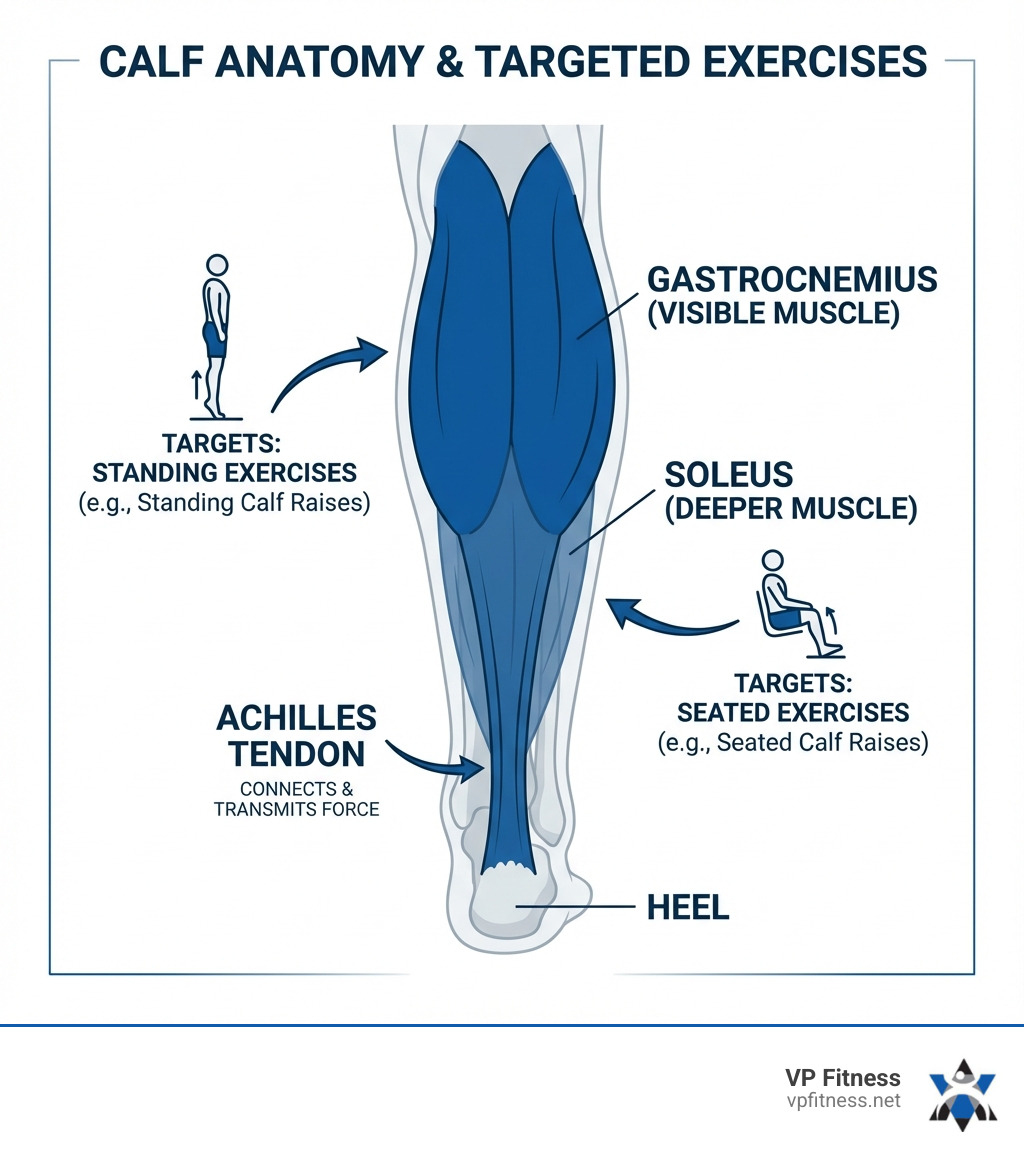
Before we dive into the exercises, let’s get acquainted with the stars of the show: your calf muscles. Understanding their structure and function is crucial for effective calf definition exercises and for achieving those “popping” calves.
Your calf is primarily made up of two main muscles, often referred to as the triceps surae:
-
Gastrocnemius muscle: This is the larger, more visible muscle that gives your calf its characteristic “diamond” shape. It has two heads (medial and lateral) and is primarily responsible for explosive movements like jumping, sprinting, and pushing off the ground. The gastrocnemius contains a higher percentage of fast-twitch muscle fibers, meaning it responds well to heavier loads and more explosive training. Because it crosses both the knee and ankle joint, it’s most effectively targeted when your leg is relatively straight.
-
Soleus muscle: Lying deeper, beneath the gastrocnemius, the soleus is a flatter, longer muscle that extends from just below your knee down to your Achilles tendon. Unlike the gastrocnemius, the soleus is rich in slow-twitch muscle fibers, making it vital for endurance activities and sustained ankle stability. It’s heavily engaged during walking, running, and maintaining an upright posture. Because it only crosses the ankle joint, the soleus is best activated when your knee is bent, taking the gastrocnemius out of the primary action.
-
Achilles tendon: Both the gastrocnemius and soleus muscles converge to form the powerful Achilles tendon, which attaches to your heel bone. This tendon is critical for transmitting the force generated by your calf muscles to propel you forward and upward.
For complete calf development and definition, it’s essential that we target both the gastrocnemius and the soleus. Relying on only one type of exercise will lead to imbalances and limit your overall growth potential. Think of it like this: to build a truly strong and aesthetically pleasing house, we need to work on both the visible exterior and the foundational interior.
The Top 20 Calf Definition Exercises
Now that we understand the anatomy, let’s get to the good stuff! Here are our top 20 calf definition exercises, categorized to help you target both major calf muscles effectively and diversify your training.
Foundational Standing Exercises (Gastrocnemius Focus)
These exercises primarily engage the gastrocnemius due to the straight-leg position, making them excellent for building the visible bulk and shape of your calves.
-
Standing Barbell Calf Raise:
- How to do it: Rest a barbell across your upper back. Stand with feet hip-width apart and the balls of your feet on a step. Press up to lift your heels as high as possible. Pause, then slowly lower your heels for a deep stretch.
- Why it works: Allows for heavy weight to overload the gastrocnemius.
- Tip: Point feet slightly in to target the outer calf, or slightly out to target the inner calf.
-
Standing Dumbbell Calf Raise:
- How to do it: Hold dumbbells at your sides. Stand with the balls of your feet on a step, heels hanging off. Press up onto your toes as high as possible. Slowly lower back down for a deep stretch.
- Why it works: Great for progressive overload and can be done anywhere.
- Tip: Focus on a full range of motion, allowing the heels to drop for a deep stretch.
-
Bodyweight Calf Raise:
- How to do it: Stand with feet hip-width apart, using a wall for balance. Lift your heels, rising onto the balls of your feet. Hold briefly, then slowly lower back down.
- Why it works: Excellent for beginners, warm-ups, or high-rep finishers.
- Tip: Perform slowly and feel the squeeze at the top and the stretch at the bottom.
-
Single-Leg Calf Raise:
- How to do it: Stand on one leg on a raised platform, using a wall for balance. Lower your heel as far as possible, then press up onto the ball of your foot.
- Why it works: Isolates one calf at a time, addressing strength imbalances.
- Tip: Engage your core to maintain balance and keep your ankle aligned.
-
Donkey Calf Raise:
- How to do it: Bend forward at the hips, supporting yourself on a sturdy surface. Have a partner sit on your lower back or use a machine. With knees mostly straight, lift your heels.
- Why it works: The hip-hinge position provides a unique stretch and activation for the gastrocnemius.
- Tip: Keep your back flat and focus on the calf contraction.
-
Leg Press Calf Raise:
- How to do it: In a leg press machine, place the balls of your feet on the lower edge of the footplate. Push the plate away by extending your ankles. Control the movement as you bring your heels back towards you.
- Why it works: Allows for heavy, stable loading to promote hypertrophy.
- Tip: Prioritize a full, smooth range of motion over excessive weight. More on the Leg Press Calf Raise.
Essential Seated Exercises (Soleus Focus)
These exercises are performed with a bent knee, which effectively reduces the involvement of the gastrocnemius and places more emphasis on the soleus muscle. This is crucial for comprehensive calf development.
-
Seated Calf Raise Machine:
- How to do it: In a seated calf raise machine, place your knees under the pads and the balls of your feet on the platform. Extend your ankles to lift your heels, then slowly lower for a deep stretch.
- Why it works: The bent-knee position isolates the often-neglected soleus muscle.
- Tip: Aim for higher repetitions (15-25) to build endurance.
-
Seated Dumbbell Calf Raise:
- How to do it: Sit on a bench with knees at 90 degrees. Place a dumbbell across your thighs and secure it with your hands. Lift your heels off the floor, or use a small step for a greater range of motion.
- Why it works: A great machine-free alternative to isolate the soleus.
- Tip: Focus on the peak contraction and a controlled lowering phase.
-
Seated Band Pushes:
- How to do it: Sit on the floor with legs extended. Loop a resistance band around the balls of your feet, holding the ends for tension. Push your toes forward against the band, then slowly return.
- Why it works: A low-impact way to work the soleus and shin muscles.
- Tip: Control the movement in both directions; don’t let the band snap your foot back.
Plyometric & Dynamic Calf Definition Exercises
Plyometric exercises are fantastic for developing explosive power and building fast-twitch muscle fibers in your calves, contributing to a more athletic and defined look.
-
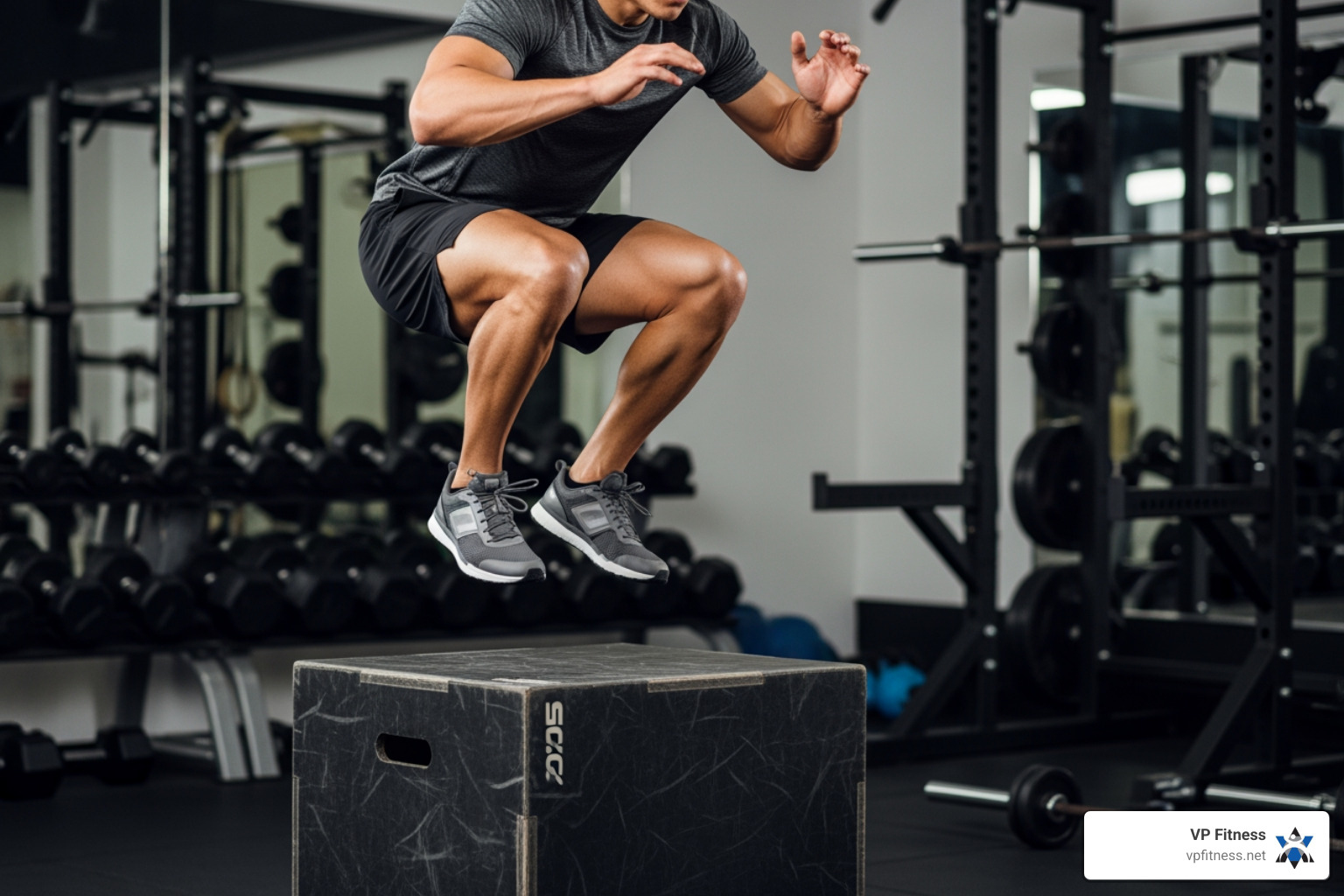
Box Jumps:
- How to do it: Stand before a sturdy box. Dip at the knees and hips, then explode upward, swinging your arms for momentum. Land softly on the box, then step or jump down.
- Why it works: Builds explosive power and elasticity in the calves and lower body.
- Tip: Use a challenging but safe box height. Land softly to absorb the impact.
-
Jump Rope:
- How to do it: Swing a jump rope and jump lightly on the balls of your feet as it passes under you. Keep jumps low and quick.
- Why it works: Excellent cardio that builds calf endurance and explosive power.
- Tip: Stay on the balls of your feet with knees slightly bent.
-
Lunge Jumps:
- How to do it: Start in a lunge. Explode upward, switching your leg positions in mid-air, and land softly in the opposite lunge.
- Why it works: A plyometric move that improves calf strength and definition while working the entire leg.
- Tip: Push off powerfully from the front foot to maximize calf engagement. Lunge Jumps.
-
Seal Jumps:
- How to do it: Like a jumping jack, but clap your hands in front of you. Your legs move outward and inward, keeping your calves engaged.
- Why it works: A dynamic movement that keeps calves working through repetitive jumps.
- Tip: Maintain a quick rhythm and land lightly.
-
Agility Ladder Drills:
- How to do it: Perform drills like quick feet or the Ickey Shuffle in an agility ladder.
- Why it works: Improves foot speed, coordination, and the reactive power of your calves.
- Tip: Stay on the balls of your feet for maximum calf activation.
Functional & Unconventional Calf Builders
Sometimes, the best calf definition exercises are the ones that mimic real-world movements or leverage our daily activities.
-
Tiptoe Walks (with or without dumbbells):
- How to do it: Walk on your tiptoes, keeping calves contracted. Hold dumbbells for added intensity.
- Why it works: Builds endurance and definition through continuous muscle engagement.
- Tip: Start with short distances and increase as you get stronger.
-
Stair Climbing / Hill Sprints:
- How to do it: Sprint up a flight of stairs or a steep hill, pushing off the balls of your feet. Walk or jog down to recover.
- Why it works: A functional, high-intensity workout for explosive calf strength.
- Tip: Use your arms to help propel you upwards.
-
Incline Walking:
- How to do it: Walk at a brisk pace on a treadmill set to a high incline.
- Why it works: The incline increases the workload on your calves with less impact than running.
- Tip: Focus on pushing off with your toes to feel the burn in your calves.
-
Running Sports (Soccer, Basketball, Tennis):
- How to do it: Play sports that involve frequent running, jumping, and quick directional changes.
- Why it works: These activities naturally build functional calf strength and definition.
- Tip: Consistent participation will lead to stronger, more defined calves.
-
Step Class / Dance Class:
- How to do it: Join classes with repetitive stepping, jumps, and dynamic footwork.
- Why it works: These classes improve calf endurance, coordination, and definition.
- Tip: Focus on precise, controlled foot placement.
-
Swimming:
- How to do it: Swim, focusing on kicking drills.
- Why it works: Water provides low-impact resistance to strengthen calf muscles, ideal for recovery.
- Tip: Use flutter, dolphin, and breaststroke kicks to vary calf engagement.
How to Program Your Calf Workouts for Maximum Growth
We’ve explored a wide array of calf definition exercises, but knowing the exercises is only half the battle. To truly get those calves popping, we need a smart, structured approach to our training.
Why Are Calves So Stubborn to Grow?
Many people get frustrated with their calves, blaming genetics. While genetics play a role, most of us just aren’t training them effectively. Here’s why calves can be so stubborn:
- High Daily Usage: Your calves are used to high daily volume from walking and standing. To make them grow, you must challenge them far beyond their everyday demands.
- Improper Form: Rushing calf raises with partial reps is a common mistake. A full range of motion—dropping the heels low and rising high on the toes—is crucial for full muscle activation.
- Insufficient Volume or Intensity: Being so resilient, calves often require more sets, reps, or intensity than other muscles to stimulate growth.
- Genetics: Genetics can affect how “full” your calves look, but they don’t prevent you from building significant muscle and definition with hard, strategic work.
The Best Calf Definition Exercises: Optimal Frequency, Reps, and Sets
To overcome the stubborn nature of our calves, we need to be intentional and consistent.
- Training Frequency: For optimal growth, train your calves 2-3 times per week. Research suggests training muscles at least twice weekly is superior for hypertrophy, as noted in this scientific review.
- Rep Ranges:
- For the gastrocnemius (fast-twitch), use heavier loads for 8-15 reps per set.
- For the soleus (slow-twitch), use lighter loads for higher reps, typically 15-25 per set.
- Sets: Aim for 4-5 sets per exercise to provide the necessary stimulus for these resilient muscles.
- Time Under Tension: Focus on slow, controlled movements to maximize time under tension, a key driver of growth. For example, use a 2-second lift, a 1-second hold, and a 4-second lower.
The Principle of Progressive Overload for Calves
If we want our calves to grow, we must continually challenge them. This is the essence of progressive overload.
- Increase Weight: Once you can complete your target reps with good form, increase the weight by 5-10%.
- Increase Reps and Sets: If you can’t increase weight, add more reps or an extra set to your workout.
- Improve Range of Motion: Use a step to allow your heels to drop lower, increasing the stretch and stimulus for growth.
- Decrease Rest Time: Shorten rest periods between sets to increase intensity and metabolic stress.
- Vary Exercises: Regularly cycling through different calf definition exercises and variations ensures you’re constantly providing a novel stimulus for growth.
Beyond the Exercises: Diet and Lifestyle for Popping Calves
While specific calf definition exercises are crucial, we can’t neglect the bigger picture of diet and overall lifestyle. These factors play an equally important role in achieving visible muscle definition.
- The Myth of Spot Reduction: You cannot spot reduce fat from your calves. Fat loss happens across the entire body, not just in the area you exercise.
- Importance of Overall Body Fat Percentage: For your calf muscles to “pop,” you need to lower your overall body fat. A balanced diet and consistent exercise are key, as even well-developed calves will be hidden under a layer of fat.
- Nutrition for Muscle Growth: To build muscle, you need the right fuel. Aim for 0.8 to 1 gram of protein per pound of body weight daily. Also, consume slightly more calories than you burn (a lean surplus) to provide energy for muscle repair and growth.
- Hydration’s Role in Muscle Function: Dehydration impairs performance and recovery. Drink at least 8-10 glasses of water daily, especially on training days, to support muscle function and flexibility.
- Overall Physical Activity: Beyond targeted exercises, activities like running, hiking, and sports naturally engage the calves. Training calves improves explosive power, mobility, and balance, as supported by research on the benefits of strength training for mobility and balance.
Frequently Asked Questions about Calf Training
We often hear similar questions from our clients when it comes to training their calves. Let’s address some of the most common ones.
Should I train calves with heavy weight or light weight?
The best approach is to use both. Your calves have two main muscles with different fiber types:
- Gastrocnemius: This fast-twitch muscle responds best to heavier weight for 8-15 reps (e.g., standing calf raises).
- Soleus: This slow-twitch muscle responds best to lighter weight for 15-25 reps (e.g., seated calf raises).
Varying your weight and reps ensures you train both muscles for complete development.
How long does it take to see calf definition?
Results vary based on genetics, training consistency, diet, and body fat. With dedicated effort, you can see noticeable improvements in a few months. Significant definition often takes 6-12 months of focused training. Consistency is key.
Can I get defined calves just using bodyweight?
Yes. While adding weights can accelerate progress, bodyweight exercises like single-leg calf raises and box jumps are very effective. To progress without weights, you can increase volume (more sets/reps), increase intensity (slower tempo, explosive moves), or decrease rest times between sets. Bodyweight training is a great and effective option.
Conclusion
We’ve covered a lot of ground today, from the intricate anatomy of our calves to a comprehensive list of calf definition exercises and the strategic programming needed to see results. The journey to getting those calves popping might seem challenging, but it’s entirely achievable with the right knowledge and dedication.
The key takeaways are clear:
- Understand our anatomy: Target both the powerful, fast-twitch gastrocnemius with straight-leg, heavier exercises, and the enduring, slow-twitch soleus with bent-knee, higher-rep movements.
- Be consistent: Our calves are resilient, so they demand frequent, focused training (2-3 times per week).
- Accept progressive overload: Continually challenge our muscles by increasing weight, reps, sets, or range of motion.
- Don’t forget diet and lifestyle: Overall body fat reduction and proper nutrition are crucial for revealing the definition we’ve worked so hard to build.
Remember that every body is unique, and what works for one person might need tweaking for another. If you need guidance, consider working with an expert trainer who can help you create a personalized plan. They can guide you through these calf definition exercises, ensure proper form, and help you craft a holistic plan that includes nutrition and progressive overload strategies to help you achieve your goals.
Are you ready to stop hiding those calves and start showcasing them? With a dedicated and strategic approach, you can unlock their full potential.