

Why Your Body Craves Cardio: Top Reasons to Get Moving

Why Your Body Naturally Needs Cardio Exercise
Cardio workout benefits extend far beyond burning calories, changing your body and mind to make daily life easier and more enjoyable. From climbing stairs without getting winded to sleeping better and feeling more energized, cardiovascular exercise delivers measurable improvements to your health and quality of life.
Quick Answer: Top Cardio Workout Benefits
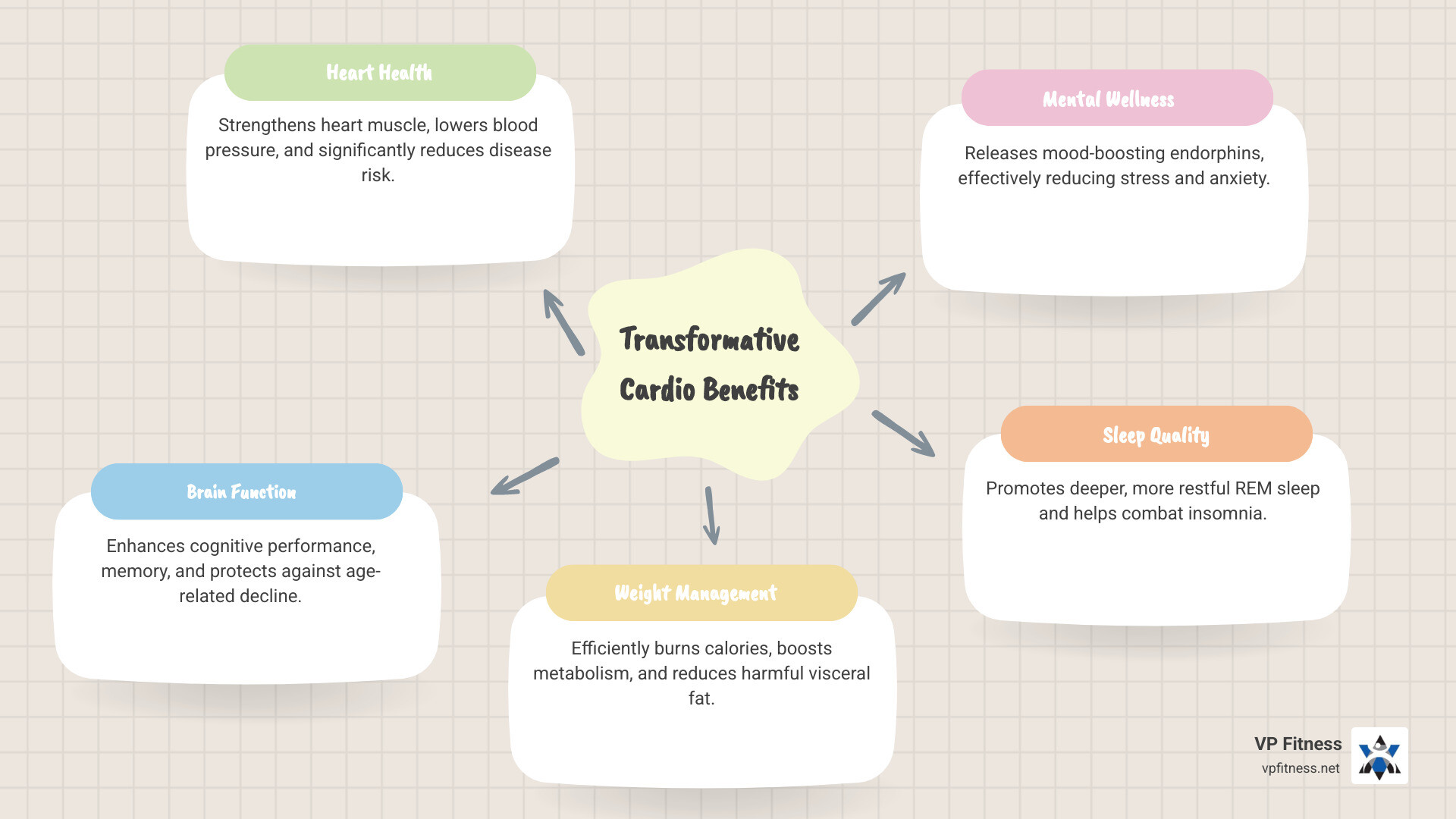
- Heart Health: Strengthens heart muscle, lowers blood pressure, improves cholesterol
- Mental Wellness: Releases mood-boosting endorphins, reduces stress and anxiety
- Weight Management: Burns calories, increases metabolism, reduces visceral fat
- Brain Function: Improves memory, cognitive performance, and protects against decline
- Sleep Quality: Promotes deeper REM sleep and helps you fall asleep faster
- Disease Prevention: Reduces risk of diabetes, heart disease, stroke, and certain cancers
- Energy Levels: Increases daily stamina and reduces fatigue
- Immune System: Strengthens your body’s ability to fight illness
The science is clear: only about one in five adults and teens get enough exercise to maintain good health, yet studies show that people who do regular aerobic exercise live longer than those who don’t. Your body craves movement because it’s designed to thrive with cardiovascular activity.
From strengthening your heart muscle to sharpening your mental focus, cardio exercise creates a positive cascade of changes throughout your body. Research shows that even moderate activities like brisk walking can significantly reduce your risk of chronic diseases while boosting your mood and energy levels.
I’m Joseph Depena, a fitness professional with over a decade of experience. I’ve helped hundreds of clients find the transformative power of cardiovascular exercise. I’ve witnessed how cardio workout benefits extend beyond the gym, improving every aspect of daily life, from work productivity to personal confidence.
What is Cardio Exercise?
Cardio exercise, or cardiovascular exercise, is any activity that gets your heart pumping and makes you breathe harder. Also called “aerobic” exercise, it uses oxygen to fuel movements, giving your heart and lungs a workout.
During cardio, your heart beats faster to pump more blood, and your breathing deepens to pull in more oxygen for your working muscles. Your body’s internal delivery system kicks into high gear.
The key difference between cardio and strength training is what they’re designed to do. While strength training focuses on building muscle through resistance, cardio workout benefits center around making your heart, lungs, and circulatory system more efficient. Instead of lifting heavy weights, you’re doing sustained, rhythmic movements that challenge your endurance.
Most cardio is “aerobic,” meaning your body can keep up with the oxygen demand. But some forms, like High-Intensity Interval Training (HIIT), mix in “anaerobic” bursts where you’re working so hard that your body can’t quite keep up—and that’s fine too.

Examples of Cardio Workouts
The best part about cardio is there’s something for everyone, regardless of fitness level, budget, or preference. You don’t need fancy equipment to get your heart rate up.
Running is a popular choice, whether on outdoor trails or a treadmill. Cycling is a fantastic low-impact alternative, on a stationary bike or through your neighborhood.
Swimming provides an incredible full-body workout that’s gentle on your joints. For beginners, brisk walking (2.5 mph or faster) is effective moderate-intensity cardio that can be done anywhere.
Want to have fun while you exercise? Dancing makes cardio feel like a party. Rowing machines offer a complete upper and lower body challenge.
For those short on space or budget, jumping rope delivers serious results with minimal equipment. And High-Intensity Interval Training (HIIT) offers maximum benefits in minimum time through short bursts of intense activity followed by brief recovery.
Everyday activities count too. Gardening, cleaning house, or mowing the lawn can get your heart rate up. Every bit of movement matters, and the best cardio workout is the one you’ll do consistently.
The Core Cardio Workout Benefits for Your Heart and Lungs
Your heart and lungs are a powerhouse duo. When considering cardio workout benefits, these vital organs deserve the spotlight because they transform dramatically with regular cardiovascular exercise.
Regular cardio strengthens your heart muscle, making it more powerful and efficient. It learns to pump more blood with each beat, so it doesn’t have to work as hard. This is why people who exercise regularly often have lower resting heart rates—their hearts have become so efficient they can do more with less effort.
At the same time, your lungs get their own workout. Regular cardio increases your lung capacity, making every breath more productive. You’ll find yourself breathing more efficiently and feeling less winded during activities that used to leave you gasping for air.

Strengthening Your Cardiovascular System
When you commit to regular cardio, your entire cardiovascular system benefits. Your blood pressure starts to drop as your heart becomes more efficient. Scientific research on exercise and blood pressure shows that just 40 minutes of moderate to vigorous cardio three to four times per week can lead to significant reductions in blood pressure.
Your cholesterol levels also improve. Cardio raises your HDL cholesterol (the good kind) while lowering your LDL cholesterol (the bad kind). This double benefit helps keep your arteries clear and flexible for better blood flow.
The result is a dramatically reduced risk of heart disease. People who exercise regularly live longer and experience fewer cardiovascular problems. Your improved circulation means oxygen and nutrients reach every part of your body more efficiently.
Boosting Respiratory Function
Your lungs become remarkably more efficient with regular cardio. Your body gets better at using oxygen—what scientists call increased VO2 max—meaning you can extract more oxygen from each breath.
Everyday activities that used to leave you breathless become much easier. Reduced shortness of breath is one of the most noticeable benefits. Climbing stairs or carrying groceries stops feeling like such hard work because your respiratory muscles are stronger and your oxygen exchange has improved.
Even people with asthma often find their symptoms more manageable with regular cardio. Strengthening your respiratory system can help reduce fatigue and breathing difficulties. Of course, if you have asthma or other respiratory conditions, work with your doctor to create a safe exercise plan.
Sharpen Your Mind and Boost Your Mood
The cardio workout benefits we love aren’t just for our muscles and lungs—they’re changing our brains, too. Every workout gives your mind a powerful boost that can last for hours.
That incredible post-workout feeling comes from endorphins, your body’s natural mood elevators. These chemicals make you feel happier, more relaxed, and genuinely good about life.
Regular cardio also reshapes how our brain works. It improves cognitive performance, helping us think more clearly and stay focused. Research shows that people who do regular cardio experience less brain tissue loss as they age, helping keep our minds young and sharp.

Unpacking the Mental Health Cardio Workout Benefits
The link between moving our body and feeling better mentally is well-researched. When life feels overwhelming, cardio can be powerful medicine.
Stress reduction happens almost immediately. As we move, our body processes stress hormones like cortisol, teaching our system to handle pressure more effectively.
For those dealing with anxiety, the rhythmic nature of cardio can be deeply calming, quieting anxious thoughts and creating a sense of control.
Cardio can also help fight depression symptoms. One study on exercise and depression found that walking on a treadmill for 30 minutes a day for 10 days led to significant mood improvements. This may be because cardio helps grow the hippocampus, the brain region that manages emotions.
Regular cardio also builds improved self-esteem. Each workout completed and goal reached adds up to a more positive relationship with ourselves.
Enhancing Sleep and Energy Levels
If you toss and turn at night or drag through your afternoons, cardio might be the game-changer you need. Move more during the day, sleep better at night.
People who do regular cardio fall asleep faster and enjoy deeper, more restorative REM sleep, leaving them feeling refreshed.
For anyone struggling with insomnia, cardio can be a natural, effective treatment. Just remember to finish your workout a few hours before bedtime so you’re not too energized to wind down.
Spending energy gives you more energy. Regular cardio creates an increased daily energy that carries through everything you do. Many people find they have reduced daytime fatigue and genuine stamina that surprises them.
Achieve a Healthier Weight and a Stronger Body
One of the most compelling cardio workout benefits is how it transforms your entire body from the inside out. Beyond just burning calories, cardiovascular exercise creates a ripple effect that strengthens your metabolic health, boosts your immune system, and builds resilience in your bones and joints. It’s like giving your body a comprehensive upgrade that pays dividends for years to come.
When you commit to regular cardio, you’re not just working toward a number on the scale – you’re investing in protection against the chronic diseases that affect millions of people. Your body becomes more efficient at fighting off illness, your bones grow stronger, and your risk of developing serious health conditions drops significantly.

How Cardio Workout Benefits Contribute to Weight Management
If weight management is on your mind, cardio is your reliable partner in creating lasting change. The magic happens both during and after your workout, as your body continues burning calories at an liftd rate even when you’re resting.
Calorie burning is the most obvious benefit – and it’s impressive. Studies show that people who burned 400 to 600 calories through exercise five times a week for 10 months lost between 4.3 and 5.7 percent of their starting weight. That might sound modest, but it represents real, sustainable weight loss that tends to stay off when combined with healthy habits.
What’s even more exciting is how cardio transforms your metabolism. Your body becomes more efficient at burning calories throughout the day, not just during exercise. This metabolic boost means you’re working toward your goals even while you sleep.
Fat loss, particularly the dangerous visceral fat that surrounds your organs, responds especially well to cardiovascular exercise. This type of fat reduction goes beyond appearance – it significantly improves your health markers and reduces disease risk.
Perhaps most importantly, cardio supports maintaining a healthy body weight over time. The people who successfully keep weight off long-term almost universally include regular physical activity in their lifestyle. It’s not about perfection; it’s about consistency.
Reducing Chronic Disease Risk
The protective power of cardio against serious health conditions is nothing short of remarkable. Your cardiovascular system isn’t the only beneficiary – your entire body becomes more resilient against disease.
Type 2 diabetes risk drops significantly with regular cardio. Your body becomes better at regulating blood sugar and using insulin effectively, which means glucose doesn’t build up dangerously in your bloodstream. This improved insulin sensitivity is like giving your body’s natural systems a tune-up.
The connection between cardio and cancer prevention continues to strengthen as research progresses. While scientists are still uncovering exactly how exercise provides this protection, the evidence consistently shows lower rates of several cancer types among people who exercise regularly.
Osteoporosis prevention happens naturally when you choose weight-bearing cardio activities like brisk walking, dancing, or jogging. Your bones respond to the gentle stress by becoming denser and stronger, building a foundation that will serve you well as you age.
Risk Reduction with Regular Cardio
Regular cardio significantly reduces the risk of:
- Heart Disease and Stroke
- Type 2 Diabetes
- High Blood Pressure
- Dementia and Alzheimer’s
- Several types of Cancer
- Osteoporosis
Strengthening Bones, Joints, and Immunity
Your musculoskeletal system and immune defenses get a powerful boost from cardiovascular exercise, creating a foundation of strength that supports everything else you want to do in life.
Bone density increases naturally when you engage in weight-bearing cardio activities. Your bones are living tissue that responds to use – the more you ask of them (within reason), the stronger they become. This is your best defense against fractures and bone loss as you age.
Balance and agility improve dramatically with regular cardio, especially activities like dancing or activities that challenge your coordination. This matters more than you might think – one in three people over 65 fall each year, often with serious consequences. Better balance means more confidence in your daily movements.
If you deal with arthritis discomfort, gentle cardio might seem counterintuitive, but movement truly is medicine for stiff joints. Activities like swimming, cycling, or walking help maintain your range of motion while strengthening the muscles that support your joints. Many people find their pain actually decreases with consistent, appropriate exercise.
Your immune system gets a significant upgrade from regular cardio. Moderate aerobic exercise increases immunoglobulins – specialized antibodies that help fight off infections. This means fewer sick days, faster recovery when you do get ill, and better overall resilience against viruses and other bugs that come your way.
The beauty of these cardio workout benefits is how they compound over time. Each workout contributes to a stronger, more resilient version of yourself that’s better equipped to handle whatever life brings your way.
How to Start Your Cardio Journey Safely and Effectively
Starting your cardio journey can feel overwhelming, but it doesn’t have to be! Whether you’re completely new to exercise or returning after a long break, the most important thing is to begin where you are – not where you think you should be. The secret to open uping all those amazing cardio workout benefits isn’t about diving in headfirst; it’s about taking that first step and building momentum gradually.
Think of it this way: your body is incredibly adaptable, but it needs time to adjust. Starting slowly gives your cardiovascular system, muscles, and joints the chance to strengthen together. Consistency trumps intensity every single time. It’s better to walk for 15 minutes three times a week than to exhaust yourself with one intense hour-long session that leaves you too sore to move for the next week!
The real game-changer? Finding activities you genuinely enjoy. If you dread your workout, you won’t stick with it long enough to see results. Maybe you love dancing to your favorite songs, or perhaps you find peace in a morning walk through your neighborhood. There’s no “perfect” cardio exercise – only the one you’ll actually do consistently.

Recommended Cardio Guidelines
Here’s some great news: you don’t need to become a fitness fanatic to experience incredible health improvements! The Physical Activity Guidelines for Americans provide clear, achievable targets that can transform your health.
For most healthy adults, aim for 150 minutes of moderate-intensity aerobic activity each week, or 75 minutes of vigorous-intensity activity. Before you panic about finding that much time, remember this breaks down to just 30 minutes, five days a week for moderate activity, or about 25 minutes, three times a week for vigorous exercise.
What does moderate intensity feel like? You should be able to carry on a conversation, but you’ll definitely know you’re working. Think brisk walking, water aerobics, or dancing around your living room. Vigorous intensity means you’ll break a sweat and find it harder to chat – activities like jogging, swimming laps, or jumping rope.
For children and teens aged 6-17, the recommendation is 60 minutes of moderate to vigorous activity daily. This might sound like a lot, but it includes everything from playground time to sports to walking the dog.
If you can work up to 300 minutes of moderate activity per week, you’ll see even greater health benefits. And don’t forget to add some muscle-strengthening activities at least twice a week – your bones and metabolism will thank you!
Accessible and Affordable Cardio Ideas
One of the most beautiful things about cardio is its accessibility. You don’t need expensive equipment or memberships to get your heart pumping and start experiencing those life-changing cardio workout benefits.
Walking or jogging outdoors costs absolutely nothing and offers endless variety. Your neighborhood sidewalks, local parks, or nearby trails become your personal fitness studio. Plus, you get the added mental health boost of fresh air and changing scenery.
Dancing to music might be the most enjoyable cardio you’ll ever do. Put on your favorite playlist and let loose for 20-30 minutes. Your heart rate will soar, and you might forget you’re even exercising. It’s pure joy in motion.
Bodyweight circuits at home require nothing but a small space and your own body. Jumping jacks, high knees, mountain climbers, and burpees can create an incredibly effective workout. YouTube offers thousands of free follow-along videos for every fitness level.
Taking the stairs whenever possible transforms mundane daily activities into mini cardio sessions. Skip the elevator and feel your heart rate climb along with you.
Even everyday activities like vigorous house cleaning, gardening, or raking leaves count toward your weekly cardio goals. Who knew that vacuuming could be part of your fitness routine?
Important Precautions to Consider
While cardio is generally safe and beneficial, a few smart precautions will help you avoid injury and get the most from your efforts.
Consulting with a doctor is especially important if you’ve been inactive for a while, have any chronic health conditions like heart disease or diabetes, or you’re over 40 and starting a new exercise program. Your doctor can help determine appropriate exercise heart rates and identify any specific considerations for your situation.
Starting slowly cannot be emphasized enough. If you’re new to exercise, begin with just 10-20 minutes every other day. Your body needs time to adapt, and pushing too hard too fast often leads to injury or burnout. Gradually increase your duration and intensity as you get stronger.
Proper warm-up and cool-down are non-negotiable. Spend 5-10 minutes before your workout doing light movement like marching in place or gentle stretching. After your session, cool down with light activity followed by gentle stretches. This helps your heart rate return to normal and reduces muscle soreness.
Staying hydrated is crucial, especially during longer or more intense sessions. Drink water before, during, and after your workouts. Your body needs adequate hydration to function properly and recover effectively.
Most importantly, listen to your body. Some muscle fatigue is normal, but sharp pain, dizziness, or unusual discomfort means it’s time to stop and rest. Your body is incredibly smart – learn to interpret its signals and respect its limits.
Every fitness journey is unique. What matters most is that you start, stay consistent, and gradually build your endurance. Those amazing cardio workout benefits are waiting for you, one step at a time.
Conclusion
The journey we’ve taken through cardio workout benefits reveals something truly remarkable – that simple, consistent movement can transform virtually every aspect of our health and happiness. From the moment our heart starts pumping faster during that first walk around the block, we’re setting in motion a cascade of positive changes that will ripple through our cardiovascular system, our mental well-being, our sleep quality, and our long-term disease risk.
We’ve finded that cardio isn’t just about burning calories or losing weight, though it certainly excels at both. It’s about strengthening our heart muscle so climbing stairs feels effortless, boosting our mood through those wonderful endorphins, and sharpening our minds as we age. The science consistently shows us that people who engage in regular cardiovascular exercise don’t just live longer – they live better, with more energy, less stress, and greater resilience against the chronic diseases that affect so many of us.
Perhaps most encouraging is how accessible these benefits are. We don’t need to become marathon runners or spend hours in the gym. Those 150 minutes of moderate activity per week – whether it’s dancing in our living room, taking brisk walks through our neighborhood, or following along with online workout videos – can genuinely transform our health. The empowerment through fitness extends far beyond physical changes, building confidence that carries into every area of our lives.
Starting this journey safely and effectively is key to long-term success. Whether we’re taking our first steps back into fitness or looking to lift our current routine, having proper guidance makes all the difference. The value of personalized training and support cannot be overstated – it ensures we’re moving correctly, progressing appropriately, and most importantly, enjoying the process.
Experience shows that the right support and an individualized approach can help people open up all the incredible cardio workout benefits their body craves. Personalized fitness plans are designed to meet you exactly where you are, whether you’re just beginning to explore cardio or ready to take your cardiovascular fitness to new heights.
Take the first step to integrate the joy and transformative power of cardio into your daily life. Your heart, mind, and future self will thank you for it.