

Chest Day Domination: Routines to Build a Powerful Upper Body

Why Building Chest Strength Transforms Your Upper Body
A chest workout routine is key for upper body power, better posture, and functional strength for daily life. Whether pushing heavy doors or just wanting to look more confident, a strong chest is the foundation of a powerful physique.
Quick Chest Workout Essentials:
- Frequency: Train chest 2-3 times per week
- Volume: 12-24 sets per week for optimal growth
- Key Exercises: Bench press, incline press, dips, flyes
- Rep Ranges: 6-8 for strength, 8-12 for muscle growth
- Rest: 2-3 minutes between compound exercises
A strong chest offers more than just aesthetic benefits. It improves posture by counteracting the forward shoulder slump common in desk workers and builds functional strength for sports and daily tasks like carrying groceries.
The chest muscles, the pectoralis major and minor, move your arms across your body and stabilize countless upper body movements. Strengthening them properly builds a foundation that supports better performance in nearly every other exercise.
Training your chest isn’t just about looking good; it’s about creating a balanced, functional upper body. The benefits, from improved breathing to better shoulder stability, compound over time.
With over a decade of experience, I help clients build powerful physiques through strategic chest workout routines, combining proven principles with personalized coaching to help busy professionals achieve their goals efficiently.
Understanding Chest Anatomy and Training Principles
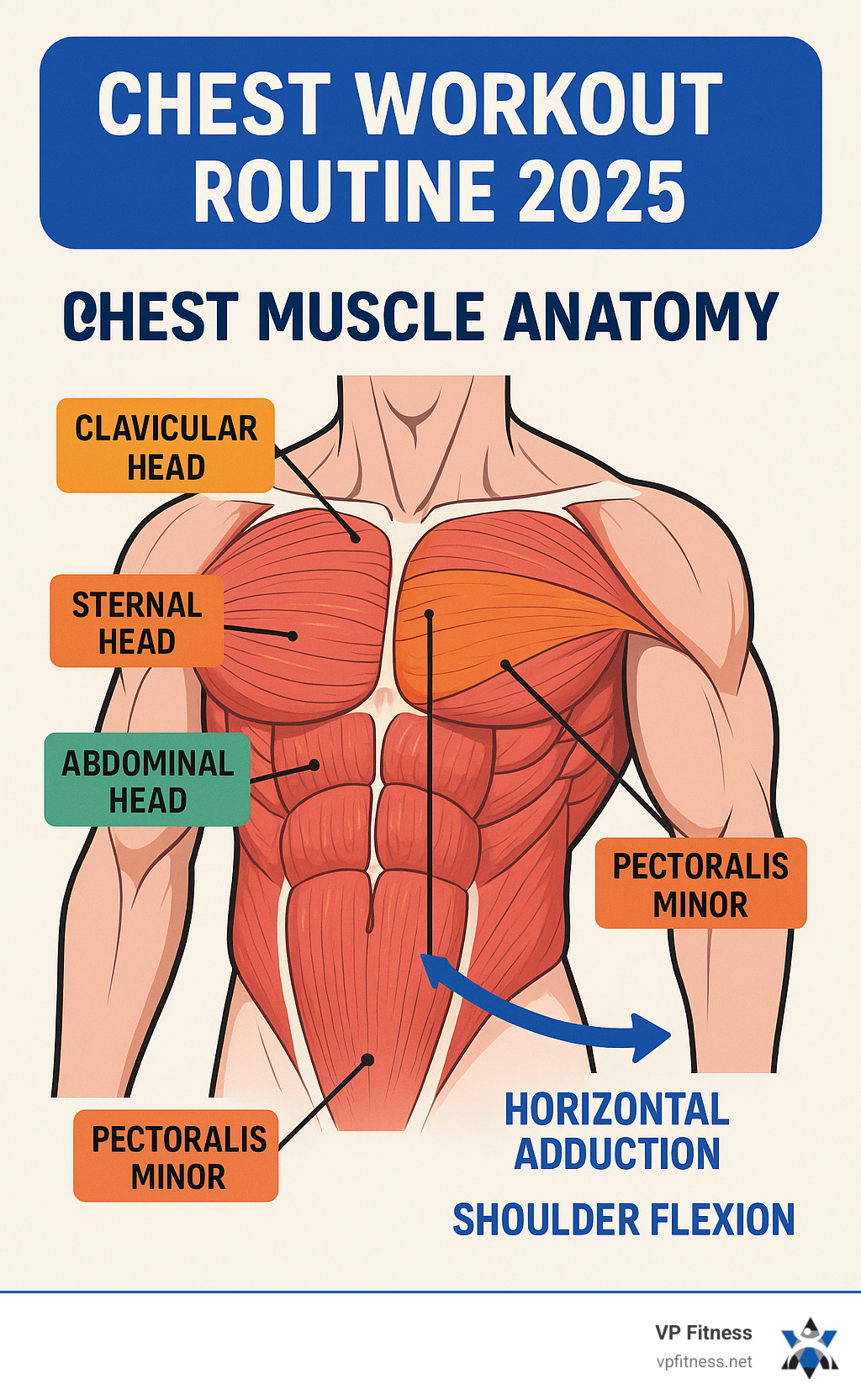
An effective chest workout routine starts with understanding your anatomy. Your chest has two main muscles that create a powerful, defined look.
The Pectoralis Major is the large, fan-shaped muscle responsible for size and width. It has two sections: the upper chest (clavicular head), which lifts your arms forward and up, and the middle and lower chest (sternocostal head), which brings your arms across your body. Understanding these fiber directions helps you target specific areas.
The Pectoralis Minor is a smaller muscle underneath the major that stabilizes your shoulder blades. While not targeted directly, it’s crucial for smooth movement.
To make muscles grow, apply these key principles:
- Progressive Overload: To get stronger, you must gradually challenge your muscles more than they’re used to. This can mean adding weight, reps, or sets.
- Mind-Muscle Connection: Focus on feeling your chest muscles do the work. Squeezing your pecs at the top of each rep can significantly improve muscle activation and growth.
- Proper Form: Good form is more important than lifting heavy. Control the weight through a full range of motion to ensure your chest, not other muscles, gets the intended workout.
Research on muscle activation during chest exercises at different angles confirms the importance of technique and angle selection.
The Three Pillars of Chest Growth
Every great chest workout routine is built on three foundations.
Compound exercises, like the bench press, involve multiple muscle groups (chest, shoulders, triceps). They allow you to lift heavy weight, making them efficient for building overall strength and mass.
Isolation exercises, like cable flyes, zero in on your chest muscles. They are perfect for sculpting and defining the pecs with focused tension.
Training volume is your total sets and reps. Research shows a clear dose-response relationship between weekly resistance training volume and increases in muscle mass. Aim for 12-24 effective sets per week, spread across two or three sessions, for optimal chest growth.
The Role of Nutrition and Recovery
Your chest grows during recovery, not in the gym. The workout creates the stimulus; recovery builds the muscle.
- Protein Intake: Muscle is made of protein. Aim for 0.8 to 1 gram of protein per pound of body weight daily to provide the raw materials for repair and growth.
- Caloric Surplus: Eat slightly more calories than you burn to give your body the energy to build new muscle tissue.
- Hydration: Water transports nutrients and supports metabolic processes essential for muscle function.
- Sleep: Your body releases growth hormone and repairs muscle fibers during deep sleep. Aim for 7-9 hours of quality sleep per night.
- Active Recovery: Light activities like walking on off days improve blood flow and reduce soreness, preparing you for your next session.
The Ultimate Chest-Building Exercises
To transform your chest, you need exercises that challenge your pectorals from every angle. Each type of equipment offers unique benefits for your chest workout routine. Barbells are best for raw strength, dumbbells offer a greater range of motion and balance work, cables provide constant tension, and machines offer stability to focus on muscle contraction. Mix and match them based on your goals and experience.
Compound Lifts for Mass and Strength
These movements are the backbone of any serious chest workout routine, allowing you to move the most weight and stimulate maximum growth.
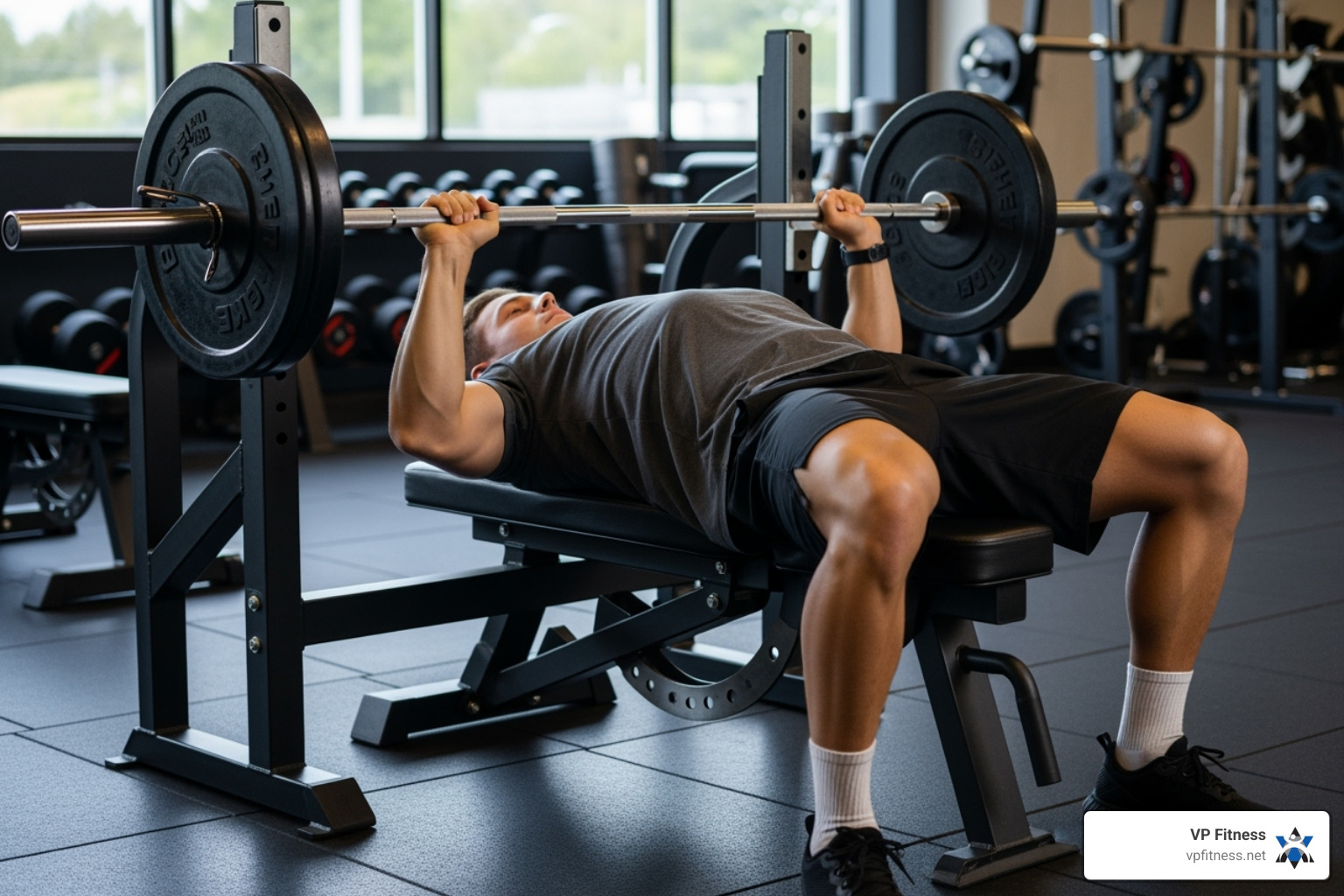
- Barbell Bench Press: The king of chest exercises for building mass. Lie on a bench, grip the bar slightly wider than your shoulders, lower it to your mid-chest with control, and drive it back up. Keep elbows at a 45-degree angle.
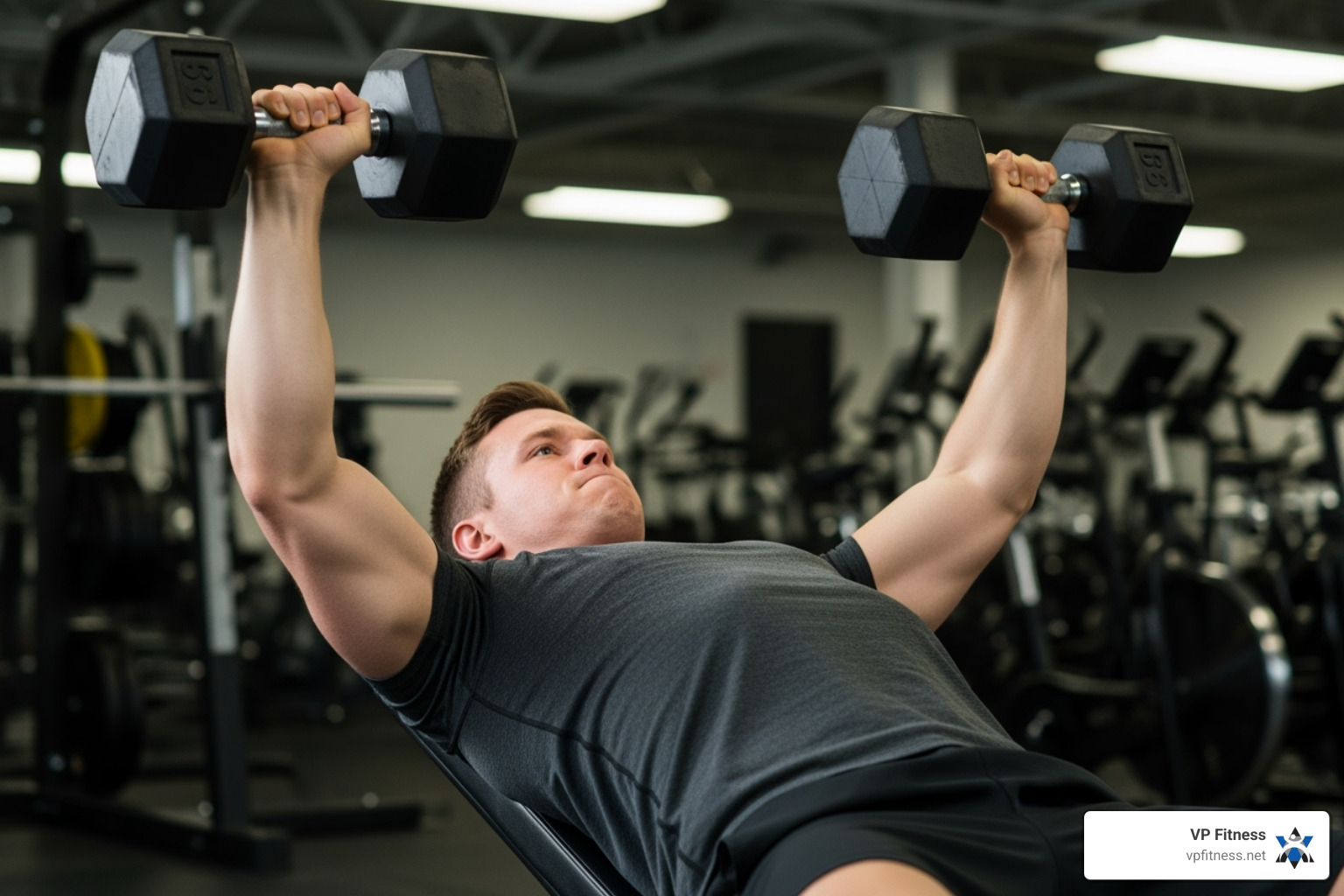
- Incline Dumbbell Press: Excellent for building the upper chest. Set a bench to a 30-45 degree angle. Dumbbells allow a deep stretch and a strong squeeze at the top.
- Chest Dips: An underrated builder for the lower chest. Lean forward slightly and allow your elbows to flare out to 45-60 degrees. Add weight with a dip belt once you can do 15-20 bodyweight reps.
- Decline Press: Specifically targets the lower chest fibers, often allowing you to handle heavier weights due to the favorable shoulder position.
Isolation Moves for Definition and Shape
After your compound lifts, use isolation exercises to sculpt and define your pecs.
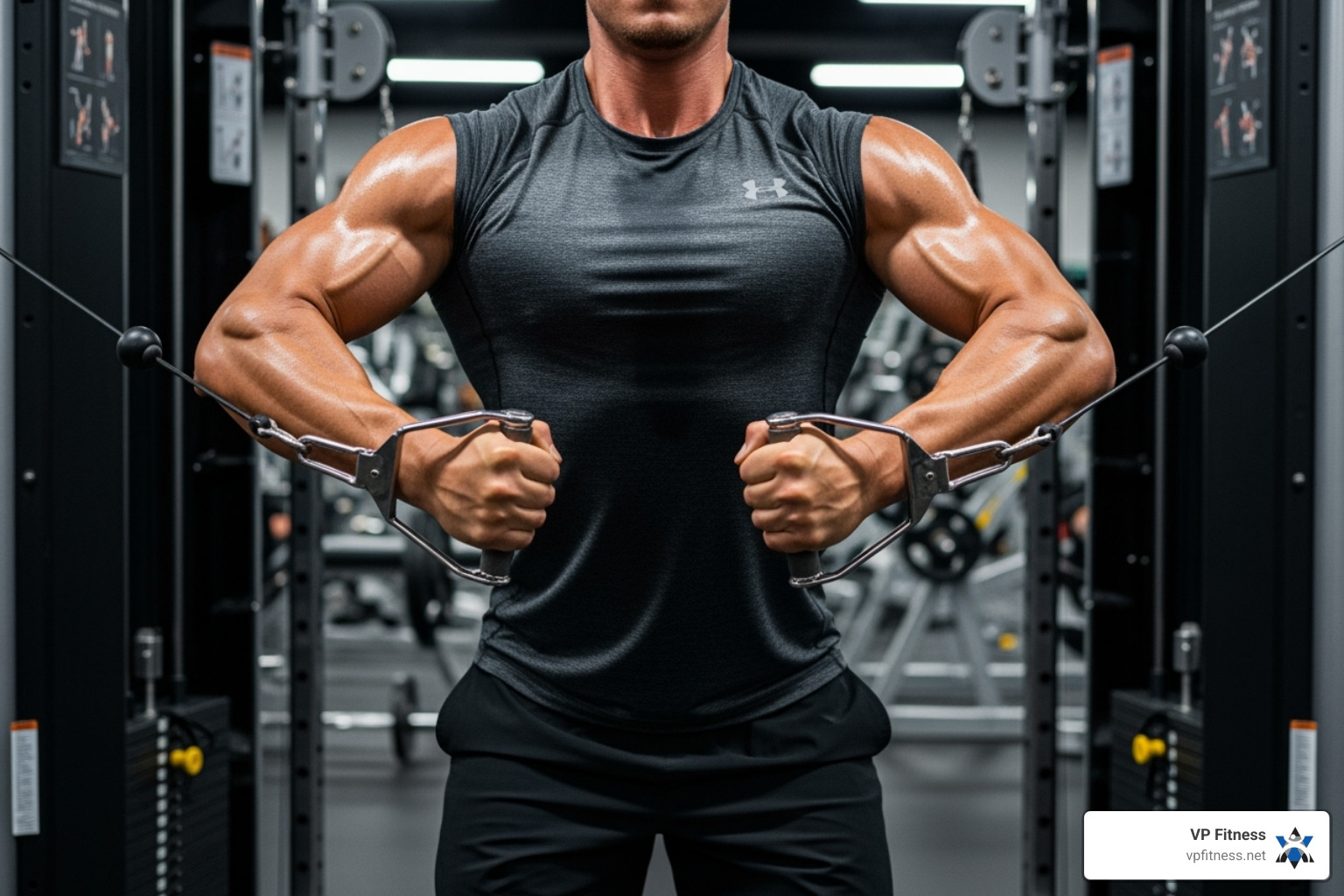
- Cable Flyes: These maintain constant tension on the chest. Adjust the cable height to target different areas: low-to-high for the upper chest, mid-height for overall development, and high-to-low for the lower chest.
- Dumbbell Flyes: Offer an incredible stretch at the bottom of the movement. Perform on a flat, incline, or decline bench with a wide arc motion.
- Pec-Dec Machine: Isolates the chest by removing the need for stabilization, allowing you to focus entirely on the squeeze.
- Pinch Press: Hold a weight plate between your palms and press it straight out, squeezing hard to create an intense isometric contraction for the inner chest.
Bodyweight and Home Workout Adaptations
You can build an impressive chest at home with minimal equipment.
- Push-up Variations: The push-up is highly versatile. Standard push-ups work the total chest. Decline push-ups (feet liftd) target the upper chest. Incline push-ups (hands liftd) are easier and focus on the lower chest. Diamond push-ups hit the inner chest and triceps.
- Resistance Bands: Mimic cable exercises like band chest presses and band flyes to add constant tension to your home workouts.
To maximize results with minimal equipment, slow down your reps (time under tension), increase sets and reps, and reduce rest times. As you get stronger, progress to harder variations like plyometric push-ups.
Crafting the Perfect Chest Workout Routine
An effective chest workout routine requires a strategic plan. Organizing your exercises, sets, and rest periods is crucial for maximizing growth and preventing injury.
- Training Frequency: Train your chest 2-3 times per week. This balances stimulus and recovery, giving muscles time to repair and grow.
- Sets and Reps: Tailor these to your goals. For strength, use heavier weights for 3-5 sets of 2-6 reps. For muscle size (hypertrophy), the sweet spot is 3-4 sets of 6-12 reps. For endurance, use lighter weights for 12-20+ reps.
- Rest Periods: Rest 2-3 minutes for heavy compound lifts to recharge energy. For hypertrophy work, 60-90 seconds is effective. For isolation exercises, 30-60 seconds keeps metabolic stress high.
Avoid common mistakes like ego lifting (using weight you can’t handle with good form), poor range of motion, neglecting back training (which leads to imbalances), and overtraining. Smart, consistent programming is better than excessive volume.
Sample Beginner Chest Workout Routine
This routine builds a solid foundation. Perform it 1-2 times per week with at least 48 hours of rest between sessions. Focus on form over weight.
- Barbell or Dumbbell Bench Press: 3 sets of 8-12 reps. Control the weight and focus on form.
- Incline Dumbbell Press: 3 sets of 10-15 reps. Target the upper chest, feeling the muscle work.
- Push-ups: 3 sets to near failure. A great finisher for endurance and proper pushing mechanics.
Choose a weight that challenges you but allows you to complete all reps with good form, leaving 2-3 reps “in reserve.”
Sample Advanced Chest Workout Routine
For experienced lifters, this high-volume routine hits the chest from multiple angles. Perform it twice a week with 2-3 days of rest in between.
- Barbell Bench Press: 4 sets of 5-8 reps (Focus on strength).
- Incline Dumbbell Press: 3 sets of 8-12 reps (Target upper chest).
- Weighted Dips: 3 sets of 8-12 reps (Build lower chest thickness).
- Cable Flyes (Mid-Pulley): 3 sets of 12-15 reps (Create constant tension and a pump).
- Dumbbell Pullover: 3 sets of 10-15 reps (Stretch the pecs and rib cage).
Apply progressive overload: once you can hit the top of the rep range with perfect form, increase the weight.
Advanced Technique: FST-7 for Maximum Pump
FST-7 (Fascial Stretch Training) is a high-intensity finishing technique to maximize blood flow and stretch the muscle fascia, potentially creating more room for growth.
To use it, pick an isolation exercise like cable crossovers after your main workout. Perform 7 sets of 10-15 reps with only 30-45 seconds of rest between sets. Between each set, stretch your chest for 30 seconds and then flex your pecs for 30 seconds. This drives nutrient-rich blood into the muscle.
FST-7 is intense and should be used sparingly, perhaps once a week for a 4-6 week block, to break through plateaus. Proper recovery is crucial.
Frequently Asked Questions about Chest Training
Here are answers to some of the most common questions about building a powerful chest.
How often should I train my chest?
For optimal muscle growth, most people should train their chest 2-3 times per week. This frequency provides enough stimulus for growth while allowing for adequate recovery. Beginners may start with once a week to master form, while more experienced lifters can handle the higher frequency. Always listen to your body; if you’re still sore, take an extra rest day. Quality training is more important than quantity.
What’s better for chest growth: barbells or dumbbells?
Both are excellent tools with unique benefits. Neither is inherently superior.
- Barbells are best for building raw strength and overall mass. They allow you to lift the heaviest weight possible, making them ideal for progressive overload.
- Dumbbells are champions for mobility and balance. They force each arm to work independently, helping to fix strength imbalances, and allow for a greater range of motion and a deeper muscle stretch.
The best approach is to use both in your chest workout routine. Start with heavy barbell presses for strength, then use dumbbells for accessory work to improve balance and muscle recruitment.
How do I target my upper chest?
Targeting the upper chest requires understanding angles. You need exercises where your arms move upward and inward, following the upper pec muscle fibers.
- Incline Press: The incline bench press (with a barbell or dumbbells) is the primary exercise for the upper chest. Set the bench to a 30-45 degree angle to effectively target the clavicular head of the pectoralis major.
- Low-to-High Cable Crossovers: Set the pulleys low and pull the handles up and across your body, squeezing the upper pecs at the top.
- Decline Push-ups: Elevating your feet during push-ups shifts the emphasis to your upper chest.
The key is a strong mind-muscle connection. Focus on feeling the upper chest contract with every rep. Slow, controlled movements and a hard squeeze at the top will make a significant difference.
Build Your Ultimate Chest
Building your ideal chest requires more than just knowing the right exercises; it demands support, guidance, and consistency to achieve real results. While this guide covers the science and programming, expert guidance can make achieving your goals significantly easier.
Every fitness journey is unique. Whether you’re a busy professional, returning to fitness, or an experienced lifter trying to break a plateau, a personalized approach is best. Your chest workout routine should be customized to your specific needs, schedule, and goals. Cookie-cutter programs are less effective because your body and lifestyle are unique.
Experienced trainers provide the technical expertise to help you master form, optimize training angles, and apply progressive overload safely. Understanding biomechanics is the difference between mediocre results and the powerful chest you want. They can also provide nutrition guidance to ensure you’re fueling your body for muscle growth and recovery, helping you apply these principles to your real life.
Consistency is key, and a strong support system provides the accountability and support to keep you on track. A clean, professional, and well-equipped facility has everything you need, from quality free weights to cable machines for optimal muscle development.
Ready to build the powerful upper body you deserve? Expert guidance and personalized attention can turn your goals into reality.
Your change starts here. Let’s build that powerful physique together!