

Discover Companies That Prioritize Employee Wellness

Companies with employee wellness programs: Top 10 Elite
Why Employee Wellness Programs Are Reshaping the Modern Workplace
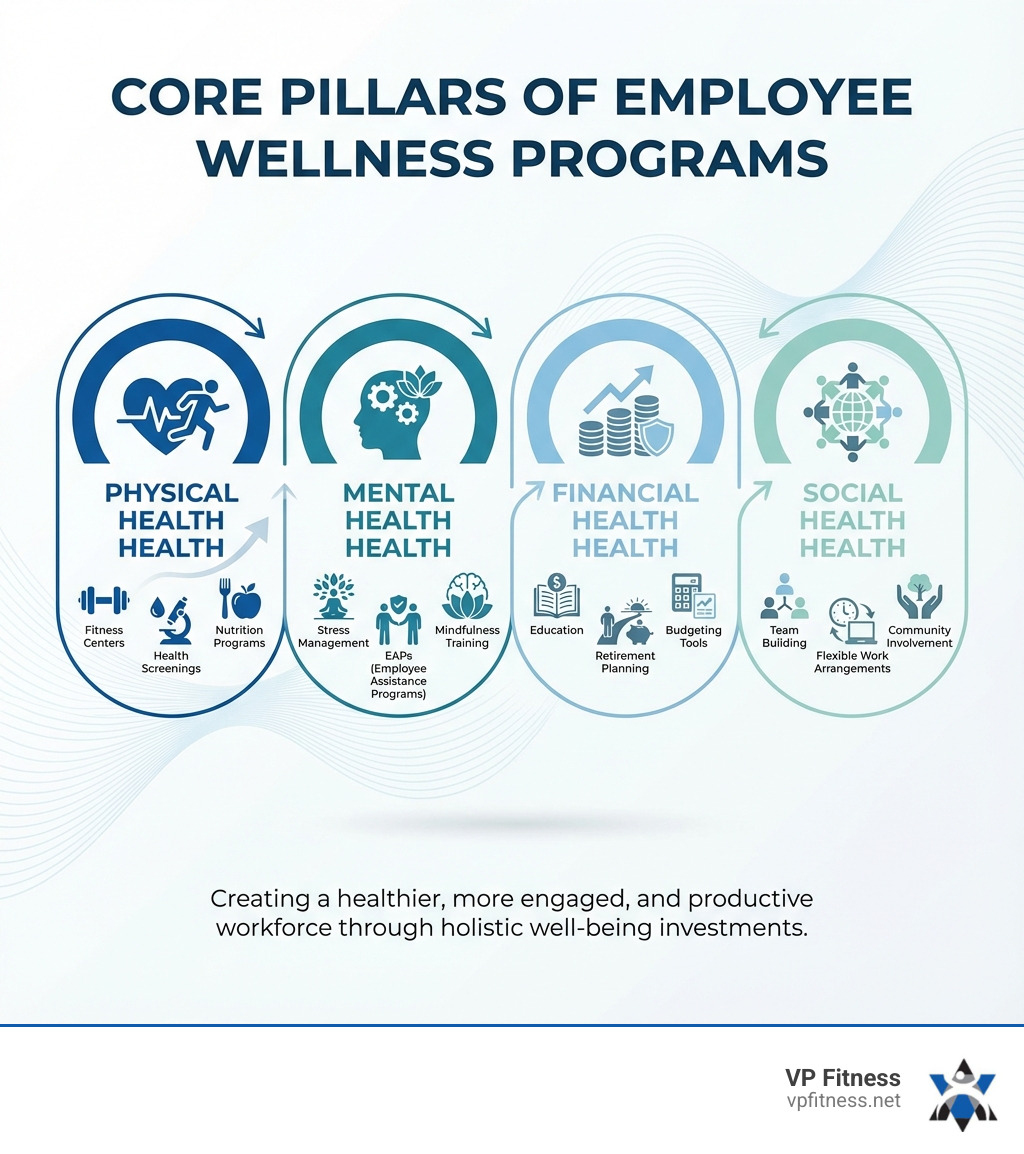
Companies with employee wellness programs are gaining a significant competitive edge in today’s job market. These programs typically include:
- Physical wellness: On-site fitness centers, gym reimbursements, health screenings, and nutrition counseling
- Mental health support: Employee Assistance Programs (EAPs), counseling services, mindfulness training, and stress management resources
- Financial well-being: Financial education, retirement planning support, and budgeting tools
- Work-life balance: Flexible work arrangements, generous paid time off, and parental leave policies
The impact is measurable. 89% of workers at companies that support wellness initiatives are likelier to recommend their company as a good workplace. Even more compelling, 61% of employees agree that they have made healthier lifestyle choices because of their company’s workplace wellness program.
The numbers tell a powerful story about prevention too. In the United States, 70% of healthcare costs are preventable, primarily from cardiovascular diseases like high blood pressure, diabetes, and obesity. Companies that invest in robust wellness programs often see double-digit decreases in sick leave, hospital admissions, and disability days.
These programs aren’t just nice-to-have perks anymore. They’ve become strategic business investments that directly impact productivity, employee satisfaction, and retention. From Google’s comprehensive on-site amenities to Microsoft’s flexible reimbursement model, leading organizations are proving that supporting employee well-being pays off for everyone.
As a fitness entrepreneur with over a decade of experience designing wellness programs, I’ve witnessed how companies with employee wellness programs create healthier, more engaged workforces through personalized training, nutrition guidance, and supportive community building. Throughout this article, I’ll share insights on what makes these programs successful and how businesses of all sizes can implement them effectively.
Key terms for companies with employee wellness programs:
- corporate wellness programs
- do corporate wellness programs work
- employee wellness software
What Makes a Wellness Program Truly Comprehensive?
A truly comprehensive employee wellness program goes beyond merely offering a gym membership. It adopts a holistic approach, recognizing that an individual’s well-being is multifaceted, encompassing physical, mental, emotional, and financial health. We believe that when these core areas are addressed, employees can thrive both personally and professionally.
At its heart, a holistic program integrates various components:
- Physical wellness: This is often the most visible aspect, including initiatives like on-site fitness facilities, subsidies for fitness classes, health screenings, and nutritional guidance. The goal is to encourage regular physical activity and healthy eating habits, leading to sustained energy levels and better overall health.
- Mental health support: Recognizing the growing importance of mental well-being, comprehensive programs offer resources for stress management, burnout prevention, and emotional resilience. This can range from counseling services to mindfulness workshops.
- Financial well-being: Financial stress can significantly impact an employee’s overall health and productivity. Programs addressing this might include financial literacy workshops, retirement planning assistance, and access to financial counseling.
- Work-life balance: Promoting a healthy balance between work and personal life is crucial. This involves flexible work arrangements, generous paid time off, and support for family responsibilities.
We understand that designing such a program can seem daunting, but the benefits far outweigh the effort. The effectiveness of a holistic approach is also backed by scientific research on workplace wellness, demonstrating its positive impact on employee health and organizational success.
The Critical Role of Mental Health Support
In today’s world, mental health support has moved from a “nice-to-have” to a “must-have” component of any modern employee wellness program. We’ve seen how unaddressed stress and burnout can cripple productivity and morale.
Effective mental health support includes:
- Stress management: Offering workshops, digital tools, and techniques to help employees identify and cope with workplace and personal stressors. This can significantly reduce the risk of burnout.
- Burnout prevention: Proactive strategies like promoting regular breaks, encouraging vacation time, and fostering a supportive work environment where employees feel comfortable discussing their workload.
- Employee Assistance Programs (EAPs): These confidential services provide employees and their families with access to counseling, legal advice, and financial guidance for a wide range of personal and work-related issues. Companies like Cisco, for instance, highlight extensive mental health resources that are crucial for employee well-being.
- Mindfulness resources: Providing access to meditation apps, guided mindfulness sessions, or quiet spaces for reflection can help employees cultivate focus, reduce anxiety, and improve emotional regulation.
- Counseling services: Ensuring easy and confidential access to professional psychological support is paramount. This might be through EAPs, virtual therapy platforms, or direct partnerships with mental health providers.
By prioritizing mental health, companies with employee wellness programs demonstrate a genuine commitment to their employees’ overall well-being, creating a more resilient and engaged workforce.
Integrating Work-Life Balance and Flexibility
Beyond the direct health services, fostering work-life balance and offering flexibility are cornerstones of a truly supportive workplace. We recognize that employees are individuals with lives outside of work, and accommodating these needs leads to a happier, more dedicated team.
Key elements include:
- Flexible work schedules: This can mean compressed workweeks, hybrid models (a mix of in-office and remote work), or simply allowing employees to adjust their start and end times to better manage personal commitments. Johnson & Johnson, for example, offers a “J&J Flex” hybrid model, allowing eligible employees to work remotely for a portion of the week, alongside other flexible arrangements.
- Remote work options: The rise of remote and hybrid work has transformed how we approach well-being. Offering the option to work from home, even for a portion of the week, can reduce commute stress and provide greater autonomy.
- Generous paid time off: This includes not just vacation days, but also parental leave (Johnson & Johnson offers 12 weeks of paid parental leave), caregiver leave (10 days annually at J&J), bereavement leave (up to 30 days at J&J), and even volunteer leave. These policies support employees through significant life events, reinforcing that their well-being extends beyond their professional output.
- Bandwidth’s 90-minute lunch: A great example of innovative flexibility comes from Bandwidth, which provides a 90-minute lunch break. This allows employees ample time to enjoy a healthy meal, engage in recreational activities, or even take a brief nap, significantly reducing frustration and supporting overall well-being.
When companies with employee wellness programs accept these flexible arrangements, they empower employees to manage their personal and professional lives more effectively, leading to increased job satisfaction and reduced stress.
Top Companies with Employee Wellness Programs That Set the Standard

When we look at leading companies with employee wellness programs, we see a common thread: innovation and a deep understanding of employee needs. These organizations aren’t just checking boxes; they’re creating environments where well-being is embedded in the culture. Let’s explore some of these trailblazers and the unique aspects of their programs.
Focus on Holistic Health & On-site Amenities
Some of the most recognizable names are setting the bar high by offering extensive on-site resources and taking a comprehensive view of health.
- Google: Renowned for its comprehensive and innovative approach, Google offers a wide range of programs and amenities. This includes on-site fitness centers and classes, a plethora of healthy food options in their cafeterias, nutrition education, and dedicated mindfulness and stress reduction programs. Their approach often serves as a benchmark for what’s possible when a company commits fully to employee well-being.
- SAS: At its headquarters, SAS boasts an on-site fitness center with a health care center, which significantly boosts employee engagement in fitness. Their focus extends to well-organized displays, open office layouts, and educational programs designed to help employees balance their lifestyle.
- Johnson & Johnson: As a global healthcare leader, Johnson & Johnson has a long-standing commitment to employee wellness. Their comprehensive ‘Energy for Performance’ program focuses on physical, mental, and emotional well-being, offering personalized health assessments and access to health coaches. They were also pioneers, being among the first to be tobacco-free and to promote safe driving and HIV prevention globally. Their approach emphasizes a total health strategy, ensuring employees can perform at their best.
These companies demonstrate that investing in the physical environment and providing easy access to health resources can create a powerful culture of wellness.
Prioritizing Mental and Financial Wellness
Beyond physical health, leading companies are increasingly recognizing the profound impact of mental and financial well-being on their workforce.
- Salesforce: This tech giant emphasizes mental health support through employee assistance programs, mindfulness sessions, and regular wellness challenges. They also champion flexible work options, demonstrating a holistic understanding of employee well-being.
- Accenture: A global professional services company, Accenture has implemented a comprehensive wellness program that focuses on prevention, education, and support. This includes comprehensive health screenings, wellness challenges with incentives, and extensive mental health and counseling services. They understand that a healthy mind is as crucial as a healthy body for peak performance. We believe that effective programs, like Accenture’s, should be custom to meet diverse employee needs. This principle can transform a team’s health.
- American Express: This financial services powerhouse offers mental health counseling, stress management resources, and mindfulness training. They promote work-life integration, acknowledging that employees’ lives are interconnected and support in one area benefits all.
These examples highlight a critical shift: recognizing and actively addressing the emotional and financial stresses that employees face, providing resources that empower them to steer these challenges more effectively.
Innovative Perks and Reimbursement Models
Innovation in employee wellness isn’t just about on-site facilities; it’s also about empowering employees with choice and flexibility through unique perks and reimbursement models.
- Microsoft: Their ‘StayFit’ program provides employees with a wellness reimbursement for health-related expenses like gym memberships, fitness classes, and wellness apps. This model empowers employees to choose the activities that best suit their preferences and lifestyle, promoting a sense of ownership over their health journey.
- Zappos: Known for its unique company culture and commitment to employee well-being, Zappos offers ‘wellness adventures,’ fitness reimbursements, nap rooms, relaxation spaces, and personalized wellness coaching. They even offer fitness classes and mindfulness training. This creative approach makes wellness an exciting and integrated part of the work experience.
- CompanyCam: This company provides a tangible incentive by reimbursing employees up to $50 monthly for wellness purchases. This could cover anything from fitness equipment to health app subscriptions or gym memberships, making wellness accessible and affordable.
- Intuit: Their ‘Fit for Life’ program offers classes, meditation, and reimbursable expenses for employees. This helps them achieve a better balance between their work and health, recognizing that financial support for wellness activities can be a significant motivator.
These companies demonstrate that embracing flexible, employee-centric models for wellness can lead to higher participation and greater satisfaction, proving that a little financial support can go a long way in fostering healthier habits.
The Tangible Business Benefits of Investing in Employee Wellness
Investing in employee wellness isn’t just a compassionate gesture; it’s a shrewd business decision with tangible returns. We’ve seen repeatedly how robust companies with employee wellness programs transform their organizations from the inside out.
Let’s look at the measurable impacts:
- Increased productivity: Healthy employees are more focused, energetic, and present. We know that conditions like cardiovascular diseases cost the U.S. $32 billion annually in lost productivity due to premature illness. By reducing health issues, wellness programs directly contribute to a more productive workforce.
- Reduced healthcare costs: This is a significant driver for many companies. With average annual health insurance premiums in 2024 at $8,951 for single coverage and $25,572 for family coverage (a 52% increase since 2014), controlling these costs is paramount. Wellness programs have been shown to lead to double-digit decreases in sick leave, hospital admissions, disability days, and workers’ compensation costs. By focusing on preventive care, we can help mitigate these rising expenses.
- Improved employee engagement: When employees feel cared for, they are more engaged. Studies show that 89% of workers at companies that support wellness initiatives are more likely to recommend their company as a good workplace. This translates to a more motivated, loyal, and enthusiastic workforce.
- Improved recruitment & retention: In a competitive talent market, a strong wellness program can be a key differentiator. Companies with employee wellness programs often have a competitive edge in attracting and retaining top talent, as prospective employees view these offerings as a significant benefit.
- Positive company culture: Wellness programs foster camaraderie, reduce stress, and create a supportive environment. This leads to higher morale and a more positive, collaborative workplace where employees feel valued.
The question isn’t “Do corporate wellness programs work?” but “How effectively can we implement them?” The evidence suggests they absolutely work, and this is a topic worth exploring further.
How to Encourage Employee Participation
Even the best-designed wellness program won’t succeed without strong employee participation. We’ve identified several key strategies that companies with employee wellness programs use to get their teams involved and excited:
- Effective communication: Clearly articulate the benefits of the programs, how to access them, and what employees can expect. Use multiple channels – emails, internal newsletters, team meetings – to ensure everyone is informed.
- Leadership buy-in: When leaders actively participate and champion wellness initiatives, it sends a powerful message. Employees are more likely to engage when they see their managers and executives leading by example.
- Incentives and rewards: A little motivation can go a long way. Companies like The Iowa Clinic offer healthcare and wellness gift cards as incentives. IBM motivates its workforce with a $150 reward for completing online wellness programs. General Motors’ ‘LifeSteps Program’ enables employees to earn up to $1,500. CompanyCam reimburses employees up to $50 monthly for wellness purchases. Even The Motley Fool shares monthly newsletters highlighting employees recognized for proactive excellence in wellness.
- Gamification: Turning wellness into a friendly competition can boost engagement. Wellness challenges, like CGI’s annual ‘Walk Around the World’ event or Intel’s wellness challenges, add an element of fun and social connection. Tough Mudder’s corporate wellness program incorporates walking desks and discounts on fitness-related sponsors, encouraging active lifestyles.
- Feedback surveys: Regularly solicit employee input on what types of programs they’d like to see, what challenges they face, and how existing initiatives can be improved. This ensures programs remain relevant and meet the actual needs of the workforce. The Manitoba Teachers’ Society’s ‘Balance’ program, for instance, is based on teacher input.
By combining these strategies, companies with employee wellness programs can create an environment where participation is not just encouraged, but genuinely desired.
How to measure the success of companies with employee wellness programs
Measuring the effectiveness of wellness programs is crucial to demonstrate their value and secure continued investment. Businesses can understand their return on investment (ROI) by focusing on clear metrics:
- ROI calculation: While not always straightforward, this involves comparing the costs of the program against quantifiable savings, such as reduced healthcare expenditures, decreased absenteeism, and improved productivity. The goal is to achieve double-digit decreases in sick leave, hospital admissions, disability days, and per capita workers’ compensation costs.
- Employee satisfaction surveys: Regular surveys gauge how employees perceive the programs, whether they feel supported, and if their well-being has improved. This provides qualitative data on morale and engagement.
- Participation rates: Tracking how many employees engage with different wellness activities (e.g., gym visits, workshop attendance, EAP utilization) provides insight into program reach and appeal.
- Health risk assessments: These assessments, often conducted annually, help track improvements in key health indicators across the workforce over time, such as blood pressure, cholesterol levels, and BMI.
- Absenteeism rates: A direct measure of employee health and engagement, a reduction in sick days is a clear indicator of a successful wellness program.
Here’s a simplified look at how key metrics can shift with effective wellness program implementation:
| Metric | Before Program (Baseline) | After Program Implementation |
|---|---|---|
| Healthcare Claims | X | Decrease (e.g., 5-15%) |
| Absenteeism Rate | Y | Decrease (e.g., 10-20%) |
| Employee Engagement | Z | Increase (e.g., 10-25%) |
| Employee Turnover | A | Decrease (e.g., 5-10%) |
| Productivity | B | Increase (e.g., 5-15%) |
| Self-Reported Stress | C | Decrease (e.g., 15-30%) |
By diligently tracking these metrics, companies with employee wellness programs can refine their offerings, prove their value, and ensure long-term success.
The Future of Corporate Wellness: Emerging Trends and Innovations
The landscape of corporate wellness is constantly evolving, driven by technological advancements, changing workforce demographics, and a deeper understanding of employee needs. We’re seeing exciting trends that are shaping how companies with employee wellness programs will operate in the years to come:
- Digital wellness platforms: These are becoming increasingly sophisticated, offering personalized health tracking, virtual coaching, and access to a vast library of wellness resources. CGI, for example, reaches 68,000 employees worldwide through its online health portal, and MetLife’s ‘BeWell’ program offers free online health promotion tools. These platforms offer unparalleled scalability and accessibility, especially for remote or hybrid teams.
- Wearable technology integration: Devices like smartwatches and fitness trackers are moving beyond simple step counting. Companies like Devon Energy have incorporated wearable devices into their programs, tracking activity, hydration, and sleep, and even using heart-rate monitors for mindfulness programs. This data-driven approach allows for hyper-personalized insights and incentivized challenges.
- Hyper-personalization: One-size-fits-all programs are becoming a thing of the past. The future lies in tailoring wellness initiatives to individual employee needs, preferences, and health goals. This could involve AI-driven recommendations, personalized coaching, or flexible spending accounts that allow employees to choose the wellness benefits most relevant to them.
- Focus on financial literacy: As we’ve discussed, financial stress significantly impacts overall well-being. More companies with employee wellness programs are integrating robust financial literacy programs, offering education, tools, and coaching to help employees manage their finances, save for the future, and reduce financial anxiety. PepsiCo, for instance, is rolling out a new digital platform for financial well-being to nearly all markets by 2025.
- Support for remote workers: With the continued prevalence of hybrid and remote work, wellness programs are adapting to support employees wherever they are. This includes virtual fitness classes, online mental health resources, and digital tools for fostering connection and preventing isolation.
Managing these diverse offerings can be complex, but technology is stepping up to help. Using software to manage wellness can streamline these processes and improve engagement.
Key components of successful companies with employee wellness programs
As we look to the future, successful companies with employee wellness programs will share several critical characteristics:
- Adaptability: The ability to quickly adjust programs based on employee feedback, emerging health trends, and changes in the work environment (e.g., shifting from in-office to remote work).
- Inclusivity: Designing programs that cater to a diverse workforce, considering different ages, cultural backgrounds, fitness levels, and health needs. This means offering a wide range of options, from high-intensity workouts to mindfulness sessions and financial planning.
- Data-driven decisions: Utilizing analytics from participation rates, health assessments, and satisfaction surveys to continuously refine and improve program offerings, ensuring maximum impact and ROI.
- Leadership involvement: Strong leadership commitment is non-negotiable. When executives and managers actively participate in and advocate for wellness, it creates a culture where well-being is genuinely valued.
Here are 3 top emerging wellness trends for the next five years:
- AI-powered personalized wellness journeys: Leveraging artificial intelligence to create highly individualized health plans, coaching, and recommendations based on an employee’s unique data and preferences.
- Integrated mental health and resilience training: A deeper, more systematic integration of mental health support, moving beyond reactive EAPs to proactive resilience-building, stress management, and mindfulness as standard offerings.
- Holistic financial well-being solutions: Comprehensive programs that combine financial literacy, debt management, savings strategies, and personalized coaching to alleviate financial stress, which is increasingly recognized as a major determinant of overall health.
Conclusion
In summary, the landscape of work is changing, and companies with employee wellness programs are at the forefront of this change. A holistic approach, encompassing physical, mental, financial, and work-life balance, not only benefits individual employees but also yields significant returns for businesses in the form of increased productivity, reduced healthcare costs, improved engagement, and stronger talent attraction and retention.
The examples from leading organizations like Google, Johnson & Johnson, Salesforce, and Microsoft illustrate that whether through on-site amenities, robust mental health support, or innovative reimbursement models, the commitment to employee well-being is a strategic investment. The future of corporate wellness will continue to be shaped by digital advancements, personalized approaches, and a deepening understanding of the interconnectedness of all aspects of an employee’s life.
Proactive wellness is not just a perk, but a strategic imperative that builds more resilient, engaged, and successful teams. By embracing these principles, companies can empower their teams, foster a thriving workplace, and create a wellness program that truly makes a difference.