

Corporate Wellness Programs 101

Corporate Wellness Programs 101: Essential Guide
Why Employee Well-Being Is Your Company’s Best Investment
Corporate wellness programs are structured initiatives designed to improve employee health, reduce workplace stress, and boost overall productivity. These programs typically include fitness classes, mental health support, nutritional guidance, health screenings, and financial wellness resources—all aimed at creating a healthier, more engaged workforce.
Quick Answer: What You Need to Know
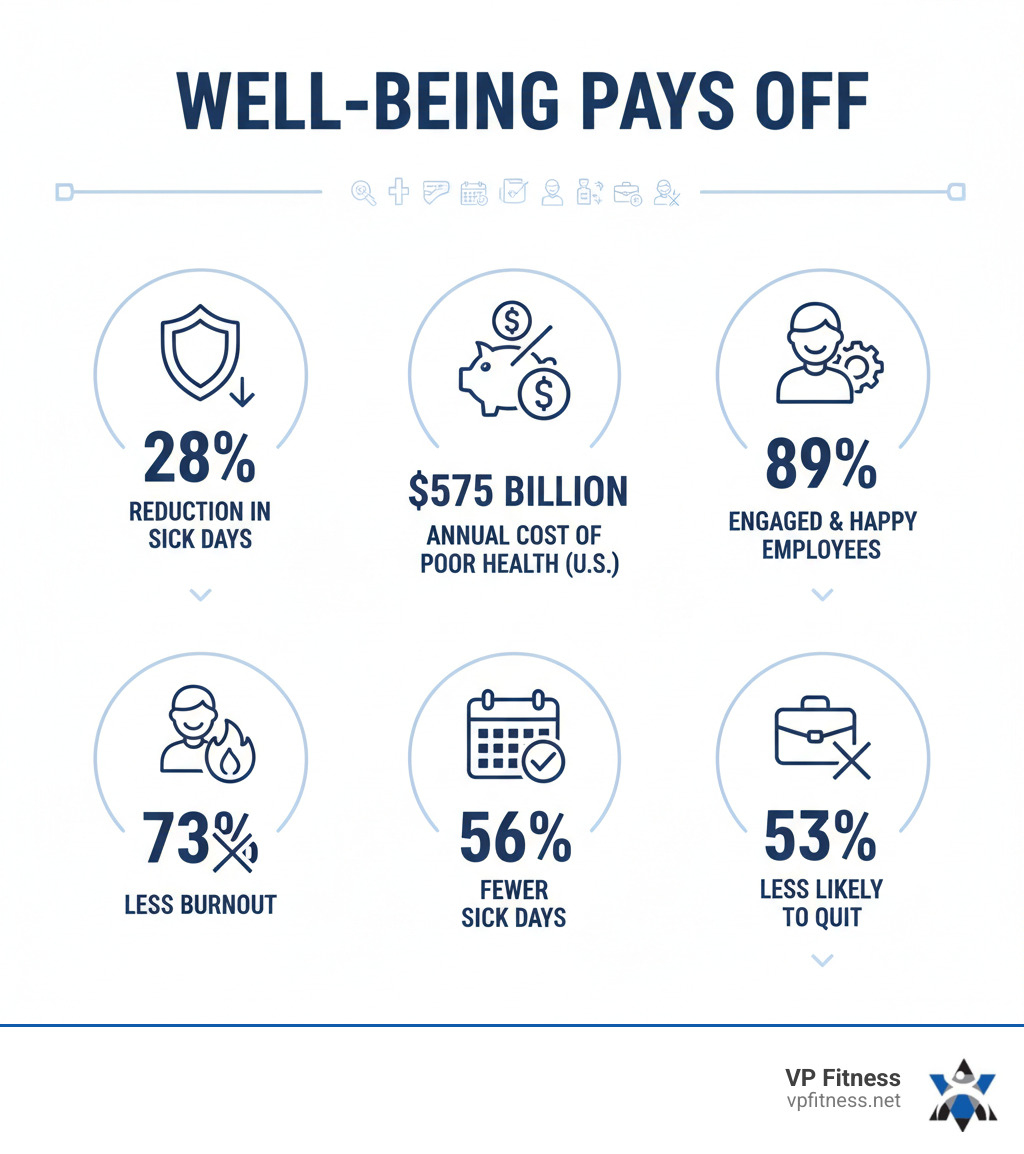
| Key Benefit | Impact |
|---|---|
| Reduced Sick Days | 28% reduction in absenteeism |
| Lower Healthcare Costs | $3.27 saved per $1 spent |
| Higher Retention | 53% less likely to leave |
| Less Burnout | 73% reduction in burnout rates |
| Better Engagement | 89% report higher job satisfaction |
The numbers tell a sobering story. Poor employee health drains $575 billion from the U.S. economy in lost productivity annually, and work-related illnesses claim about 2 million lives globally each year. The modern workplace, with its long hours and screen time, has led to chronic illness and burnout.
But there’s good news: companies investing in wellness see dramatic returns. Employees in these programs take 56% fewer sick days, and when they feel their employer cares about their well-being, they are more than half as likely to look for another job. This isn’t just about perks—it’s about building a culture where people thrive.
What Are Corporate Wellness Programs and Why Do They Matter?
A corporate wellness program is an organized effort to support the health and well-being of a team. Far from a simple perk, these programs are now a necessity, encompassing fitness, mental health, nutrition, and financial wellness. They combat the modern workplace’s health challenges, like a sedentary lifestyle where the average office worker takes only 2,000 steps a day. Prolonged sitting increases risks for Type 2 diabetes, heart disease, and obesity, leading some experts to call it “the new smoking.”
By taking a holistic approach, corporate wellness programs can reverse these trends. Investing in people’s health is a smart business decision that boosts the bottom line through a healthier, more engaged, and productive workforce.
The Tangible Benefits for Employers
When companies commit to wellness, the returns are clear and measurable.
Reduced absenteeism is an immediate benefit. Organizations with wellness initiatives see a 28% reduction in sick days, and active participants take 56% fewer. This leads to more consistent project timelines and reliable teams.
Lower healthcare costs quickly follow. For every $1 spent on wellness, companies can save $3.27 in medical costs. Johnson & Johnson, a pioneer in this space, has consistently kept its healthcare costs below corporate averages for decades.
Increased productivity is another key outcome. Healthy employees are more focused, creative, and engaged, with some studies showing productivity increases of up to 66%.
Higher retention rates are invaluable. When employees feel their employer cares about their well-being, they are 53% less likely to seek a new job, reducing turnover costs and building stronger teams.
Finally, these programs foster an improved company culture. Offering comprehensive wellness benefits sends a clear message: your people matter. This creates a positive, supportive environment where morale thrives.
How Employees Benefit from Workplace Wellness
While the business case is compelling, the real impact is on people’s lives. Corporate wellness programs help employees become healthier and happier.
Improved physical health is the most visible change. Access to fitness classes or gym memberships provides the tools and motivation to take charge of one’s health, alleviating issues like chronic back pain and boosting energy.
Better mental well-being is critical. Programs offering stress management techniques and resilience training give employees strategies to protect their psychological health and build long-term emotional resilience.
The impact on stress and burnout is significant. When organizations prioritize well-being, employees are 73% less likely to feel burned out. Mental health resources and a culture that respects boundaries relieve daily pressures.
Higher job satisfaction naturally follows. Employees at companies with strong wellness cultures are significantly more satisfied with their jobs (90% vs. 61%).
Wellness programs also support better work-life balance. Flexible work options give employees the autonomy to manage their personal and professional lives, allowing them to recharge and bring their best selves to work.
The Essential Components of a Successful Program

A successful corporate wellness program requires more than a fruit bowl in the break room. It needs a thoughtful strategy built on a holistic approach, executive buy-in, clear communication, and a commitment to evolving based on employee feedback.
Building a Foundation for Success
A strong wellness program addresses multiple dimensions of health:
- Physical well-being: This is the foundation, including fitness challenges, exercise resources, and health screenings to help employees maintain a healthy diet, get enough rest, and stay active.
- Emotional wellness: This involves providing resources to manage stress and build resilience, such as mindfulness workshops and creating a culture where it’s safe to discuss mental health.
- Financial stability: With 70% of U.S. adults experiencing financial stress, programs that teach budgeting, debt management, and future planning can make an enormous difference in focus and well-being.
- Social connection: Fostering positive interactions through team activities builds a support system that improves the effectiveness of all other wellness efforts.
Leadership makes or breaks these initiatives. When a program is backed by senior leadership, it secures budget, promotes collaboration, and sends a clear message that employee well-being is a core value.
How to create inclusive corporate wellness programs
An effective program must be inclusive and meet a diverse workforce where they are.
- Support remote and hybrid employees: Virtual fitness classes, online resources, and digital mental health support are now essential for engaging employees regardless of their location.
- Ensure accessibility for all physical abilities: Offer customizable options with different intensity levels and modified exercises so everyone, from beginners to enthusiasts, can participate comfortably.
- Practice cultural sensitivity: Acknowledge and incorporate diverse backgrounds through varied food options, activities, and respect for different holidays. When people feel seen, they engage authentically.
Leveraging Technology and Measuring ROI
Technology makes corporate wellness programs more accessible, engaging, and measurable.
- Wellness platforms: These act as a central hub for resources, challenges, and analytics, making it easy for employees to engage and for HR to manage the program. A good wellness portal is the go-to for all things health-related.
- Wearable technology: From applications to wearables, these devices motivate employees by tracking progress and providing real-time feedback.
- Virtual fitness classes: These offer best flexibility, allowing employees to fit workouts into their schedules, which dramatically increases participation.
Measuring success is critical. Tracking key metrics like participation and satisfaction shows what’s working. Calculating ROI demonstrates the financial impact through reduced healthcare costs and sick days. Don’t forget VOI (Value on Investment)—the intangible but crucial benefits like improved morale, culture, and team cohesion.
Types of Corporate Wellness Programs with Examples

A great corporate wellness program is like a buffet, offering a variety of options to meet the diverse needs and goals of your employees. A comprehensive offering should address multiple dimensions of well-being.
Physical and Nutritional Wellness Initiatives
Physical wellness programs deliver results you can see and feel, forming the core of many corporate initiatives.
- Fitness initiatives: These can include subsidized gym memberships, on-site or virtual fitness classes, and team step-challenges. Making movement accessible and enjoyable reduces stress, improves sleep, and boosts energy.
- Nutritional wellness programs: Recognizing that nutrition plays a vital role, these initiatives might involve providing healthy snacks, access to dietitians, or cooking workshops to promote sustained energy and focus.
- Preventive healthcare initiatives: On-site health screenings, flu shot clinics, and chronic disease management programs are your first line of defense. These preventive measures help catch potential issues early and keep your team healthy.
Mental, Financial, and Social Well-being Programs
Physical health is just one piece of the puzzle. A holistic program must also support employees’ mental, financial, and social needs.
- Mental wellness programs: With 88% of employers increasing investment in this area, initiatives like stress management workshops, mindfulness sessions, and quiet rooms are becoming standard.
- Employee Assistance Programs (EAPs): These offer confidential counseling for work and personal challenges, providing a crucial safety net for employees navigating difficult times.
- Financial wellness programs: As financial stress is at an all-time high, these programs are crucial. Workshops on budgeting, debt management, and retirement planning help employees feel more secure and focused.
- Social wellness programs: Team-building activities, volunteer opportunities, and social events help build relationships and a sense of community, making the workplace a more supportive environment.
These elements work together. An employee who is physically active sleeps better, while someone free from financial worry has more mental energy for work and exercise.
Driving Engagement and Looking to the Future

Launching a corporate wellness program is just the first step. The real challenge is sustaining engagement. Keeping momentum requires intentional effort, genuine enthusiasm, and a willingness to evolve with your employees’ needs.
Effective Strategies for Encouraging Employee Participation
To get your team invested, make participation feel less like a chore and more like a rewarding experience.
- Gamification: Turn wellness into a friendly competition with leaderboards and badges. This can motivate even those who don’t consider themselves “fitness people” to get involved.
- Incentives and rewards: Tangible rewards like gift cards or extra paid time off can provide the initial push needed to build lasting habits.
- Wellness challenges: Organize inclusive challenges around physical activity, mindfulness, or hydration to create a sense of shared purpose and camaraderie.
- Appoint wellness champions: Empower enthusiastic employees to lead by example. Their authentic passion is contagious and can inspire others to join.
- Make it fun and social: Group fitness classes, walking clubs, or healthy cooking competitions transform wellness from a solitary task into a team-building opportunity.
employee engagement in wellness programs thrives when initiatives are custom to what your team actually wants.
The Future of Corporate Wellness
The landscape of corporate wellness is evolving toward more meaningful and effective solutions.
- Hyper-personalization: Generic programs are becoming obsolete. With 80% of employees believing a personalized program would improve their well-being, virtual platforms are now tailoring goals and activities to each individual.
- Increased focus on mental health: This is a fundamental shift. 88% of employers are increasing their investment in mental health, focusing on stress management, resilience, and mindfulness.
- AI and virtual reality: AI can deliver personalized recommendations, while VR can offer immersive wellness experiences, like guided meditations or virtual fitness classes.
- Data-driven strategies: Wearables and wellness platforms provide valuable insights to track progress, measure outcomes, and continuously refine programs based on real data.
- Holistic well-being: The most effective programs address physical, emotional, financial, and social health simultaneously, recognizing that all these dimensions are interconnected.
- Flexible wellness benefits: Remote work and flexible schedules demand adaptable wellness offerings that allow employees to integrate health seamlessly into their lives.
The future of corporate wellness is personal, tech-enabled, and deeply integrated into the fabric of work.
Conclusion: Investing in Your Most Valuable Asset
The evidence is clear: corporate wellness programs aren’t just a nice gesture—they’re a smart business decision that pays real dividends. Throughout this guide, we’ve explored how these programs transform workplaces by cutting sick days by 28%, reducing healthcare expenses by over $3 for every dollar invested, and creating teams that are more productive, engaged, and loyal.
For your employees, the impact goes even deeper. We’re talking about people who feel genuinely healthier, both physically and mentally. They experience less burnout, find more joy in their work, and finally achieve that elusive work-life balance we all crave. When you invest in wellness, you’re telling your team something powerful: you matter.
The most successful programs share common threads. They take a holistic approach, recognizing that well-being isn’t just about hitting the gym—it’s about emotional resilience, financial security, and meaningful connections with colleagues. They have leaders who walk the talk, using technology smartly to personalize the experience, and they continuously evolve based on what employees actually need and want.
Here’s what I’ve learned after a decade in this field: a healthy workforce truly is a productive workforce. When people feel their best, they do their best work. It’s that simple.
Whether a company is just starting to think about employee wellness or looking to revitalize an existing program, the goal should be to build something meaningful. A workplace where people thrive isn’t just good for morale—it’s the foundation of lasting business success.