

Beyond the Bench Press: A Guide to East Side Gyms

East Side Gyms: The Ultimate 2025 Guide
Finding Your Ideal Fitness Hub on the East Side
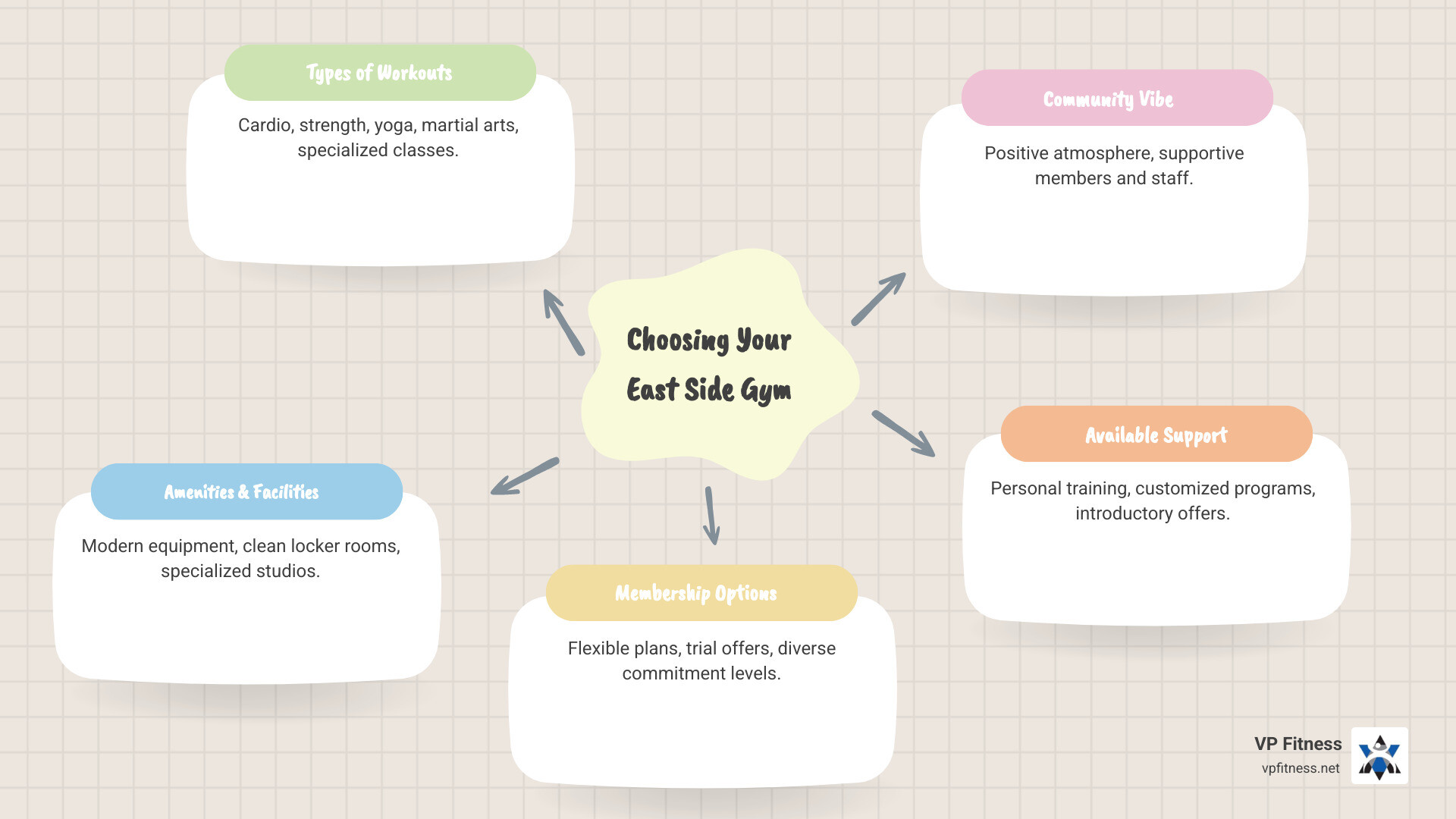
When searching for east side gyms, it’s about finding more than just equipment; it’s about finding a place that supports your journey with expert guidance and a welcoming community. For busy professionals, the right fitness center is a key step toward achieving health goals.
Consider these factors in your search:
- Diverse Offerings: A good gym provides options from weights and cardio to specialized classes like yoga or martial arts.
- Supportive Community: Look for a positive atmosphere that encourages personal development.
- Expert Guidance: Prioritize facilities with certified personal training, custom programs, and nutrition advice.
- Flexible Memberships: Check for various tiers, commitment levels, and introductory offers.
- Key Amenities: Modern equipment, clean locker rooms, and extra features like pools are important.
- Convenient Hours: Ensure the gym’s schedule fits your own.
A great fitness hub inspires you to push your limits and offers programs for all fitness levels. A gym should be a place of empowerment, helping individuals achieve wellness through personalized training and supportive communities.
What to Look For: Matching a Gym to Your Personal Goals
The first step in your fitness journey is defining what you want to achieve. Whether your goal is weight loss, building muscle, boosting endurance, or training for a sport, the right gym will offer the specific support you need. Look for east side gyms that can cater to your unique path.
Connecting your goals with a supportive environment is crucial. Personalized attention and coaching from a certified professional can make all the difference. A trainer who understands your needs can build an effective and sustainable plan, providing the accountability needed to stay on track. A great fitness center should have diverse options: ample cardio and group classes for weight loss, extensive free weights and strength machines for muscle building, and specialized equipment for endurance athletes. A preliminary fitness assessment can help pinpoint exactly what you need.
Defining Your “Why”
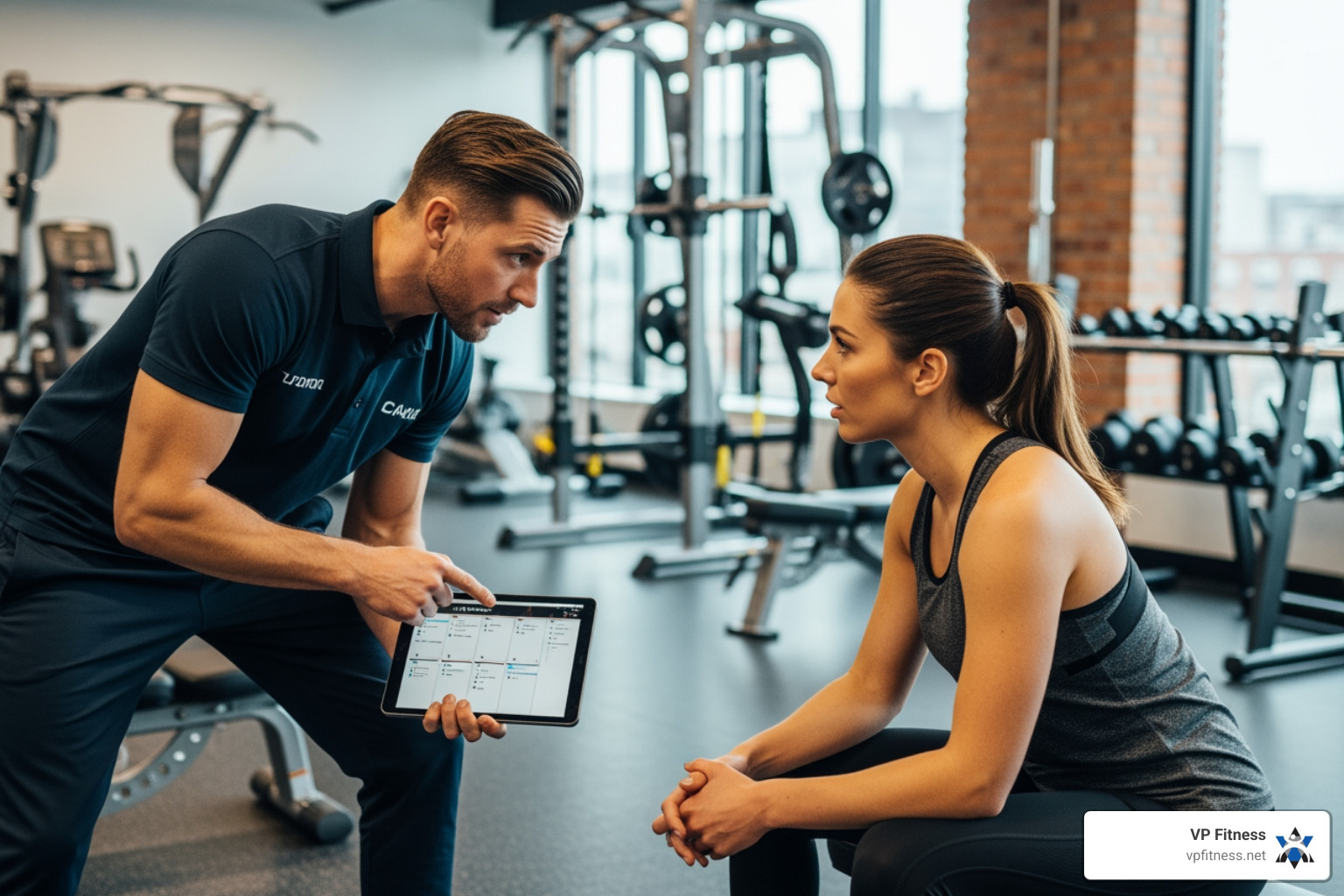
Before starting, identify your core motivation—your “why.” Is it for more energy, better health, or improved athletic performance? This motivation is your foundation for long-term success, especially during plateaus or setbacks. It helps you map out long-term goals and achievable short-term objectives, creating a sustainable routine.
This is where personal training excels. A trainer helps you clarify your “why” and translates it into actionable goals. They design a program custom to you, teach you about fitness and nutrition, and provide the encouragement and accountability to keep you moving forward. Professional guidance empowers you to build a routine that lasts.
Beginner-Friendly Programs
Starting at a gym can be intimidating, which is why beginner-friendly programs are so important. They are designed to ease you into a routine safely and build confidence. Look for introductory offers like free trial periods or discounted first-time packages to test the gym’s atmosphere and equipment without a long-term commitment.
Many gyms offer a complimentary fitness assessment and introductory sessions for new members. New member orientations are also helpful, providing a tour and instructions on using equipment. Foundational classes for beginners teach correct form and technique, building a strong base for future progress. For beginners, personal training is especially beneficial, as a trainer can assess your starting point and guide you through your first workouts, making the gym an empowering place.
A Look Inside Top Gym Amenities and Offerings

When exploring east side gyms, the amenities can make or break your experience. A top-tier facility is a comprehensive environment designed for comfort and efficiency. A great gym floor should include a wide range of cardio equipment, extensive free weight areas, and targeted strength machines. Some facilities also offer specialized zones for functional or athletic training.
Beyond equipment, cleanliness and safety are non-negotiable, from sanitized machines to well-maintained locker rooms and showers. Modern equipment is also valuable, as it’s often safer and more effective. Premium amenities like pools, saunas, or basketball courts can transform a gym visit into a holistic wellness escape.
Specialized Training and Group Classes
Modern gyms offer a variety of specialized training and group classes that provide structure, expert instruction, and a sense of community. These engaging options include:
- Strength Training: Circuit training and bodyweight workouts.
- Yoga-Inspired Classes: For flexibility, balance, and mental calm.
- Functional Fitness: HIIT and boot camps for overall fitness.
- Dance Fitness: Energetic classes like Zumba or Barre.
- Boxing-Inspired Workouts: For intense physical and mental conditioning.
- Cycling Studios: Challenging cardio in a group setting.
Group fitness creates a motivating energy and sense of camaraderie. With structured workouts and regularly updated routines, you can simply show up and follow the instructor’s lead.
Beyond the Workout: Holistic Health Services
Exceptional east side gyms understand that health is holistic. Many offer comprehensive services beyond exercise, including nutrition guidance. Personalized meal plans and access to dietitians are invaluable, as diet is critical to achieving fitness goals. Wellness services like stress management workshops and mindfulness practices address mental health. Finally, recovery options such as massage therapy, stretching areas, and foam rolling are crucial for preventing injury and improving performance. Rest and recovery are just as important as the workout itself.
Understanding Memberships and Finding the Right Fit
Navigating membership options at east side gyms should be straightforward. The right plan matches your lifestyle, goals, and budget. Most fitness centers offer a variety of choices, from flexible monthly memberships to cost-effective annual contracts and specialized class packs.
Memberships are often tiered. A basic tier typically grants access to cardio, free weights, and strength machines. Mid-tier options usually add unlimited group fitness classes, while premium memberships might include personal training sessions and access to specialty amenities like pools or saunas. Look for value-added benefits like digital fitness apps or buddy passes. To choose the best fit, consider how often you’ll visit and which services you’ll use most. Look for gyms with transparent pricing to help you select a plan that supports your journey.
What to Expect from Gym Pricing
Gym pricing varies based on location, amenities, and the level of service. Budget-friendly options provide basic gym floor access, which is great for self-motivated individuals. Mid-range memberships often include perks like unlimited group fitness classes. Premium memberships offer comprehensive access to all classes, programs, and amenities for a complete fitness experience.
Many gyms also offer family and senior programs to accommodate different life stages. Fitness should be accessible to everyone, so always ask about promotions or trial periods to experience a gym’s value before committing.
The Importance of Gym Culture
A gym’s culture is as important as its equipment. A positive, supportive atmosphere is the foundation of long-term success. A strong community atmosphere makes a gym a place you look forward to visiting, where you feel celebrated and encouraged.
A great culture is built on the belief that everyone is welcome. When members and staff support each other, accountability becomes natural. Staff friendliness and professionalism are crucial; approachable, knowledgeable staff who are invested in your success make a huge difference. Cleanliness is another non-negotiable aspect, signaling respect for the members and the facility. When you find east side gyms with a culture that resonates with you, the gym becomes a second home.
Effective Strategies for Building Muscle and Strength
Building muscle and strength is a transformative goal, and many east side gyms offer the ideal environment for it. Understanding fundamental principles is key to consistent progress.
- Progressive Overload: This is the cornerstone of strength training. You must continually challenge your muscles by gradually increasing weight, reps, or sets, or by decreasing rest time. Without this, your muscles will plateau.
- Compound and Isolation Exercises: Your program should be built on compound exercises (squats, deadlifts, bench presses) that work multiple muscle groups at once. Add isolation movements (bicep curls, leg extensions) to target specific muscles.
- Rest and Recovery: Muscles grow during rest, not during workouts. Aim for 7-9 hours of sleep and take at least one or two rest days per week to allow your muscle fibers to repair and rebuild stronger.
- Nutrition for Muscle Growth: Training is only half the battle. Proper nutrition for muscle growth is essential. Your body needs adequate protein to build new muscle tissue, a principle supported by numerous sports nutrition studies. You also need carbohydrates for energy and healthy fats for hormone production.
Your First Steps in a Weight Training Program
Starting a weight training program can feel intimidating, but everyone starts somewhere. The key is building a solid foundation.
Your first priority is proper form. Start with light weights to master the movement, which prevents injury and ensures you’re targeting the right muscles. When choosing the right weight, select a load that makes the last few reps of a set challenging but possible with good form. For muscle building, aim for three to four sets of eight to twelve repetitions.
Beginners should start with full-body workouts two to three times per week, with rest days in between. Avoid common mistakes like ego lifting (using too much weight), rushing reps, and skipping warm-ups or cool-downs. A certified personal trainer is invaluable here; they can teach you proper technique and design a safe, effective program, helping beginners build confidence in the weight room.
Advanced Techniques for Experienced Lifters
As you become more experienced, you may need advanced strategies to break through plateaus. Well-equipped east side gyms support these techniques.
- Periodization: Systematically vary your training in cycles (e.g., a high-volume phase followed by a high-intensity phase) to prevent overtraining and keep your body adapting.
- Supersets: Perform two exercises back-to-back with no rest, often for opposing muscle groups (like biceps and triceps), to increase intensity and efficiency.
- Drop Sets: Push a muscle to failure, then immediately reduce the weight and continue for more reps. This technique creates significant metabolic stress that drives muscle growth but should be used sparingly.
Breaking through plateaus requires changing your routine. A personal trainer can be incredibly valuable for advanced lifters, designing complex periodized programs, teaching new techniques, and providing expert feedback to help you reach your most ambitious goals.
Conclusion
Finding the right fitness hub among the many east side gyms is a game-changer for your health. We’ve covered how to match a gym to your goals, what amenities to look for, and how to understand memberships and culture. The key is to find a gym that truly supports you.
Look for a facility with diverse programs for all levels, from beginner-friendly introductions to advanced lifting techniques. Prioritize personalized support through certified trainers and nutrition guidance, and seek out a welcoming community that feels like a “second home.” The value of professional guidance cannot be overstated; expert coaches provide the knowledge, accountability, and encouragement needed to achieve your goals, whether you’re learning proper form or breaking through plateaus.
Use these insights to find a fitness journey that empowers you. It’s time to lift your workout experience on the East Side.