

From Good to Great: Uncovering the Best Employee Wellness Software for 2025

Why Employee Wellness Software Matters More Than Ever
Employee wellness software is a digital platform that helps companies support their teams’ physical, mental, and financial well-being. These tools make wellness accessible and engaging through features like fitness tracking, mental health resources, team challenges, and rewards programs.
The business case is stronger than ever. Research shows 77% of employees would consider changing employers for better wellness support, while organizations with effective programs report 11% more revenue per employee. With health-related absenteeism costing employers $16 billion annually and 9 out of 10 employees reporting that workplace stress affects their mental health, investing in the right software is essential for business success.
Top employee wellness software options for 2025 include:
- Holistic platforms (e.g., Wellable, Personify Health) for all-in-one solutions.
- Mental health-focused apps (e.g., Headspace, Unmind) for stress management.
- Gamified challenge platforms (e.g., YuMuuv, MoveSpring) for engagement.
- Customizable enterprise solutions (e.g., WellSteps) for large organizations.
What started as simple step-counters has evolved into sophisticated platforms that integrate with HR systems, offer AI-powered personalization, and provide data to prove ROI.
As a corporate wellness expert, I’ve seen how the right wellness tools transform lives. My work implementing corporate wellness programs has shown me what truly drives engagement and creates lasting change. Let’s explore the best solutions and how to choose the right one for your team.
What is Employee Wellness Software and Why is it Crucial for Business?
Employee wellness software is a company’s digital wellness coach, providing comprehensive tools to support physical health, mental resilience, financial security, and social connection. By putting health management in employees’ pockets—with everything from step tracking to meditation sessions—it makes wellness an easy and accessible choice.
For business leaders, the impact on the bottom line is significant. When employees feel supported and healthy, productivity increases, and morale gets a genuine boost. The financial case is compelling: companies with effective health programs report 11% more revenue per employee.
Key business benefits include:
- Reduced Absenteeism: Access to preventive health resources helps lower sick days, which cost employers a staggering $16 billion annually.
- Talent Attraction and Retention: With 77% of employees willing to change jobs for better wellness support, a strong program is a critical competitive advantage.
- Lower Healthcare Costs: Healthier habits can lead to lower medical claims and reduced insurance premiums over time.
Boosting Productivity and Supporting Mental Health
Workplace stress is a productivity crisis, with 9 out of 10 employees reporting it affects their mental health. Employee wellness software provides immediate access to stress-reduction tools like guided breathing and meditation, allowing employees to reset and refocus.
These platforms also foster engagement through gamified features like team step challenges and leaderboards, turning wellness into a fun, collaborative activity. This camaraderie strengthens team bonds and contributes to a positive work culture.
Crucially, these platforms offer 24/7 access to mental health resources. This includes meditation libraries, cognitive behavioral therapy modules, and even connections to professional counselors. By providing proactive tools for stress management and resilience training, companies can help employees build mental fitness and prevent burnout. Supporting mental health isn’t just the right thing to do; it’s fundamental to building a resilient and productive workforce. For more information, see the WHO’s guidance on mental health in the workplace.
Key Features to Look for in Top Employee Wellness Software
Choosing the right employee wellness software means finding a platform that makes wellness easier, not harder. It should blend seamlessly into your employees’ lives and your company’s operations.

Look for these essential features:
- Core Functionalities: The basics must be covered, including health tracking (steps, sleep), a library of wellness content, and customizable challenges.
- Usability: The platform must be intuitive and mobile-friendly. A clean interface, like that of Headspace, encourages adoption.
- Integration Capabilities: It should connect with popular wearables (Fitbit, Apple Watch) and sync with your existing HR systems.
- Data Security: Prioritize platforms with GDPR compliance and anonymized reporting to protect sensitive employee health information.
- Reporting and Analytics: Comprehensive, anonymized reports are needed to track participation, measure ROI, and improve your program.
Engagement Tools: Gamification and Rewards
Gamification transforms wellness from a chore into a fun competition. Features like team challenges, leaderboards, and points systems motivate participation and build camaraderie. YuMuuv, for example, offers unlimited challenges to keep teams engaged.
Rewards provide tangible incentives. Look for platforms that allow employees to redeem points for gift cards, merchandise, or even extra PTO. Lifestyle Spending Accounts (LSAs), offered by platforms like Wellable, give employees flexible funds for wellness expenses that matter to them, from gym memberships to mental health apps. This approach makes wellness rewarding and sustainable.
Comprehensive Health and Wellness Resources
A great platform is a complete ecosystem supporting an employee’s entire health journey.
- Physical Activity: Look for seamless wearable device integration and on-demand fitness classes (yoga, HIIT, etc.).
- Nutrition Guidance: Resources should include healthy recipes, meal planning tools, and dietary advice.
- Mental Health Support: This is crucial. Features should range from mindfulness exercises (Headspace) to proactive resilience training (Headversity).
- Financial Wellness: Tools that address financial stress, such as budgeting resources or discount programs (Abenity), are a valuable component of overall well-being.
Administration and Integration
Effective software simplifies management for your HR team.
- HRIS Integration: Automatic syncing with systems like BambooHR eliminates manual data entry.
- Custom Branding: White-label options (CoreHealth Pro) make the platform feel like a genuine part of your company culture.
- Anonymized Reporting: This provides essential insights into program effectiveness while protecting individual employee privacy.
- Communication Tools: Built-in messaging and notification systems keep employees informed and engaged.
| Feature Category | Holistic Platforms (e.g., Wellable) | Mental Health Focused (e.g., Headspace) | Gamified Challenges (e.g., YuMuuv) | Enterprise Solutions (e.g., WellSteps) |
|---|---|---|---|---|
| Physical Wellness | Comprehensive tracking, on-demand classes, nutrition, challenges | Limited to stress-reducing physical activities (e.g., gentle yoga) | Primary focus: step/activity challenges, leaderboards | Broad physical activity tracking, customizable challenges |
| Mental Wellness | Extensive resources, mindfulness, stress management, coaching | Core offering: meditation, CBT, counseling, resilience training | May include basic mindfulness or stress challenges | Integrated mental health modules, often with coaching options |
| Financial Wellness | Often included (e.g., Abenity discounts, LSAs) | Rarely a core feature | Minimal or none | Can integrate financial literacy resources |
| Social Connection | Team challenges, community features, peer recognition | Limited to shared program experiences | Strong emphasis on team-building, leaderboards, social interaction | Group challenges, social features, community engagement |
| Personalization | Custom content, coaching, program recommendations | User-specific content/programs based on needs | Challenge customization, individual goals | Highly customizable programs, individual health assessments |
| HR Integration | Good (HRIS, API, reporting) | Variable, often simpler integrations | Basic user management, challenge reporting | Advanced (HRIS, SSO, detailed analytics, custom branding) |
| Gamification/Rewards | Integrated challenges, points, flexible rewards | Minimal | Core mechanism: points, badges, leaderboards, varied rewards | Customizable rewards engine, points, verified activities |
| Data & Analytics | Comprehensive reporting, trend analysis | Engagement & usage data | Participation & challenge completion rates | Deep analytics, outcomes-based reporting, population health insights |
The Best Types of Employee Wellness Software Solutions
There is no single perfect employee wellness software for every company. The market offers specialized platforms to meet different priorities, from comprehensive support to targeted concerns like mental health or team engagement.
Understanding the main categories makes it easier to find a solution that fits your team’s specific goals:
- Holistic Platforms: These are all-in-one command centers, bringing physical, mental, financial, and social well-being resources together in a single, unified platform.
- Mental Health-Focused Apps: These platforms specialize in psychological and emotional wellness, offering tools like meditation, resilience training, and access to counseling.
- Gamified Challenge and Rewards Platforms: These solutions focus on making wellness fun and engaging through friendly competition, team leaderboards, and rewards.
- Personalized Coaching Platforms: Blending technology with a human touch, these platforms offer customized guidance from real coaches to provide accountability and expertise.
The right choice depends on what your team needs most. Let’s look at each category more closely.
1. Holistic All-in-One Platforms
Best for: Companies seeking a single solution for total well-being
Holistic employee wellness software platforms are for companies that want to support every dimension of health: physical, mental, financial, and social. These comprehensive solutions bring everything together under one roof, simplifying access for employees and management for HR.
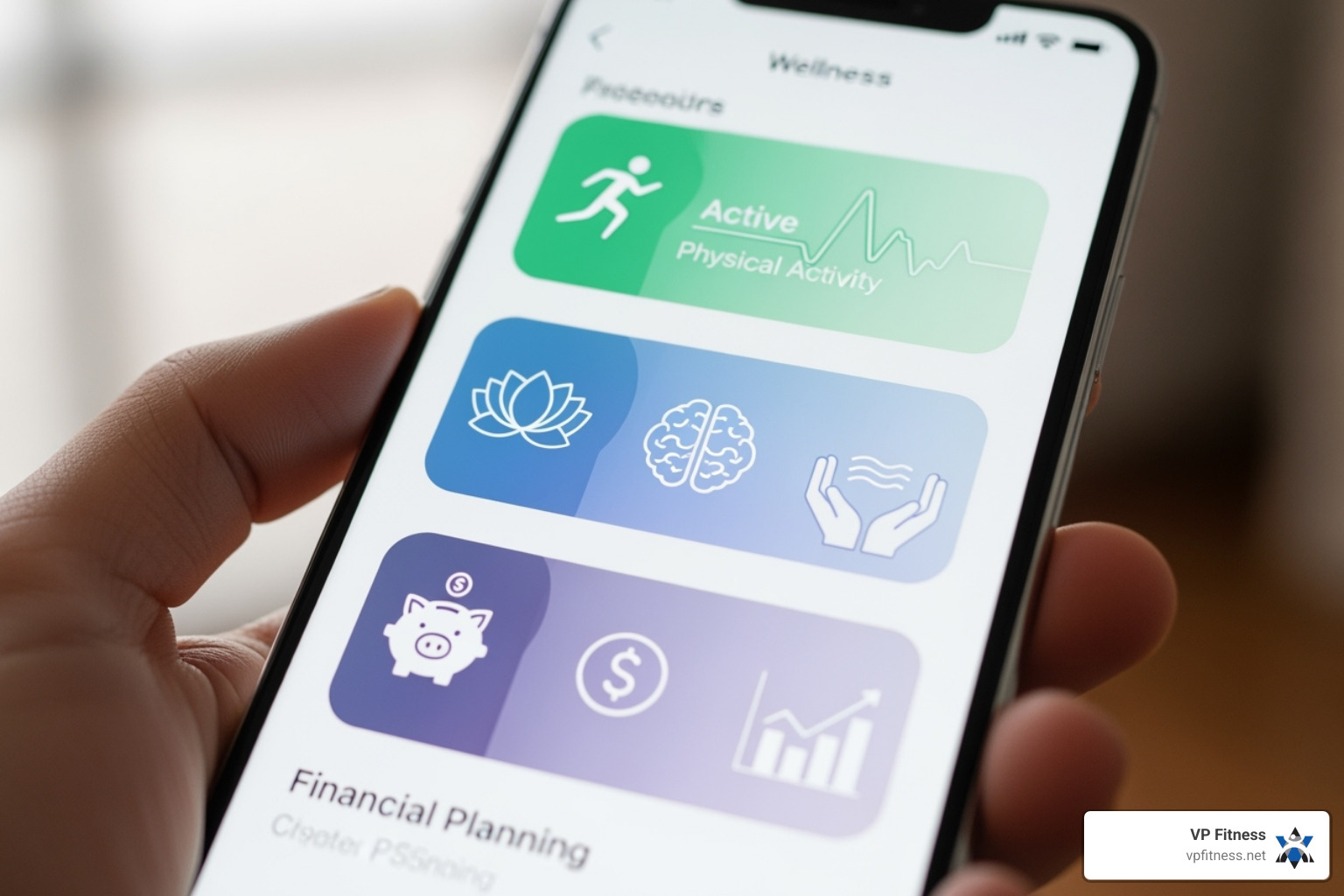
Think of these platforms as a centralized hub for tracking steps, practicing mindfulness, getting financial tips, and joining team challenges. Many start with Health Risk Assessments (HRAs) to help employees identify their needs. The platform then delivers personalized content—like workout suggestions or stress management techniques—custom to their goals. Personify Health is known for this individualized approach.
Wellable and CoreHealth are other examples that offer a full suite of tools to support complete health journeys. For HR teams, these platforms provide anonymized reporting to track engagement and program impact. The key advantage is simplicity: one vendor, one contract, and one integrated solution.
2. Mental Health and Mindfulness Apps
Best for: Organizations prioritizing stress reduction and mental resilience
With 9 out of 10 employees reporting that workplace stress affects their mental health, specialized mental health and mindfulness platforms are more critical than ever. These employee wellness software solutions focus deeply on psychological health rather than trying to be everything to everyone.
Core features typically include:
- Meditation and Mindfulness Programs: Guided sessions for all levels to reduce stress and improve focus. Headspace is a leader in this area, offering 24/7 access to resources through its user-friendly app.
- Cognitive Behavioral Therapy (CBT) Programs: Structured digital experiences, like those from Starling, that help users reshape negative thought patterns.
- On-Demand Counseling: Some platforms connect employees directly with licensed mental health professionals for personalized support.
- Proactive Skill-Building: Solutions like Headversity and Unmind focus on building emotional intelligence and resilience before a crisis hits.
These platforms also provide practical tools like breathing exercises and mood tracking. By offering accessible and discreet support, they help employees manage daily pressures, prevent burnout, and cultivate a more positive outlook. This is a powerful complement to physical wellness initiatives.
3. Gamified Challenge and Rewards Platforms
Best for: Driving engagement and team-building through healthy competition
For organizations looking to inject fun and team spirit into their wellness initiatives, gamified challenge and rewards platforms are an excellent choice. They tap into our natural love for competition and recognition, turning wellness into an exciting shared experience.
These platforms make wellness feel like play. Step challenges and activity tracking form the foundation, encouraging movement by setting team or individual goals. Social features are key, allowing colleagues to form teams, share progress, and cheer each other on. This creates the same accountability that makes group fitness classes so effective.
Leaderboards fuel friendly competition, while customizable rewards—points, badges, or prizes—provide tangible incentives. WellSteps Rewards, for example, allows employees to earn points for completing verified wellness activities.
YuMuuv and IncentFit are prime examples of this approach. They focus on rewarding healthy activities, which drives high user engagement. This type of employee wellness software fosters camaraderie and builds a more active, connected workforce.
How to Choose and Implement the Right Solution
Choosing the right employee wellness software requires finding a solution that fits your company’s unique culture, needs, and goals.

- Assess Company Needs: Use surveys, focus groups, or HR data to understand your workforce’s biggest challenges. Are they stressed, inactive, or worried about finances?
- Define Wellness Goals: Set specific, measurable goals. Instead of “improve health,” aim for “reduce sick days by 15%” or “increase engagement scores by 20%.”
- Consider Budget and Scalability: Be realistic about costs while understanding the potential ROI. Ensure the platform can grow with your company.
- Develop an Implementation Plan: A solid plan includes a clear rollout strategy, a communication campaign to build excitement, and a smooth onboarding process. Identify internal wellness champions to encourage participation.
Understanding Costs and Pricing Models
Pricing for employee wellness software typically follows a per-employee-per-month (PEPM) model, often with tiered subscriptions (Basic, Standard, Premium) that offer different feature sets. Costs can range from less than $1 to over $7 PEPM. Some vendors charge one-time setup fees, while others offer custom pricing for large enterprises.
Remember to factor in the ROI. Reducing absenteeism (which costs employers $16 billion annually) and improving retention can quickly offset the software’s cost. Effective programs have been shown to generate 11% more revenue per employee.
Future Trends in Employee Wellness Software
The future of wellness tech is focused on personalization and proactive support:
- AI and Hyper-Personalization: AI will deliver truly customized recommendations for fitness, nutrition, and mental health, making programs far more effective.
- Deeper Integration with Healthcare: The line between wellness and traditional healthcare is blurring, allowing for more coordinated care.
- Predictive Analytics for Burnout: AI can spot early warning signs of stress, allowing for proactive intervention.
- Hybrid and Remote Work Wellness: New features are addressing the unique challenges of distributed teams, such as isolation and sedentary behavior.
Frequently Asked Questions about Employee Wellness Software
Here are answers to the most common questions about employee wellness software.
How do you measure the ROI of an employee wellness program?
Measuring the Return on Investment (ROI) is crucial for demonstrating value. Track these key metrics:
- Reduced Absenteeism: Compare sick days before and after implementation. A decrease translates directly to cost savings.
- Lower Healthcare Costs: Analyze medical claims and insurance premiums over time. Healthier employees generally have lower healthcare expenses.
- Increased Productivity: While harder to measure directly, organizations with effective programs report 11% more revenue per employee.
- Improved Employee Retention: Track turnover rates. With 77% of employees considering leaving for better wellness support, retention is a major cost saver.
- Employee Engagement Surveys: Use surveys to gauge satisfaction, morale, and perceived support.
How long does it take to implement employee wellness software?
The timeline varies. Out-of-the-box solutions can be implemented in just a few weeks. Fully customized platforms for large organizations, requiring HRIS integration and custom branding, can take several months.
A significant portion of the timeline should be dedicated to a well-planned communication strategy and onboarding process to ensure employees understand and use the new tools.
Is employee health data kept private and secure?
Yes. Reputable employee wellness software providers prioritize data security. Here’s how:
- Compliance: They adhere to strict regulations like HIPAA (in the U.S.) and GDPR (in the E.U.).
- Anonymized Reporting: Employers receive only aggregated and anonymized data. They can see overall trends but not individual health information.
- Security Protocols: Providers use encryption, secure servers, and regular third-party audits to protect data.
- Employee Consent: Employees must give explicit consent for their data to be collected and used, with clear explanations of how it will be handled.
Choosing a provider with a strong commitment to privacy is essential for building the trust needed for a successful program.
Conclusion: Investing in Your Team’s Greatest Asset
Employee wellness software is more than a perk; it’s a strategic investment in your people. These platforms boost productivity, reduce absenteeism, and address the critical need for mental health support. Whether you choose a holistic solution, a mental health app, or a gamified platform, the key is to find what resonates with your team.
However, technology works best when it’s part of a broader culture of care. The software provides structure and resources, but it flourishes when paired with a genuine commitment to your team’s health—not just their output, but their whole selves.
Combining digital tools with hands-on support creates a truly transformative experience. Personal training services, for example, provide that human touch—custom plans, one-on-one coaching, and accountability that helps turn intentions into lasting habits. A comprehensive strategy meets people where they are, offering both digital convenience and expert, in-person guidance.
Investing in wellness sends a powerful message: your people are your greatest asset. You’re showing that their health is a priority and that you’re willing to provide real resources to support them. That’s the kind of workplace top talent seeks out and stays with.
Ready to build a healthier, happier, and more productive workplace? Your team—and your bottom line—will thank you.