

Workout Wonders: Simple Plans for Fitness Newbies

Why Starting Your Fitness Journey Doesn’t Have to Be Overwhelming
Exercise for beginners can feel intimidating, but the truth is simple: any movement is better than none, and you don’t need to become a fitness expert overnight to see real benefits.
Quick Start Guide for Beginners:
- Start small: 10-20 minutes of walking daily
- Mix it up: Combine cardio (walking, cycling) with basic strength moves (squats, push-ups)
- Be consistent: Aim for 2-3 workouts per week initially
- Listen to your body: Rest when needed, progress gradually
- Set realistic goals: Focus on building habits, not perfection
Nearly half of all women have done no vigorous exercise in the past 12 months, which means you’re definitely not alone if you’re feeling uncertain about where to begin. The good news? Research shows that even short 10-minute workouts can improve your mood, energy levels, and sleep quality almost immediately.
The mental health benefits kick in fast – you might notice improved mood and better sleep within days of starting. Physical changes like increased strength and endurance typically appear within 2-4 weeks of consistent activity.
Starting an exercise routine can feel challenging and overwhelming, but it doesn’t have to be scary. The key is beginning with activities that match your current fitness level and gradually building from there. Whether your goal is weight loss, better health, or simply feeling more energetic, the most important step is just getting started.
As a master trainer since 2011, I’ve helped hundreds of busy professionals find that exercise for beginners doesn’t require perfection – just consistency and the right guidance. My experience has shown me that the most successful fitness journeys start with simple, sustainable habits rather than dramatic overhauls.

Getting Started: Your First Steps into Fitness
Starting on a fitness journey, especially when you’re new to it, can feel like stepping into uncharted territory. However, with a few foundational considerations, you can confidently pave the way for a successful and sustainable routine. Our first step is always to ensure we’re ready to go!
One of the most crucial considerations before starting any new exercise for beginners program is to check in with our health. While exercise is generally safe and beneficial, it’s always wise to consult with a healthcare professional, especially if we have any underlying health conditions or concerns. They can offer personalized advice and ensure our chosen activities are appropriate for our current physical state.
Once we have the green light, the next step is to make a plan and set realistic goals. We often see people get discouraged because they aim for perfection right away. Instead, we encourage setting SMART goals: Specific, Measurable, Achievable, Realistic, and Timely. For instance, instead of “I want to get fit,” a SMART goal might be “I want to walk for 30 minutes, five days a week, for the next month.” This approach helps us build momentum and celebrate small victories, which is vital for long-term adherence.
Finding our “why” is also incredibly powerful. Why do we want to exercise? Is it for better health, more energy, stress reduction, or simply to feel stronger? Research suggests that attaching our fitness efforts to performance- and health-based reasons, rather than purely aesthetic ones, tends to lead to greater satisfaction and consistency. When we focus on how exercise makes us feel and what our bodies can do, rather than just how they look, we create a more resilient motivation. As we like to say, “Start something today that your next-year self will be glad you did.”
The hardest part of any fitness journey is often making the decision to start. But by taking these initial steps – consulting a doctor, setting realistic goals, and understanding our personal motivations – we lay a solid foundation for a fulfilling and lasting fitness habit. For those who appreciate a custom approach, exploring the benefits of personalized fitness plans can be a game-changer. These plans can guide us through our initial steps and beyond, ensuring our efforts are effective and safe.
The Physical Activity Guidelines for Americans also provides excellent recommendations for overall health, which we will dig into more deeply as we craft our weekly plan.
The Building Blocks of a Beginner Workout
To understand exercise for beginners, it’s helpful to categorize the fundamental types of movement. Think of these as the essential ingredients for a well-rounded fitness routine. We typically focus on four main pillars: aerobic exercise, strength training, flexibility, and balance.
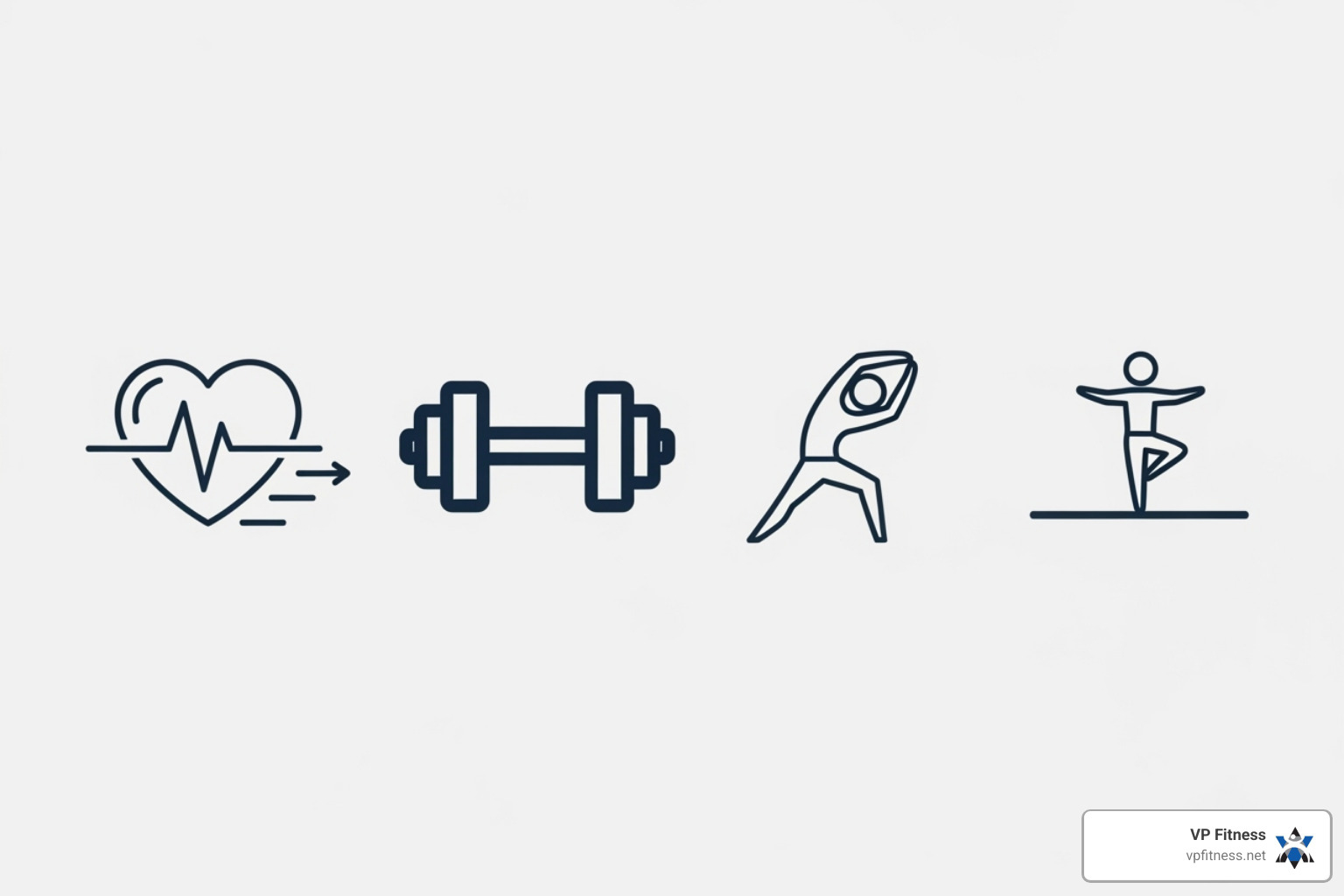
Aerobic Exercise (Cardiovascular Health): This is all about getting our heart rate up and improving our cardiovascular system. Activities like brisk walking, jogging, cycling, swimming, or even dancing fall into this category. For beginners, a brisk walk is an excellent starting point. It’s low-impact, accessible, and highly effective for building endurance. Even short bursts of cardio, like a 10-minute low-impact HIIT workout, can get our heart pumping and contribute to our weekly activity goals.
Strength Training (Muscle Building): This type of exercise focuses on building and maintaining muscle mass, which is crucial for a healthy metabolism, strong bones, and functional movement in daily life. For exercise for beginners, bodyweight exercises are fantastic as they require no equipment and can be done anywhere. Moves like squats, lunges, and push-ups (even modified ones) are incredibly effective. As we progress, we can consider adding light dumbbells. Research suggests that for beginners, weights between 5 and 10 pounds are a good starting point for dumbbell exercises, allowing us to focus on proper form before increasing resistance. Bodyweight exercises alone can help build strength and muscle mass, improve aerobic fitness, and manage fat mass.
Flexibility (Mobility & Stretching): Often overlooked, flexibility is vital for preventing injuries, improving range of motion, and reducing muscle stiffness. Stretching after a workout or incorporating practices like yoga can significantly improve our overall well-being. Even a 5-minute daily mobility routine or a 10-minute active recovery yoga session can make a big difference.
Balance Exercises (Stability): Good balance is essential for daily activities and becomes increasingly important as we age. Simple exercises like the Bird Dog pose can greatly improve our stability and core strength. Planks, too, are full-body exercises that improve overall strength and stability.
By incorporating elements from each of these categories, we create a comprehensive and effective exercise for beginners program. It’s not about doing everything perfectly from day one, but about gradually building these components into our routine. For those who thrive in a supportive environment, exploring the benefits of group fitness classes can provide both structure and motivation.
Crafting Your Weekly Exercise for beginners Plan
Now that we understand the types of exercises, let’s talk about putting them into a realistic and achievable plan. The most effective workout plan is ultimately one we’ll actually follow. Consistency, not intensity, is the true magic ingredient for exercise for beginners.

We emphasize starting small and building habits. A 20-minute home workout is certainly better than no physical activity at all. It’s about integrating movement into our lives in a way that feels sustainable, rather than overwhelming.
How Much and How Often Should I Exercise?
The Physical Activity Guidelines for Americans provides us with excellent benchmarks. They recommend that adults aim for at least 150 minutes of moderate-intensity cardiovascular exercise or 75 minutes of high-intensity exercise per week. Additionally, we should aim to do strengthening and balance exercises at least twice a week.
What does this mean for exercise for beginners? It means we don’t have to jump into hour-long gym sessions right away. We can start with quick workouts that are 30 minutes or less. Even 5-10 minutes is a fantastic start! As we build strength and confidence, we can gradually increase the time. For example, the American Heart Association recommends starting with brisk walking for 30 minutes, five days a week. We can even break this into shorter 10-minute segments throughout the day if that fits our schedule better.
The key is to create a routine that works for us, allowing our bodies to adapt and grow stronger without feeling burnt out. We want to aim for consistency, building a habit that turns initial motivation into lasting discipline. For more details on these recommendations, check out the American Heart Association exercise recommendations.
A Sample 1-Week Beginner Workout Schedule
Here’s a sample 1-week schedule designed for exercise for beginners, focusing on a balanced mix of activities and allowing for rest and recovery. This plan aims to meet the recommended guidelines while keeping things manageable and enjoyable.
- Monday: 20-minute Brisk Walk. Get outside, put on some music, or call a friend. Focus on a pace where you can talk but are slightly breathless.
- Tuesday: 20-minute Full-Body Strength. Focus on bodyweight exercises like squats, knee push-ups, and planks. We’ll detail some of these below.
- Wednesday: Active Recovery (Stretching/Mobility). This could be a 10-minute active recovery yoga session or simply holding some gentle stretches for major muscle groups.
- Thursday: 20-minute Brisk Walk. Another opportunity to enjoy some low-impact cardio.
- Friday: 20-minute Full-Body Strength. Repeat Tuesday’s routine or try some new bodyweight variations to keep it fresh.
- Saturday: Fun Activity (Hike, Dance, or Bike Ride). This is our chance to make exercise enjoyable! Choose something that feels like play, not work.
- Sunday: Rest Day. Our bodies build muscle during rest, so this day is crucial for recovery and preventing burnout.
This structure provides a great starting point for building a consistent gym routine, whether we choose to work out at home or in a dedicated fitness space.
At-Home Exercise for beginners: No Equipment Needed
One of the greatest advantages of exercise for beginners is that we don’t need fancy equipment or a gym membership to get started. Bodyweight exercises are incredibly effective for building strength, improving balance, and boosting our fitness levels. Here are some beginner-friendly exercises we can do right in our living room:
- Bodyweight Squats: Stand with feet shoulder-width apart, chest up. Lower our hips as if sitting back into a chair, keeping our knees in line with our toes. Go as low as comfortable, then push back up. Bodyweight squats can improve the strength and function of our muscles, tendons, and bones.
- Knee Push-ups: Start on all fours, hands slightly wider than shoulder-width. Lower our chest towards the floor, keeping our body in a straight line from head to knees. Push back up. If this is too challenging, start with Wall Push-ups.
- Planks: Start in a push-up position, then lower onto our forearms, keeping our body in a straight line from head to heels. Engage our core and hold for 20-30 seconds. Planks are a full-body exercise that can improve overall strength, stability, and athletic performance.
- Glute Bridges: Lie on our back, knees bent, feet flat on the floor close to our glutes. Lift our hips off the floor until our body forms a straight line from shoulders to knees. Squeeze our glutes at the top.
- Bird-Dog: Start on all fours, hands directly under shoulders, knees under hips. Slowly extend our right arm forward and our left leg straight back, keeping our core engaged and hips stable. Return to start and repeat on the other side. The Bird Dog pose is a full-body move that requires balance and stability.
- Stationary Lunges: Step forward with one leg, lowering our hips until both knees are bent at approximately a 90-degree angle. Ensure our front knee stays over our ankle. Push back up to the starting position.
Focus on proper form over the number of repetitions. It’s better to perform fewer reps with good technique than many with poor form, which can lead to injury. We encourage starting with 2-3 sets of 10-15 repetitions for each exercise, resting for 30-60 seconds between sets.
Fueling Your Fitness and Preventing Injury
As we accept our new exercise for beginners routine, it’s crucial to adopt a holistic approach that extends beyond the workout itself. This means paying attention to how we fuel our bodies and how we prepare for and recover from physical activity. Listening to our body and prioritizing proper form are paramount to preventing injuries and optimizing our results.
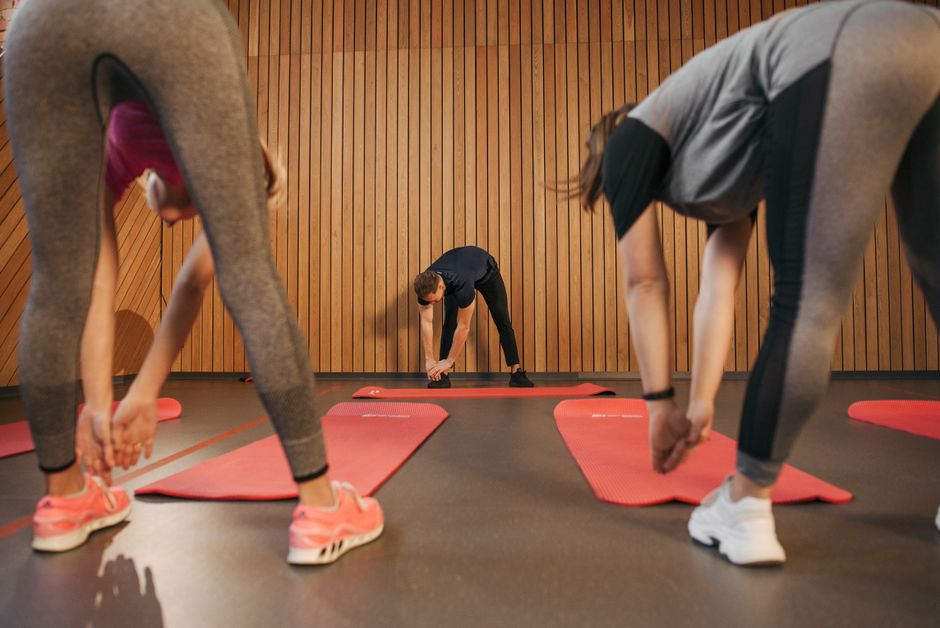
The Importance of a Proper Warm-Up and Cool-Down
Think of warming up and cooling down as the bookends of our workout. They might seem like extra steps, but they are essential for preparing our bodies for activity and aiding in recovery.
A proper warm-up prepares our muscles and joints for the work ahead. Scientific research suggests that warming up before exercising provides several physical and psychological benefits. It increases blood flow to our muscles, raises our body temperature, and helps us mentally prepare for the workout. A dynamic warm-up, which involves movement rather than static holds, is ideal. We can try light cardio like marching in place, arm circles, leg swings, or dynamic stretches for 5-10 minutes.
A cool-down, on the other hand, helps our body gradually return to its resting state. It allows our heart rate to come down slowly and helps prevent blood pooling in our extremities. The American Heart Association states that stretching after exercise can also help reduce muscle soreness and tightness by reducing the buildup of lactic acid in our muscles and joints. A cool-down should involve 5-10 minutes of static stretches, where we hold each stretch for 20-30 seconds, focusing on the muscles we just worked. This helps improve flexibility and prevent injuries.
Nutrition and Hydration for Optimal Results
What we put into our bodies plays a massive role in how we perform during our workouts and how well we recover afterward. For exercise for beginners, understanding basic nutrition and hydration is key.
Hydration is absolutely essential. Replenishing fluids during exercise is critical for maintaining optimal performance, preventing injury, and maximizing recovery, especially if we’re exercising in warmer temperatures. The Academy of Nutrition and Dietetics provides clear guidelines: men should aim for about 15.5 cups (3.7 liters) of water daily, and women about 11.5 cups (2.7 liters). This includes water from food and other beverages. Keep a water bottle handy and sip throughout the day, not just during workouts.
Nutrition fuels our body like gas fuels a car. Eating a well-balanced diet is one of the most important aspects of preventing chronic conditions and maintaining a healthy weight.
- Pre-Workout Fuel: Carbohydrates are our body’s primary energy source. Consuming carbohydrates before exercise, especially for activities lasting longer than an hour, can help fuel our muscles. A small, easily digestible snack like a banana or a slice of toast an hour before our workout can provide the necessary energy.
- Post-Workout Recovery: After a workout, our muscles need to repair and rebuild. Protein is crucial for this process, helping to improve muscle recovery, repair tissue damage, and build muscle mass. Combining protein with carbohydrates after a workout helps replenish glycogen stores and aids in nutrient absorption. A balanced meal with lean protein (like chicken or fish) and complex carbohydrates (like brown rice or sweet potato) within an hour or two post-workout is ideal.
- Healthy Fats: While not a primary fuel source for quick energy, healthy fats help promote fat burning, increase energy, and manage blood pressure and cholesterol levels. Incorporating sources like avocados, nuts, and olive oil into our diet is beneficial for overall health.
By focusing on these aspects of warming up, cooling down, nutrition, and hydration, we set ourselves up for success and ensure our fitness journey is both effective and injury-free.
Staying the Course: Motivation and Progression
Starting is one thing, but staying consistent with exercise for beginners is where the real challenge often lies. We know that long-term success comes from building habits and finding ways to keep our motivation high. Overcoming plateaus and celebrating small wins are integral parts of this journey.
How to Stay Motivated and Build a Lasting Habit
Motivation can ebb and flow, but habits endure. We’ve found several strategies that truly help beginners stay engaged and build a consistent routine:
- Find What We Enjoy: This is perhaps the most important factor. Research suggests we’re more likely to maintain an exercise routine long-term if we actually have fun doing it. If we hate running, let’s not force it! Try dancing, hiking, cycling, or even a sport we enjoyed as a child.
- Workout with a Buddy or Group: Accountability is a powerful motivator. Exercising with a friend, family member, or joining group fitness classes can make workouts more enjoyable and ensure we show up, even on days we don’t feel like it. The camaraderie and shared experience of group fitness can be incredibly uplifting.
- Track Our Progress: Seeing how far we’ve come is incredibly motivating. Whether it’s logging our walks, tracking our reps, or simply noting how much stronger we feel, tangible progress reinforces our efforts.
- Schedule Our Workouts: Treat our workouts like important appointments. Put them on our calendar and commit to them. Consistency builds habit.
- Vary Our Routine: Doing the same thing every day can lead to boredom and plateaus. Introduce variety by trying different types of exercises, new routes for walks, or different online workout videos.
- Add Entertainment: Listening to music, podcasts, or audiobooks during our workouts can make the time fly by and add an element of enjoyment.
The goal isn’t perfection, but consistency. We’re building a new lifestyle, one step at a time.
Progressing From Beginner to Intermediate
Once we’ve established a consistent exercise for beginners routine and those initial workouts start to feel easier, it’s time to think about progression. This is how we continue to challenge our bodies, build strength, and avoid plateaus. The principle behind this is called progressive overload – gradually increasing the demands on our body.
Here are ways we can progress from basic exercises to more challenging ones:
- Increase Repetitions: If we’re comfortably doing 10 reps of an exercise, try for 12-15 reps.
- Increase Sets: If we’re doing 2 sets, try adding a third set.
- Add Light Weights: For bodyweight exercises, once we’ve mastered form and increased reps, we can introduce light dumbbells (starting with 5-10 pounds) or resistance bands to increase the challenge.
- Reduce Rest Time: Shortening the rest period between sets can increase the intensity of our workout.
- Try Harder Exercise Variations: For example, once knee push-ups are easy, we can try full push-ups. Or progress from stationary lunges to walking lunges, which can activate lower body muscles better and improve stability.
- Increase Workout Duration or Frequency: If we’re doing 20-minute workouts, we can gradually extend them to 30 minutes. If we’re working out three times a week, we might add a fourth session.
The key is to make these changes gradually and listen to our body. Don’t add too much too soon. The goal is to consistently challenge ourselves without risking injury. This is an area where personalized guidance can be incredibly valuable. If we’re unsure how to best progress, choosing the right personal trainer for your goals can provide expert advice custom to your specific needs and aspirations.
Frequently Asked Questions about Exercise for Beginners
We often hear similar questions from those just starting their fitness journey. Let’s address some of the most common ones to help clarify any doubts.
What is the best type of exercise for a beginner?
The “best” type of exercise for beginners is the one we enjoy and will stick with consistently. A combination approach is generally recommended for overall health and well-being. This means including both cardiovascular exercise (like brisk walking, cycling, or swimming) and strength training (using bodyweight or light weights).
True beginners should start with full-body workouts composed of low-impact strength training exercises. As we progress, our workouts can become more focused. The most effective workout plan is ultimately one we’ll actually follow. So, if we love dancing, dance! If we prefer quiet walks, walk! Consistency is key, and personal preference plays a huge role in building a lasting habit.
How long should a beginner workout be?
When it comes to exercise for beginners, we encourage starting small. Workouts can be as short as 5-10 minutes when we’re just getting started. The American Heart Association notes that even 5-10 minutes is great if we’re just getting started! The goal is to build momentum and establish a routine.
As we build strength and confidence, we can gradually increase the duration. We can aim for 20-30 minutes per session, working towards the recommended 150 minutes of moderate activity per week. A 20-minute home workout is better than no physical activity, but may not be enough weekly exercise on its own as we progress. The quality of movement and consistency are more important than pushing for long, exhausting sessions initially.
Can I build muscle with just bodyweight exercises?
Absolutely, yes! We can definitely build muscle mass with just bodyweight exercises. The key principle here is progressive overload. This means continually challenging our muscles as they adapt and get stronger.
With bodyweight training, we can apply progressive overload by:
- Increasing Repetitions: Doing more reps per set.
- Decreasing Rest Periods: Shortening the time we rest between sets.
- Performing Harder Variations: Moving from knee push-ups to full push-ups, or from standard squats to single-leg squats (when ready).
- Increasing Time Under Tension: Performing movements more slowly and controlled, keeping the muscle engaged for longer.
While bodyweight exercises are an effective way to help build strength and muscle mass, proper nutrition, especially adequate protein intake, is also crucial for muscle growth and recovery.
Conclusion: Your Fitness Journey Starts Now
Starting on an exercise for beginners journey is a powerful step towards a healthier, happier us. We’ve explored the fundamental types of exercise, how to craft a realistic plan, the importance of proper warm-ups, cool-downs, nutrition, and hydration, and strategies for staying motivated and progressing.
The key takeaways are simple: start slow, be consistent, and listen to your body. Any movement is good movement, and even short, regular workouts can lead to significant improvements in our mood, energy levels, and overall well-being in the short term. Over the long term, consistent exercise helps us manage our weight, build muscle mass, and significantly reduce the risk of chronic diseases.
Your fitness journey doesn’t have to be overwhelming or intimidating. It’s about taking that first step, finding what works for you, and building from there. The goal is to build a sustainable fitness habit that lasts a lifetime, opening up the wonders of exercise and allowing you to experience the incredible benefits for yourself.