

Fluid Movement: Unlock Your Body’s Full Flexible Potential

Exercise for flexibility: Unlock 5 Vital Benefits!
Why Exercise for Flexibility is Your Body’s Secret Weapon
Exercise for flexibility is often the most overlooked component of fitness, yet it transforms how you move through daily life. From reaching for a high shelf to getting up from the floor, your flexibility determines how easy and pain-free these movements feel.
Here’s a quick overview:
- Frequency: Stretch major muscle groups at least 2-3 times per week.
- Duration: Hold each stretch for 15-30 seconds, for a total of 60 seconds per exercise.
- Types: Use dynamic stretches before workouts and static stretches after.
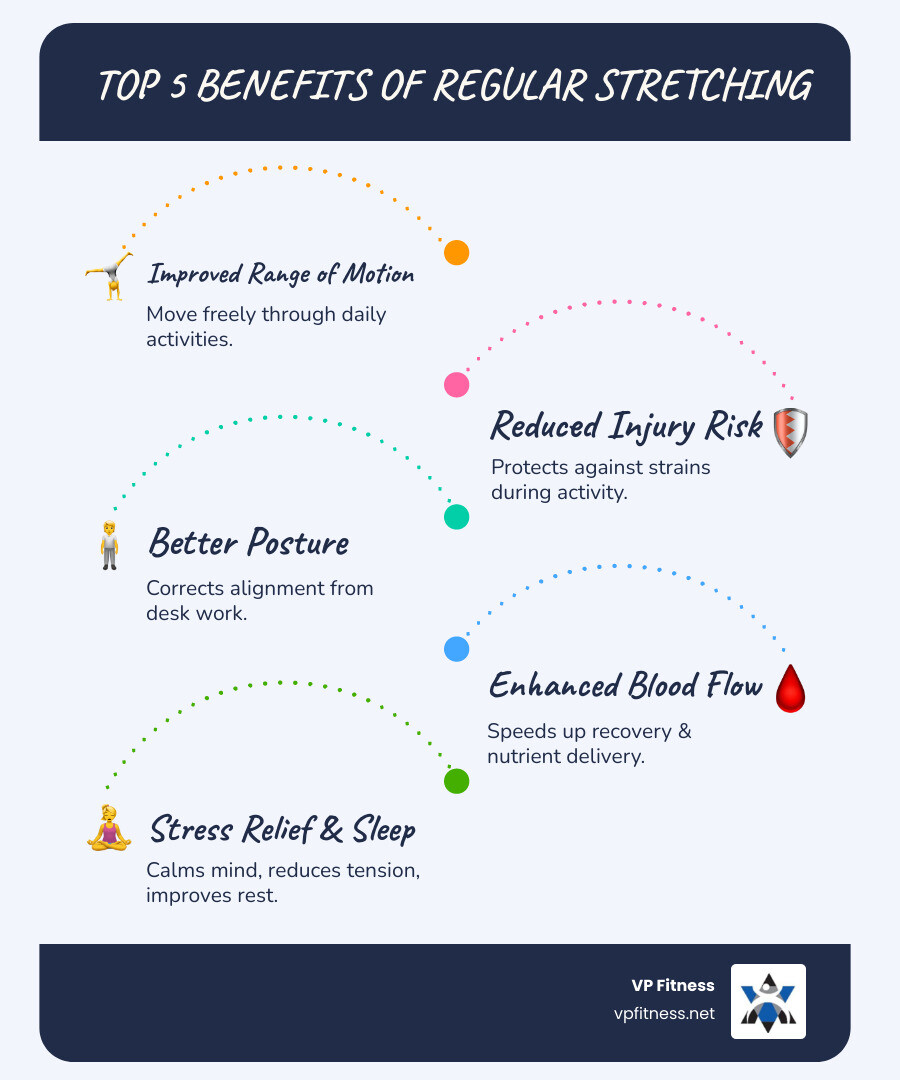
- Benefits: Enjoy improved range of motion, reduced injury risk, better posture, and stress relief.
- Safety: Always stretch warm muscles, avoid bouncing, and stop if you feel pain.
Sitting for long periods causes muscles to lose flexibility. As we age, muscles also become shorter and less elastic, making tasks more difficult. The good news is that research shows just 30 minutes of stretching per week can dramatically increase your flexibility and improve your quality of life.
I’m Joseph DePena, and with over a decade of experience, I’ve seen how consistent exercise for flexibility transforms not just physical performance but overall well-being and confidence.
Exercise for flexibility word roundup:
- Achieve fitness goals
- Consistent gym routine
- Best muscle exercises
The Science of Stretching: Why It’s a Non-Negotiable for Health
While most people focus on cardio and strength, exercise for flexibility is the third pillar of fitness that makes everything else work better. Think of it as the foundation for your health and mobility.
- Improved physical performance: When your muscles can move through their full range of motion, they work more efficiently, generating more power with less effort.
- Injury prevention: Regular stretching keeps muscle fibers supple and connective tissues elastic, so they can handle sudden movements without tearing.
- Better posture: Hours spent hunched over screens create tight chest muscles and weak back muscles. Stretching helps lengthen these tight areas and strengthen the muscles that hold you upright, resetting your alignment.
- Reduced muscle soreness: Stretching increases blood flow to your muscles, helping them recover faster by flushing out waste products and bringing in fresh nutrients.
- Stress relief: Stress causes muscles to tighten, creating a vicious cycle of discomfort. Stretching, especially when combined with deep breathing, breaks this cycle and signals your nervous system to relax.
- Improved circulation: As you stretch, you naturally improve blood flow, delivering oxygen and nutrients throughout your body while helping remove metabolic waste.
These benefits are backed by research from organizations like the American College of Sports Medicine. You can explore more about these expert guidelines from the ACSM to understand their importance. To see how mobility translates to real-world performance, consider incorporating functional training.
Why an Exercise for Flexibility is Crucial for Well-being
Most of us live sedentary lives, causing our muscles to adapt by shortening. This makes simple daily activities like tying your shoes or reaching for a high shelf surprisingly difficult. This process accelerates with age as muscles naturally lose elasticity. However, you can reverse this trend by actively counteracting a sedentary lifestyle.
Flexibility also has a mental component. Stress is physically stored in muscles like the psoas, which connects your spine to your legs. Chronic tightness can disrupt posture and sleep. Regular stretching offers profound mental relaxation and can lead to improved sleep quality as your body and mind learn to let go of tension.
How Often and For How Long Should You Stretch?
The American College of Sports Medicine recommends stretching major muscle groups 2-3 times per week. For each stretch, aim for a 15-30 second hold, feeling a gentle pull, not pain.
The goal is to accumulate 60 seconds per exercise. You can achieve this with 2-4 repetitions of shorter holds (e.g., four 15-second holds). This approach gives your muscles time to adapt and relax into the stretch. Consistency is more important than intensity. Listen to your body and back off if you feel pain. Exercise for flexibility should feel restorative, not punishing.
Static vs. Dynamic Stretching: The Right Tool for the Job
Understanding the difference between static and dynamic stretching is key to an effective flexibility routine. Think of them as two different tools for specific situations: dynamic stretching involves movement, while static stretching involves holding still.
| Feature | Dynamic Stretching | Static Stretching |
|---|---|---|
| When to Use | Before workouts (as part of a warm-up) to prepare the body for activity. | After workouts (as part of a cool-down) or as a standalone flexibility session on warm muscles. |
| Benefits | Increases blood flow, raises body temperature, improves joint lubrication, improves range of motion for immediate activity, primes muscles for movement, improves coordination. | Lengthens muscles and connective tissues, increases overall flexibility and range of motion over time, aids muscle recovery, reduces post-exercise stiffness, promotes relaxation. |
| Examples | Leg swings, arm circles, torso twists, walking lunges, high knees, butt kicks. | Hamstring stretch (holding toe), quad stretch (pulling heel to glute), triceps stretch, chest stretch, figure-four stretch. |
| Key Principle | Controlled, fluid movements through a full range of motion, gradually increasing speed or amplitude. | Holding a stretched position for an extended period (typically 15-60 seconds) at the point of mild tension. |
| What to Avoid | Jerky or uncontrolled movements that could strain muscles. | Bouncing, stretching cold muscles, stretching to the point of pain, holding for excessively long periods (can temporarily reduce muscle power if done pre-workout). |
Dynamic Stretching: Priming Your Body for Movement
Dynamic stretching uses smooth, controlled movements to take your joints and muscles through their full range of motion. It’s the ideal way to prepare your body for physical activity. As part of a warm-up routine, it increases blood flow, raises body temperature, and lubricates your joints. It also primes your nervous system for the movements you’re about to perform, improving coordination.
Key dynamic stretches include:
- Leg swings: Gently swing one leg forward and back like a pendulum to warm up your hips and hamstrings.
- Arm circles: Start with small circles and gradually make them larger to prepare your shoulders and upper back.
- Torso twists: Gently rotate your torso from side to side to wake up your spine and core.
Static Stretching: Deepening Flexibility and Aiding Recovery
Static stretching involves moving a muscle to its comfortable maximum length and holding that position for 15 to 60 seconds. This method is most effective after your workout when your muscles are warm and receptive to lengthening.
This type of exercise for flexibility increases your overall range of motion over time, aids muscle recovery, and reduces post-workout stiffness. It’s also incredibly relaxing, calming your nervous system when paired with deep breathing. This makes static stretches a perfect addition to your cool-down stretches routine, helping your body transition back to a state of rest. The key is patience—never stretch to the point of pain, only to a gentle pull.
Your Foundational Exercise for Flexibility Routine
This foundational exercise for flexibility routine targets the major muscle groups that impact your daily life: the neck, shoulders, chest, back, hips, and legs. These stretches fit perfectly into any routine, including a beginner fitness program. Remember to hold each static stretch for 20-30 seconds and repeat 2-4 times for a total of 60 seconds per exercise. Consistency is more important than intensity.
Upper Body Stretches
These stretches counteract the effects of modern life, like hunching over a computer, helping you stand taller and move more freely.
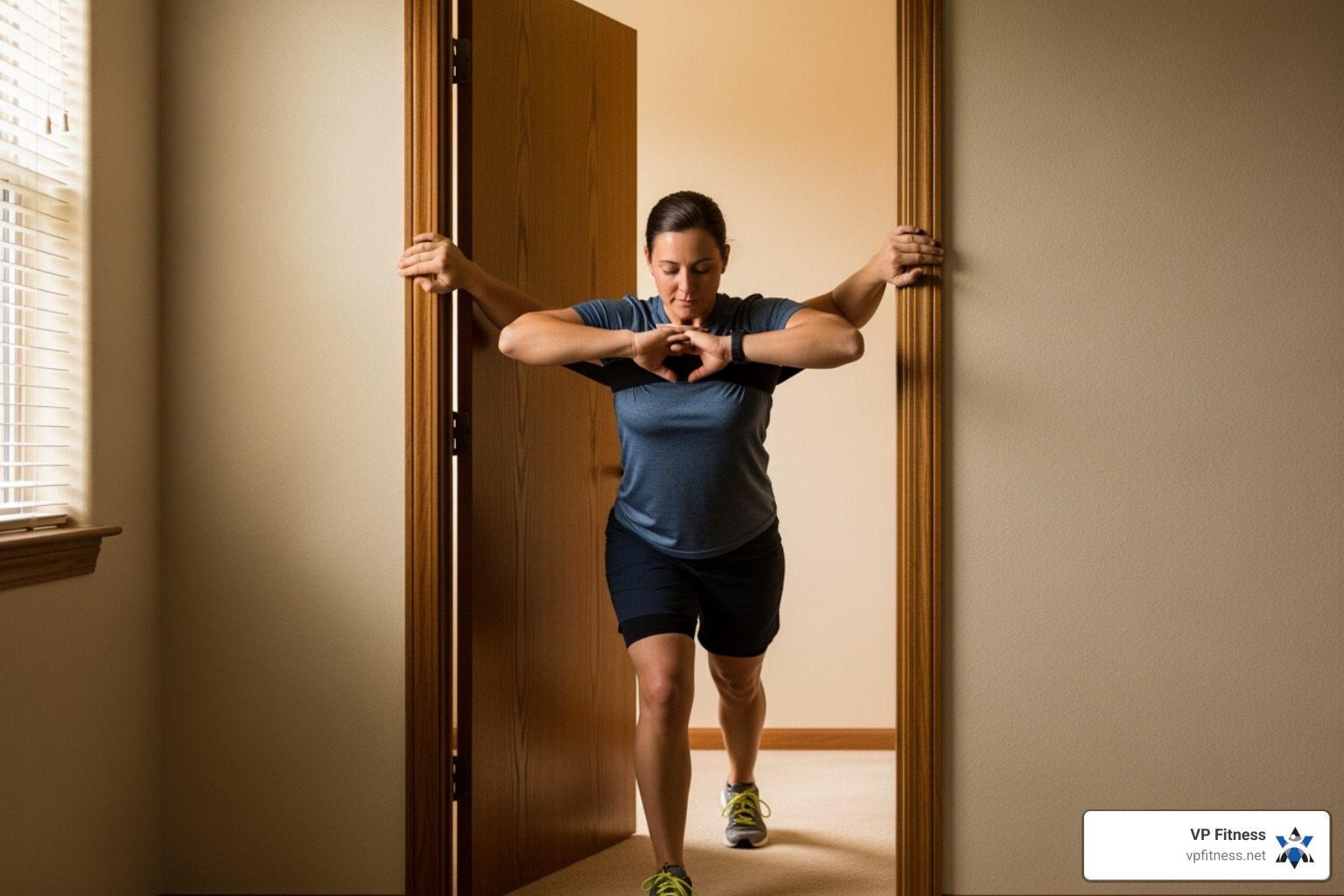
- Chest Stretch: Stand in a doorway with your forearms on the frame, elbows bent at 90 degrees. Gently step forward until you feel a stretch across your chest.
- Triceps Stretch: Raise one arm overhead, bend your elbow, and let your hand drop behind your head. Use your other hand to gently press down on the bent elbow.
- Shoulder Stretch: Bring one arm across your chest at shoulder height. Use your other hand to gently pull it closer to your body.
- Neck Stretches: Slowly turn your head from side to side. Then, gently tilt your ear toward your shoulder, using your hand to deepen the stretch slightly if comfortable.
Lower Body and Core Stretches
These stretches target the body’s largest muscles, which are often the tightest, affecting everything from your walk to back pain.
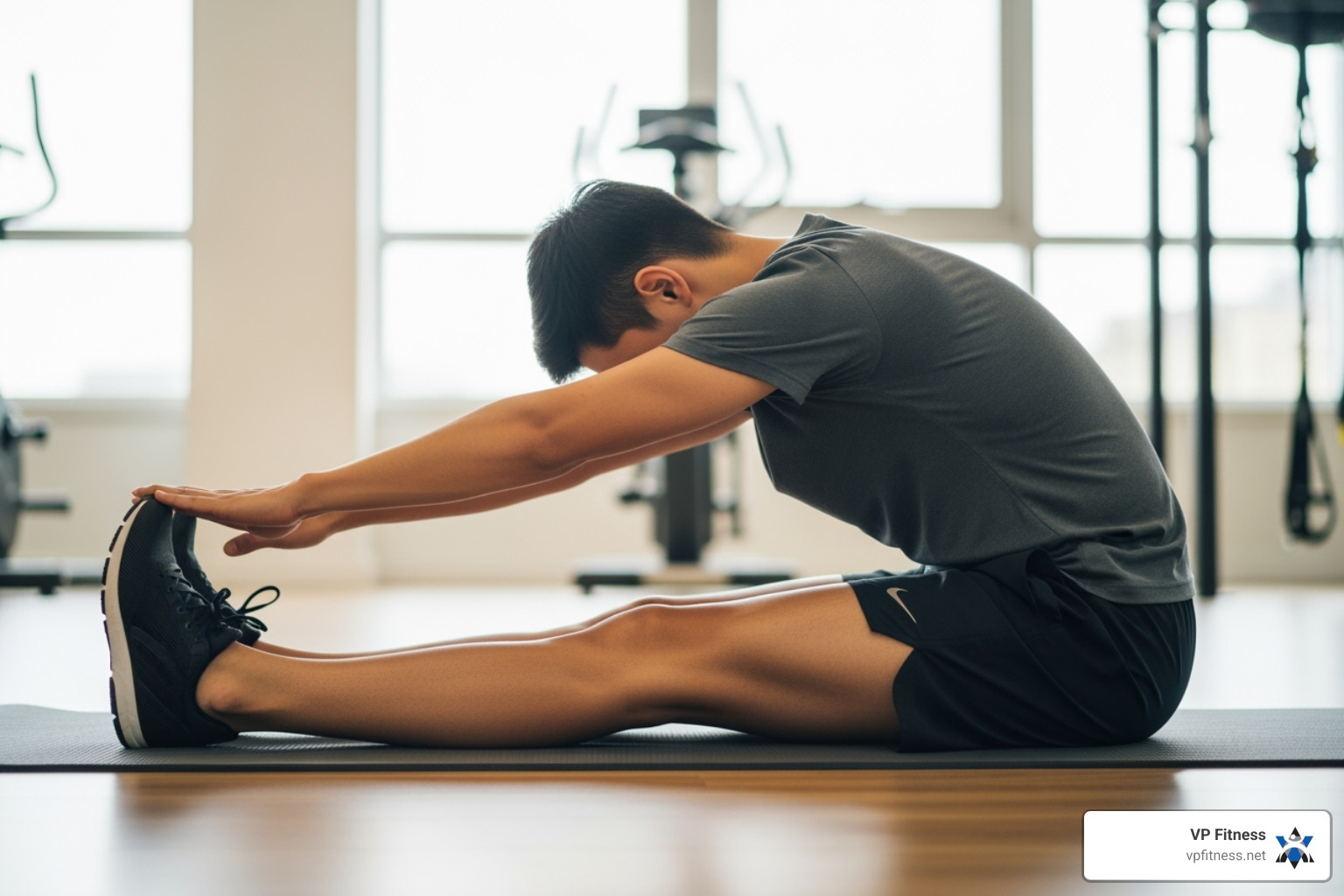
- Seated Hamstring Stretch: Sit on the floor with one leg extended. Keeping your back straight, lean forward from your hips toward your extended foot until you feel a stretch in the back of your thigh.
- Standing Quad Stretch: Stand tall, holding a wall for balance. Bend one knee, grasp your ankle, and gently pull your heel toward your glute.
- Kneeling Hip Flexor Stretch: Kneel on one knee with your other foot flat on the floor in front of you. Gently push your hips forward, keeping your torso upright, to feel a stretch in the front of your hip.
- Piriformis Stretch: Sit in a chair, cross one ankle over the opposite thigh, and gently lean forward from your hips. This targets a deep glute muscle, the anatomy of the piriformis muscle, which can contribute to hip pain.
- Cat-Cow Stretch: On your hands and knees, alternate between arching your back while dropping your belly (cow) and rounding your spine while tucking your chin (cat). This dynamic stretch releases tension in your spine.
Safe Stretching and Making It a Habit
The golden rule of exercise for flexibility is to listen to your body: stretching should feel like productive tension, not sharp pain. Pushing too hard can lead to injury, so it’s crucial to understand safe practices.
How to Safely Perform Stretches to Avoid Injury
- Warm up first: Never stretch cold muscles. Start with 5-10 minutes of light movement like walking or arm swings to warm up your tissues.
- Avoid bouncing: Bouncing, or ballistic stretching, can trigger a muscle’s protective reflex, causing it to tighten. Use slow, controlled movements instead.
- Breathe deeply: Holding your breath creates tension. Inhale as you prepare, and exhale as you deepen the stretch to help your nervous system relax.
- Don’t lock your joints: Keep a slight bend in your knees and elbows to protect them from hyperextension.
- Consider special conditions: If you have existing injuries, chronic conditions like osteoporosis, or are a young athlete, proper form is critical. Consulting a healthcare professional or a personal trainer is essential to ensure safety.
How to Build Your Exercise for Flexibility Habit
Consistency is more important than intensity. Small, regular efforts lead to the best results. Weave stretching into your existing schedule to make it a sustainable habit.
- Morning Routine: Start your day with 5-10 minutes of gentle movements like cat-cow to improve blood flow.
- Evening Routine: Help your body release the day’s tension with gentle stretches before bed to improve sleep quality.
- Post-Workout: The best time for static stretching is after a workout when your muscles are warm and receptive. Make it a non-negotiable part of your cool-down.
- Use Reminders: Set a phone alarm or leave a note to prompt your stretching time.
- Find Accountability: Stretch with a partner or join a group fitness class to make it more enjoyable.
Patience is key. You won’t become hyper-flexible overnight, but research shows that just 30 minutes of stretching per week creates significant improvements over time.
Frequently Asked Questions about Flexibility
Here are answers to the most common questions about starting an exercise for flexibility journey.
Can you become more flexible at any age?
Absolutely. It is never too late to improve your flexibility. While muscles lose some elasticity with age, our bodies remain incredibly adaptable. The key is consistency over intensity. Older adults can see remarkable improvements in their range of motion, confidence, and balance with a gentle, regular stretching routine. Even small gains, like being able to touch your toes again, can significantly improve daily life.
Does stretching help with back pain?
Yes, for many people, stretching can be tremendously helpful for back pain caused by muscular tightness. A sedentary lifestyle often leads to tight hamstrings and hip flexors, which pull on the pelvis and strain the lower back. Stretches like the Seated Hamstring Stretch, Kneeling Hip Flexor Stretch, and Cat-Cow can provide relief. However, not all back pain is the same. If you experience sharp or shooting pain, or if stretching makes it worse, stop immediately and consult a doctor. Combining flexibility with core strengthening provides the best long-term support for back health.
How long does it take to see flexibility improvements?
While it varies for everyone, many people notice functional improvements within just a few weeks of consistent practice. You might find it easier to reach for things or get out of bed with less stiffness. The timeline depends on your starting point and consistency. Stretching for 10 minutes three times a week is more effective than one long session per month. More dramatic goals, like doing the splits, may take months or years, but the real victory is moving through your day with less pain and more confidence.
Conclusion
Exercise for flexibility is your body’s secret weapon, a simple tool that open ups profound benefits for your health and well-being. By dedicating just a small amount of time each week, you can transform how you move and feel every day.
Consistent stretching leads to improved mobility in daily tasks, reduced pain from muscular tension, and an overall better quality of life. It’s an empowering form of self-care that releases physical and mental stress, helping you stand taller, move more freely, and even sleep better.
This isn’t about becoming a contortionist; it’s about honoring your body’s need for movement. Your future self will thank you for every moment you invest in this practice.
Ready to integrate flexibility into a holistic fitness plan? Consider creating a custom workout plan to build a roadmap to a more flexible, stronger, and healthier you.