

Move Better, Feel Stronger: Simple Physical Therapy Exercises for Daily Relief

Why Exercise Physical Therapy Matters for Your Daily Movement
Exercise physical therapy is a structured approach to movement that helps restore function, reduce pain, and improve how your body performs everyday activities. Unlike general workouts, these are specific, prescribed movements designed to correct problems, heal injuries, and rebuild strength where you need it most.
Quick Answer: What You Need to Know About Exercise Physical Therapy
- Purpose: Corrects movement problems, restores function, and reduces pain through prescribed exercises.
- Main Types: Range-of-motion, strengthening, balance, and flexibility exercises.
- Key Difference: Targets specific impairments vs. general fitness goals.
- Primary Benefits: Pain relief, improved mobility, injury prevention, and better daily function.
- Best For: Post-surgery recovery, chronic pain, sports injuries, balance issues, and limited mobility.
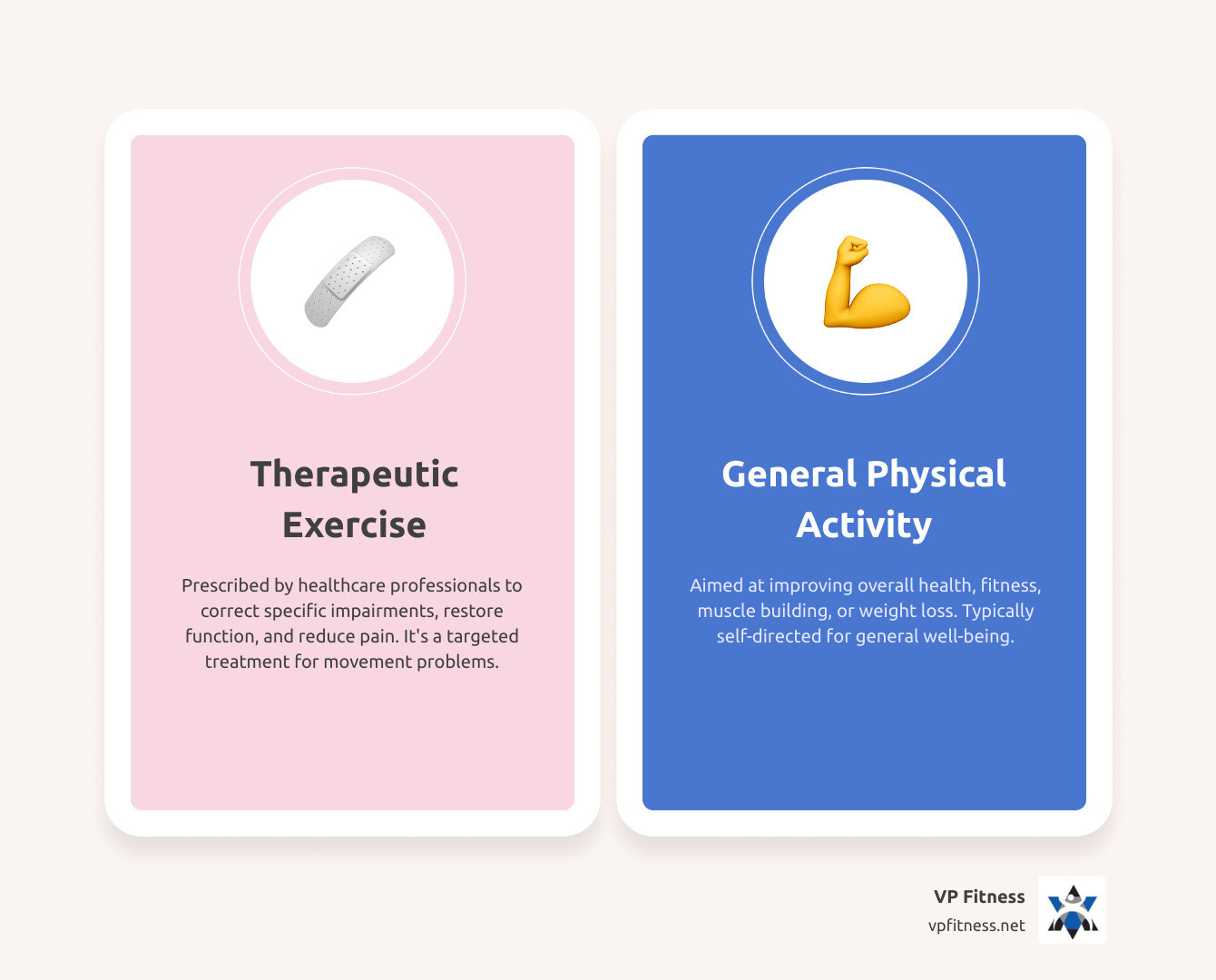
If you’ve struggled with persistent back pain, stiff shoulders, or weak knees, you know how much these issues affect your daily life. The difference between therapeutic exercise and regular physical activity is simple: general exercise improves overall health, while therapeutic exercise is a treatment prescribed by healthcare professionals to address specific physical problems. It’s targeted medicine for your movement system.
Physical therapy can improve joint and muscle function, helping you stand better, balance more confidently, and walk more smoothly. The good news is that many of these exercises can be done safely at home once you understand the proper techniques. This article will show you simple, effective physical therapy exercises you can start using today for daily relief.
As a certified fitness professional, I’ve helped hundreds of clients integrate exercise physical therapy principles into their recovery and wellness routines. Whether you’re recovering from an injury or simply want to move better, the right therapeutic exercises can make a significant difference.
Understanding Therapeutic Exercise: More Than Just a Workout
When you think about exercise physical therapy, understand that this is movement with a mission—a targeted approach where every exercise serves a specific healing purpose. The goals are straightforward: restore function, promote healing, and alleviate pain. It’s about getting your body to work the way it’s supposed to, whether you’re recovering from surgery or managing chronic pain.
Therapeutic vs. General Physical Activity: What’s the Difference?
Both therapeutic exercises and general physical activity involve movement, but their intentions are different. General activity—like jogging or lifting weights—is about improving your overall health. Therapeutic exercise is prescribed movement designed to address particular impairments and correct dysfunctional movement patterns. It’s not just about getting stronger; it’s about getting stronger in the right way to fix a specific problem.
Think of it this way: general exercise is like a multivitamin for overall health, while therapeutic exercise is like a targeted medication for a specific condition.
| Feature | Therapeutic Exercise | General Physical Activity |
|---|---|---|
| Purpose | Correct impairments, restore function, alleviate pain, promote healing | Improve overall fitness, health, endurance, strength, weight management |
| Prescription | Prescribed by a physical therapist or healthcare professional | Self-directed, or guided by a trainer for general fitness goals |
| Focus | Targeted movements for specific body parts or conditions | Broad range of movements for overall body conditioning |
| Supervision | Often performed under guidance initially, with clear instructions for home practice | May or may not involve professional guidance |
| Pain Threshold | Strictly within pain-free range to avoid exacerbating injury | May involve pushing through discomfort for performance gains |
| Progression | Structured progression based on healing and functional improvement | Progression based on increasing reps, weight, intensity, or duration |
The Different Types of Therapeutic Exercises
Exercise physical therapy draws from several types of exercises, each targeting specific aspects of physical function.
- Range-of-motion (ROM) exercises focus on maintaining or increasing joint flexibility to prevent stiffness.
- Strengthening exercises increase muscle size, strength, and endurance. As you progress, resistance gradually increases using tools like bands or weights. Resistance training also offers benefits for diabetes, osteoporosis, and back pain.
- Balance exercises are essential for preventing falls and improving stability, especially as we age. They often progress from supported to unsupported movements.
- Flexibility exercises target muscle and connective tissue extensibility through sustained, moderate stretching.
- Coordination exercises help you perform tasks by repeating meaningful movements that engage multiple joints and muscles, improving motor skills.
The Benefits of Therapeutic Exercises
The advantages of incorporating therapeutic exercises into your routine are extensive and supported by research.
- Pain reduction: Scientific research shows that therapeutic exercise is a validated treatment for conditions like osteoarthritis and chronic pain.
- Improved mobility and function: By targeting specific weaknesses, these exercises improve your ability to perform daily activities.
- Injury prevention: Strengthening supporting muscles and improving balance can significantly reduce your risk of future injuries and falls.
- Faster healing: Targeted exercises accelerate recovery from surgery or injury by promoting blood flow and tissue repair.
- Improved overall well-being: Moving freely and without pain profoundly impacts your mental and emotional health.
For those interested in enhancing overall movement patterns, exploring options like functional fitness training can complement your therapeutic exercise journey.
Your Guide to At-Home Exercise Physical Therapy
The beauty of exercise physical therapy is that you can take control of your recovery from home. Success with at-home therapeutic exercise comes down to two things: safety and consistency. Let’s walk through what you need to know to create a safe, effective routine.
Safety First: How to Perform Exercises Effectively at Home
When working without a therapist, proper form is your best friend. Doing an exercise incorrectly isn’t just ineffective—it can make things worse. Here are the core principles for a safe at-home practice:
- Prioritize Proper Form: Watch demonstration videos carefully. If possible, have a physical therapist or certified fitness coach check your form at least once. Proper guidance on exercise for beginners can provide a solid foundation.
- Follow the Pain-Free Rule: These movements should not cause sharp, shooting, or radiating pain. Mild discomfort from a muscle working is fine; sharp pain is a signal to stop immediately. Move beyond stiffness, but avoid residual pain.
- Always Warm-Up and Cool-Down: Spend 5-10 minutes warming up with light activity like walking in place or arm circles. A few minutes of gentle stretching after your exercises can improve flexibility and reduce soreness.
- Progress Gradually: Your body adapts over time, not overnight. Start with fewer repetitions and sets. As you get stronger, you can slowly increase the challenge by adding reps, holding positions longer, or using resistance bands or weights.
Simple Equipment for Your Home Routine
Effective exercise physical therapy doesn’t require an expensive home gym. Many beneficial exercises use only your body weight. However, a few simple tools can expand your options:
- Resistance bands are a great investment. They are inexpensive, portable, and come in various resistance levels.
- Foam rollers are excellent for self-massage and improving flexibility, especially for the back, hips, and legs.
- A stability ball adds versatility for core strengthening, balance training, and modifying exercises.
No equipment? No problem. Use household items:
- A sturdy chair can be used for seated exercises, assisted squats, or balance support.
- Walls are ideal for stretches and wall push-ups.
- Towels can assist with stretches, like looping one around your foot for a hamstring stretch.
- Your own body is your most versatile tool. Bodyweight exercises are remarkably effective for building strength.
Key Considerations for Your Personalized Exercise Physical Therapy Plan
While this guidance is helpful, there’s no substitute for personalized professional advice. Keep these points in mind:
- Consult a Professional: Before starting any new program, especially if you have an injury or chronic condition, consult with a physical therapist or healthcare provider for a customized plan.
- Start Slowly: Begin with a manageable number of repetitions and sets. Only increase the difficulty when you can perform the exercises with good form and without pain.
- Set Realistic Goals: Aim for small, achievable milestones, like performing an exercise for 10 repetitions correctly. Celebrate these small wins.
- Track Your Progress: Keep a simple log of your exercises, reps, sets, and any notes on pain or difficulty. This helps you see how far you’ve come and make smart adjustments.
- Modify as Needed: Don’t be afraid to adjust exercises. You can use less resistance, reduce your range of motion, or progress to a more challenging variation. Learning how to create a custom workout plan offers strategies for tailoring exercises to your needs.
Common Physical Therapy Exercises for Key Body Parts
These foundational movements in exercise physical therapy can provide targeted relief, activate important muscles, and improve joint mobility. Remember the golden rule: prioritize good form over everything else. If you feel sharp pain, stop immediately.
For Back and Core Stability
Your core is the support system for your spine. When these muscles are strong, daily activities become easier.
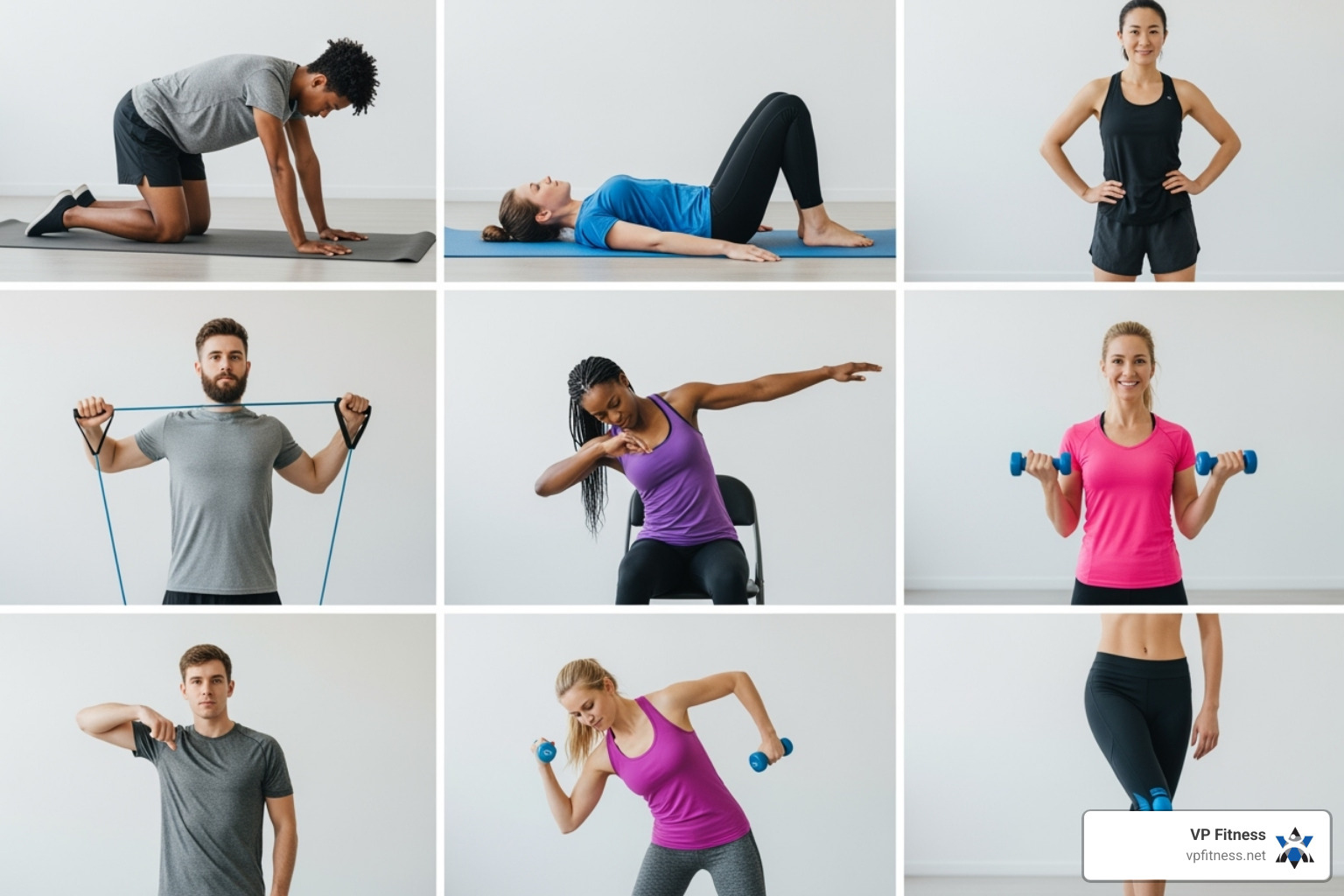
- Prone Press-Ups: Lie face-down with hands under your shoulders. Gently push to lift your chest, keeping your hips on the floor. You should feel a comfortable stretch. Hold briefly, then lower. See the Prone Press-Ups demonstration.
- Bird-Dog: Start on all fours. Engage your core, then slowly extend your right arm forward and left leg back. Keep your back flat and hips stable. Hold for a few seconds, then switch sides. This builds stability that protects your back.
- Double Leg Bridge: Lie on your back with knees bent and feet flat. Press through your heels and squeeze your glutes to lift your hips until your body is in a straight line from shoulders to knees. Hold, then lower. Watch the video demonstration for proper technique.

For Shoulder Mobility and Strength
These exercises address common shoulder issues by improving mobility and stability.
- Doorway Chest Stretch: Stand in a doorway with forearms on the frame, elbows bent at 90 degrees. Step forward until you feel a gentle stretch across your chest. Hold for 30 seconds.
- Standing Scapular Retraction: Stand tall and gently squeeze your shoulder blades together and down, without shrugging. Hold for a few seconds, then release. This strengthens key stabilizer muscles. See the video demonstration.
- Wall Push-Ups: Stand facing a wall. Place your hands on the wall, slightly wider than your shoulders. Keeping your body straight, bend your elbows to lean in, then push back. This builds strength with less strain.
For Hip and Knee Health
Strong, stable hips and knees make movement easier. These exercises target key supporting muscles.
- Clamshells: Lie on your side with knees bent and stacked. Keeping your feet together and hips stable, lift your top knee toward the ceiling. Lower with control. This targets a critical hip stabilizer muscle. See the Clamshells video.
- Straight Leg Raises: Lie on your back with one leg straight and the other bent. Tighten the quad of your straight leg and lift it 6-12 inches. Hold briefly, then lower with control. This strengthens your quads and hip flexors.
- Heel Slides on Wall: Lie on your back with feet flat against a wall. Slowly slide your heels down the wall, bending your knees, then slide them back up. The wall provides smooth, controlled movement. Watch the video demonstration.
For Ankle and Foot Support
Strong ankles and feet improve balance and absorb impact.
- Ankle Pumps: Point your toes away from you, then pull them back toward your shins. This simple motion improves range of motion and circulation. Add resistance with a band as you get stronger (dorsiflexion and plantarflexion).
- Single Leg Balance: Stand on one leg for 30 seconds. To increase the challenge, close your eyes or stand on a pillow. This improves your body’s spatial awareness (proprioception). See the video demonstration.
- Calf Raises: Stand with feet hip-width apart. Slowly rise onto the balls of your feet, then lower with control. Hold a wall for balance if needed.
- Toe Raises: Stand and rock back on your heels, lifting your toes and the balls of your feet. This works the muscles on the front of your shins.
When to Seek Professional Guidance
While at-home exercise physical therapy is beneficial, knowing when to seek professional help is crucial. It’s about having the right support when things get complicated.
Indications for Therapeutic Exercise
Sometimes your body needs a trained professional to assess the situation and create a specific plan. Seek guidance for:
- Post-surgery recovery: A physical therapist is essential for designing a program to restore range of motion and strength, ensuring proper healing.
- Chronic pain management: For persistent back, neck, or joint pain, a therapist can identify the root cause and provide corrective exercises. Research confirms therapeutic exercise is a validated treatment for osteoarthritis.
- Sports injuries: A specialist can help you heal correctly and safely return to your activities after an injury.
- Limited mobility: If you can’t reach or bend like you used to, a professional can assess the restriction and design exercises to restore movement.
- Balance issues: If you feel unsteady, therapeutic exercise can significantly improve balance and reduce fall risk, especially in older adults.
- Neurological conditions: For conditions like stroke or Parkinson’s, physical therapy is vital for maintaining function and mobility.
Working with certified professionals, such as those providing expert fitness coaching, ensures your plan is safe, personalized, and effective.
Contraindications and When to Stop
There are times when you should stop exercising and seek medical attention. Be aware of these red flags:
- Acute injury with severe swelling, redness, or heat. Rest and get a proper diagnosis first.
- Sharp or radiating pain, especially if it travels down an arm or leg. This may signal a nerve issue.
- Dizziness, shortness of breath, or chest pain during exercise. Stop immediately and consult a healthcare professional.
- Fever or illness. Your body needs to rest and recover.
- Unstable medical conditions, like uncontrolled blood pressure or recent heart issues. Always clear exercise with your doctor first.
Follow the “stop” rule: when in doubt, stop. It’s always better to be cautious than to push through pain and risk making an injury worse.
Frequently Asked Questions about Exercise Physical Therapy
Let’s address some common questions about exercise physical therapy.
How is therapeutic exercise different from just going to the gym?
This is a great question. The key difference is intent. Therapeutic exercise is a prescribed treatment from a healthcare professional to fix a specific impairment. It’s focused on correcting movement patterns, restoring function, and alleviating pain.
General gym exercise is aimed at overall fitness, such as building strength or improving cardiovascular health. While beneficial for general wellness, it isn’t custom to rehabilitate a specific injury. Both are valuable and can complement each other.
How long does it take to see results from physical therapy exercises?
Results vary widely depending on the person and the condition. Factors include the severity of the issue, your consistency with the exercises, your age, and your overall health.
Some people feel relief in a few weeks, while those with chronic conditions or recovering from major surgery may need several weeks or months to see significant improvement. The most important factors are consistency and patience. Celebrate small victories along the way, as they are signs that your body is healing.
Can I do these exercises if I have arthritis?
Yes, and in many cases, you should. Exercise is a validated treatment for many types of arthritis, especially osteoarthritis. Movement helps lubricate joints, and strengthening the muscles around a joint reduces stress on it, which can significantly decrease pain.
However, it is crucial to perform low-impact exercises and consult a physical therapist or healthcare provider first. They can recommend movements appropriate for your specific type and stage of arthritis, ensuring you get the benefits without aggravating your condition. The right guidance helps you find the right movements for your body.
Conclusion
Your body is designed to move, and when it moves well, life flows more easily. That’s the promise of exercise physical therapy: reclaiming the freedom to live fully, without pain holding you back.
We’ve explored how therapeutic exercise is a targeted intervention designed to fix specific problems. The exercises we’ve shared—from bridges for your core to clamshells for your hips—are tools you can use to start feeling better today. They don’t require expensive equipment, just your commitment to moving with intention.
Pain relief, improved strength, and better mobility are gateways to the life you want to live. Whether that’s playing with your grandchildren, returning to a sport you love, or simply moving through your day without nagging discomfort, these benefits are within reach.
Remember to start slowly, listen to your body, and never push through sharp pain. When you need professional guidance, don’t hesitate to seek it out.
Everyone’s movement journey is unique. Personalized fitness planning with individualized attention helps you progress safely and effectively.
If you’re ready to move beyond managing pain and toward thriving in your body, professional guidance can help you start your journey to better movement. A plan that puts your needs first, with professional guidance in a welcoming environment, can make all the difference.
Your body has carried you this far. With the right approach, it can carry you even further—stronger, freer, and with less pain. That’s a promise exercise physical therapy can help you keep.