

Level Up Your Fitness: Finding a Personal Trainer Made Easy

Find Personal Trainer: Ultimate Easy Guide 2025
Why Finding the Right Personal Trainer Changes Everything
When you find personal trainer support that matches your schedule, goals, and personality, you open up results you can’t achieve alone. Here’s how to start:
Quick Guide to Finding Your Perfect Trainer:
- Define your goals — Weight loss, muscle gain, or athletic performance.
- Set your budget — Session prices vary by location and experience.
- Search locally — Check gym directories, social media, and certification registries (NASM, ACE, NSCA).
- Verify credentials — Look for recognized certifications and liability insurance.
- Ask key questions — Inquire about experience with your goals, training philosophy, and progress tracking.
- Book a trial session — Test the fit before committing.
Starting a fitness journey is hard. Between work, family, and daily stress, it’s tough to figure out proper form, design a balanced program, and stay motivated. That’s where a great personal trainer comes in. They don’t just count reps; they build a customized plan around your life, teach you to train safely, and provide the accountability that keeps you showing up.
The challenge is that not all trainers are created equal. Some specialize in weight loss, others in strength, and some in post-rehabilitation. The key is matching the right expertise to your specific needs and knowing what to ask before you commit.
This guide walks you through the entire process, from identifying your goals and searching for qualified trainers to spotting red flags. I’m Joseph DePena, founder of VP Fitness and a master trainer since 2011. My experience has taught me what separates great trainers from the rest, and I’m sharing that knowledge with you here.
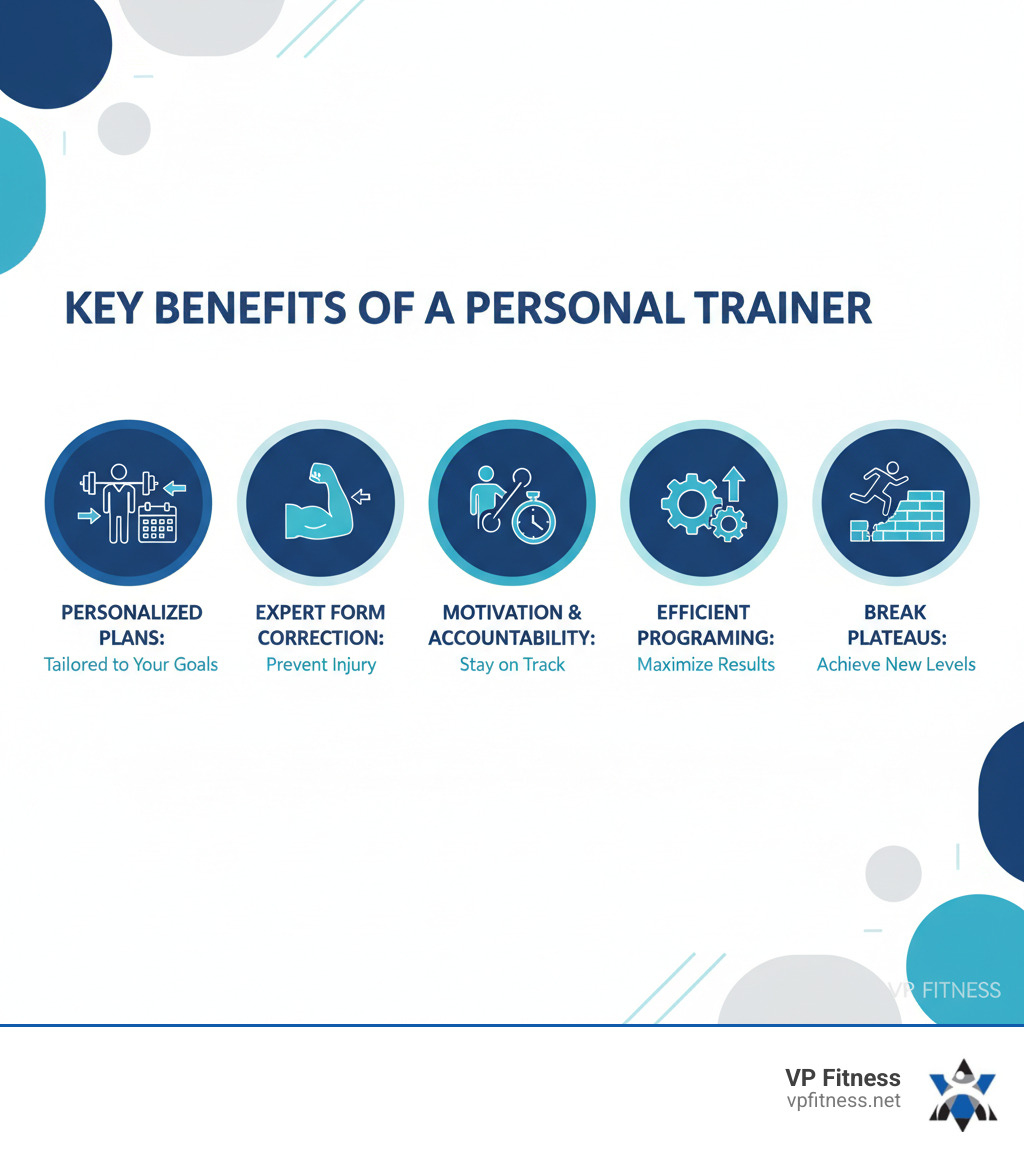
Find personal trainer terminology:
Why Hire a Personal Trainer? The Benefits of Expert Guidance
Do you ever walk into a gym and feel lost? Or follow a workout video, only to wonder if you’re doing it right? This is why working with a certified fitness coach changes everything.

The biggest advantage is a truly personalized workout built for your body and goals. Generic programs can’t account for an old injury or a hectic schedule. A good trainer designs every session for you, making the benefits of personalized fitness plans clear. It’s a roadmap that fits your life.
Motivation fades, but accountability sticks. It’s easy to skip a workout when you’re only letting yourself down. But when you have a dedicated fitness accountability partner expecting you, you show up. Your trainer celebrates your wins and helps you steer rough patches without giving up.
Safety is paramount. One of a trainer’s most valuable roles is watching your form. A slight knee wobble or a rounded back can lead to injury. When you find personal trainer guidance that prioritizes proper technique, you learn to engage the right muscles and protect your body, making every rep count.
Think about workout efficiency. A trainer eliminates guesswork, making every minute of your session purposeful. Your program progresses logically as you get stronger, and you’ll use equipment and try movements you might have otherwise avoided, keeping your body adapting.
We all hit frustrating plateaus. When the scale won’t budge or your lifts stall, expert fitness coaching is critical. A skilled trainer can pinpoint why you’re stuck—be it nutrition, recovery, or programming—and get you moving forward again. This outside perspective is often what helps people achieve fitness goals instead of giving up.
A personal trainer is your educator, safety net, and strategic partner in building a stronger, healthier you.
The Ultimate Guide to Find a Personal Trainer
Finding the right personal trainer starts with getting clear on what you want. Are you looking to lose weight, build serious muscle, or train for a specific event? Your goal determines the kind of expertise you need. A trainer specializing in fat loss will have a different approach than a strength coach. Being precise helps you find personal trainer support that’s qualified to help you succeed.
Next, consider your budget. Personal training is an investment, with costs varying by location and experience. On average, sessions are around C$58, but can range from £30 to £250 or more. Don’t let that scare you. Semi-private training (2-4 people) and group training offer expert guidance at a lower price point. Set a realistic budget and find a format that works for you.
So where do you look? Start with local fitness facilities, which often have trainer directories. Online directories for certified professionals let you search for trainers with detailed profiles and reviews. Finally, don’t underestimate word-of-mouth. Asking friends or family for recommendations can provide valuable insights into a trainer’s style and reliability.
Matching a Trainer to Your Fitness Goals
Just as you’d hire a specialist for a specific job, you want a trainer whose expertise aligns with your goals.
- Weight Loss: Look for someone who understands sustainable fat loss, combining effective workouts with sound nutritional guidance to help you build lasting habits.
- Build Muscle and Strength: You need a strength and conditioning coach who understands progressive overload and proper form for key lifts like squats and deadlifts.
- Athletic Performance: Find a trainer who uses sport-specific drills, like plyometrics and agility work, to improve your performance on the field or court.
- Injury Recovery: A post-rehabilitation or corrective exercise specialist is essential. They design safe programs that restore function and prevent re-injury, often working alongside your doctor or physical therapist.
Being upfront about your needs when you choose the right personal trainer for your goals ensures you find the right match. A true professional will be honest if they aren’t the best fit. This is where expert fitness coaching makes all the difference.
How to find a personal trainer in your community
To find local trainers, combine a few practical approaches. Use Google with terms like “personal trainer near me” and browse trainer profiles on professional networking sites or online directories. Look for clear certifications, specialties, and client testimonials.
Social media is also a useful tool. Search hashtags like #personaltrainerprovidence, #rhodeislandtrainer, or #providencefitness on Instagram or Facebook to see a trainer’s work, content, and client interactions. This offers a glimpse into their personality and coaching style.
Here’s how different training formats compare:
| Training Option | Description | Pros | Cons | Typical Cost (per session) |
|---|---|---|---|---|
| One-on-One Training | Exclusive attention from a trainer | Highly personalized, maximum focus, rapid progress | Most expensive, less social | C$50 – C$250+ |
| Semi-Private Training | 2-4 clients train together with one trainer | More affordable than 1:1, personalized attention, shared motivation | Less individual focus than 1:1, scheduling coordination | C$30 – C$80 |
| Small Group Training | 5-10+ clients train in a class setting with one trainer | Very affordable, high energy, community feel | Least personalized, trainer attention is divided | C$15 – C$40 |
The right option depends on your budget, need for individual attention, and personal preference. All three formats can be effective when you find personal trainer support that fits your life.
Vetting Your Potential Trainer: Qualifications, Red Flags, and Key Questions
Once you have a shortlist, it’s time to vet your candidates to ensure you’re investing wisely and putting your health in capable hands.

Certifications are non-negotiable. A qualified trainer should be certified by a reputable organization like the National Academy of Sports Medicine (NASM), the American Council on Exercise (ACE), or the National Strength and Conditioning Association (NSCA). These credentials ensure a solid understanding of exercise science and safety. You can often verify credentials through the certifying organization’s public registry. Also, confirm they have public liability insurance; a professional will have this and won’t mind showing proof.
Equally important is personality fit and training style. You need a motivator whose communication style resonates with you. Some trainers are high-energy cheerleaders, while others are calm and methodical. Think about what approach keeps you engaged and motivated.
Essential Questions to Ask Before You Hire
Schedule a consultation to interview potential trainers. Here are the key questions to ask:
- “What is your experience with clients who have goals similar to mine?” Look for specific examples and success stories relevant to you.
- “What is your training philosophy?” Ensure their approach (e.g., HIIT, strength fundamentals, holistic) aligns with your values.
- “How do you track progress?” A professional uses data—measurements, strength tests, photos—to adjust your custom workout plan and show results.
- “What are your rates and package options?” Get clarity on pricing. Monthly payment plans are often safer than large upfront payments.
- “What is your availability and cancellation policy?” Make sure their schedule works with yours and you understand the rules for missed sessions.
- “Do you offer a trial session?” This is a low-risk way to test their coaching style before committing.
Spotting the Best and Avoiding the Worst: Signs and Red Flags
Pay attention to these positive signs and warning flags during your consultation.
Signs of a Great Trainer:
- They are great listeners: They ask thoughtful questions and tailor their approach to you.
- They set realistic goals: They are honest about timelines and what it takes to achieve sustainable results.
- They educate you: They explain the ‘why’ behind exercises, empowering you with knowledge.
- They practice what they preach: They demonstrate a genuine commitment to their own health and wellness.
- They are passionate and empathetic: You can feel their genuine desire to help you succeed.
Red Flags to Watch For:
- Unrealistic promises: Guarantees of rapid, extreme results are a major warning sign.
- High-pressure sales tactics: You should not feel pushed into buying a large, expensive package upfront.
- Poor communication: A distracted or disengaged trainer is not invested in your success.
- One-size-fits-all plans: Your program should be customized after a thorough assessment, not a generic template.
- Disregarding pain: A good trainer knows the difference between a challenge and pain that signals injury. They will always prioritize your safety.
- Extreme dietary advice: Trainers can offer general guidance, but detailed meal plans should come from a registered dietitian.
When you find personal trainer support that ticks the right boxes, you’ve found a partner for your fitness journey. Trust your instincts and don’t settle.
Your First Steps: The Consultation and Beyond
Congratulations on finding a trainer you’re excited about! The initial consultation is where your journey truly begins.

During the initial consultation, your trainer will get to know you, your lifestyle, and your challenges. Expect a fitness assessment—including measurements and basic strength or endurance tests—to establish a baseline for tracking progress. This is also when you’ll set SMART goals (Specific, Measurable, Achievable, Relevant, Time-bound), turning vague wishes into concrete targets. Be prepared to discuss your health history and any past injuries to ensure your personalized exercise routine is both safe and effective.
Your first few sessions will focus on education and fundamentals. A great trainer explains the “why” behind each exercise, teaching you proper form, breathing, and muscle engagement. This builds a solid foundation and establishes safety protocols before you move on to more complex exercises.
How to prepare for your first session with a personal trainer
A little preparation can help you feel confident and ready for your first session.
- Wear comfortable clothing that allows for a full range of motion.
- Bring a water bottle to stay hydrated.
- Be ready to discuss your health history, including any past injuries or chronic conditions.
- Think about your goals. The more specific you are, the better your trainer can customize your program.
- Commit to open communication. If something feels wrong or you’re struggling, speak up. A good trainer wants your feedback to fine-tune your program. This partnership is part of what makes VP Fitness different.
The Role of Nutrition and Lifestyle Coaching
Many trainers also offer guidance on nutrition and lifestyle. It’s important to understand their scope of practice: a certified trainer can provide general nutrition advice (e.g., the importance of protein, choosing whole foods), but they cannot prescribe specific meal plans for medical conditions. That role belongs to a registered dietitian.
This nutrition guidance is still incredibly valuable for supporting your fitness goals. Beyond food, trainers often provide lifestyle advice on the importance of quality sleep for recovery and strategies for managing stress. This holistic approach, which can include accountability coaching, recognizes that fitness is about building sustainable, healthy habits around the clock.
Frequently Asked Questions about Finding a Personal Trainer
It’s normal to have questions as you start your search. Here are answers to some of the most common concerns.
How much does a personal trainer typically cost?
On average, a personal training session costs around C$58, but this varies. Key factors influencing the price include:
- Location: Major cities are typically more expensive than smaller towns.
- Experience: A seasoned trainer with advanced certifications will charge more than a newly qualified one.
- Session Length: Most sessions are 30-60 minutes. Many trainers offer package deals for buying multiple sessions at a reduced rate.
- Training Type: One-on-one training is the most expensive, while semi-private and small group training are more budget-friendly.
Prices can range from £10 to £250 per hour. The key is to find a balance between your budget and the level of expertise you need.
What are the different types of personal trainers?
Trainers often specialize, so it helps to find personal trainer expertise that matches your needs.
- Strength and Conditioning Coaches: Focus on building muscle, power, and endurance.
- Weight Loss Specialists: Combine exercise with nutritional guidance for sustainable fat loss.
- Senior Fitness Specialists: Focus on mobility, balance, and independence for older adults.
- Youth Fitness Specialists: Make exercise fun and build healthy habits for children and teens.
- Corrective Exercise Specialists: Identify and fix muscular imbalances and movement issues.
- Pre/Post-Natal Specialists: Provide safe workouts for new and expectant mothers.
- Sports-Specific Trainers: Help athletes excel in their chosen sport.
- Holistic Health Coaches: Address exercise, nutrition, sleep, stress, and mental well-being.
How often should I see a personal trainer?
The ideal frequency depends on your goals, budget, and availability. If you’re new to fitness, 2-3 times per week can accelerate progress and help you master proper form. If your budget is tighter, even one session per week is incredibly valuable; your trainer can provide a program for you to follow on your own for the other days.
We recommend at least one session per week to maintain consistency and accountability. This allows your trainer to monitor your progress, adjust your custom workout plan, and keep you motivated. Over time, as you gain confidence, you might reduce the frequency to bi-weekly or monthly check-ins.
Conclusion
You’ve made it to the end of this guide, and that alone tells me something important about you—you’re serious about making a change. Finding the right personal trainer isn’t just another item to check off your to-do list; it’s a genuine investment in your health, your confidence, and the life you want to live.
We’ve covered a lot of ground together. You now know how to define your specific goals, whether that’s shedding weight, building strength, or simply moving through your day with less pain and more energy. You understand what a trainer should cost and where those price differences come from. You’ve learned where to search—from online directories to social media to good old-fashioned word-of-mouth—and how to verify that a trainer has the proper credentials and insurance to keep you safe.
Most importantly, you know what questions to ask during that crucial first consultation. You can spot the red flags that signal a trainer who’s more interested in their commission than your progress, and you can recognize the green flags that indicate someone who’ll genuinely partner with you on this journey. You’re prepared to walk into that first session with confidence, knowing exactly what to expect and how to communicate your needs.
The truth is, finding the right personal trainer is about more than just hiring someone to count your reps. It’s about finding someone who understands where you’re starting from, respects your limitations, celebrates your victories (no matter how small), and pushes you just enough to grow without breaking you. It’s about building a relationship with someone who’ll hold you accountable on the days you don’t feel like showing up, and who’ll teach you the skills you need to eventually train independently if that’s your goal.
The right trainer doesn’t just help you achieve your immediate fitness goals—they transform how you think about movement, health, and what your body is capable of. They give you tools and knowledge that stick with you long after your sessions end. That’s the kind of long-term success we’re talking about here.
If you’re ready to experience that kind of change, we’d love to be part of your journey. At VP Fitness, we’ve built our entire approach around personalized attention, expert guidance, and a genuine commitment to each client’s success. Explore our personal training options to see how we can support your specific goals, or start your fitness journey with us today. Your future self will thank you for taking this step.