

Beyond Biceps: What Being a ‘Fit’ Personal Trainer Really Means

Fit Personal Trainer: Ultimate Guide 2025
Why Finding the Right Personal Trainer Goes Beyond Appearances
A fit personal trainer isn’t just someone who looks good in gym clothes—they’re a qualified professional who possesses the right education, certifications, experience, and empathy to guide you safely toward your goals. When searching for a fit personal trainer, prioritize these key qualifications:
- NCCA-accredited certification (NASM, ACE, NSCA, or ISSA)
- Current CPR/AED certification
- Relevant specializations for your goals (weight loss, strength, injury recovery, etc.)
- Proven track record with clients similar to you
- Strong communication skills and a training philosophy that matches your needs
The fitness industry is projected to grow 14% through 2032, and with that growth comes a flood of trainers with varying levels of qualification. Some focus on their own physique rather than their clients’ results. Others lack the scientific foundation to design safe, effective programs. The truth is, a trainer’s appearance tells you nothing about their ability to help you succeed.
What matters most? Education in exercise science and biomechanics. Experience working with diverse clients and goals. The empathy to listen to your concerns and adapt. Specializations that align with what you’re trying to achieve. A truly fit trainer brings all of these elements together—not just a six-pack.
Experienced master trainers know that the right fit personal trainer transforms not just bodies, but lives through evidence-based programming and genuine support. The best trainers invest as much in their education as they do in their own fitness.
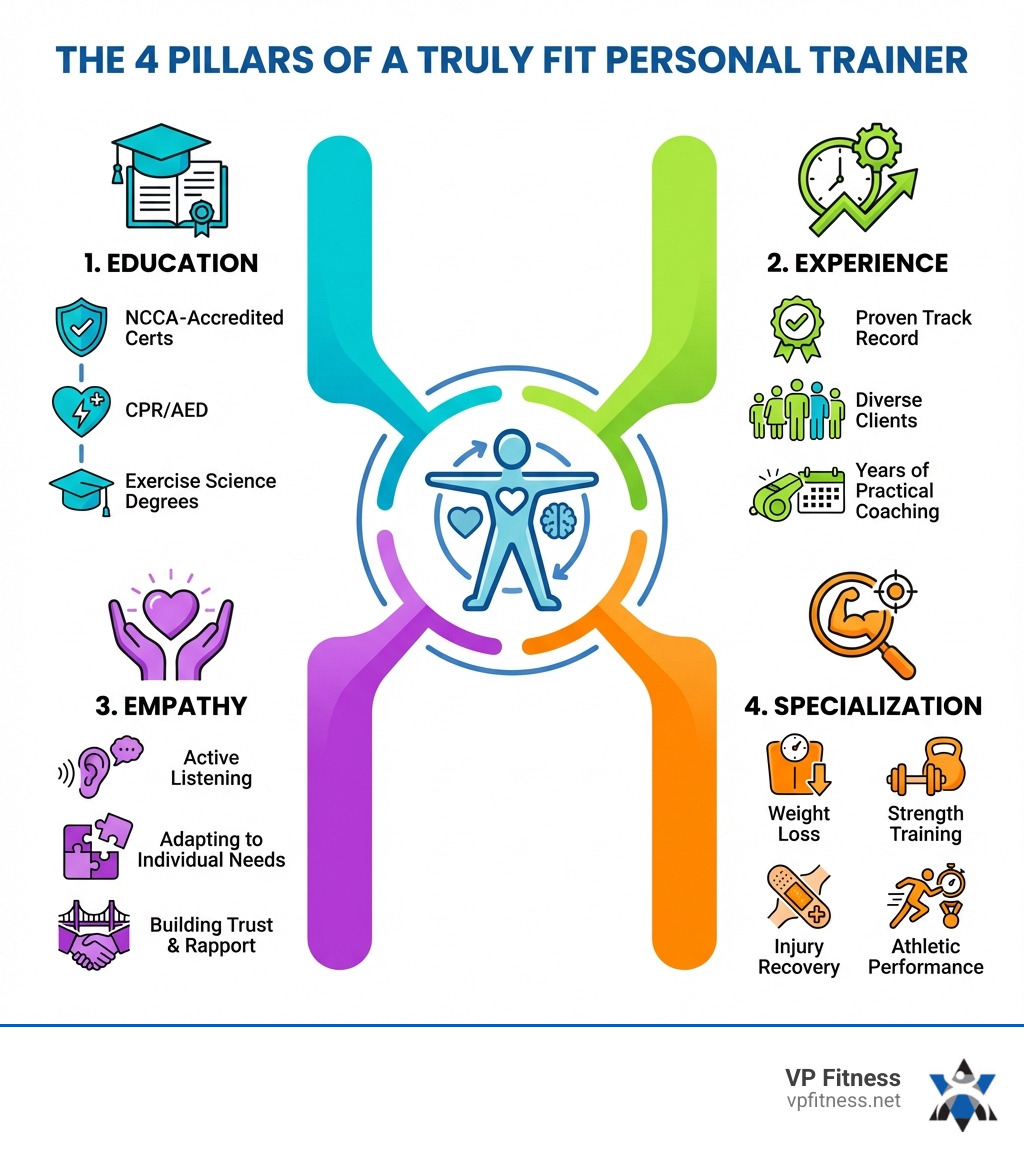
What “Fit” Really Means: Credentials and Qualifications
When we talk about a “fit” personal trainer, we’re not just referring to their physical condition, but to their professional readiness to guide you. This encompasses their qualifications, certifications, and commitment to ongoing education. The U.S. Bureau of Labor Statistics projects significant growth for fitness trainers, highlighting the increasing demand for qualified professionals.
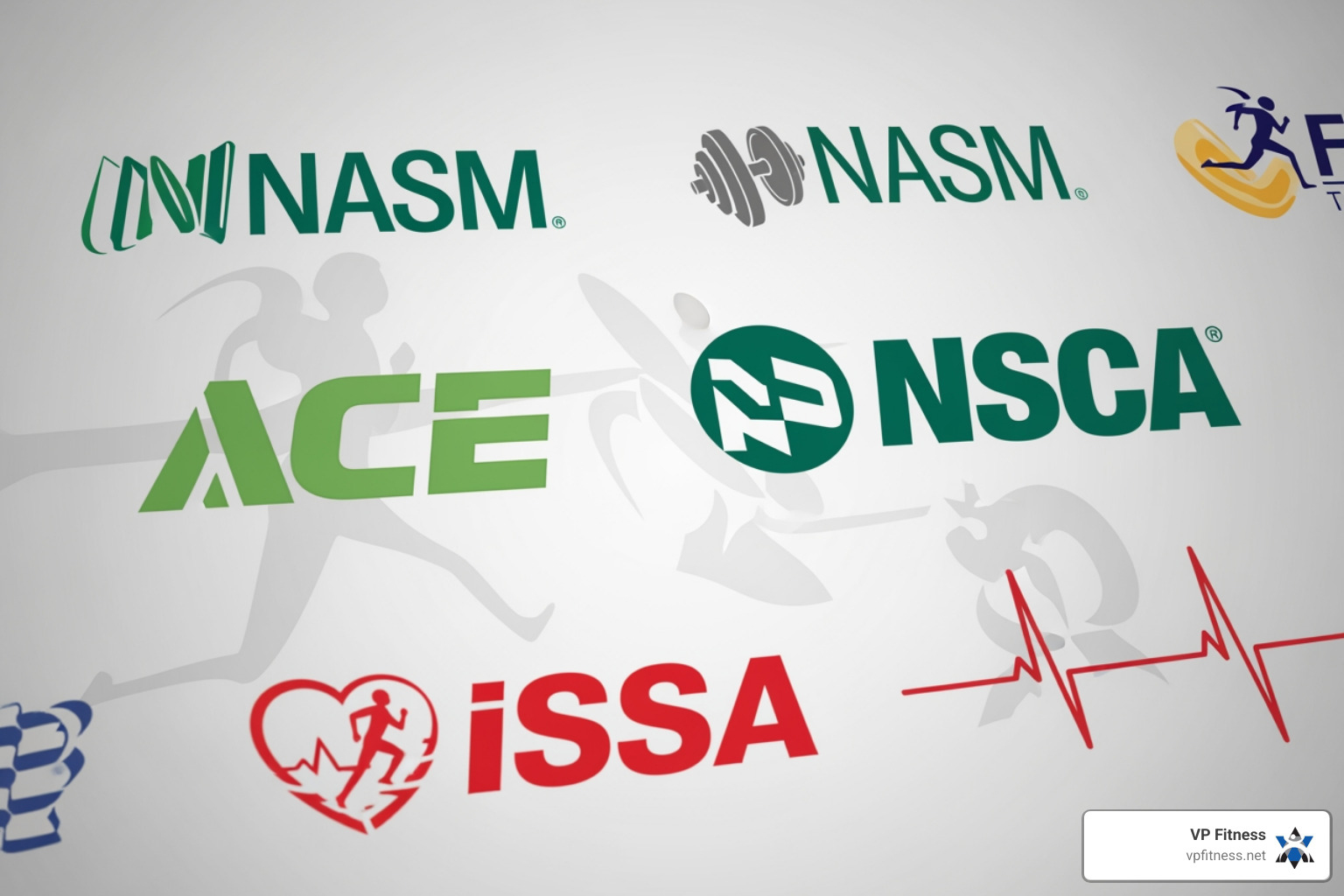
A legitimate personal trainer should hold certifications from nationally recognized organizations that are NCCA-accredited. These include the National Academy of Sports Medicine (NASM), the American Council on Exercise (ACE), the National Strength and Conditioning Association (NSCA), and the International Sports Sciences Association (ISSA). These certifications ensure a trainer has met a rigorous standard of knowledge in exercise science, anatomy, physiology, and program design.
Beyond the core certification, every fit personal trainer must possess current CPR/AED (Cardiopulmonary Resuscitation/Automated External Defibrillator) certification. This isn’t just a recommendation; it’s a non-negotiable safety requirement. In any physical activity, unforeseen emergencies can occur, and knowing your trainer is equipped to handle them provides invaluable peace of mind.
Furthermore, the fitness industry is constantly evolving, with new trends and technologies emerging regularly. A truly fit personal trainer stays current with these developments through Continuing Education Credits (CECs). These credits ensure trainers are continually learning and refining their skills, keeping their knowledge base fresh and relevant. This commitment to lifelong learning is a hallmark of a dedicated and effective Certified Fitness Coach.
The Importance of Education Over Aesthetics
It’s easy to be impressed by a trainer’s physique, but their knowledge base is far more critical to your success and safety. A genuinely fit personal trainer possesses a deep understanding of human anatomy, how muscles work, and how the body responds to different types of exercise. This scientific foundation allows them to design effective and safe programs custom to your unique needs.
For instance, understanding biomechanics helps a trainer correct your form, preventing injuries and maximizing the effectiveness of each movement. Without this knowledge, a trainer might inadvertently put you at risk or lead you down an ineffective path. Their education ensures client safety, allows for custom program design that aligns with scientific principles, and helps you achieve sustainable results. It’s about moving better, not just lifting heavier.
Verifying a Trainer’s Credentials
Before committing to a personal trainer, we encourage you to verify their credentials. Most reputable certification organizations offer online databases or verification processes where you can confirm a trainer’s certification status. Don’t hesitate to ask for proof of their certifications and inquire about their continuing education. A professional and confident trainer will be happy to provide this information.
This step isn’t about distrust; it’s about due diligence. Just as you’d check the qualifications of any other professional, ensuring your trainer is properly certified guarantees they have the foundational knowledge to guide you safely and effectively. It reflects their professionalism and commitment to their craft.
The Benefits of Hiring a Genuinely Fit Personal Trainer
Hiring a fit personal trainer is an investment in your health and well-being, offering a myriad of benefits that extend far beyond what you might achieve on your own. They provide a structured, supportive environment that fosters growth and success.
One of the most significant advantages is the creation of personalized plans. Unlike generic workout routines, a trainer designs a program specifically for you, taking into account your current fitness level, health history, goals, and even your preferences. This custom approach optimizes your efforts, helping you reach your goals faster and more efficiently. We’ve seen clients transform, like the individual who lost 55lbs and could run again, or another who overcame migraine headaches and knee surgery to lose nearly 30lbs and significantly increase their strength.
Beyond the custom workouts, a trainer acts as a powerful source of motivation and accountability. We all have days when our enthusiasm wanes, but a scheduled appointment with a trainer provides that crucial push to show up and put in the work. Their encouragement helps you break through mental barriers and stay committed to your journey.
Proper form instruction is another cornerstone benefit. Many injuries in the gym stem from incorrect technique. A fit personal trainer carefully observes your movements, providing real-time feedback and corrections to ensure you’re performing exercises safely and effectively. This prevents injuries, maximizes muscle activation, and builds confidence in your abilities. This expert guidance can help you overcome plateaus, introduce workout variety, and ensure consistent progress.
Personalized Programming for Faster Results
Your fitness journey is unique, and your training program should be too. A fit personal trainer begins with an initial assessment, which often includes a discussion of your goals, health history, and a movement screening. Some even use advanced tools like TRX MAPS technology for a 3D body movement scan, assessing mobility, activation, posture, and symmetry. This comprehensive evaluation allows them to create a truly goal-oriented workout plan.
This isn’t a static plan; it’s dynamic. As you progress, your trainer adapts the program, introducing new challenges and exercises to keep you moving forward and prevent plateaus. This personalized approach is incredibly efficient, ensuring every minute you spend exercising contributes directly to your objectives. This individualized attention is what truly drives significant results, whether you’re aiming for weight loss, muscle gain, or improved athletic performance.
Staying Motivated and Accountable
Let’s face it, maintaining motivation can be tough. Life gets busy, and sometimes the couch looks a lot more inviting than the gym. This is where a fit personal trainer shines. Scheduled appointments create a commitment that’s harder to break. You’re not just letting yourself down; you’re letting your trainer down, and that external accountability is a powerful motivator.
Trainers also help you track progress, not just on the scale, but in strength, endurance, and overall well-being. Seeing tangible improvements, whether it’s lifting heavier, running longer, or simply feeling more energetic, provides positive reinforcement that fuels your journey. One client, for example, dropped 14% body fat and completed a half marathon with consistent training.
Their expert support goes beyond exercise; it’s about breaking mental barriers. A trainer believes in your potential even when you doubt yourself, pushing you safely past your perceived limits. This kind of partnership fosters resilience and helps you develop a consistent routine.

Finding Your Match: From Specializations to Training Styles
Finding the right fit personal trainer is a deeply personal process. It’s not just about their qualifications, but about how well their training philosophy, communication style, and personality align with yours.
Consider their training philosophy: Do they focus on high-intensity interval training (HIIT), strength building, functional movements, or a blend? Does this align with what you enjoy and what you believe will work best for you? Their communication style is also key; do they explain things clearly, listen actively, and provide constructive feedback? A good trainer is a good communicator.
Finally, a trial session can be incredibly valuable. It’s like a first date for your fitness journey. Does their personality mesh with yours? Do you feel comfortable and motivated in their presence? The connection you build with your trainer can significantly impact your long-term success.
How to find a fit personal trainer for your specific goals
The beauty of the personal training industry is its vast array of specializations. No matter your goal, there’s likely a trainer whose expertise is perfectly custom to help you achieve it. Here are some common training specializations:
- Weight Loss Specialists: These trainers focus on creating sustainable calorie deficits through exercise and often provide guidance on nutrition. They help clients overcome plateaus and implement effective strategies, like the trainer who helped a client lose 50 pounds.
- Strength Training/Bodybuilding: For those looking to build muscle, increase strength, or prepare for physique competitions, these trainers have expertise in progressive overload, hypertrophy, and advanced lifting techniques.
- Athletic Performance: Athletes aiming to improve speed, agility, power, or sport-specific skills will benefit from trainers specializing in performance improvement, including injury prevention and conditioning. One client, for example, added 20 yards to their golf drive.
- Senior Fitness: Trainers in this area understand the unique needs of older adults, focusing on maintaining mobility, balance, strength, and overall health to support active aging.
- Pre/Post-Natal Fitness: Specialized trainers guide pregnant and postpartum individuals through safe and effective exercise programs, addressing the physiological changes of these life stages.
- Corrective Exercise/Rehabilitation: These trainers work with individuals recovering from injuries or managing chronic conditions, focusing on improving movement patterns, strengthening weak areas, and reducing pain. They often collaborate with physical therapists.
- Functional Fitness: Focusing on movements that mimic daily activities, these trainers help improve overall body mechanics, stability, and strength for real-world tasks.
- Women’s Health: Some trainers specialize in addressing the unique physiological and hormonal aspects of women’s fitness, from strength building to hormone-related weight management.
By identifying your primary goal, you can narrow down your search for a fit personal trainer who truly understands your needs and has a proven track record in that area.
In-Person vs. Online Training: Which is Right for You?
The rise of technology has brought a new dimension to personal training: online coaching. Both in-person and online training offer unique advantages, and the “best” option depends on your lifestyle, preferences, and goals.
Here’s a comparison to help you decide:
| Feature | In-Person Training | Online Training |
|---|---|---|
| Flexibility | Fixed schedule, requires travel to a gym. | Highly flexible, workouts can be done anywhere, anytime. Ideal for busy professionals or travelers. |
| Cost | Generally higher hourly rates due to overhead and direct supervision. | Often more affordable, with packages potentially costing a fraction of in-person training. |
| Accountability | High, due to direct human interaction and scheduled appointments. | Relies on self-discipline and communication via apps/messages, regular check-ins provide structure. |
| Equipment Access | Access to full gym equipment, trainer can guide on usage. | Programs designed around available equipment (home gym, commercial gym, minimal equipment). |
| Form Correction | Immediate, hands-on corrections and demonstrations. | Primarily via video analysis (client records self, trainer reviews and provides feedback). |
| Motivation | Direct, real-time encouragement, and energy from the trainer. | Provided through messaging, regular check-ins, and personalized feedback. |
| Social Interaction | Direct, personal connection, and camaraderie. | Primarily digital, but strong relationships can still be built. |
| Suitability | Ideal for beginners, those needing hands-on correction, or who thrive with direct supervision. | Great for self-starters, experienced exercisers, those with tight schedules, or who prefer privacy. |
Online personal training has gained significant traction, with the global online personal training market valued at USD 1.6 billion in 2023. It connects you with a certified fitness coach who creates custom workout and nutrition plans, offering 24/7 support via messaging. Clients can message their trainer anytime, with guaranteed responses typically within 24 hours. For many, this flexibility and cost-effectiveness make it a highly appealing option. For those who travel frequently, a trainer can even create additional workout plans and offer advice on maintaining nutrition while on the go.
However, for beginners or those who struggle with form, the immediate, hands-on correction of an in-person trainer can be invaluable. The choice depends on your personal needs and how you best learn and stay motivated.
The Practical Guide: Sessions, Costs, and Red Flags
Starting on a fitness journey with a fit personal trainer should be a transparent and rewarding experience. Understanding what to expect from sessions, how pricing works, and what warning signs to look out for will empower you to make informed decisions.
What to Expect From Your First Few Sessions
Your initial interactions with a fit personal trainer are crucial for building a solid foundation. The first few sessions typically involve:
- Initial Consultation: This is a conversation where you discuss your fitness goals, health history, any past injuries, dietary habits, and lifestyle. This helps the trainer understand your starting point and what you hope to achieve.
- Fitness Assessment: A comprehensive evaluation of your current fitness level. This might include:
- Movement Screening: Observing your body’s mechanics during various movements to identify imbalances or limitations.
- Body Composition Analysis: Measuring body fat percentage, often using tools like calipers.
- Strength and Endurance Tests: Basic assessments to gauge your current physical capabilities.
- Introductory Workout: Often, a portion of the first session is dedicated to a light workout. This allows the trainer to observe your form, understand your comfort levels, and introduce you to some basic exercises.
- Goal Discussion & Plan Outline: Based on the assessment, your trainer will discuss a realistic timeline for your goals and outline the type of program they envision for you. This is also a good opportunity to build rapport and ensure you feel comfortable and confident with your chosen professional.
These initial steps are vital for creating a truly personalized and effective training plan.
Understanding Costs and Nutrition Guidance
The cost of personal training can vary significantly based on several factors, including the trainer’s experience, certifications, the type of training (one-on-one, partner, small group), and package deals. The median annual wage for fitness trainers was $47,840 in May 2023, but highly certified professionals, like ACE Certified Personal Trainers, can command average hourly rates of $60-$100. Some services might start as low as $35 per session for specific formats.
Generally, buying sessions in packages (e.g., 10 or 20 sessions) often reduces the per-session cost compared to single sessions. While a fit personal trainer provides invaluable guidance, it’s important to understand their scope regarding nutrition.
Most personal trainers are not registered dietitians or nutritionists and therefore cannot provide medical nutrition therapy or prescribe strict meal plans. However, they can offer general dietary advice, healthy eating guidelines, and support you in making better food choices that complement your training. Some fitness centers partner with specialized nutrition platforms, such as EatLove, to provide personalized eating programs, nutritionist consultations, recipes, and shopping lists, ensuring clients receive comprehensive support for their diet alongside their fitness.
Red Flags to Watch Out For When Choosing a Trainer
While most personal trainers are dedicated professionals, it’s crucial to be aware of potential red flags that could indicate a less-than-ideal partnership. When choosing a fit personal trainer, watch out for these warning signs:
- Unrealistic Promises: Be wary of any trainer guaranteeing rapid, dramatic results (e.g., “lose 20 pounds in two weeks!”). Sustainable, healthy progress takes time and effort.
- High-Pressure Sales Tactics: If a trainer pushes you into expensive, long-term contracts before you’ve even had a trial session or feel comfortable, it’s a major red flag.
- Poor Communication: A trainer who doesn’t listen to your goals, concerns, or feedback, or who is consistently late and unresponsive, is not a good fit.
- One-Size-Fits-All Approach: If a trainer uses the exact same workout plan for everyone, regardless of their individual needs or goals, they lack the personalization essential for effective training.
- Ignoring Pain or Safety Concerns: Your safety is paramount. A trainer who encourages you to “push through” sharp pain or disregards proper form is dangerous.
- Lack of Focus During Sessions: Your time with a trainer is valuable. If they are constantly distracted by their phone, other clients, or seem disengaged, they’re not providing the attention you deserve.
- Lack of Credentials: As we discussed, a fit personal trainer should readily provide proof of their NCCA-accredited certifications and CPR/AED. If they’re evasive, it’s a red flag.
Trust your gut feeling. If something feels off, it probably is. Your fitness journey is personal, and you deserve a trainer who is professional, attentive, and genuinely invested in your success.
Frequently Asked Questions about Finding a Fit Personal Trainer
How often should I work out with a personal trainer?
The ideal frequency for working with a fit personal trainer depends on several factors: your fitness goals, budget, current fitness level, and how quickly you want to see results. For beginners or those with specific goals, 2-3 sessions per week can provide excellent structure, motivation, and rapid learning of proper form. If your budget is tighter, 1 session per week can still be highly effective, especially if your trainer provides a program for you to follow on your own during other days.
Many clients find a balance by training with a professional once or twice a week and then performing supplementary workouts independently. The key is consistency, whether that’s with your trainer or following their guidance on your own.
How long until I start to see results?
This is a common question, and the answer, like many things in fitness, is “it depends.” While physical results vary based on your starting fitness level, workout frequency and intensity, and dietary adherence, you can often expect immediate “non-scale victories.” These might include increased energy levels, improved mood, reduced stress, better sleep quality, and improved body awareness.
Visible physical changes—such as weight loss, muscle gain, or improved endurance—typically become noticeable within 4-8 weeks of consistent effort. For significant changes, a commitment of several months is usually required. Consistency in both your workouts and nutrition, coupled with the expert guidance of a fit personal trainer, is what truly accelerates progress.
Can a personal trainer help if I have an old injury or medical condition?
Absolutely, a qualified and fit personal trainer can be incredibly beneficial if you’re managing an old injury or medical condition. However, it’s crucial that you choose a trainer with specific experience or specialization in corrective exercise, post-rehab training, or working with special populations.
Before starting any new exercise program, we always recommend consulting with your doctor or physical therapist. Once you have medical clearance, your trainer can work closely with your healthcare providers to design a safe and effective program. They’ll focus on strengthening supporting muscles, improving mobility, correcting movement patterns, and preventing re-injury. For example, a client with an old shoulder injury successfully improved their golf performance after working with a trainer on rehabilitation. The goal is to ensure a smooth transition back to activity and to build a resilient body for long-term health.
Conclusion
In the evolving landscape of health and fitness, understanding what truly makes a fit personal trainer is more critical than ever. It’s clear that genuine fitness in a trainer extends far beyond physical appearance; it encompasses a robust foundation of education, NCCA-accredited certifications, practical experience, and a deep sense of empathy for their clients’ unique journeys. We’ve explored the profound benefits of personalized programming, the unwavering motivation and accountability a great trainer provides, and the importance of finding a specialist whose expertise aligns with your specific goals.
We’ve also armed you with the knowledge to steer the practicalities, from understanding what to expect in your first sessions to deciphering pricing structures and identifying red flags. Choosing a personal trainer is a significant decision, one that profoundly impacts your safety, progress, and overall well-being. By prioritizing credentials, communication, and a genuine connection, you’re not just hiring someone to count reps; you’re partnering with a professional who will empower you to achieve sustainable results and a healthier, happier life.