

Mastering High-Intensity Interval Training: What It Is and How to Do It

High intensity cardio: Master 3 Workouts
Why High-Intensity Cardio Is Changing Modern Fitness
High intensity cardio alternates short bursts of maximum effort with brief recovery periods, delivering fitness results in less time than steady-state cardio. Key benefits include:
- Time-Efficient: Achieve significant fitness gains in 10-30 minutes.
- Higher Calorie Burn: Burns more calories during and after your workout (the “afterburn effect”).
- Improves Multiple Systems: Improves both cardiovascular health and metabolic function.
- Flexible Format: Works with running, cycling, bodyweight exercises, or equipment.
- Proven Results: Research shows improvements in fat loss, VO2 max, and blood pressure.
For busy professionals struggling to find time for long gym sessions, high-intensity interval training (HIIT) offers a practical solution. Studies show HIIT can deliver the same health benefits as regular exercise in less time–including reduced body fat, lower heart rate and blood pressure, and improved blood sugar levels.
The concept is simple: instead of maintaining one pace for 45 minutes, you push yourself hard for 20-60 seconds, rest briefly, and repeat. This pattern triggers metabolic responses that keep your body burning calories for hours after you finish.
The science backs this up. Research shows HIIT can boost your metabolism for hours post-exercise, leading to additional calorie burning. Multiple studies demonstrate that 30 minutes of HIIT burns more calories than the same duration of other cardio workouts. Even more impressive, improvement in cardiorespiratory fitness can be nearly double with HIIT compared to moderate-intensity continuous training–a 19.4% increase versus 10.3%.
Fitness professionals have witnessed how high intensity cardio transforms client results while fitting into demanding schedules. This guide shares the evidence-based strategies that have helped hundreds of busy professionals achieve their fitness goals through HIIT.
The Science-Backed Benefits of High-Intensity Cardio
High intensity cardio is not just a trend–it’s a scientifically proven approach that delivers measurable results for your health and fitness. The efficiency of HIIT is remarkable. Research consistently shows these workouts offer similar, and often superior, health benefits compared to traditional endurance training, but in a fraction of the time.
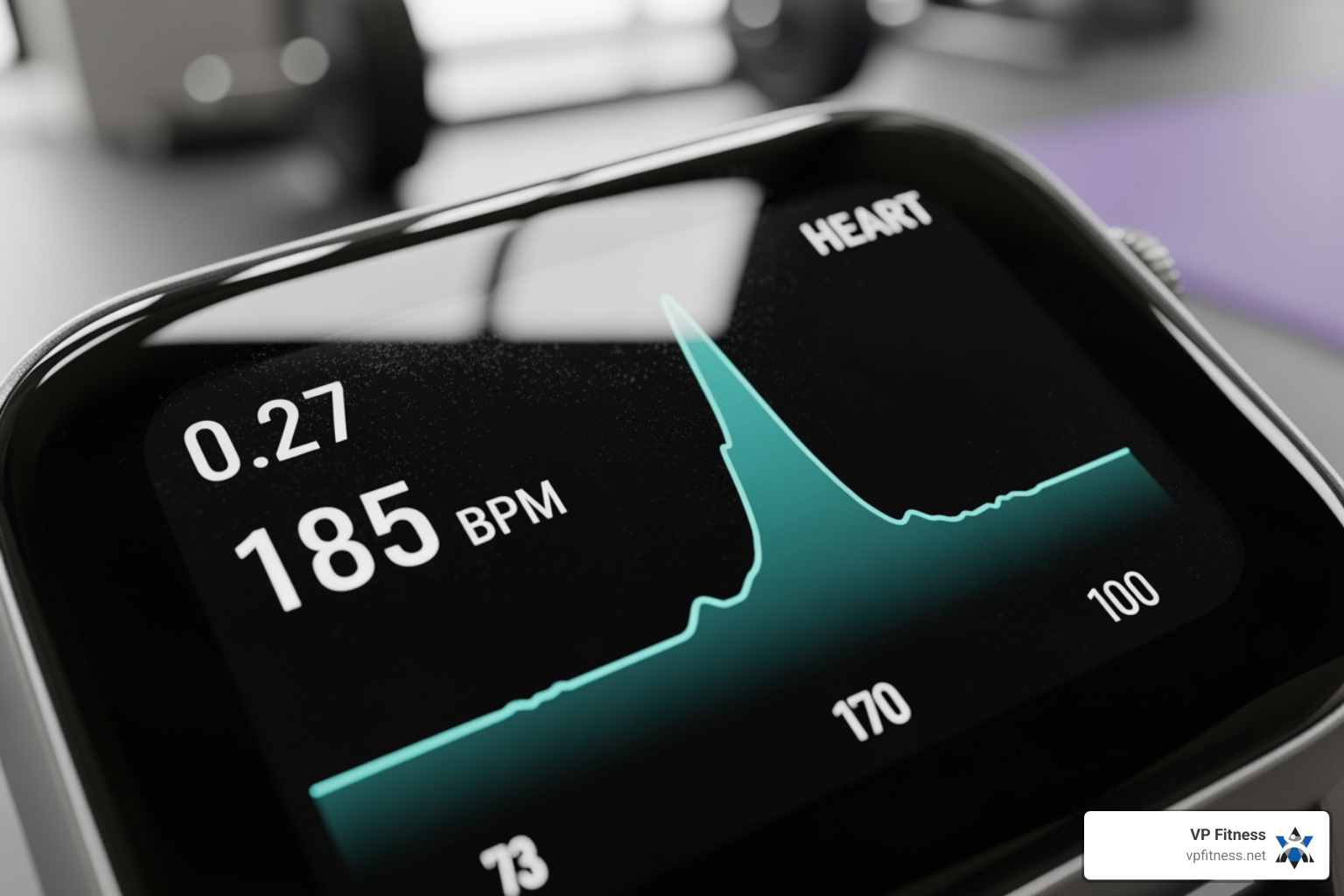
These short sessions lead to dramatic improvements in calorie burn, metabolic rate, and cardiovascular health. Let’s explore what happens in your body during HIIT.
Boost Your Metabolism and Afterburn Effect
One of the most powerful benefits of high intensity cardio is its ability to keep your metabolism working overtime for hours after your workout. This phenomenon is known as Excess Post-exercise Oxygen Consumption (EPOC), or the “afterburn effect.”
During intense intervals, your body burns energy at a high rate. Afterward, it needs extra oxygen and energy to recover and repair, keeping your metabolic rate lifted for up to 24 hours. Scientific research on the afterburn effect confirms this extended calorie burn is significantly more pronounced with HIIT than with steady-state cardio. Your metabolism becomes more efficient at fat oxidation, burning fat for fuel even while you’re resting.
Effective for Fat Loss and Muscle Preservation
When it comes to changing body composition, high intensity cardio is highly effective. A review of HIIT for fat loss involving 424 adults found that while both HIIT and traditional exercise reduced body fat and waist circumference, HIIT achieved this in considerably less time.
HIIT is particularly effective at reducing visceral fat–the deep abdominal fat linked to serious health issues. By lowering insulin resistance, HIIT helps prevent hormonal conditions that promote fat storage.
While weight training is known for building muscle, HIIT can also help you gain muscle mass, especially if you’re currently less active. This dual benefit means you’re not just getting smaller–you’re getting leaner and stronger.
Strengthen Your Heart and Improve Circulation
Your heart is a muscle that gets stronger with appropriate challenges. High intensity cardio provides the stimulus your cardiovascular system needs to thrive. A key measure of fitness is VO2 max–the maximum amount of oxygen your body can use during exercise. HIIT’s effect on cardiovascular fitness shows it improves VO2 max as effectively as traditional endurance training, but in less time.
For individuals with chronic cardiovascular or metabolic diseases, VO2 max increases with HIIT can be nearly double those from moderate-intensity training (a 19.4% improvement vs. 10.3%). HIIT also effectively reduces heart rate and blood pressure, particularly in people who are overweight. This improved vascular function means better circulation and a reduced risk of heart disease.
Improve Blood Sugar Control and Insulin Sensitivity
High intensity cardio offers powerful benefits for managing blood sugar. HIIT programs significantly reduce insulin resistance compared to continuous training. This means your body becomes more efficient at using insulin to regulate blood sugar. Research on HIIT and blood sugar shows it can reduce blood sugar levels in people with type 2 diabetes.
In one study, HIIT lowered fasting blood glucose levels and reduced fasting insulin by 31%, compared to just a 9% decrease with moderate-intensity training. These are potentially life-changing improvements that can help manage serious metabolic conditions.
Lift Aerobic and Anaerobic Performance
High intensity cardio improves your body’s performance in multiple ways. Your aerobic capacity (endurance) improves as your body learns to use oxygen more efficiently. Simultaneously, your anaerobic capacity (power for short bursts) also gets a boost. This makes you more versatile across a wide range of activities.
The famous Tabata study demonstrated this with a 4-minute protocol (20 seconds of intense work, 10 seconds of rest, repeated 8 times), which produced remarkable improvements in both aerobic and anaerobic systems. For athletes, these gains translate directly to their sport. For everyone else, it means more energy for daily tasks and feeling more physically capable.
How to Structure Your High Intensity Cardio Workout
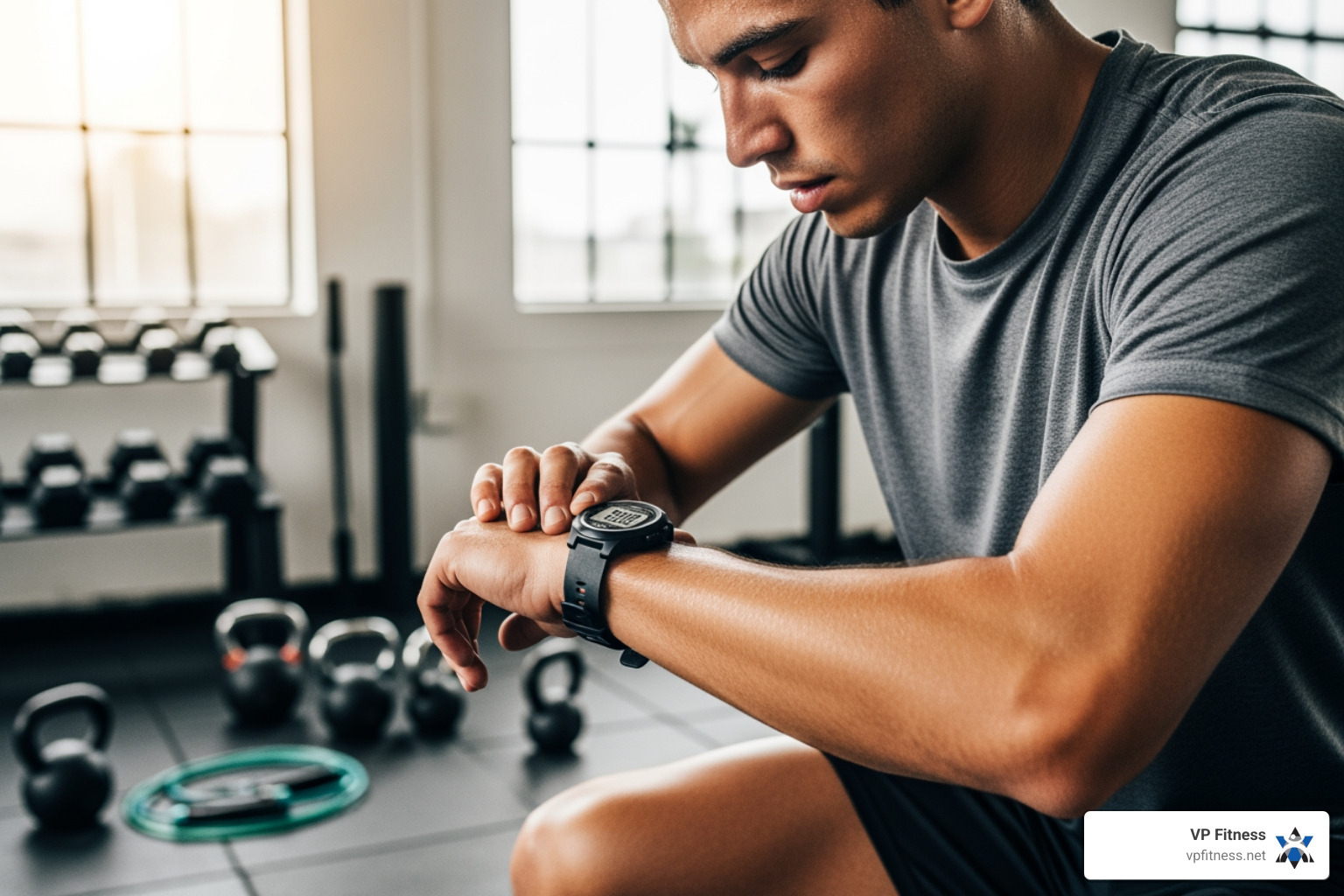
Understanding the benefits of high intensity cardio is the first step; applying it correctly is the next. The structure of your HIIT workout is what makes it effective and safe. It’s a balance of work-to-rest ratios, appropriate frequency, and progressive overload–gradually increasing the challenge as you adapt.
Most importantly, you need to listen to your body. HIIT is demanding, and there’s a difference between productive discomfort and pain that signals a potential injury. Recognizing that difference is crucial for long-term success.
Key Principles for a Safe and Effective Routine
Follow these foundational principles for safe, effective high intensity cardio training.
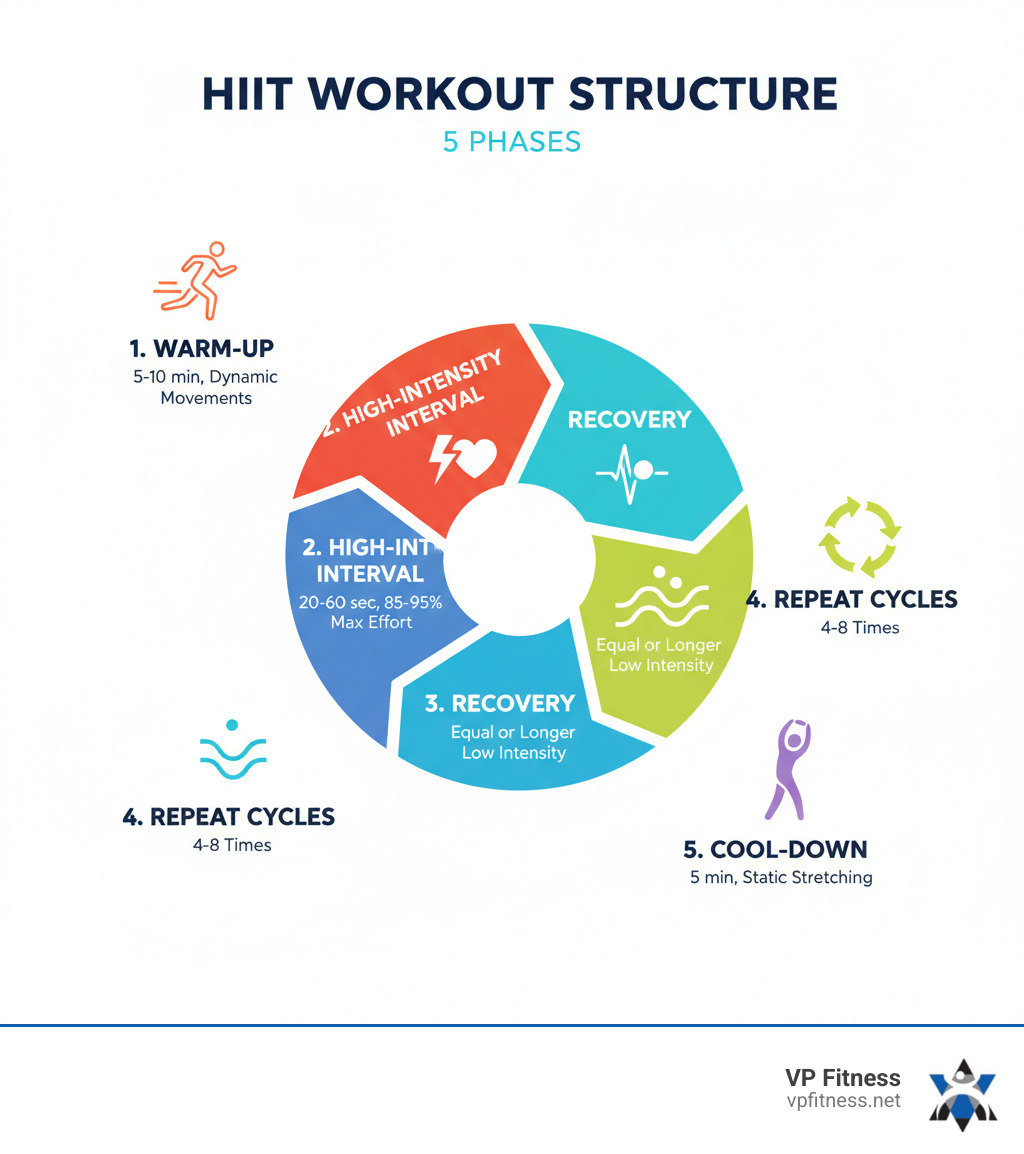
- Warm-Up Properly. A 5-10 minute warm-up with dynamic movements like light jogging, arm circles, and leg swings is not optional. It gradually increases your heart rate and prepares your muscles for intense work.
- Prioritize Form Over Speed. When your heart is pounding, it’s tempting to sacrifice technique for speed. Don’t. Sloppy form is a recipe for injury. If your form breaks down, slow down or pause to reset.
- Gauge Your Intensity. Use Rate of Perceived Exertion (RPE) on a 1-10 scale. Aim for an RPE of 7-9 during high-intensity intervals (feeling very hard, difficult to talk). During recovery, drop to an RPE of 3-4. This corresponds to roughly 85-95% and 60-70% of your max heart rate, respectively.
- Cool Down Properly. After your final interval, spend 5 minutes bringing your heart rate down gradually. Follow this with static stretches (holding positions) to reduce muscle soreness and improve flexibility.
- Watch for Overtraining. More isn’t always better. Persistent fatigue, decreased performance, or trouble sleeping are warning signs that you need more recovery. Your body gets stronger during rest, not during the workout.
List of Effective HIIT Exercises
The versatility of high intensity cardio means you can create effective sessions with or without equipment.
- Bodyweight Exercises: Burpees, high knees, jump squats, and mountain climbers are excellent full-body choices that require no equipment.
- Equipment-Based Exercises: A rowing machine offers full-body conditioning. The stationary bike is a great low-impact option. Kettlebell swings build explosive power. Battle ropes provide intense upper body and core work. Treadmill sprints offer a classic HIIT workout.
Sample HIIT Routines for Beginners
If you’re new to high intensity cardio, start with a 1:2 work-to-rest ratio (e.g., 30 seconds of work, 60 seconds of rest). This helps you maintain good form and prevents burnout. Keep total workout time to 15-20 minutes, excluding warm-up and cool-down.
Here are three beginner-friendly routines:
| Exercise Type | Exercise | Work Interval | Rest Interval | Total Rounds |
|---|---|---|---|---|
| Bodyweight | Burpees, High Knees, Jump Squats, Mountain Climbers (rotate through) | 30 seconds | 60 seconds | 5-7 |
| Stationary Bike | High-resistance sprint alternating with moderate-resistance pedaling | 45 seconds | 90 seconds | 4-6 |
| Treadmill | Sprint (high speed) alternating with walk (low speed) | 30 seconds | 60 seconds | 5-7 |
As your fitness improves, you can gradually decrease rest time, increase work time, or add more rounds. This is progressive overload. Focus on perfect form in these early weeks to build a strong foundation. If you’re unsure about form, working with an experienced trainer can ensure you progress safely and effectively.
HIIT vs. Steady-State Cardio: A Head-to-Head Comparison

How does high intensity cardio stack up against traditional steady-state cardio? Traditional moderate-intensity continuous training (MICT)–like jogging at a steady pace–has long been the standard. But HIIT has emerged as a powerful alternative, especially for those with busy schedules.
-
Time Commitment: This is where HIIT stands out. A 10- to 30-minute HIIT session can deliver comparable health benefits to a 30- to 60-minute MICT workout. This efficiency is a game-changer for busy professionals.
-
Calorie Burn: While you might burn a similar number of calories during the workout itself, HIIT has a significant advantage due to the afterburn effect. Your metabolism stays lifted for hours afterward, burning additional calories long after you’ve finished exercising.
-
Cardiovascular Fitness: Both approaches improve your VO2 max (how efficiently your body uses oxygen), but HIIT often produces more dramatic results. For individuals with certain chronic diseases, the increase in VO2 max with HIIT was nearly double that of MICT (19.4% vs. 10.3%).
-
Body Composition: Both HIIT and MICT are effective for fat loss. However, some research suggests HIIT has an edge. One meta-analysis found that HIIT led to greater reductions in waist circumference and percent body fat compared to MICT in young and middle-aged adults.
-
Enjoyment Factor: This is personal. Some find the rhythm of steady-state cardio meditative, while others prefer the variety and intensity of HIIT. Research suggests HIIT can be more enjoyable for many people, potentially improving long-term adherence.
Fitness professionals have seen clients thrive with both approaches. Often, the best choice is the one you’ll stick with consistently. A combination can also be effective–for example, two HIIT sessions and one longer, moderate-intensity session per week. This variety keeps training interesting while maximizing the benefits of each style.
The bottom line: high intensity cardio offers remarkable efficiency and metabolic benefits, but steady-state cardio still has its place for building an aerobic base and promoting recovery. The smartest approach often involves both, customized to your goals and schedule.
Potential Risks and Special Considerations
High intensity cardio is powerful, but it requires certain considerations, especially for beginners. With proper guidance, most people can safely incorporate HIIT into their fitness routine.
Before you start, consult with a healthcare professional, especially if you have pre-existing health conditions, have been inactive for a while, or are pregnant. This step helps ensure HIIT is appropriate for you.
The explosive nature of many HIIT movements creates an injury risk, particularly for the knees, shoulders, and back, if performed with poor form. Proper technique is essential. Certified coaches prioritize form correction because staying injury-free is key to long-term progress.
Some groups need extra caution:
- Individuals with heart conditions: HIIT can be beneficial for those with conditions like coronary artery disease, but it must be done under medical supervision, often after a stress test. Research on patients with heart failure shows HIIT improved cardiac function in supervised clinical programs.
- Pregnant individuals: Guidance depends on your pre-pregnancy activity level and trimester. If you were already doing HIIT, you might continue in the first trimester with your doctor’s approval. As pregnancy progresses, modifications or a switch to lower-intensity activities are usually necessary.
- Absolute beginners: We recommend building a foundation with moderate-intensity exercise first. After a few weeks or months of brisk walking or light strength training, you can gradually introduce HIIT with shorter work intervals and longer rest periods.
- Those with joint or muscle problems: High-impact movements can aggravate conditions like arthritis. Choose lower-impact options like cycling, swimming, or the elliptical. Interestingly, HIIT has shown promise in lower back rehabilitation by decreasing pain, but this must be done under professional guidance.
HIIT is also being used in clinical settings. One study found HIIT improved cardiovascular fitness in men awaiting cancer surgery after just one month. For younger populations, supervised HIIT programs effectively improve cardiovascular fitness and body composition. In cases of pediatric obesity, HIIT training has been shown to decrease BMI, body fat, and insulin resistance.
The bottom line is that high intensity cardio demands respect. A well-designed program should challenge you safely. Professional guidance ensures you’re not just working hard–you’re working smart.
Frequently Asked Questions about High-Intensity Cardio
Here are answers to the most common questions we receive about high intensity cardio to help you get started safely and effectively.
How often should I do HIIT?
The ideal frequency depends on your fitness level, but a general guideline is effective for most people. We typically recommend 2-3 non-consecutive days per week for high intensity cardio workouts. This allows your body the necessary time to recover and adapt.
If you’re new to HIIT, start with 1-2 sessions per week. You can increase to three sessions as your fitness improves. Pushing for more can lead to overtraining, fatigue, and injury. Listen to your body; if you feel unusually sore or exhausted, take an extra rest day. Consistency over time is more important than unsustainable intensity.
Can I combine HIIT with strength training?
Yes, combining high intensity cardio with strength training is one of the most effective ways to build muscle, improve cardiovascular health, and maximize fat loss. Here are a few ways to structure your week:
- On separate days: This is a clean approach. For example, do strength training on Monday, Wednesday, and Friday, with HIIT on Tuesday and Thursday.
- As a finisher: A quick 10-15 minute HIIT blast after a strength session can boost your calorie burn and metabolic rate.
- In a circuit: Alternate between strength exercises and short cardio bursts to keep your heart rate lifted while building strength.
Group fitness classes often incorporate both elements. For a custom approach, a trainer can create a balanced program for you. A sample week could be: Monday (Upper Body Strength), Tuesday (HIIT), Wednesday (Lower Body Strength), Thursday (Rest), Friday (Full Body Strength), Saturday (HIIT), Sunday (Rest).
How long does it take to see results from HIIT?
Results vary based on consistency, nutrition, sleep, and genetics, but you can expect a general timeline.
-
Cardiorespiratory fitness improves quickly. Within 2-4 weeks of consistent high intensity cardio, most people feel less winded and can recover faster. Your heart and lungs adapt rapidly.
-
Body composition changes, like fat loss and muscle definition, typically take longer. Expect to see noticeable changes in 8-12 weeks with consistent training and proper nutrition. HIIT is very effective at reducing body fat and waist circumference.
Consistency is key. Sporadic workouts won’t deliver the results you want. Regular training, good nutrition, and adequate sleep will accelerate your progress. Also, pay attention to non-visual results like better energy, improved mood, and sounder sleep–these are important signs of progress.
To maximize your results with professional guidance, consider working with a trainer. They can create a personalized fitness plan designed for your specific goals and lifestyle.
Conclusion
High intensity cardio is a cornerstone of modern fitness because it’s a scientifically proven method for delivering significant results in less time than traditional cardio. It boosts your metabolism, sheds body fat while preserving muscle, strengthens your heart, and improves blood sugar control. It’s a powerful tool for anyone from a busy professional to an athlete breaking through a plateau.
The flexibility of HIIT is one of its greatest assets. You can do it anywhere, with or without equipment, and tailor it to your fitness level. Meaningful improvements can be seen in just a few weeks of consistent effort.
However, HIIT is demanding. Proper form, appropriate intensity, and smart programming are crucial for getting results while avoiding injury. This is where professional guidance becomes invaluable.
Experienced coaches can help you harness the power of high intensity cardio safely and effectively. They can design personalized plans that fit your schedule, goals, and unique needs, providing a professional environment where you can focus on your fitness change.
Ready to find what your body is capable of? A personalized fitness plan can help you start building a stronger, healthier version of yourself. Your fitness journey deserves expert support.