

How to Build an Effective Gym Routine for Weight Loss as a Beginner

How to Build an Effective Gym Routine for Weight Loss as a Beginner
Start With a Beginner Gym Routine for Weight Loss You Can Repeat
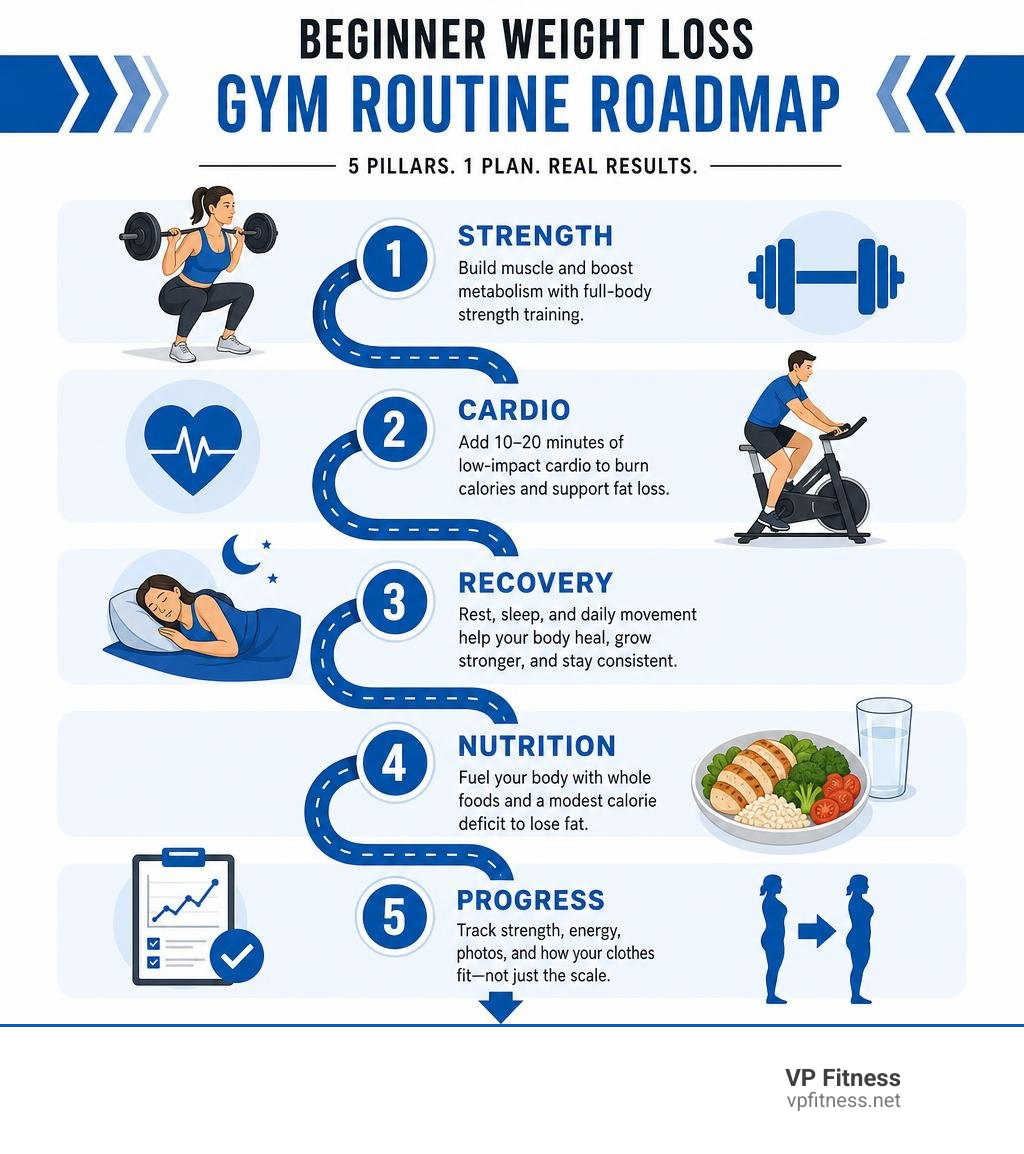
An effective beginner gym routine for weight loss combines full-body strength training, simple cardio, daily movement, and a modest calorie deficit. For most beginners, the best starting point is three non-consecutive gym sessions per week, with each session lasting about 45 to 60 minutes.
- Lift first: Use basic full-body movements that train your legs, chest, back, core, and hips.
- Add manageable cardio: Finish with 10 to 20 minutes of walking, cycling, or another low-impact option.
- Recover between sessions: Rest days, sleep, and walking support progress without burning you out.
- Progress slowly: Add a few reps or a small amount of weight only when your form stays controlled.
- Track more than the scale: Strength, energy, photos, and how your clothes fit can show progress before body weight changes.
The goal is not to crush yourself with daily workouts. It is to build a routine that fits a busy schedule, preserves muscle while you lose fat, and becomes easier to maintain each week. A coach or personal trainer can also help remove guesswork by teaching safe form, setting realistic targets, and adding accountability when motivation dips.
I am Joseph DePena, a fitness entrepreneur, master trainer, and experienced fitness coach with years of experience helping clients build sustainable habits through strength training, coaching, and measurable progress. In this guide, I will show you how to turn a beginner gym routine for weight loss into a practical plan you can follow with confidence.
Why Strength Training Beats Cardio for Fat Loss
When most people decide to shed unwanted pounds, their first instinct is to head straight for the treadmill and spend an hour running until total exhaustion. While cardiovascular exercise certainly burns calories in the moment, relying exclusively on cardio for fat loss often leads to frustration and plateaus.
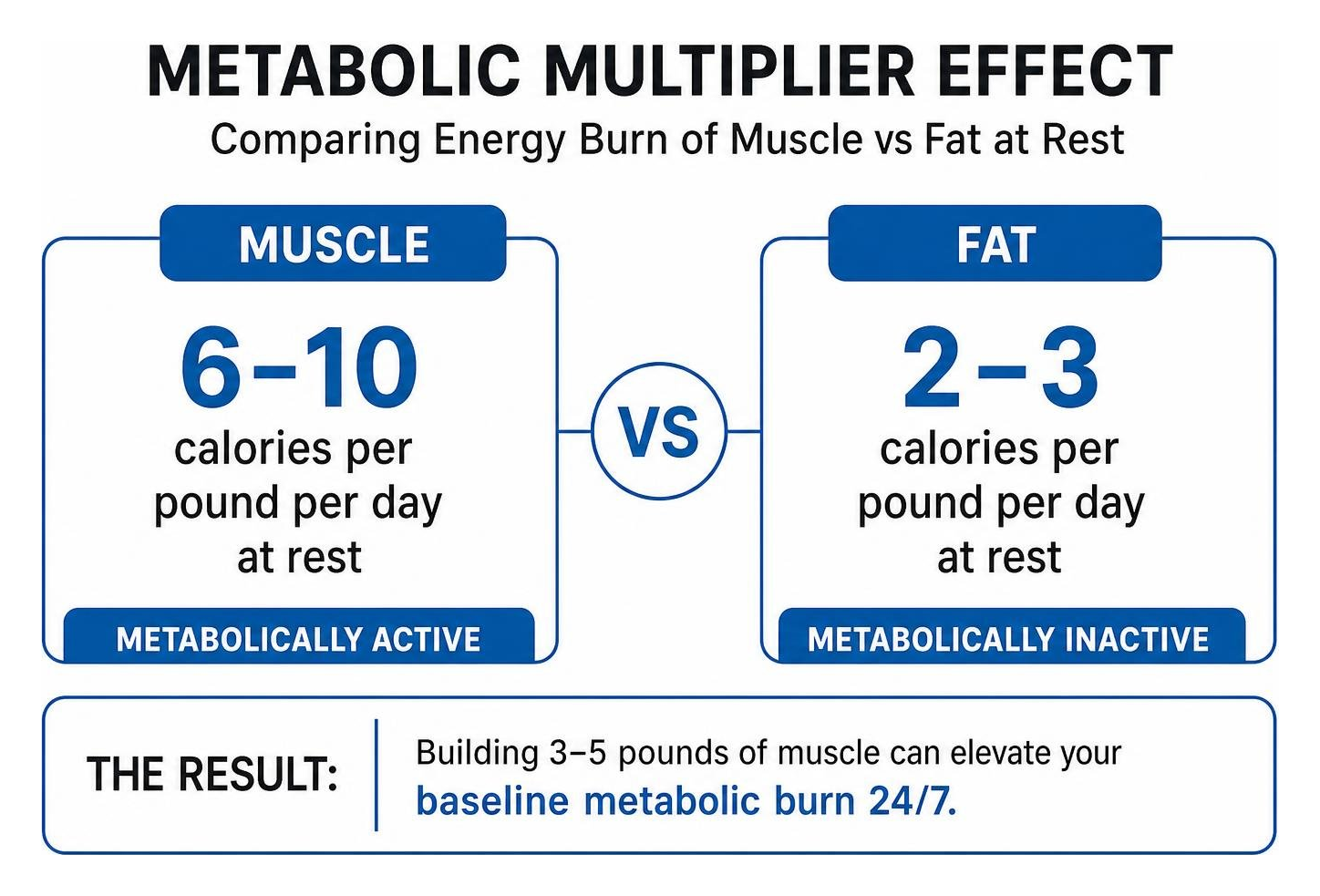
To maximize fat loss while building a toned, functional physique, weight training must take center stage. The core scientific secret lies in how muscle tissue influences your Resting Metabolic Rate (RMR)-the number of calories your body burns at rest just to keep you alive. Each pound of skeletal muscle burns approximately 6 to 10 calories per day at rest, compared to just 2 to 3 calories burned per pound of fat tissue. While that difference might seem modest on paper, building 3 to 5 pounds of lean muscle elevates your baseline metabolic furnace 24/7. In fact, research demonstrates that regular resistance training can increase RMR by 7% to 8% in previously sedentary adults. The CDC adult physical activity guidelines also recommend muscle-strengthening activities at least two days per week, which supports making resistance training a core part of a beginner plan.
Furthermore, lifting weights creates a physiological metabolic boost known as Excess Post-Exercise Oxygen Consumption (EPOC), often referred to as the “afterburn effect.” After a challenging resistance training session, your body consumes elevated levels of oxygen to repair muscle tissue, replenish glycogen stores, and clear metabolic waste. This post-workout recovery process keeps your body burning calories at an elevated rate for up to 24 to 38 hours after you put down the weights. Exploring the full suite of Cardio Workout Benefits will show you how cardiovascular health works best when paired alongside strength work.
When we create a moderate calorie deficit of roughly 500 calories per day-which traditionally yields about one pound of fat loss per week-strength training ensures that weight lost comes almost exclusively from stored body fat rather than precious muscle tissue.
Cardio vs Strength Training in a Beginner Gym Routine for Weight Loss
Understanding the distinct roles of aerobic exercise and resistance training allows us to design an optimal, balanced program. Aerobic cardio is phenomenal for cardiovascular health, lung capacity, stress reduction, and burning immediate calories during the workout session. However, doing cardio in a deep calorie deficit without lifting weights forces your body to break down both fat and lean muscle mass for energy. Losing lean muscle causes your metabolism to slow down over time, making long-term fat loss maintenance significantly harder.
Resistance training provides what we call the “Metabolic Multiplier Effect.” By preserving and building lean tissue while in a calorie deficit, resistance training prevents metabolic slowdown. Combining structured resistance workouts with targeted Low-Intensity Steady-State (LISS) cardio produces significantly greater fat mass loss and lean muscle retention than cardio alone.
Gender Differences in Weight Loss Workouts
While the underlying principles of energy balance apply universally, biological differences between men and women influence workout adaptations and nutrition needs. Women naturally carry higher overall essential body fat percentages due to reproductive and hormonal profiles, particularly estrogen and progesterone. Additionally, women often have different baseline muscle distribution, holding a higher proportion of Type I (slow-twitch) muscle fibers, which tolerate higher training volume and shorter recovery windows between sets.
A common fear among beginner women is that lifting weights will cause them to look bulky. However, women possess a fraction of the testosterone levels of men, making large-scale muscle hyper-trophy extremely difficult without intentional, multi-year calorie surpluses and aggressive training protocols. For women, a beginner gym routine for weight loss creates a lean, sculpted appearance by removing body fat while defining underlying muscle tissue. Men, having higher baseline testosterone levels, often build noticeable muscle mass slightly faster during their initial weeks, but both genders benefit equally from focusing on multi-joint compound movements.
Designing the Ultimate Beginner Gym Routine for Weight Loss

Building an effective workout routine requires simplicity, structure, and realistic frequency. The most successful gym program is never the most extreme one—it is the one you can show up for consistently week after week without burning out or sustaining injuries.
For total beginners, we recommend a 3 to 4 day workout schedule structured around full-body training sessions on non-consecutive days (for example, Monday, Wednesday, and Friday). This structure leaves ample room for active recovery, allows muscle groups 48 hours to rebuild, and fits seamlessly into busy working schedules. If you are entirely new to fitness, exploring a dedicated Exercise for Beginners resource or joining a structured Beginner Fitness Program will give you the foundational confidence needed on the gym floor.
Here is an ideal weekly template combining strength training, light cardio, and active recovery:
- Monday: Full-Body Strength Routine A + 15 Min LISS Cardio
- Tuesday: Active Recovery (20–30 minute walk & light stretching)
- Wednesday: Full-Body Strength Routine B + 15 Min LISS Cardio
- Thursday: Active Recovery or Rest Day
- Friday: Full-Body Strength Routine A + 15 Min LISS Cardio
- Saturday: Active Outdoor Movement or Group Fitness Classes
- Sunday: Complete Rest Day
How to Structure Your Full-Body Workout
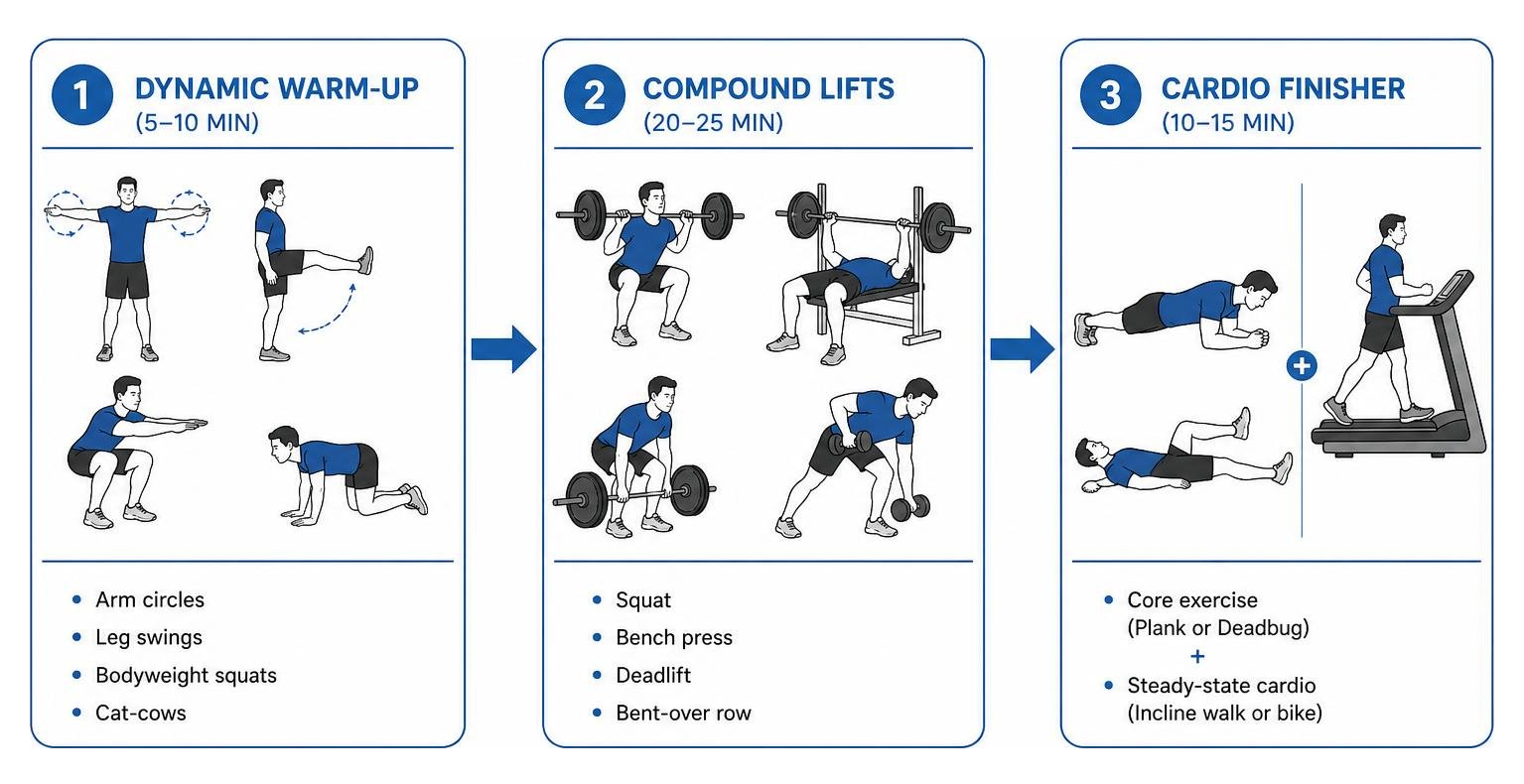
Every workout session in your beginner gym routine for weight loss should follow a structured sequence to maximize results and keep your joints healthy:
- Dynamic Warm-Up (5–10 Minutes): Never jump straight into heavy lifts. A dynamic warm-up elevates core body temperature and increases synovial fluid in your joints. Include movements like arm circles, leg swings, bodyweight squats, and cat-cows. A proper warm-up improves lifting performance on your first working set by 8% to 12%.
- Primary Compound Lifts (20–25 Minutes): Perform multi-joint movements that recruit large muscle groups first while your central nervous system is fresh. Aim for 3 sets of 8 to 12 reps.
- Secondary Upper/Lower Lifts (15 Minutes): Perform complementary exercises or machine-based movements to build balanced structural strength. Aim for 3 sets of 10 to 12 reps.
- Core & Cardio Finisher (10–15 Minutes): Finish your session with a core movement (like planks or deadbugs) followed by steady-state treadmill walking on an incline or stationary cycling.
When judging exercise intensity, monitor your Rate of Perceived Exertion (RPE) on a scale of 1 to 10. As a beginner, aim for an RPE of 6 to 7. This means completing your sets with roughly 1 to 3 Reps in Reserve (RIR)—meaning you could have safely performed 1 to 3 more clean repetitions before your form broke down.
Home Bodyweight Alternatives for Beginners
If stepping into a commercial gym feels intimidating at first, or if your busy daily schedule forces you to train at home, you can achieve remarkable initial fat loss using bodyweight circuit training. Untrained individuals can make noticeable strength and physical gains using home-based exercises provided they maintain consistency.
A powerful home bodyweight circuit for weight loss requires minimal equipment and targets all major muscle groups:
- Bodyweight Air Squats: 3 sets of 12–15 reps
- Incline Push-Ups (hands elevated on a sturdy bench or desk): 3 sets of 8–12 reps (Note: Incline push-ups reduce bodyweight load by 30% to 40% compared to standard floor push-ups, making them ideal for beginners)
- Glute Bridges: 3 sets of 12–15 reps
- Doorframe or Resistance Band Rows: 3 sets of 12–15 reps
- Forearm Plank Hold: 3 sets of 20–30 seconds
Perform these movements sequentially with 40 to 60 seconds of rest between exercises. Repeat the full circuit 3 times before completing a cool-down walk.
Best Strength Exercises and Progressive Overload
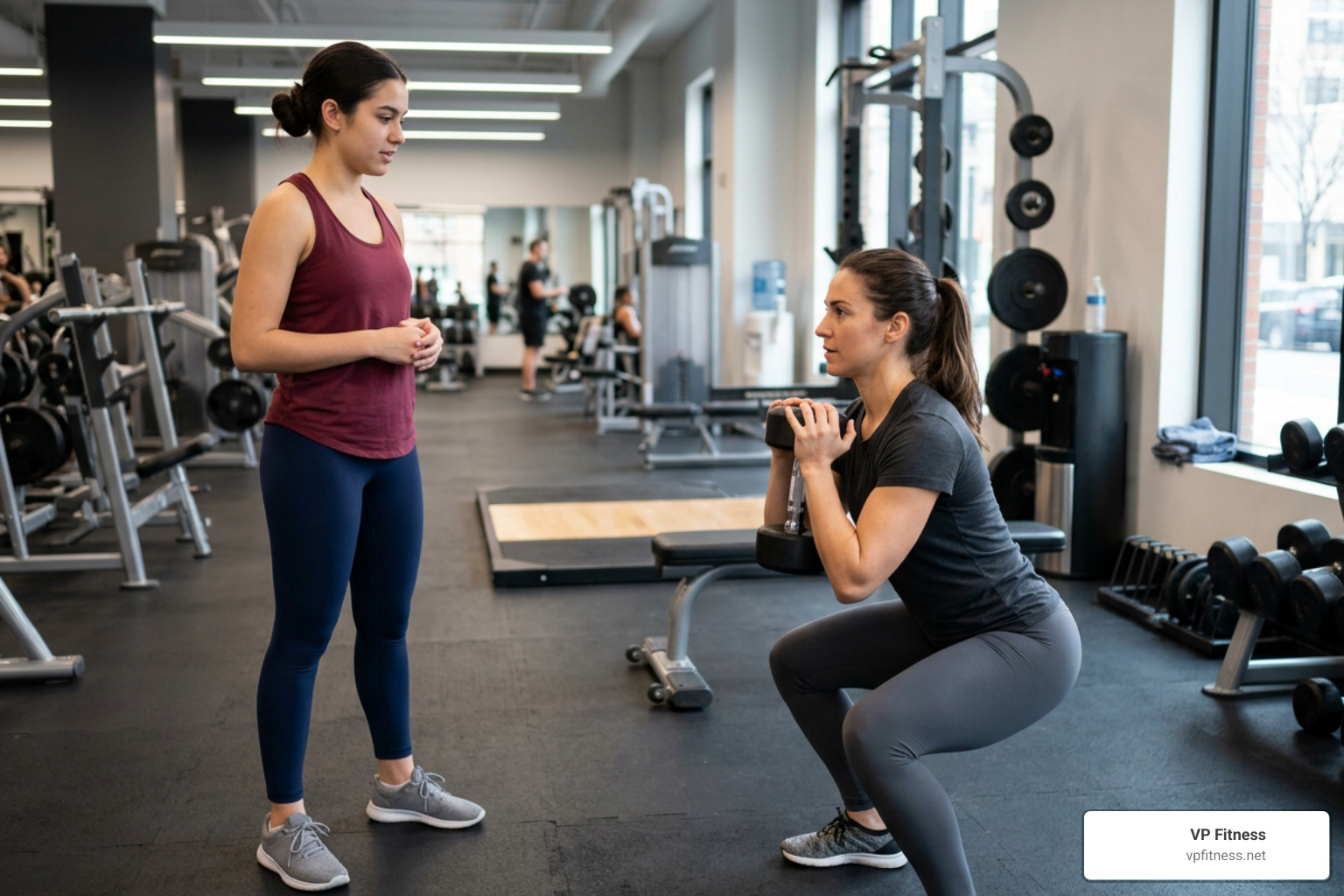
To get the absolute most out of your beginner gym routine for weight loss, focus your attention on multi-joint compound exercises. These exercises move multiple joints simultaneously, engaging large amounts of muscle mass to maximize work capacity and caloric expenditure during your session.
Understanding how fundamental movements form the bedrock of successful long-term physical transformations will help you get the most out of every workout. For personalized physical instruction, our Personal Training program provides one-on-one coaching to help you master these exact lifts safely.
Essential Compound Movements for Beginners
Incorporating movements across all core movement patterns (squat, hinge, push, pull, and carry) builds a resilient, calorie-burning physique:
- Goblet Squat (Squat Pattern): Holding a single dumbbell or kettlebell vertically against your chest, squat down until your thighs are parallel to the floor while keeping your chest high. Goblet squats build quadriceps, gluteal, and core strength while keeping spine load low.
- Lat Pulldown or Cable Row (Pull Pattern): Sitting tall at a pulldown machine, pull the bar down toward your upper chest by driving your elbows down and back. This exercise strengthens your broad upper back muscles, improving posture after long hours seated at a desk.
- Dumbbell Flat or Incline Bench Press (Push Pattern): Lying on a gym bench holding dumbbells at chest level, press the weights directly upward until your arms are extended. Dumbbells are fantastic for beginners because they allow your wrists and shoulders to move through a natural, pain-free path.
- Dumbbell Romanian Deadlift (Hinge Pattern): Standing with feet hip-width apart, hinge backward at your hips while keeping a soft bend in your knees, sliding dumbbells down your shins until you feel a stretch in your hamstrings. Squeeze your glutes to return to standing.
- Forearm Planks & Farmer Carries (Core & Carry): Strengthen your abdominal wall and grip strength by bracing your torso against movement.
For additional technique tips, review our Beginners Guide to Weight Training Tips and learn How to Build Muscle effectively.
How to Apply Progressive Overload in Your Beginner Gym Routine for Weight Loss
The body is an amazingly adaptable machine. If you perform the exact same exercise with the exact same weight for 10 reps every week, your body stops adapting because it no longer faces a novel physical challenge. To force your body to continually adapt, burn fat, and build tone, you must apply progressive overload.
For beginners, the safest and most effective strategy is the Double Progression Method:
- Choose a target rep range, such as 8 to 12 reps, and select a moderate weight.
- Start by performing 3 sets of 8 reps with complete movement control.
- Each week, attempt to add reps to your sets using that same weight (e.g., Week 1: 8, 8, 8 reps; Week 2: 10, 9, 8 reps; Week 3: 12, 12, 12 reps).
- Once you can perform all 3 sets at the top of the rep range (12 reps) with immaculate form, increase the weight slightly (by 2.5 to 5 lbs) during your next session and drop back down to 8 reps. Repeat the cycle!
Maintaining a controlled 3-second eccentric tempo (lowering the weight slowly) keeps tension on the working muscle while protecting delicate ligaments and tendons.
Nutrition, Pre and Post-Workout Fuel, and Recovery
Workout routines spark the stimulus for fat loss and muscle tone, but proper nutrition and systemic recovery provide the fuel that makes those physical adaptations possible. Attempting to out-train a poor diet is a losing battle. Pairing a structured gym routine with smart nutrition creates a compounding effect that accelerates your weight loss results.
To lose body fat while retaining muscle mass, establish a moderate daily calorie deficit of approximately 300 to 500 calories below your total daily maintenance burn. Consuming sufficient protein is non-negotiable during this phase: target 0.7 to 1.0 grams of protein per pound of target body weight daily. For a 160-pound individual, that translates to roughly 112 to 160 grams of daily protein distributed across 3 to 4 balanced meals. Dive deeper into fueling strategies through our guide on Nutrition for Muscle.
| Meal Timing | Goal | Ideal Food Choices |
|---|---|---|
| Pre-Workout (1–2 hours before) | Fuel workout performance and prevent low energy | Oatmeal with sliced banana; whole-wheat toast with peanut butter; Greek yogurt with berries |
| Post-Workout (Within 2 hours) | Stimulate muscle recovery and replenish glycogen stores | Whey or plant protein shake with fruit; grilled chicken with sweet potato; egg white scrambled wrap |
Pre and Post-Workout Fueling Guidelines
Fueling your body correctly before hitting the weights ensures you have the physical stamina to push through working sets without experiencing premature fatigue or lightheadedness. Aim to eat a light meal containing complex carbohydrates and lean protein roughly 1 to 2 hours before your workout session. Carbohydrates serve as your muscles’ primary energy source during high-intensity lifting.
Following your workout session, your muscles are primed to absorb nutrients. Consuming 20 to 40 grams of lean protein within two hours post-exercise stimulates muscle protein synthesis and accelerates systemic tissue repair. Never neglect proper daily hydration: aim for at least 80 to 100 ounces of water daily, adding extra fluids on heavy training days to replace sweat losses. Learn more about effective recovery protocols in our full guide on Post Workout Recovery.
Avoiding Common Beginner Weight Loss Mistakes
When stepping into the gym for the first time, enthusiasm is high, but common pitfalls can quickly derail your momentum or lead to early burnout. Be mindful of these frequent beginner mistakes:
- Ego Lifting: Trying to lift weights that are too heavy leads directly to poor exercise form, momentum cheating, and unnecessary joint stress or injury. Always prioritize clean execution over weight stack size.
- Skipping the Warm-Up: Rushing into intense lifting without raising joint fluid and body temperature increases injury risks significantly.
- Overtraining: Believing that “more is always better” often leads beginners to train 7 days a week. Your muscles grow and fat is mobilized during recovery and sleep, not while you are inside the gym.
- Scale Weight Obsession: Scale weight fluctuates daily due to water retention, salt intake, digestive contents, and natural muscle repair inflammation. Relying solely on the scale creates false discouragement.
For more insights into breaking negative habit loops, read our guide on Why Fitness Resolutions Fail.
Frequently Asked Questions About Beginner Weight Loss Routines
How many days a week should a beginner work out to lose weight?
A beginner should work out 3 to 4 days per week on non-consecutive days (such as Monday, Wednesday, and Friday). This frequency provides enough stimulus to kickstart fat loss and boost metabolic rate while granting your body 48 hours of rest between sessions to recover and adapt. On off days, light movement like a 20 to 30 minute neighborhood walk keeps daily activity high without causing central nervous system fatigue. Read more on how steady daily movement enhances health in our breakdown of Daily Exercise Benefits.
How long does it take to see weight loss results from a gym routine?
Untrained beginners typically experience initial strength gains and internal neuromuscular adaptations within the first 4 to 6 weeks of consistent training. Noticeable body composition changes—such as visible fat loss, firmer muscle tone, and clothing fitting looser around the waist—generally become apparent between weeks 8 and 12. Untrained individuals often gain 1 to 2 kg of lean tissue during their initial 8 weeks of lifting, which might keep scale weight steady even as body fat drops dramatically.
How do I know if my workout plan is working for weight loss?
Look beyond the bathroom scale! Your workout program is working successfully if:
- You are feeling stronger over time (lifting heavier weights or performing more reps).
- Your daily energy levels and sleep quality improve.
- Your clothes feel looser around your waistline, shoulders, and hips.
- Side-by-side progress photos taken every 4 weeks show visible improvements in posture and body composition.
If you struggle to stay consistent on your journey, utilize our Weight Loss Accountability Guide to stay on track.
Conclusion
Starting a beginner gym routine for weight loss is one of the most powerful, life-changing health decisions you can ever make. Real, lasting transformation does not come from extreme crash diets or spending two exhausting hours on a treadmill every single day. It comes from establishing sustainable habits: lifting weights 3 to 4 days per week, supporting your body with a moderate calorie deficit and lean protein, prioritizing daily sleep, and maintaining patience throughout the process.
Focus always on consistency over short-lived perfection. Showing up for your scheduled 45-minute gym session even on days when your energy is moderate builds the mental discipline necessary for long-term health success.
If you want to fast-track your progress, eliminate gym intimidation, and receive expert personalized coaching in a supportive environment, we are here to help you every step of the way. Explore How to Create a Personalized Workout Plan or learn about our full Weight Loss Accountability Program Guide.
Whether you take advantage of custom training plans, vibrant group classes, or dedicated coaching options, the goal is to help you achieve long-term health, strength, and confidence. Take that exciting first step today—your future, healthier self will thank you!