

No BS Muscle: Your Blueprint for Lean Gains

Why Building Muscle Is Your Best Investment in Health
Learning how to build muscle effectively requires three pillars: progressive resistance training, proper nutrition with enough protein, and adequate recovery. Here’s the blueprint:
Essential Steps to Build Muscle:
- Train with weights 3-4 times per week using compound movements.
- Eat in a calorie surplus of 300-500 calories above maintenance.
- Consume 1.4-2g of protein per kg of body weight daily.
- Get 7-9 hours of sleep for muscle repair.
- Apply progressive overload by gradually increasing weight, reps, or sets.
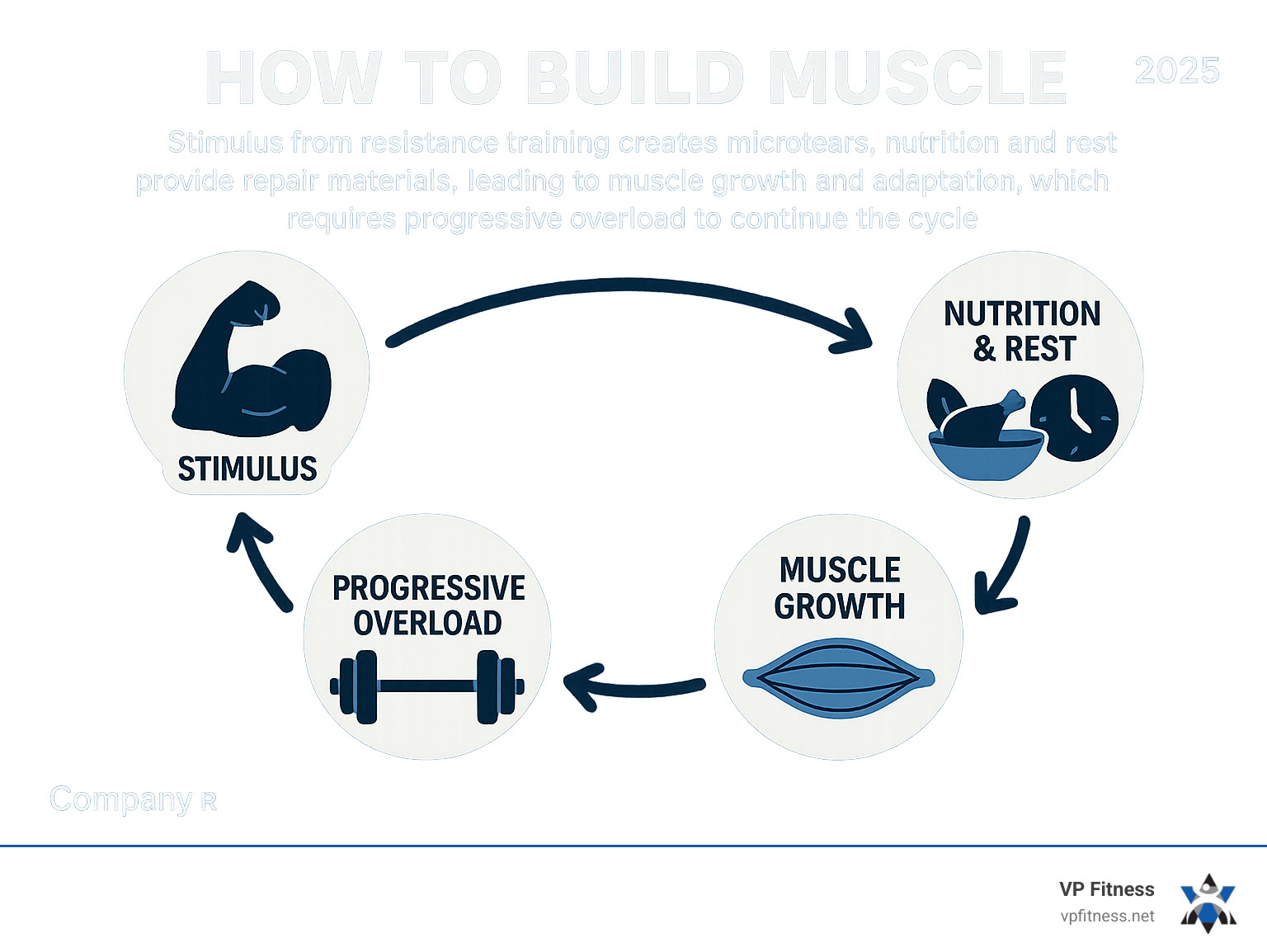
Building muscle is a powerful investment in your long-term health. It creates a stronger, more resilient body and counteracts the natural muscle loss that occurs after age 30. The science is simple: resistance training creates microscopic tears in your muscles, and your body uses protein to repair them, making them larger and stronger. This growth, called hypertrophy, happens during rest and sleep, not during the workout.
There are no shortcuts. Building meaningful muscle takes months and years of consistent effort. The fundamentals are straightforward, and anyone can learn them.
The Science of Muscle Growth: Understanding Hypertrophy
Understanding how to build muscle starts with the science of muscle hypertrophy—the process where muscle fibers grow larger. When you lift weights, the stress creates microscopic tears in the muscle fibers. This damage is the signal for your body to begin a repair process that makes you stronger.
In response to these micro-tears, your body ramps up muscle protein synthesis, building and storing new proteins in your muscle tissue to make it bigger and stronger. Specialized satellite cells also activate upon detecting muscle damage. They donate their nuclei to muscle fibers, increasing their capacity to produce more proteins.
Your hormones also play a key role. Testosterone and growth hormone are released in response to resistance exercise and during deep sleep, coordinating the entire repair and growth process. The key takeaway is that muscle growth doesn’t happen during your workout. The gym provides the stimulus, but the real magic occurs during recovery. Muscles are built in the kitchen and the bedroom, not just the gym.
You can dive deeper into the process of increasing muscle mass.
The Two Key Triggers: Mechanical Tension & Metabolic Stress
To master how to build muscle, you need to understand the two primary signals for growth: mechanical tension and metabolic stress.
Mechanical tension is the force placed on your muscles when lifting weights, especially through a full range of motion. This tension is the primary driver of the micro-tears that signal adaptation. Controlling the speed of your lifts (increasing time under tension) amplifies this growth signal.
Metabolic stress is the burning sensation and the satisfying “pump” you feel during tough sets. This occurs when metabolic byproducts like lactate accumulate, causing cellular swelling. While it doesn’t create micro-tears directly, it contributes to growth through hormonal responses and cell hydration.
A combination of both triggers is ideal. Heavy compound movements provide mechanical tension, while higher-rep isolation exercises create metabolic stress, giving your muscles every signal they need to grow.
The Pillars of Training: How to Build Muscle in the Gym
Now that we understand the science, let’s focus on the gym. Resistance training is the foundation of muscle building. Your muscles only adapt when challenged, so consistency paired with smart progression is crucial for learning how to build muscle.

Most people find success with 3-4 strength training sessions per week, which allows each muscle group to be trained 2-3 times weekly with adequate recovery. Beginners can start with efficient full-body workouts, while more advanced lifters might prefer split routines like upper/lower or push/pull/legs. The best routine is the one you can stick to consistently.
Principle 1: Master Progressive Overload
Progressive overload is the golden rule of muscle growth. Your muscles adapt to stress, so to keep growing, you must continually make your workouts more challenging. This means gradually increasing the difficulty over time.
Common methods include:
- Increasing weight: Add small increments (e.g., 5%) to your lifts.
- Increasing reps: Push for one or two more reps with the same weight.
- Adding sets: Increase your total training volume.
- Improving form: Better technique makes the target muscle work harder.
- Decreasing rest time: Shorten rest periods to increase workout density.
You can learn more about strategic progression through periodization for athletic rehabilitation.
Principle 2: Choosing Your Weapons: The Best Exercises for How to Build Muscle
Not all exercises are created equal. Compound exercises are your most efficient tools. These multi-joint movements work several muscle groups at once, allowing you to lift heavier and create more mechanical tension. Key examples include squats, deadlifts, bench press, and the overhead press.
Isolation exercises are precision tools for targeting specific muscles like the biceps or triceps. They are great for addressing weak points and adding volume. Examples include bicep curls and tricep extensions.
Your foundation should be compound movements, with isolation exercises used to complement them and fine-tune your physique.
Principle 3: Optimal Reps, Sets, and Rest
Your rep ranges, sets, and rest periods are critical variables. While different rep ranges can build muscle, a common framework is:
- 1-5 reps: Primarily builds strength.
- 8-12 reps: The “sweet spot” for hypertrophy, balancing tension and stress.
- 15+ reps: Focuses on muscular endurance.
The key is to train close to failure, leaving no more than two reps in the tank on each set. Aim for 3-6 sets per exercise, with a total workout volume of 12-16 work sets. For hypertrophy (8-12 reps), rest for 30-90 seconds between sets. For heavy strength work (1-5 reps), rest for 2-5 minutes. You can explore more on this topic by re-examining the repetition continuum.
Fueling the Machine: Nutrition for Muscle Gain
Even the best workout plan will fail without proper nutrition. Your muscles need raw materials to grow. The foundation of muscle-building nutrition is a caloric surplus—eating more calories than you burn.

This doesn’t mean eating everything in sight. A strategic surplus of 300-500 extra calories per day above your maintenance level provides the energy for muscle repair without packing on excessive fat. The quality of these calories matters, so focus on a balance of macronutrients: protein, carbohydrates, and fats. Don’t forget hydration; your muscles are about 75% water, and even mild dehydration can impair performance and recovery.
Calculating Your Calorie and Protein Needs
First, use an online TDEE (Total Daily Energy Expenditure) calculator to find your maintenance calories. Then, add 300-500 calories to establish your muscle-building target. This moderate approach is effective because your body can only build muscle so fast; excess calories are stored as fat.
Protein is the star player, providing the amino acids to build new muscle tissue. For active individuals, the research-backed target is 1.4-2.0 grams of protein per kilogram of body weight daily. A simpler guideline is to aim for about 1 gram of protein per pound of body weight. For a 180-pound person, this means around 180 grams of protein per day, which is achievable by spreading protein sources across your meals.
For a deeper dive, check out this resource on nutritional demands for athletes.
Fueling for Gains: How to Build Muscle with Proper Nutrition
While protein builds muscle, carbohydrates fuel your workouts. They are your body’s preferred energy source, stored as glycogen in your muscles. Focus on complex carbohydrates like oats, brown rice, quinoa, and sweet potatoes for sustained energy. Aim for about 2-3 grams of carbs per pound of body weight daily.
Healthy fats are essential for hormone production, including testosterone. Good sources include avocados, nuts, seeds, olive oil, and fatty fish. Aim for 0.25-0.5 grams of fat per pound of body weight.
Nutrient timing can offer a slight edge. A meal with carbs and protein 1-2 hours before your workout can fuel your session, while another balanced meal within two hours after training can kickstart recovery. However, hitting your daily totals is most important.
High-protein food options are plentiful: lean meats, fish, eggs, Greek yogurt, cottage cheese, beans, lentils, and tofu. Variety ensures you get a complete range of amino acids.
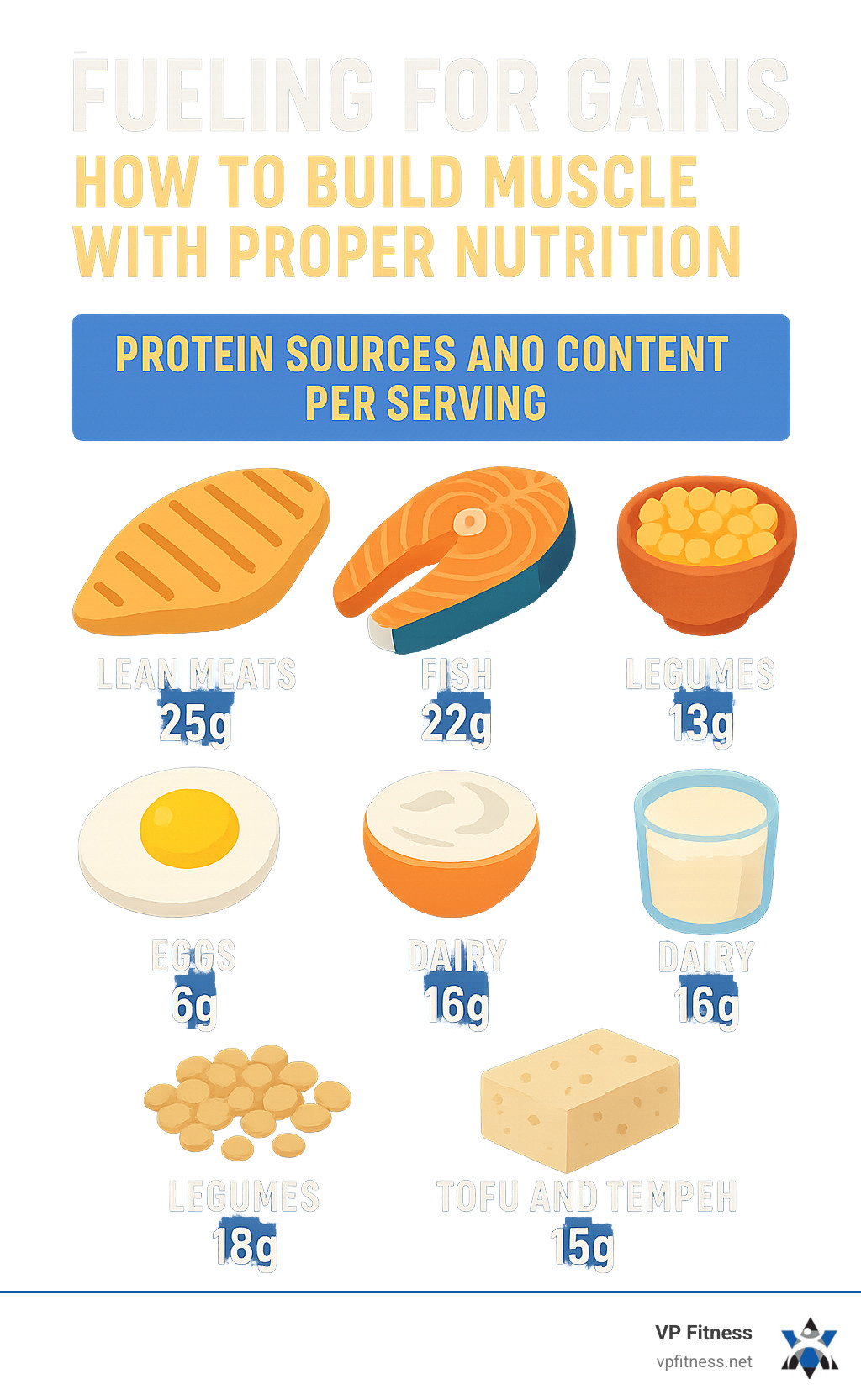
Your kitchen is where the real growth happens. Dial in your nutrition, and you’ll see results much faster.
Beyond the Lift: Recovery, Sleep, and Mindset
Many people miss this truth about how to build muscle: growth happens during recovery, not in the gym. The gym is where you break down muscle; rest is when you rebuild it stronger. Without proper recovery, you’re just spinning your wheels and risking burnout or injury.
Muscle recovery involves more than just taking days off. It includes proper nutrition, hydration, light movement on rest days (active recovery), and stress management. Chronic stress lifts cortisol, a hormone that can break down muscle tissue.

The Anabolic Power of Sleep
Sleep is the most underrated recovery tool. During deep sleep, your body’s growth hormone release peaks, which is crucial for muscle repair. This is when your body patches up the micro-tears from your workout, making muscles bigger and stronger.
Sleep also recharges your central nervous system (CNS), which is heavily taxed by lifting. Without adequate rest, you’ll feel weak and unmotivated. Aim for 7-9 hours of quality sleep per night. Improving your sleep quality by keeping your bedroom dark, quiet, and cool can be a game-changer.
Common Mistakes to Avoid
Avoid these common traps that derail muscle-building progress:
- Overtraining: More isn’t always better. Muscles grow during recovery. Stick to 12-16 total work sets per session and give muscles at least 48 hours of rest.
- Poor nutrition: You can’t build muscle without fuel. Not eating enough calories or protein will sabotage your efforts in the gym.
- Inconsistency: Muscle building is a marathon. Sporadic workouts and inconsistent eating habits will prevent you from making meaningful progress.
- Ego lifting: Using weights that are too heavy compromises form, reduces effectiveness, and increases injury risk. Focus on quality stimulus, not the number on the weight.
- Neglecting recovery: Your body needs rest days, quality sleep, and stress management to repair and grow.
- Not tracking progress: If you don’t track your lifts, you can’t ensure you’re applying progressive overload. Use a notebook or app to monitor your progress.
Frequently Asked Questions about Building Muscle
It’s normal to have questions when starting your muscle-building journey. Here are answers to some of the most common ones.
How quickly can I realistically build muscle?
Building muscle is a slow, steady process. Be wary of anyone promising rapid results. Beginner gains are real; if you’re new to lifting, you might gain 0.5-2 pounds of muscle per month for the first few months as your body adapts quickly.
However, progress slows significantly for intermediate and advanced lifters. After the first year, gaining half a pound of muscle per month is excellent progress. Advanced lifters may only gain a pound or two in an entire year. While genetic potential plays a role, consistency is key. A consistent person will always outperform a genetically gifted but sporadic lifter.
Can I build muscle and lose fat at the same time?
This is known as body recomposition, and the answer is… it depends. It’s definitely possible for beginners, whose bodies respond dramatically to the new stimulus of training and improved nutrition. For them, building muscle while losing fat is common.
For trained individuals, it’s much more challenging. Chasing both goals at once often leads to slow progress in each. A more effective strategy for experienced lifters is to focus on distinct phases: a calorie surplus to build muscle, followed by a calorie deficit to lose fat while preserving the new muscle.
Do I need supplements to build muscle?
The bottom line: supplements are not magic, and you don’t need them. Whole foods should always be your foundation.
That said, some supplements can be helpful. Protein powder is a convenient way to meet your daily protein goals if you struggle to do so with food alone. Creatine is one of the most effective and well-researched supplements for boosting strength and muscle growth. A simple dose of 3-5 grams per day is sufficient.
Beyond these two, most supplements offer little benefit for muscle growth. Focus on the fundamentals: consistent training, adequate calories and protein, and proper recovery. These will always matter more than any pill or powder.
Patience and consistency are the most important “supplements”—and they are guaranteed to work.
Your Blueprint for Success
Congratulations on completing this crash course in muscle building. You now have the roadmap to understand how micro-tears become stronger muscles and how to apply progressive overload to transform your physique.
Building muscle isn’t just about aesthetics; it’s an investment in a healthier, more capable body. Each pound of muscle boosts your metabolism, strengthens your bones, and supports your joints. You don’t need to live in the gym; even two or three 20-30 minute strength sessions per week can produce measurable results.
Your success blueprint rests on four pillars:
- Train Smart: Focus on progressive overload and build workouts around compound movements like squats, deadlifts, and presses.
- Eat Right: Maintain a modest 300-500 calorie surplus and prioritize protein, aiming for about 1 gram per pound of body weight daily.
- Recover Fully: Get 7-9 hours of quality sleep per night. This is when your body releases growth hormone and muscle repair happens.
- Be Consistent: Muscle building is a marathon. Show up consistently, even when motivation is low, to achieve long-term results.
Applying this knowledge is the hardest part. Creating sustainable habits that fit into your life is key. An individualized training program can remove the guesswork from how to build muscle, helping you manage your progression, perfect your form, and adjust your plan as you get stronger.