

Boost Your Body: A Step-by-Step Guide to Increasing Your Fitness

Increase Fitness Level: 5 Steps to Boost Success
Why Increasing Your Fitness Level Matters for Your Health and Well-Being
To effectively increase fitness level, you need a structured approach: assess your current abilities, set weekly goals (like 150 minutes of moderate aerobic activity and two strength sessions), and progressively challenge your body by gradually increasing weight, duration, or intensity. This method helps you avoid plateaus and reduces injury risk.
Quick Steps to Increase Your Fitness Level:
- Assess your baseline – Test your current strength, endurance, and flexibility
- Balance your program – Include aerobic exercise, strength training, and flexibility work
- Follow guidelines – Aim for 150 minutes of moderate cardio weekly plus 2 days of strength training
- Progress systematically – Use progressive overload (increase by 10% weekly)
- Stay consistent – Schedule workouts like appointments and track your progress
Whether you go for short walks or sweat it out at the gym, you might eventually think, “This isn’t as hard as it used to be!” That’s a sign of progress—and a signal that it’s time to adjust your routine to keep improving.
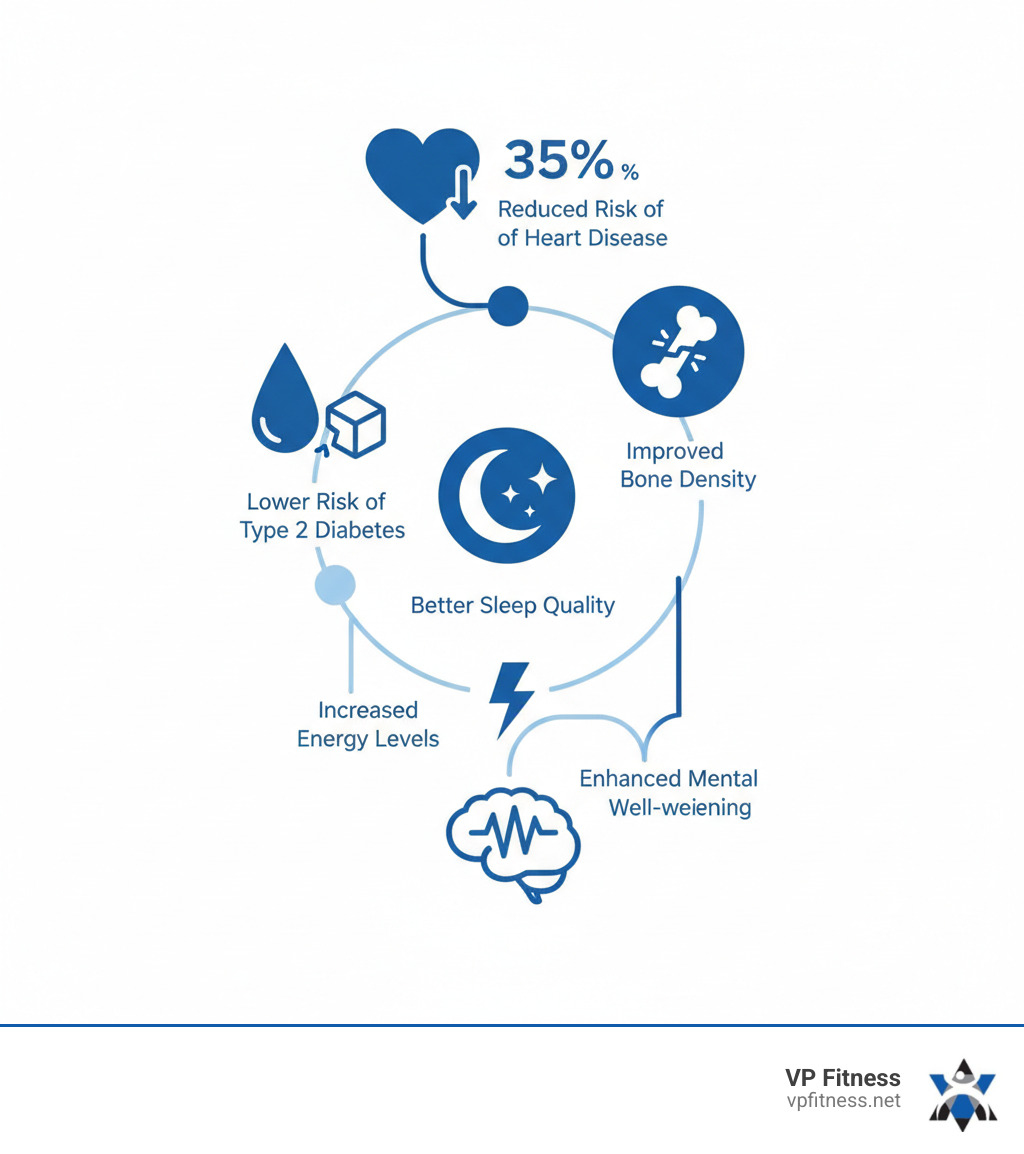
Starting a fitness program is one of the best things you can do for your health. Physical activity lowers your risk of chronic diseases, improves balance, aids in weight management, improves sleep quality, and boosts self-esteem.
Many people know exercise is important but struggle with how to increase their fitness level safely and sustainably. This guide breaks the process into five actionable steps to build strength, endurance, and confidence.
As a certified master trainer since 2011, I’ve helped countless clients systematically increase fitness level through personalized, science-backed programming. My approach focuses on measurable improvement, using the same proven principles I’ll share with you in this guide.
Step 1: Assess Your Current Fitness Level
To increase fitness level, you first need a starting point. Establishing a personal baseline isn’t about judgment; it’s about tracking real progress and celebrating your achievements. This initial assessment gives you a clear picture of your current abilities and helps you set realistic goals.
An initial evaluation is empowering. You’re gathering data that will show you exactly how much you’ve improved weeks and months from now.
A solid baseline assessment includes a muscular strength test, like the push-up test. Record how many push-ups you can do before fatigue. If standard push-ups are too challenging, modify them by doing them on your knees or against a wall. The goal is to establish your current capacity.
Next, test cardiorespiratory endurance with a 1-mile walk test. Using a stopwatch, walk a measured mile as briskly as you can. Note your time and measure your pulse immediately after. A faster time and quicker heart rate recovery indicate better cardiovascular fitness.
Don’t skip the flexibility test. The sit-and-reach test is a great option. Sit on the floor with your legs extended and reach toward your toes. How far you can reach indicates your hamstring and lower back flexibility, which is crucial for injury prevention.
Finally, measure body composition by checking your waist circumference. This measurement can be a better indicator of health risks than weight alone.
The most important part is to record your results in a journal or app. These numbers are your personal benchmarks. When you retest yourself later, seeing improvement in these metrics is incredibly motivating and proves your hard work is paying off. Progress isn’t always visible, but it is measurable.
Step 2: Understand the Pillars of a Balanced Fitness Program
To truly increase fitness level, you must understand that fitness is a combination of several key elements. A balanced approach is essential for building a strong, healthy body.

A balanced program addresses the five key components of physical fitness: cardiovascular endurance, muscular strength, muscular endurance, flexibility, and body composition. These components support each other, making you stronger and healthier. To address them all, focus on three main types of exercise: aerobic, muscle-strengthening, and balance/flexibility work. The National Institute on Aging confirms that incorporating all three is essential for overall health. You can learn more in their guide on Three Types of Exercise Can Improve Your Health and Physical Ability.
Incorporating these activities improves mental well-being, increases energy, and boosts confidence.
The Role of Aerobic (Cardiovascular) Exercise
Aerobic exercise, or cardio, is the cornerstone of heart and lung health. It’s any activity that raises your heart rate and makes you breathe harder, training your body to use oxygen more efficiently. This boosts endurance and stamina, making daily activities feel easier.
The beauty of aerobic exercise is its variety. Brisk walking, swimming, cycling, dancing, and jogging are all excellent options for building stamina and improving heart health.
The Benefits of Strength and Flexibility
A well-rounded plan must also include strength and flexibility work, which are crucial for long-term health and quality of life.
Strength exercises increase muscle strength, size, and endurance. Building muscle also boosts your resting metabolism, causing your body to burn more calories at rest. Strength training also increases bone density, which helps prevent osteoporosis and reduces fracture risk, especially as we age. Stronger muscles better support your joints, leading to fewer injuries and improved balance and posture.
You have plenty of options for building strength. Bodyweight exercises like push-ups and squats require no equipment. Weight lifting with dumbbells or barbells allows for progressive challenges. Resistance bands are a portable, joint-friendly option.
Flexibility exercises improve your joints’ range of motion. This helps reduce aches and pains, lowers injury risk, and improves posture. Improved flexibility in the hips, shoulders, and spine can alleviate back pain. Yoga, Pilates, and general stretching are excellent options. Always warm up with light movement before stretching to prevent injury.
A proper cool-down is just as important as the workout. Taking time to stretch after exercise helps your muscles recover.
Step 3: Set Your Weekly Exercise Goals
With your baseline and program pillars understood, it’s time to set weekly goals. Health organizations provide clear, research-backed guidelines to help you. Use these recommendations as a roadmap. If you can’t meet them immediately, start where you are and build up gradually. The Physical activity guidelines for adults offer excellent benchmarks to increase fitness level.
If you’re just beginning, a structured approach makes all the difference.
How Much Aerobic Activity Do You Need?
For cardiovascular exercise, aim for at least 150 minutes of moderate-intensity aerobic activity each week. Moderate intensity means you can still hold a conversation while exercising—this is known as the “talk test.” Activities like brisk walking, water aerobics, or cycling all count.
You can break this up into 30 minutes five days a week, or even shorter 10-minute sessions. If you prefer a bigger challenge, you can opt for 75 minutes of vigorous-intensity aerobic activity per week, such as running or swimming laps.
Find what works for your schedule. Small choices like taking a walk at lunch or using the stairs help you reach your aerobic goals without a major schedule overhaul.
How Often Should You Do Strength Training?
To truly increase fitness level, you also need strength training. Aim for muscle-strengthening activities on 2 or more days per week, ensuring at least one rest day for each muscle group between sessions.
During these sessions, target all major muscle groups—legs, hips, back, abdomen, chest, shoulders, and arms. This comprehensive approach builds balanced strength and helps prevent injuries.
For example, you could train upper body on Monday and lower body on Wednesday. This approach, known as a workout split, allows for adequate recovery.
Bodyweight exercises like squats and planks are effective, especially for beginners. As you get stronger, you can add resistance with bands or dumbbells. The most important thing is consistency. Start with what’s manageable and gradually increase as you adapt.
Step 4: How to Systematically Increase Fitness Level
Once you have a routine, the key to continued progress is systematic progression. To continually increase fitness level, you must adapt your workouts as you get stronger. What challenges you today will become easier tomorrow, signaling it’s time to raise the bar.
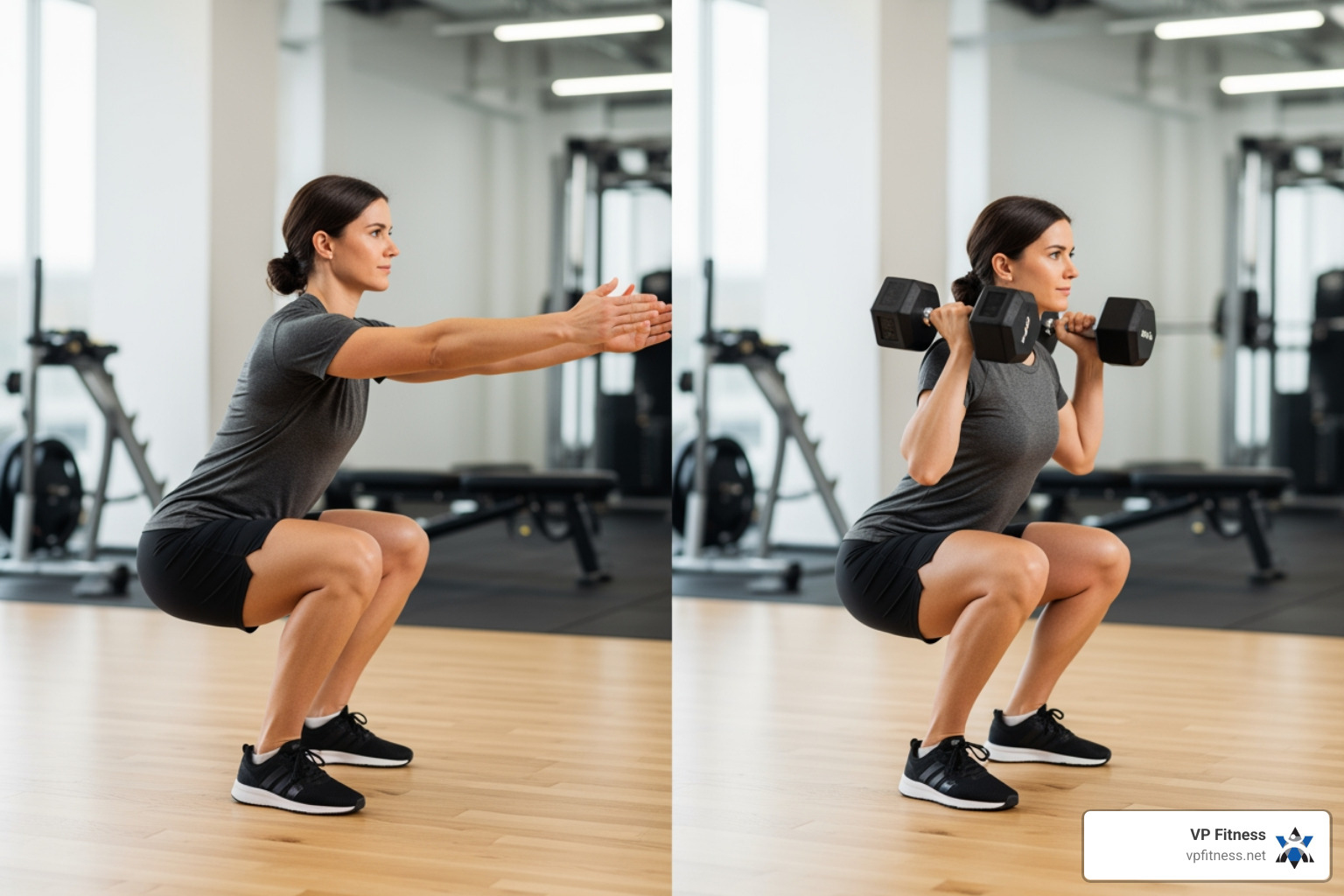
This is the principle of adaptation: your body gets stronger in response to stress. To avoid plateaus, you must continually introduce new challenges through a strategy called progressive overload. When your workouts feel easier, it’s a sign of progress and your body’s cue that it’s ready for more. Learn more about this concept in this resource on Progressive overload explained.
Using Progressive Overload to Get Stronger
Progressive overload is simple: gradually increase the demands on your body during exercise. By consistently challenging your muscles just beyond their current capacity, they respond by growing stronger.
There are several ways to apply progressive overload: increase the weight you’re lifting, increase your repetitions per set, or increase the number of sets you perform. You can also reduce rest time between sets or perform exercises with slower, more controlled movements.
Progression must be gradual. A good guideline is to increase time, weight, or intensity by about 10% or less each week. This measured approach allows your body to adapt safely and reduces injury risk.
Proper form is always the top priority. Lifting heavier with poor technique is counterproductive and can lead to injury.
Applying the FITT Principle to Your Program
The FITT principle provides a framework for modifying your program. FITT stands for Frequency (how often), Intensity (how hard), Time (how long), and Type (what kind of exercise).
By adjusting one or more of these variables, you can continually challenge your body. For example, if you walk three times a week for 20 minutes, you could increase fitness level by increasing the Frequency to five days, the Time to 30 minutes, or the Intensity by adding hills.
Here’s how you might apply FITT to different types of programs:
| FITT Variable | Walking Program (Beginner to Intermediate) | Weightlifting Program (Intermediate to Advanced) |
|---|---|---|
| Frequency | 3 days/week to 5 days/week | 3 days/week to 4-5 days/week |
| Intensity | Brisk pace to light jogging intervals | 60% max to 80% max (higher weight) |
| Time | 20 minutes to 40 minutes | 45 minutes to 60 minutes |
| Type | Outdoor walks to inclines or light trails | Full body to upper/lower split |
The FITT principle’s flexibility allows you to adjust one variable at a time to see how your body responds. This methodical approach ensures your program evolves with you.
Step 5: Stay Motivated and Consistent for Long-Term Success
Knowledge alone won’t increase fitness level; consistency is what drives real change. Showing up week after week is the key, but it’s also where many people struggle.

Initial enthusiasm often fades as life gets busy. Staying consistent isn’t about willpower; it’s about using smart strategies that fit your lifestyle.
- Make exercise enjoyable. If you dread your workouts, you won’t stick with them. Find an activity you genuinely like, whether it’s dancing, hiking, swimming, or sports.
- Find a workout partner. Accountability makes you more likely to show up, and exercising with a friend is more fun. A fitness accountability partner can be a game-changer for staying on track.
- Set realistic goals. Focus on small, achievable milestones, like walking three times this week. Hitting these bite-sized goals builds confidence and momentum.
- Reward your milestones. Celebrate reaching a goal by treating yourself to new workout gear or a relaxing massage. This reinforces positive behavior.
How to Incorporate More Activity into Your Daily Routine
One of the most effective ways to increase fitness level is to simply move more throughout your day. These small activities add up and integrate fitness into your lifestyle.
- Take the stairs instead of the elevator.
- Walk during phone calls to turn idle time into active time.
- Park farther away from entrances to add extra steps to your errands.
- Do desk exercises like stretches and shoulder rolls to combat stiffness.
- Enjoy active hobbies like gardening or playing with kids or pets.
Building a Consistent Gym Routine
For those who prefer structure, a solid gym routine is key. Be intentional about when and how you work out.
- Schedule your workouts. Block out time in your calendar to make exercise a non-negotiable part of your day.
- Find the best time to exercise. Experiment to see if you prefer morning, lunchtime, or evening workouts.
- Prepare in advance. Lay out your clothes and pack your gym bag the night before to remove excuses.
- Track your progress. Log your workouts in a notebook or app to see improvements and stay motivated.
- Listen to your body. Learn to distinguish between a healthy challenge and the warning signs of overtraining. Rest days are essential for recovery.
- Be flexible with your plan. If you miss a workout, don’t let it derail you. Just get back on track with your next scheduled session. Consistency over perfection is the key to lasting results.
Frequently Asked Questions about Increasing Fitness
What are the five key components of physical fitness?
The five key components are cardiovascular endurance (your heart and lungs’ ability to supply oxygen), muscular strength (maximum force), muscular endurance (sustained effort), flexibility (range of motion), and body composition (ratio of fat to muscle). A balanced program addresses all five to improve overall health and daily function.
How can I measure my current fitness level at home?
You can easily measure your fitness at home. For cardio endurance, time a 1-mile brisk walk. For muscular strength, count how many push-ups you can do (modified on knees if needed). For flexibility, use the sit-and-reach test by sitting with legs extended and reaching for your toes. Record your results to track progress.
What is the recommended weekly amount of exercise for adults?
Adults should aim for at least 150 minutes of moderate-intensity aerobic activity or 75 minutes of vigorous-intensity activity per week. This can be broken into smaller sessions. Additionally, include muscle-strengthening activities for all major muscle groups on 2 or more days per week. This combination is key to sustainably increase fitness level.
Conclusion
This roadmap provides a safe, sustainable, and effective way to increase fitness level. By assessing your baseline, building a balanced program, setting goals, using progressive overload, and staying consistent, you have the tools for success.
Fitness is a journey, not a destination. It’s about consistent effort and trusting the process. Progress won’t always be linear, and that’s normal. Consistency beats perfection. You don’t need to be perfect; you just need to keep showing up. Real progress happens when you honor the commitment to yourself, even on tough days.
A structured plan provides clarity and removes the uncertainty that can derail a fitness journey, keeping you on track toward your goals.