

Mastering Hybrid Fitness: How to Combine Strength, Endurance, and More

Mastering Hybrid Fitness: How to Combine Strength, Endurance, and More
The Training Philosophy That Lets You Be Strong and Fast
Hybrid fitness training is a structured approach that combines strength training and endurance work into one program — so you build muscle, boost cardiovascular fitness, and improve overall performance at the same time.
Here’s what hybrid training means in simple terms:
- What it is: A program that develops both strength (lifting, resistance work) and stamina (running, cycling, rowing) concurrently
- Who it’s for: Anyone who wants to be well-rounded — not just strong, not just fast, but both
- How it differs from general fitness: It’s structured and goal-driven, not random — every session has a purpose
- Key benefits: Better heart health, improved body composition, reduced injury risk, and real-world functional fitness
- Time commitment: Research shows effective hybrid programs can take as little as 128 minutes per week
You don’t have to choose between the weight room and the running track. Hybrid training is built on the idea that strength and endurance don’t cancel each other out — they reinforce each other.
Think about it this way: a stronger body handles the impact of cardio better. And a well-conditioned cardiovascular system helps you recover faster between sets. The two disciplines are more complementary than most people realize.
This guide covers everything you need to know — from the science behind why it works, to how to structure your week, manage recovery, and avoid the most common mistakes.
I’m Joseph DePena, founder of VP Fitness and a master trainer with over a decade of experience designing hybrid fitness training programs for clients at every level, from beginners to competitive athletes. The framework I’ll walk you through is the same one I use with clients every day to help them get stronger, fitter, and more capable — without burning out.
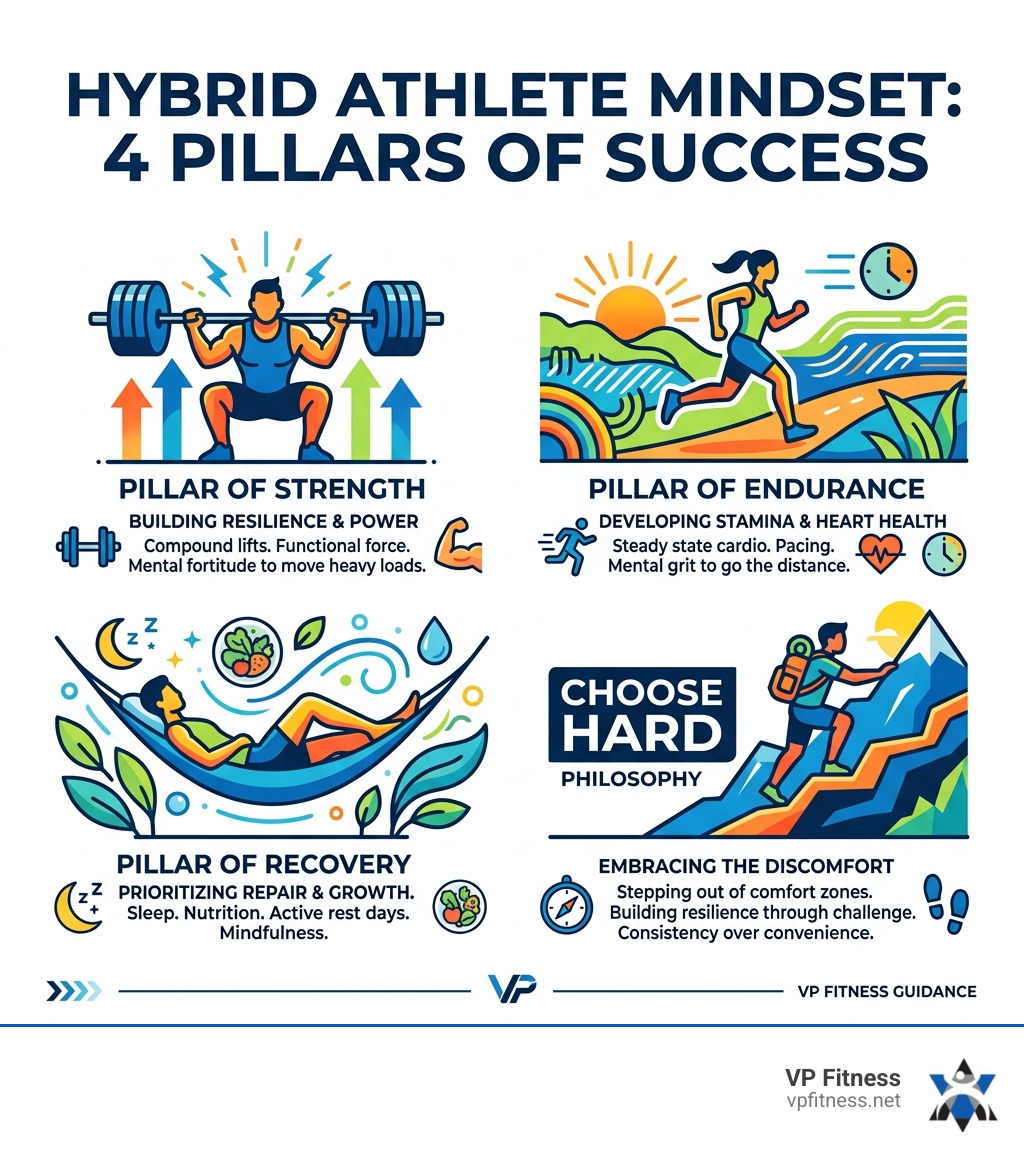
Key Hybrid fitness training vocabulary:
What is Hybrid Training?
At its core, Hybrid fitness training is the practice of training for two or more disparate physical disciplines simultaneously. In the modern fitness landscape of April 2026, it is most commonly defined as the pursuit of high-level strength and high-level endurance.
Historically, athletes were told they had to choose. You were either a “gym rat” with big muscles and no “gas tank,” or a “cardio bunny” who could run for miles but couldn’t lift a heavy grocery bag. Hybrid training shatters this dichotomy. It focuses on Defining Hybrid Training as a method to become a more capable, versatile human being.
The goal isn’t necessarily to become a world-record powerlifter or an Olympic marathoner. Instead, a hybrid athlete aims for the “90th percentile” in both. It’s about being able to deadlift twice your body weight on Friday and run a half-marathon on Saturday. This approach builds Functional Training VP Fitness—the kind of preparedness that allows you to handle any physical challenge life throws your way, whether it’s moving furniture or chasing after your kids.
Hybrid Training vs. CrossFit
While both involve lifting and breathing hard, Hybrid fitness training and CrossFit have distinct methodologies. CrossFit is often characterized by “constantly varied, high-intensity functional movement.” It thrives on randomness and broad generalism, often testing your ability to do “a little bit of everything” in a single circuit.
Hybrid training is more structured. Rather than a randomized “Workout of the Day,” a hybrid program typically separates its modalities to maximize progress in each. You might have a dedicated heavy squat session in the morning and a Zone 2 recovery run in the evening. This dual-goal focus ensures that you are following a specific progression for strength while also building a massive aerobic base. For a deeper dive into these differences, check out our guide on Strength Training Vs High Intensity Cardio.
The Benefits of Hybrid Fitness Training for Longevity
Why put yourself through the rigors of two training styles? Because the health benefits are unmatched. A 2022 study involving over 4,300 individuals found that hybrid training was superior to HIIT, steady-state jogging, or pure weight training alone for heart and lung health.
By combining these worlds, you address every pillar of longevity. Strength training preserves bone density and muscle mass as we age, while endurance training strengthens the heart and reduces cardiometabolic risk factors like high blood pressure and cholesterol. Furthermore, research published in the British Journal of Sports Medicine suggests that mixing protocols leads to a decreased chance of injury because you aren’t overstressing the same joints and tissues every single day.
For those of us in Providence balancing busy careers and families, time efficiency is a major win. Hybrid training has been shown to improve cardiometabolic health in an average of just 128 minutes per week. You can learn more about Hybrid Training – Everything You Need to Know and why Both Cardio And Strength Training Are Your Best Bet For Longevity on our blog.
Improvements in Body Composition
If your goal is to look as good as you perform, Hybrid fitness training is the “chef’s kiss” of protocols. A six-week study concluded that combining strength and endurance training resulted in significant reductions in body fat alongside an increase in muscle mass.
Strength training boosts your basal metabolic rate (BMR), meaning you burn more calories at rest. Meanwhile, endurance work provides the caloric expenditure needed to maintain a lean physique. When you combine the two, you create a metabolic powerhouse. We often recommend The Best Exercises To Build Muscle While You Burn to help our clients optimize this “best of both worlds” effect.
The Science of Success: Minimizing the Interference Effect
The biggest fear in the hybrid world is the “interference effect.” This is the physiological theory that endurance training (which activates the AMPK pathway for energy efficiency) “shuts off” the mTOR pathway responsible for muscle growth.
However, recent science tells a more nuanced story. A 2012 meta-analysis found that while concurrent training can reduce strength gains by about 10-15% compared to strength-only programs, this only really applies to elite athletes pushing the absolute limits of human performance. For the rest of us, the interference is minimal—especially if you follow the right Hybrid Training Guide for 2026.
A 2023 systematic review of 59 studies found that moderate cardio (30–45 minutes, 2–3 times per week) caused almost no interference with muscle gains. The key is in the timing and the dose. To understand the balance better, read our article on Cardio Vs Strength Training.
Overcoming the Interference Effect in Hybrid Fitness Training
To maximize your results, we use three primary strategies to keep mTOR and AMPK from clashing:
- The 6-24 Hour Rule: A 2025 study found that spacing strength and cardio sessions by at least 24 hours resulted in the greatest maximal strength gains. If you must train both on the same day, aim for a 6–8 hour gap and always lift before you run.
- Modality Selection: Running involves “eccentric” muscle damage (the pounding on the pavement), which can interfere more with leg strength. Cycling or rowing are lower-impact options that build a massive engine without as much muscle soreness.
- Polarized Intensity: Don’t try to go “all out” in every session. Keep your cardio mostly in Zone 2 (easy enough to hold a conversation) to build your aerobic base without frying your nervous system.
For a deep dive into these strategies, see our Cardio Strength Ultimate Guide.
Core Pillars of a Comprehensive Program
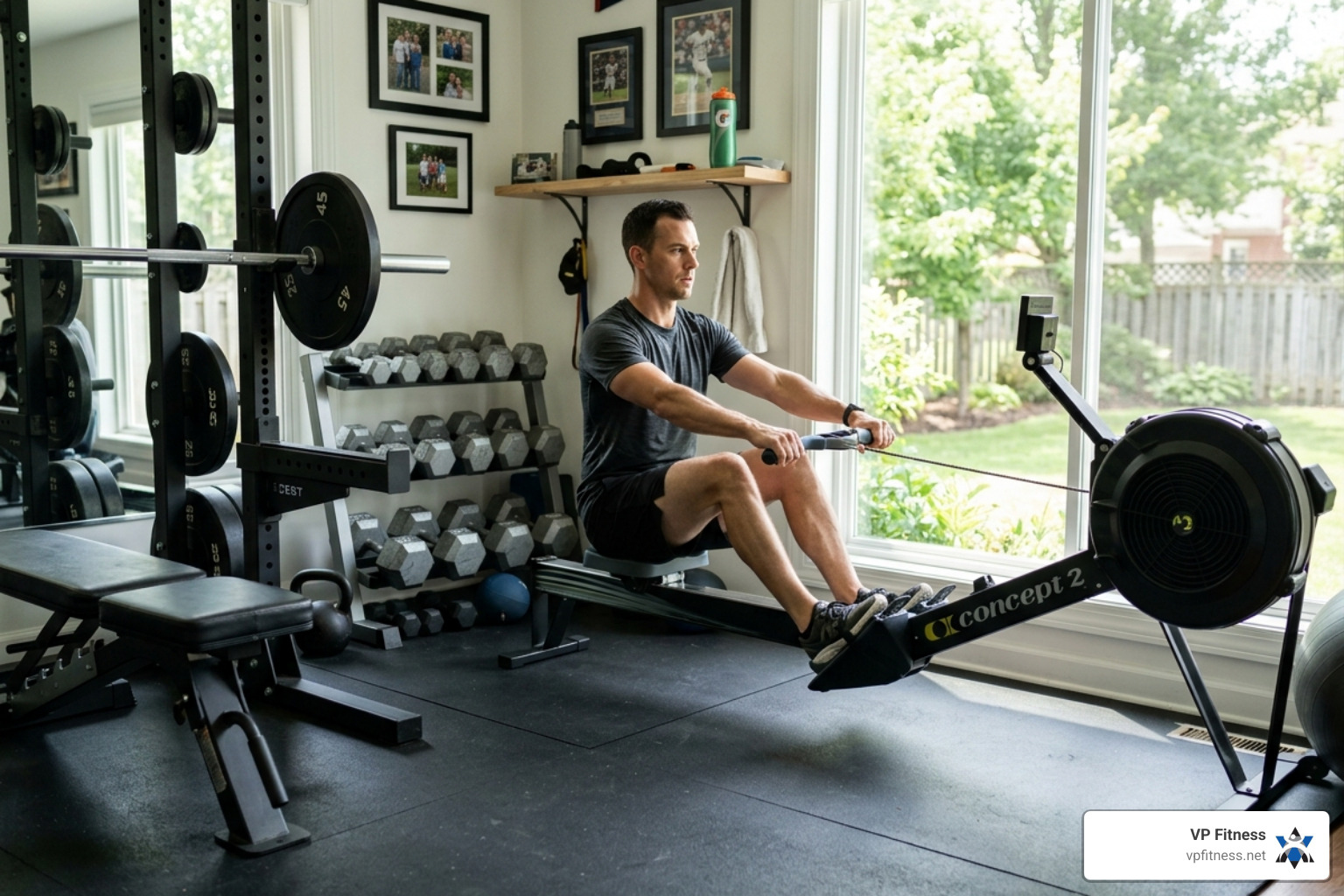
A successful Hybrid fitness training plan isn’t just a random collection of workouts. It’s built on specific pillars that ensure you are progressing in both directions without hitting a wall.
The most important concept here is progressive overload. Whether you are adding five pounds to your bench press or shaved five seconds off your mile pace, you must consistently challenge the body to adapt. This requires a Strategic Fitness Program Design that accounts for your current fitness level and your ultimate goals.
Strength and Hypertrophy Fundamentals
To keep your muscle while building endurance, you must lift with intent. We focus on compound movements—squats, deadlifts, presses, and rows—because they provide the most “bang for your buck” in terms of hormonal response and functional strength.
Research suggests training in the 80–90% of your one-rep max (1RM) range is crucial for maintaining muscle mass when you are also doing high volumes of cardio. Mechanical tension is the primary driver of growth, so don’t be afraid to keep the weights heavy. You can learn more about the Importance Of Strength Training for Long Term Health on our site.
Endurance and Metabolic Conditioning
On the flip side, your “engine” needs work. We utilize a mix of Zone 2 training (long, slow distance) and High-Intensity Interval Training (HIIT). Zone 2 is the foundation—it increases mitochondrial density and helps you recover faster between heavy sets of squats.
Meanwhile, HIIT sessions or “Metcons” improve your VO2 max and anaerobic threshold. For guidance on how to mix these, check out our Complete Cardio Workout Guide and our breakdown of the Benefits Of High Intensity Interval Training HIIT.
Programming for Performance
How do you actually put this into practice? We use a “High-Low” strategy. This means clustering your most taxing sessions (heavy leg days and sprint intervals) together, followed by low-intensity days (upper body hypertrophy and easy walks). This prevents your Central Nervous System (CNS) from being permanently “fried.”
Every individual is different, which is Why A Tailored Fitness Program Is Your Secret Weapon. Some people naturally lean toward strength (Strength-bias), while others come from a running background (Endurance-bias).
Designing Your First Hybrid Fitness Training Schedule
Here is a sample 5-day split that balances both worlds:
| Day | Workout Type | Focus |
|---|---|---|
| Monday | Heavy Lower Body + Short Sprints | Strength & Power |
| Tuesday | Upper Body Hypertrophy + Zone 2 Run | Muscle & Aerobic Base |
| Wednesday | Rest or Active Recovery | Mobility & Walking |
| Thursday | Heavy Upper Body + Interval Rowing | Strength & Anaerobic |
| Friday | Full Body Strength / Functional | Work Capacity |
| Saturday | Long Slow Distance (Run/Bike/Hike) | Endurance |
| Sunday | Full Rest | Recovery |
Whether you choose a 3-day or 5-day split, the goal is consistency. You can find more templates in our Workout Splits Ultimate Guide or get a Custom Workout Plan tailored specifically to your Providence lifestyle.
Recovery, Nutrition, and Mobility
In Hybrid fitness training, your results are only as good as your recovery. Hybrid athletes face what we call the “Hybrid Tax”—a massive increase in caloric and recovery demands. If you are lifting heavy and running 20 miles a week, your body needs significantly more fuel and rest than a specialized athlete.
Nutrition is the most common point of failure. You need adequate protein (0.8–1.2g per lb of body weight) to support muscle protein synthesis and enough carbohydrates to fuel the high glycolytic demand of both lifting and running. Ignoring your “fueling” is a fast track to hormonal disruption. For more on this, see our guide on Designing An Individualized Fitness Plan That Works For You.
Avoiding Overtraining and Common Mistakes
The “Ego Trap” is the hardest hurdle. Many lifters try to maintain their max-effort lifting schedule while adding 30 miles of running a week. This leads to “too much, too soon” and inevitable injury.
Key signs of overtraining include:
- Persistent fatigue or “brain fog”
- Decreased performance in both lifting and running
- Poor sleep quality
- Increased resting heart rate
To avoid this, listen to your body and prioritize sleep hygiene (7–9 hours). A Personalized Exercise Routine should always include deload weeks every 4–6 weeks to allow your joints and nervous system to catch up.
Frequently Asked Questions about Hybrid Training
Will cardio kill my muscle gains?
No. As long as you are eating enough calories and protein, and you aren’t running ultramarathons every week, you can maintain and even build muscle. In fact, better cardiovascular health helps you train harder in the gym.
How many days a week should I train?
For most people, 4–5 days per week is the “sweet spot.” This allows for 2–3 lifting sessions and 2–3 cardio sessions, with at least two full days of rest or active recovery.
Can I do hybrid training without running?
Absolutely. If you have “bad knees” or simply hate running, you can use a rowing machine, an air bike, swimming, or even heavy rucking. The “hybrid” part is about the energy systems (aerobic + anaerobic), not the specific exercise.
Conclusion
Hybrid fitness training is more than just a workout trend; it is a methodology for building a resilient, capable, and long-lasting body. By rejecting the idea that you have to choose between strength and stamina, you open the door to a higher level of fitness and a better quality of life.
At VP Fitness in Providence, we specialize in helping you navigate this complexity. We provide the individualized training, nutrition guidance, and professional environment you need to succeed—complete with the recovery tools (and smoothies!) to keep you going.
Ready to become a hybrid athlete? Start your journey with professional personal training at VP Fitness today. Let’s build a body that can do it all.