

Mastering the Math: Nutrition Guidance for Weight Loss

Mastering the Math: Nutrition Guidance for Weight Loss
Why Getting the Right Nutrition Guidance for Weight Loss Changes Everything
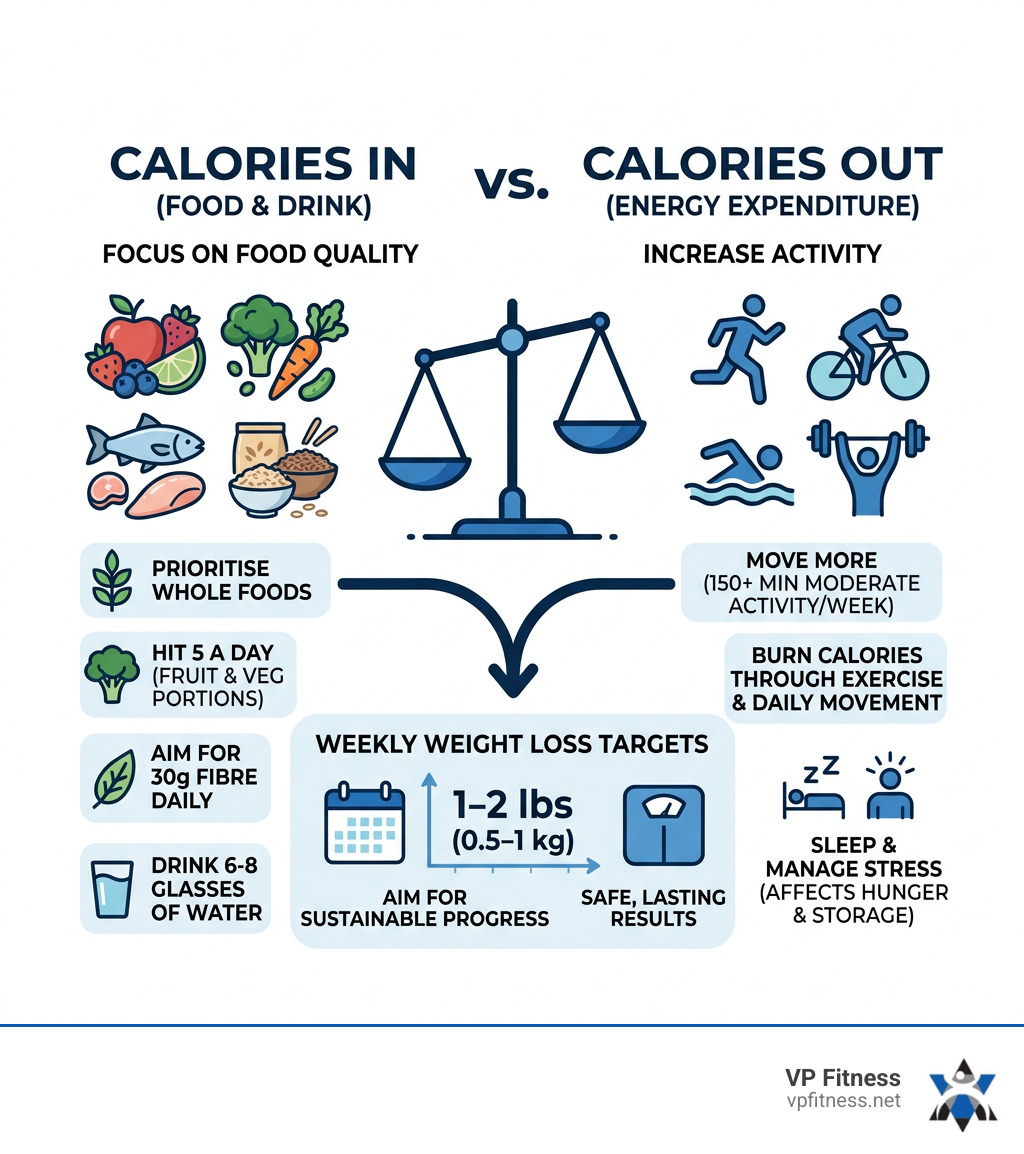
Nutrition guidance for weight loss is the foundation of any successful, sustainable fat-loss plan. Here’s a quick overview of what actually works:
- Eat in a calorie deficit – consume slightly fewer calories than your body burns
- Prioritise whole foods – vegetables, lean proteins, whole grains, and healthy fats
- Hit 5 A Day – at least 5 portions (80g each) of fruit and vegetables daily
- Aim for 30g of fibre per day from sources like oats, wholegrains, and legumes
- Drink 6-8 glasses of water or fluids daily
- Target 1-2 lbs (0.5-1 kg) of weight loss per week for safe, lasting results
- Move more – aim for at least 150 minutes of moderate activity per week
- Sleep and manage stress – both directly affect hunger hormones and fat storage
About 63% of UK adults are currently living with overweight or obesity. Yet most people trying to lose weight are not short on effort – they’re short on the right information. Fad diets, confusing food labels, and misleading supplement marketing make it harder than it needs to be.
The good news? Losing even 5-10% of your body weight delivers meaningful health benefits – including a reduced risk of type 2 diabetes, heart disease, and certain cancers. You don’t need to be perfect. You need a clear, practical plan you can actually stick to.
I’m Joseph DePena, a master trainer with over a decade of experience helping clients apply real nutrition guidance for weight loss to achieve lasting results. In this guide, I’ll break down everything you need to know – from reading your BMI to building a balanced meal plan – so you can stop guessing and start progressing.
Defining Your Starting Point: BMI and Healthy Weight
Before we dive into the kitchen, we need to know where we are standing. Measuring progress isn’t just about the number on the scale; it’s about understanding your body composition and health risks.

Understanding Your BMI
The most common tool used by health professionals is the Body Mass Index (BMI). It uses your height and weight to estimate if you are at a healthy weight. Generally, for adults, a healthy weight is a BMI between 18.5 and 24.9.
- Underweight: BMI below 18.5
- Healthy weight: BMI 18.5 to 24.9
- Overweight: BMI 25 to 29.9
- Obese: BMI 30 or higher
While BMI is a helpful starting point, it doesn’t tell the whole story. For instance, it doesn’t distinguish between muscle and fat. This is why we also look at central adiposity—or the fat stored around your midsection. A high waist-to-height ratio can be a significant indicator of chronic disease risk, including heart disease and type 2 diabetes.
Health Equity and Risk
Research shows that carrying excess weight increases the risk of high blood pressure, which often has no symptoms but can lead to heart attacks or strokes if left untreated. By achieving a modest weight loss of just 5-10%, you can significantly improve your blood sugar, cholesterol, and blood pressure levels. We believe that everyone deserves access to the tools that promote health equity, ensuring that your background or starting point doesn’t limit your ability to live a long, vibrant life.
Core Principles of Nutrition Guidance for Weight Loss
Weight loss often feels like a math problem, but it’s really about chemistry and habits. To lose weight, you must create a calorie deficit—burning more energy than you take in—but the quality of those calories determines how you feel and how much muscle you keep.
Macronutrient Balance
A successful nutrition guidance for weight loss strategy focuses on balance. You need all three macronutrients:
- Protein: Essential for muscle repair and keeping you full.
- Carbohydrates: Your body’s primary energy source (choose complex versions like oats and brown rice).
- Fats: Necessary for hormone production and absorbing vitamins (focus on unsaturated fats like olive oil).
For those looking to maintain or build lean tissue while dropping fat, a muscle-gain diet approach can actually be beneficial, as more muscle mass increases your resting metabolic rate.
The Power of Fiber and Hydration
We recommend aiming for at least 30g of fiber per day. Fiber, found in whole grains, beans, and vegetables, keeps your digestion moving and helps you feel satisfied on fewer calories. Pair this with 6-8 glasses of water daily. Often, our brains mistake thirst for hunger, leading to unnecessary snacking.
If you find the general advice overwhelming, a customized nutrition plan can take the guesswork out of the equation by tailoring these ratios to your specific body type and goals.
Creating a Balanced Meal Plan with Nutrition Guidance for Weight Loss
We don’t believe in “diets”—we believe in eating plans. A balanced plate should ideally be half vegetables, one-quarter lean protein, and one-quarter complex carbohydrates.
- Portion Control: Use smaller plates to trick the eye and avoid eating directly from large packages.
- 5 A Day: Ensure you are getting at least five 80g portions of fruits and vegetables. This provides the micronutrient density your body needs to function optimally.
- Prep for Success: Use a custom nutrition plans guide to learn how to bulk-cook proteins or prep “overnight oats” to avoid reaching for fast food when life gets busy.
Adaptations for Plant-Based Diets and Health Conditions
Weight loss is not one-size-fits-all. If you are vegan or vegetarian, you can still hit your goals by using swaps like lentils, chickpeas, or tofu instead of meat.
- Vegan Protein: Ensure you’re getting enough nutrition for muscle by combining different plant protein sources.
- Dairy Alternatives: Choose fortified versions containing calcium, B vitamins, and iodine.
- Special Conditions: If you have high blood pressure or diabetes, focus on low-sodium choices and low-glycemic index carbs to keep your levels stable.
Beyond the Plate: Activity, Sleep, and Stress
You can lose weight through diet alone, but it is much harder to maintain. Adding physical activity is the “secret sauce” for long-term success.
The Role of Exercise
The Physical Activity Guidelines for Americans recommend at least 150 minutes of moderate-intensity aerobic activity per week. This could be brisk walking, swimming, or dancing.
However, don’t ignore the weights! Strength training at least twice a week is crucial. We often discuss how muscle mass impacts fat loss; essentially, the more muscle you have, the more calories your body burns at rest.
Sleep and Stress: The Invisible Saboteurs
If you are eating right and exercising but the scale won’t budge, check your sleep and stress levels.
- Sleep Hygiene: Aim for 7-8 hours of quality sleep. Sleep deprivation wreaks havoc on your hormones, increasing ghrelin (the hunger hormone) and decreasing leptin (the fullness hormone).
- Cortisol Management: Chronic stress keeps cortisol levels high, which encourages your body to store fat, particularly around the abdomen. Practicing deep breathing or even taking a short walk can help reset your nervous system.
Avoiding Saboteurs and Choosing Sustainable Strategies
The weight loss industry is full of “miracle” supplements and “detox” teas that promise the world but deliver very little.
Unmasking Hidden Calories
Many “healthy” foods are secret calorie bombs. Flavored yogurts, granola bars, and specialty coffee drinks often contain high amounts of added sugar. Always read the labels—look for “green-coded” options on traffic light labels and be wary of serving sizes.
Mindful Eating vs. Emotional Eating
Do you eat because you’re hungry, or because you’re bored, stressed, or sad? Identifying emotional triggers is a huge step in nutrition guidance for weight loss. Practice mindful eating by sitting at a table, removing distractions like the TV, and chewing slowly to allow your brain to register that you are full.
Evidence-Based Plans vs. Fad Diets
| Feature | Evidence-Based Plan | Fad Diets |
|---|---|---|
| Rate of Loss | 1-2 lbs per week | “10 lbs in a week” |
| Food Groups | Includes all groups | Excludes entire groups |
| Sustainability | Can be done for life | Hard to maintain for >2 weeks |
| Exercise | Encourages movement | Often ignores activity |
| Cost | Regular grocery prices | Requires expensive “kits” or pills |
If you struggle with consistency, using a weight loss accountability guide can help you stay on track when motivation fades.
Setting Realistic Goals and Long-Term Maintenance
We want you to succeed not just for next month, but for the next decade. This requires shifting your mindset from a “sprint” to a “marathon.”
The 1-2 lbs Rule
Aiming to lose 1 to 2 lbs (0.5 to 1kg) per week is the gold standard. It might seem slow, but people who lose weight gradually are much more likely to keep it off. Setting SMART (Specific, Measurable, Achievable, Relevant, Time-bound) goals—like “I will walk for 20 minutes, 3 times this week”—is more effective than vague resolutions.
Non-Scale Victories and the 80/20 Rule
Don’t let the scale be your only judge. Are your clothes fitting better? Do you have more energy? These “non-scale victories” are just as important. To keep things sustainable, we suggest the 80/20 rule: make healthy choices 80% of the time, and allow yourself more flexibility for the other 20%.
Preventing Regain
Weight regain often happens because people go “off” their diet once they reach their goal. Maintenance requires a permanent lifestyle shift. Regular weighing (once or twice a week) and having a weight loss accountability coach can provide the support needed to navigate life’s setbacks without losing progress. For a deeper dive into staying the course, check out our weight loss accountability program ultimate guide.
Frequently Asked Questions about Nutrition Guidance for Weight Loss
How much weight is safe to lose per week?
As mentioned, a realistic and safe target is 0.5 to 2 pounds (0.2 to 0.9 kilograms) per week. Losing weight faster than this often leads to muscle loss and a slowed metabolism, making it harder to stay lean in the long run.
Should I use supplements or weight loss medications?
Supplements should be a “nutritional safety net,” not a replacement for food. While things like protein powder or multivitamins can help fill gaps, always prioritize whole foods. If you are considering weight loss medications, you must consult a healthcare professional. If you experience adverse effects from any medical device or medicine, you can report them to the Yellow Card Scheme.
How do I track my progress effectively?
We recommend a combination of methods. Use a digital app or a simple food diary to track what you eat for at least a few weeks to build awareness. Additionally, take body measurements and photos every 4 weeks. The scale can fluctuate due to water weight, but measurements rarely lie!
Conclusion
Mastering the math of weight loss doesn’t have to be a lonely or confusing journey. By focusing on a sustainable calorie deficit, prioritizing whole foods, and managing your lifestyle factors like sleep and stress, you can achieve the health and body you deserve.
We specialize in providing the individualized support you need to turn these principles into a reality. Whether you need a tailored meal plan or a coach to keep you moving, we are here to help you achieve long-term wellness. Start your journey with personal training today and let’s build a healthier you, together.