

The Art of Recovery: Unlocking Your Next Level After the Gym

Why Post Workout Recovery Is Your Secret Weapon for Fitness Success
Post workout recovery is the foundation that transforms your gym sessions into a powerful system for building strength and achieving lasting fitness results. Without proper recovery, even the most intense workouts fall short of their potential.
Essential Post Workout Recovery Elements:
- Protein intake: 20-40g within 2 hours to repair muscle tissue
- Hydration: Replace fluids lost through sweat plus electrolytes
- Sleep: 7-9 hours for hormone regulation and muscle repair
- Active recovery: Light movement like walking or stretching
- Rest days: 48-72 hours between training the same muscle groups
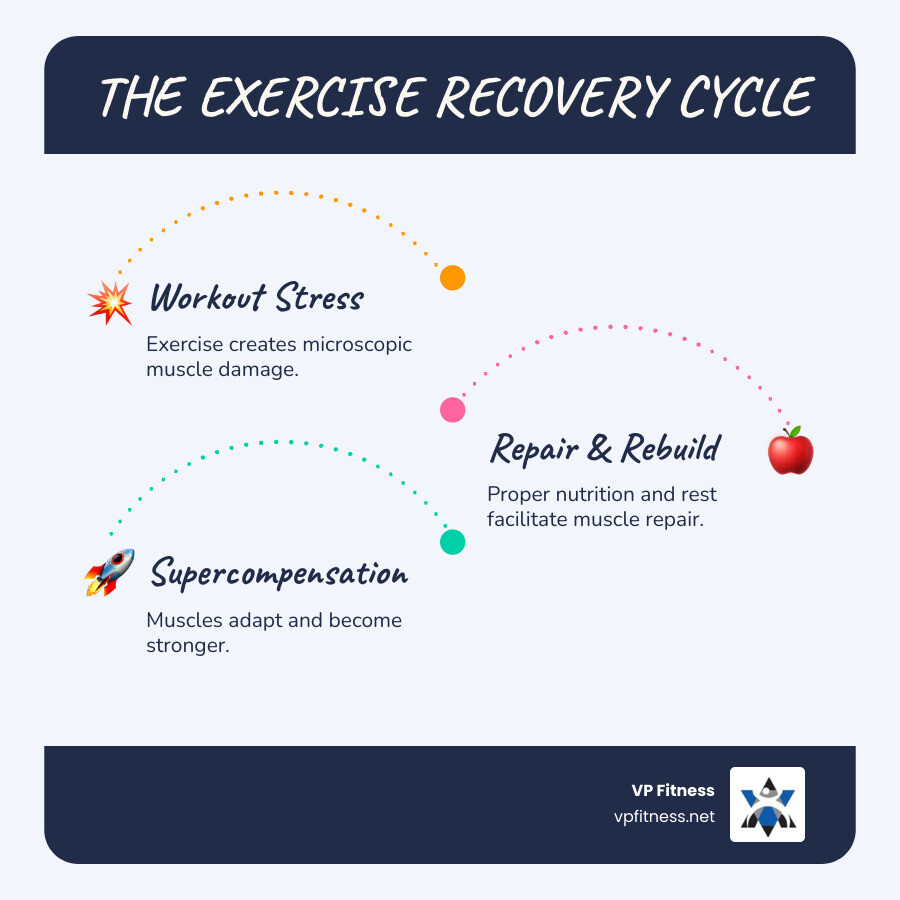
The science is clear: exercise breaks down muscle fibers, but growth happens during recovery. When you work out, you create microscopic tears in muscle tissue. Your body responds by rushing nutrients to these areas, rebuilding them stronger than before.
This process, called supercompensation, only works when you give your body the right tools and time to repair. Skipping recovery risks injury and burnout while missing out on results.
Studies show that overtraining syndrome affects roughly 60% of elite athletes and 30% of non-elite endurance athletes, proving that balancing work and recovery is a common struggle.
Fitness experts have seen how proper post workout recovery strategies make or break an individual’s progress. The best approach focuses on simple, sustainable recovery methods that busy professionals can stick to long-term.
Fueling the Machine: Nutrition for Optimal Muscle Repair
Think of your body after a workout like a construction site that needs the right materials to rebuild stronger. Smart nutrition for post workout recovery is your secret weapon for bouncing back faster and ready for your next session.
The Cornerstone of Post Workout Recovery: Protein, Carbs, and Fats
Each macronutrient has a specific job, and they work best as a team.
Protein is your muscle’s best friend. Exercise triggers the breakdown of muscle protein, signaling your body to rebuild stronger. Protein provides the amino acids needed for this repair and growth process (protein synthesis). The International Society of Sports Nutrition recommends about 1.6 grams of protein per kilogram of body weight daily, which for most people means 20-40 grams every 3-4 hours.
Carbohydrates are your energy bank account. During your workout, your muscles drain their glycogen stores. After training, you need to refill that tank, and carbs are the most efficient way to do it. For regular, hard training, aim for 8-12 grams of carbs per kilogram of body weight daily to stay energized.
Healthy fats play a key supporting role in hormone production and nutrient absorption. Research shows that whole milk beats skim milk for muscle growth, and whole eggs outperform egg whites, likely because the natural fats help your body use protein more effectively. Include foods like avocados, nuts, and fatty fish.
Nutrient Timing and Hydration
Good news: the famous “anabolic window” isn’t as narrow as once thought. You don’t need to frantically chug a protein shake within 30 minutes of your workout.
Recent research shows the post-exercise window can be several hours wide. Your overall daily nutrition matters more than hitting a magical timestamp. That said, if muscle building is your main goal, getting quality protein within 2 hours of training is a smart move. Focus on your total daily intake of protein and carbs rather than stressing about perfect timing.
Now for a crucial element: hydration. When you sweat, you lose water and electrolytes. Skipping rehydration leads to muscle cramps, fatigue, and sluggish recovery. A simple rule: for every kilogram you lose during exercise, drink 1.5 liters of fluid. Water is great, but for intense workouts, consider drinks with electrolytes. Replenishing water and electrolytes after a workout can help with recovery and performance.
Ideal Post-Workout Meals and Supplements
What should you eat? The best post workout recovery meals combine protein and carbs, a combo that research shows beats either nutrient alone for recovery.
Within 4 hours of training, aim for 0.8 grams of carbs per kilogram of body weight plus 0.2-0.4 grams of protein per kilogram. This is roughly a 3:1 or 4:1 ratio of carbs to protein.

Classic post-workout meals include grilled chicken with sweet potato and broccoli, or salmon with quinoa. A whole-grain wrap with turkey and avocado is a great quick option.
For quick snacks, try Greek yogurt with berries or cottage cheese with pineapple. Chocolate milk is also an excellent recovery drink.
Whole foods first should be your motto, but supplements can fill gaps. Protein powder offers convenience. Creatine monohydrate is also noteworthy; studies suggest creatine may help athletes recover from intense training by reducing muscle damage and restoring glycogen.
The bottom line: post workout recovery nutrition isn’t complicated. Focus on quality protein and carbs within a few hours of training, stay hydrated, and listen to your body.
Active Recovery vs. Passive Rest: Techniques to Soothe Sore Muscles
Post workout recovery isn’t just about what you eat. How you move (or don’t move) after exercise can make or break your results. Recovery exists on a spectrum from complete rest to active recovery (gentle movement), and knowing when to use each is key.
Understanding Delayed Onset Muscle Soreness (DOMS)
That stiff, achy feeling that typically occurs between 12-24 hours after a workout is Delayed Onset Muscle Soreness (DOMS). It’s caused by microscopic tears in your muscle fibers from exercise, which triggers inflammation as your body begins to repair. This isn’t caused by lactic acid, which clears from your muscles within an hour.
DOMS is a sign your muscles are adapting and getting stronger. However, it’s crucial to distinguish it from injury pain.
Normal DOMS feels like: general muscle stiffness, tenderness to the touch, and reduced range of motion.
Injury pain feels like: sharp, localized pain, severe swelling, or pain that worsens over a few days.
When in doubt, listen to your body and consult a healthcare professional.
The Role of Warm-Ups and Cool-Downs
Your body needs to transition into and out of exercise. Don’t jump into intense work cold, and don’t stop abruptly when you’re done.
Dynamic warm-ups prepare your body for work. A 10-15 minute warm-up with movements like arm circles, leg swings, or bodyweight squats increases blood flow, activates your nervous system, and reduces injury risk.

Cool-downs are equally important. They gradually bring your heart rate down and prevent blood from pooling, which can cause dizziness. This is the perfect time for static stretching—holding a gentle stretch for about 30 seconds. This helps lengthen muscles and improve long-term flexibility.
Hands-On Recovery: Massage and Foam Rolling
Sometimes muscles need extra attention. Massage helps release tension, improve blood flow, and move fluids that pool after exercise. A 2020 review found that massage has a small but significant effect on decreasing delayed onset muscle soreness and improving flexibility.
Foam rolling (myofascial release) is like a 24/7 massage therapist. You use your body weight to apply pressure to muscles and connective tissue (fascia), breaking up knots. Research shows foam rolling can reduce muscle soreness and improve range of motion by increasing blood flow.
For best results, spend 10-15 minutes foam rolling after workouts. Roll slowly over major muscle groups and pause on tender spots for 30-60 seconds.
The Ultimate Recovery Tool: Sleep
Sleep is when the real magic of post workout recovery happens. During deep sleep, your body releases growth hormone, which is crucial for muscle repair and growth. It also reduces the stress hormone cortisol. Think of sleep as your body’s overnight construction crew.
The research is clear: sleep deprivation may impair muscle recovery by disrupting hormones and your body’s inflammatory response. Most adults need 7-9 hours of quality sleep, especially when training regularly.
To improve sleep:
- Keep your bedroom cool and dark.
- Avoid screens an hour before bed.
- Stick to a consistent sleep schedule.
- Create a relaxing bedtime routine.
Prioritize sleep like you prioritize training; you’re leaving gains on the table otherwise.
Smarter Training: How to Integrate Post Workout Recovery into Your Routine
Post workout recovery isn’t an afterthought; it’s an essential part of smart training. Viewing recovery as part of your routine, not optional downtime, is a game-changer for progress and enjoyment.
How Long Does Recovery Take?
Recovery time isn’t universal; it depends on your unique rhythm.
Workout intensity and type play the biggest role. A light walk might require 24 hours to bounce back, while an intense leg day could need 48 to 72 hours for muscles to fully recover. Strength training often requires more recovery than cardio because it creates the microscopic muscle tears necessary for growth.
Your individual fitness level and overall lifestyle (sleep, nutrition, stress) also influence your recovery timeline. The golden rule is to listen to your body. If you feel energized, you’re likely ready to go. If you’re still sluggish, give it another day.

Recognizing and Preventing Overtraining Syndrome
There’s a fine line between pushing yourself and pushing too hard. Overtraining syndrome occurs when you consistently train harder than your body can recover. It’s surprisingly common, with overtraining syndrome affects roughly 60% of elite athletes and 30% of non-elite endurance athletes.
Key signs include:
- Persistent fatigue: Feeling drained even on rest days.
- Decreased performance: Your numbers drop, and workouts feel harder.
- Mood disturbances: Irritability, anxiety, or loss of motivation.
- Increased injuries: Nagging aches and pains that won’t go away.
If this sounds familiar, your body is asking for a break. The solution is periodization—planning your training in waves of high-intensity weeks followed by easier recovery weeks. Athletes should schedule a complete rest day every 7 to 10 days.
Habits That Hinder Your Post Workout Recovery
Certain habits can undermine your hard work in the gym.
Alcohol consumption disrupts sleep, dehydrates you, and interferes with muscle protein synthesis. Research shows that consistently consuming alcohol may slow muscular recovery and increase muscle loss risk over time.
Smoking is associated with increased injury risk and impaired healing because it interferes with the oxygen your muscles need to repair.
Ultra-processed foods loaded with sugar and unhealthy fats promote inflammation, which is the opposite of what your body needs during recovery. Your muscles need real nutrients, not empty calories.
Inadequate sleep is a devastating recovery killer. Consistently getting less than 7-9 hours of quality sleep prevents your body from repairing itself efficiently.
Chronic stress keeps your body in a constant state of alert, prioritizing survival over muscle growth. Managing stress through meditation or time in nature is crucial for both mental and physical recovery.
Frequently Asked Questions about Muscle Recovery
Here are straightforward answers to the most common questions about post workout recovery.
What is the most important factor for muscle recovery?
While it’s a combination of factors, the big three are quality sleep, proper nutrition, and staying hydrated. You can’t cheat the system by excelling in one area while neglecting the others.
- Sleep is when your body releases growth hormone for muscle repair.
- Nutrition provides the raw materials: protein for building blocks and carbs for energy.
- Hydration ensures those nutrients get where they need to go.
Consistency across all these areas is what separates those who see steady progress from those who hit plateaus.
Is it okay to work out with sore muscles?
This depends on the type of soreness. It’s generally okay to work through normal muscle soreness (DOMS), that stiff, achy feeling 24-48 hours after a workout.
In fact, light activity can help. Gentle movement increases blood flow, bringing in nutrients and clearing out waste, which can make you feel better. A light walk or gentle yoga are good options.
However, sharp, localized pain, or pain that gets worse with movement is a red flag for a potential injury. In this case, rest is essential. Missing one workout is far better than being sidelined for weeks with an injury.
If you can move the sore muscles through their full range of motion without sharp pain, some active recovery is likely fine.
What’s the difference between active recovery and a rest day?
Both are crucial tools for optimal post workout recovery.
Active recovery is low-intensity movement, done at about 30-40% of your normal effort. Think of pleasant walks, easy bike rides, or gentle stretching. The goal is to increase blood flow and help muscles heal without adding stress.
Passive rest days are complete breaks from structured exercise. These days are vital for giving your nervous system, not just your muscles, a break.
For example, if you had a tough leg workout on Monday, Tuesday could be an active recovery day with a 20-minute walk, and Wednesday could be a full passive rest day. Most people need one full rest day every 7-10 days, depending on training intensity. Top signs that athletes need a rest day include general fatigue, decreased performance, and nagging muscle aches.
Conclusion: Making Recovery Part of Your Routine
Post workout recovery is the secret ingredient for a sustainable, rewarding fitness lifestyle. We’ve covered the essential pillars: proper nutrition, smart hydration, active recovery techniques like foam rolling, and the ultimate repair tool—quality sleep.
The real game-changer is making these strategies a consistent part of your routine. You don’t need to be perfect, but prioritizing recovery just as you do your workouts will open up new levels of performance.
Smart scheduling means listening to your body, understanding the difference between soreness and injury, and treating rest days as productive recovery days. When you respect your body’s need for repair, it rewards you with strength, energy, and resilience.
Recovery isn’t optional; it’s the foundation for everything you’re working toward.