

Split Your Way to Success: A Comprehensive PPL Workout Plan for All Levels

PPL Split Workout Plan: Maximize Gains 2025
Why the PPL Split is a Game-Changer for Your Training
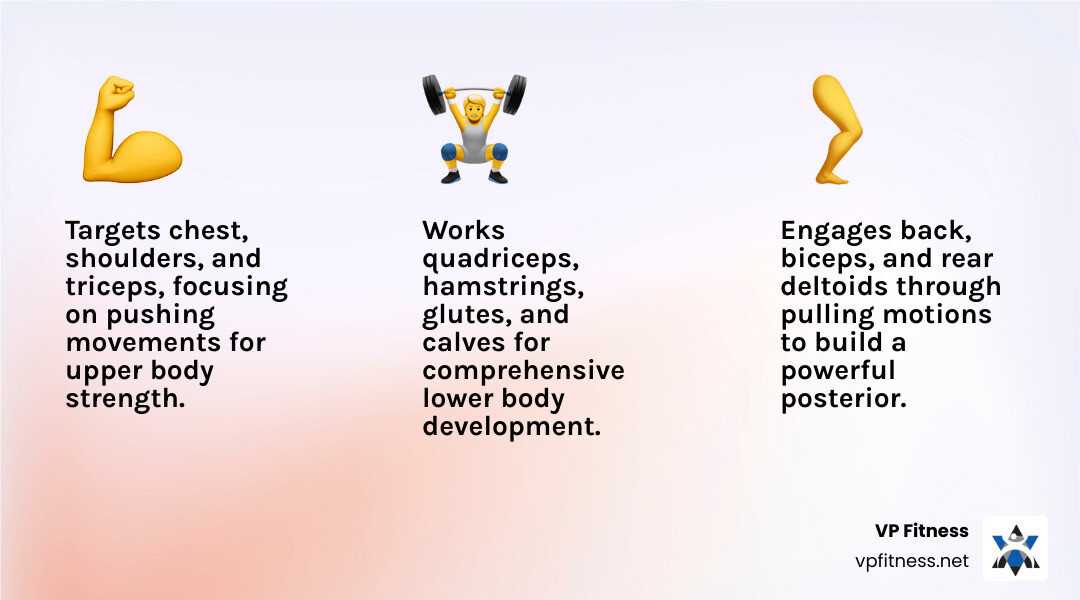
A ppl split workout plan divides your training week into three focused workout types: Push (chest, shoulders, triceps), Pull (back, biceps), and Legs (quads, hamstrings, glutes, calves). This structured approach groups muscles that work together, allowing you to train efficiently while ensuring adequate recovery between sessions.
Quick Answer: What is a PPL Split Workout Plan?
- Push Day: Train all pushing muscles (chest, shoulders, triceps)
- Pull Day: Train all pulling muscles (back, biceps, rear delts)
- Leg Day: Train entire lower body (quads, hamstrings, glutes, calves)
- Frequency: Can be done 3, 4, 5, or 6 days per week
- Best For: Building muscle, increasing strength, and maintaining consistency
- Key Benefit: Trains each muscle group 1-2x per week for optimal growth
The PPL split has stood the test of time because it’s built on logic. When you perform a bench press, your shoulders and triceps are already working hard. Training these synergistic muscles in the same session maximizes efficiency and minimizes overlap between workouts, leading to better recovery and more consistent progress. This focused, methodical approach is what makes the PPL split so effective.
What is a PPL Split & How Does It Work?
At its core, a ppl split workout plan organizes your training by grouping muscles based on movement patterns. Instead of a “chest day,” you train all muscles involved in a particular movement together. When you push a heavy door, your chest, shoulders, and triceps all fire. The PPL split leverages this natural synergy, maximizing the growth stimulus while minimizing overlap between workouts for better recovery and progress.
The split divides your training into three distinct workout types:
- Push days target all your pushing muscles.
- Pull days focus on pulling muscles.
- Leg days train your entire lower body.
This approach ensures each muscle group is fully stimulated and then has adequate time to recover.
Push Day: The Pushing Muscles
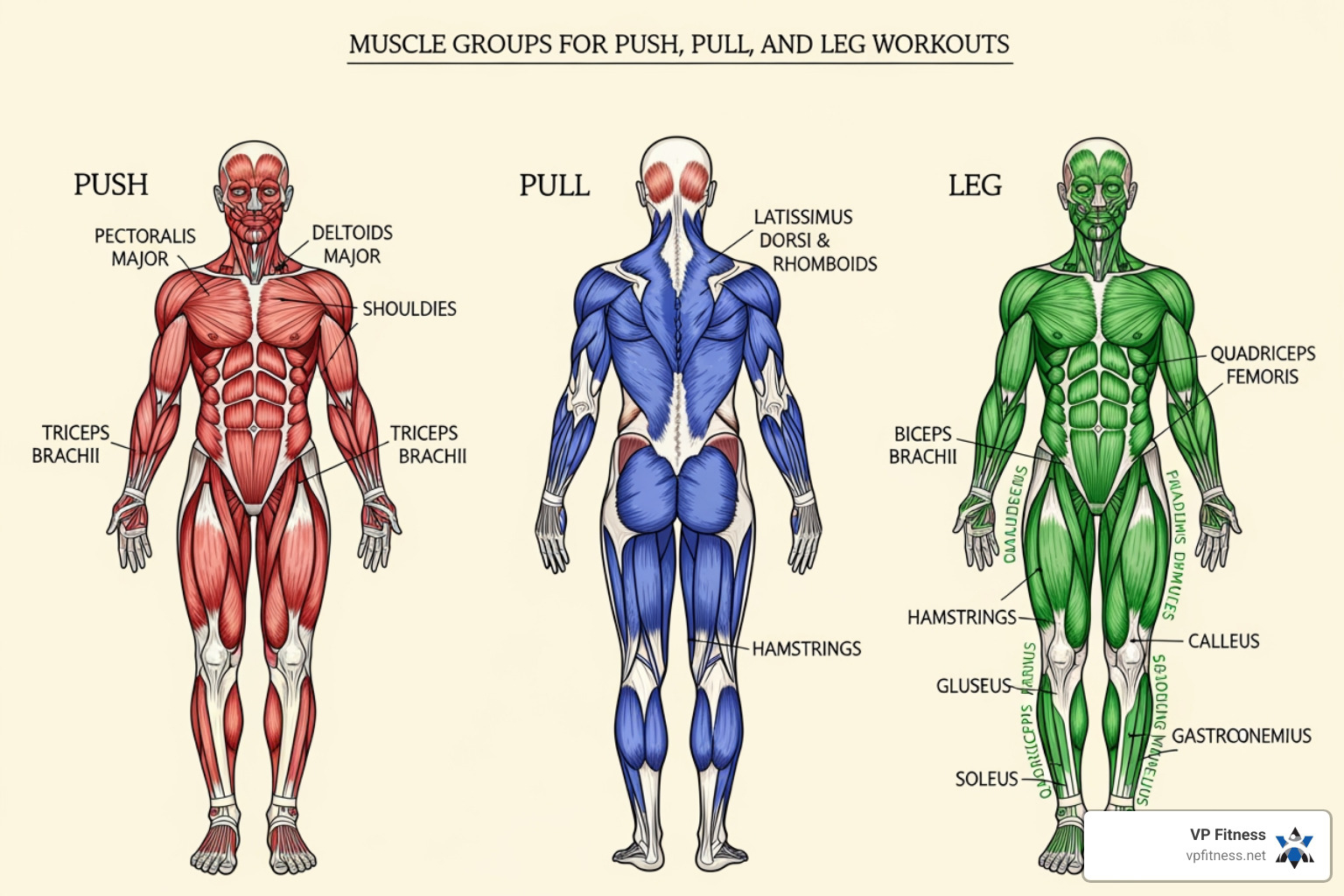
Push Day is all about the muscles that drive pushing movements: your chest (pectorals), shoulders (deltoids), and triceps. When you perform a bench press, your chest does the heavy lifting, but your shoulders and triceps work hard alongside it. Training them together creates a comprehensive stimulus that’s more efficient than isolating each one on separate days.
A typical Push Day includes exercises like the barbell or dumbbell bench press, overhead press, incline dumbbell presses, dips, lateral raises, and triceps pushdowns or skull crushers.
For more detailed guidance on building a strong, well-developed chest, explore our Chest Workout Routine.
Pull Day: The Pulling Muscles
Pull Day targets the muscles on the back of your upper body responsible for pulling movements. This includes your back muscles (lats, traps, rhomboids), biceps, and rear deltoids. When you pull yourself up or row a heavy weight, your back muscles initiate the movement while your biceps assist.
Your Pull Day exercises might include deadlifts, pull-ups or lat pulldowns, barbell or dumbbell rows, face pulls to target your rear delts, bicep curls, and shrugs to build your traps.
Mastering your deadlift form is key to a powerful Pull Day. Find valuable insights in our guide to Deadlift Technique Tips.
Leg Day: The Lower Body
Leg Day is often the most challenging but rewarding workout. You’ll train your entire lower body: quadriceps, hamstrings, glutes, and calves. Your core muscles also work overtime to stabilize your body during these compound movements. When you squat, you engage your quads, hamstrings, glutes, and core all at once.
A well-rounded Leg Day might include barbell squats, front squats, leg press, Romanian deadlifts, leg curls, leg extensions, calf raises, barbell hip thrusts, and lunges.
To get the most out of your leg workouts while preventing injury, proper form is essential. Check out our comprehensive guide on Proper Squat Form.
The Science-Backed Benefits of a PPL Split
The ppl split workout plan is a gym staple for good reason. It’s backed by exercise science, offering real advantages for building muscle, gaining strength, and managing recovery.
Why PPL is Effective for Muscle Growth
A PPL split delivers impressive muscle growth (hypertrophy) because it hits the sweet spot for training frequency. Scientific evidence on training frequency consistently shows that hitting each major muscle group twice per week produces significantly better results than training them just once.
This is because of muscle protein synthesis, the process your body uses to build muscle after training. Research on protein synthesis duration shows this process is liftd for about 36-48 hours post-workout. Training a muscle only once a week leaves several days where it’s not receiving a growth signal.
A PPL split allows you to train each muscle group every 2-4 days, triggering protein synthesis multiple times per week. This creates a sustained environment for muscle growth, rather than sporadic bursts. For a deeper dive into maximizing muscle growth, check out our guide on Workout for Hypertrophy.
Improved Recovery and Consistency
The PPL split is brilliantly designed for recovery. By grouping synergistic muscles, each muscle group gets adequate rest before you train it directly again. After a Push Day, your chest, shoulders, and triceps recover while you work your back and biceps on Pull Day.
This minimum overlap between workouts is a game-changer, significantly reducing your risk of overtraining. The logical structure also makes the ppl split workout plan incredibly easy to follow. There’s no confusion about what you’re training, which removes decision fatigue and makes it easier to show up consistently. And consistency is what builds long-term results.
When your training plan makes sense and supports your body’s recovery, you’re set up for sustainable progress. For more strategies on building that commitment, explore our guide to maintaining a Consistent Gym Routine.
Structuring Your PPL Split Workout Plan
One of the most appealing aspects of a ppl split workout plan is its flexibility. You can adapt the frequency to fit your experience level, recovery capacity, and goals. Let’s break down the main options.
The 3-Day PPL Split: For Beginners and Maintenance
The 3-day split is perfect for beginners or those focused on maintenance. A typical schedule is Push on Monday, Pull on Wednesday, and Legs on Friday. This provides ample recovery time, which is ideal as your body adapts to lifting. The focus can be on learning proper form without fighting through excessive soreness. The trade-off is that each muscle group is trained only once per week, which is less optimal for maximizing growth but perfect for starting out. Pair this split with a solid Beginner Fitness Program to build a strong foundation.
The 4-Day & 5-Day PPL Splits: The Intermediate’s Choice
For those with some training experience, 4-day and 5-day splits offer a sweet spot between manageable and challenging. These often use a rolling schedule (e.g., Push, Pull, Legs, Rest, repeat), which means your workout days shift each week. Another popular 5-day option is a PPL-Upper-Lower hybrid, which keeps the schedule consistent (e.g., PPL Mon-Wed, Upper on Thurs, Lower on Fri). These splits allow for higher frequency and volume, leading to better muscle growth. The challenge is managing recovery, especially with five consecutive training days.
The 6-Day PPL Split: For Maximum Hypertrophy
For serious lifters aiming to maximize muscle growth, the 6-day split is the gold standard. It ensures you hit each muscle group twice per week, which research shows is optimal for hypertrophy. You can structure it as PPL-Rest-PPL (mid-week rest) or PPLPPL-Rest (weekend rest). This frequency allows for significant training volume and a predictable schedule. However, it’s demanding. Six training days require excellent recovery habits: 7-9 hours of sleep, on-point nutrition, and stress management. This split is best for advanced lifters who have the conditioning and time to commit.
Here’s how the different PPL frequencies stack up:
| PPL Split Type | Training Frequency per Muscle Group | Recovery | Suitability |
|---|---|---|---|
| 3-Day | Once per week | Excellent | Beginners, Maintenance |
| 4-5 Day | 1-2 times per week (rolling/hybrid) | Good | Intermediate |
| 6-Day | Twice per week | Demanding | Advanced, Max Hypertrophy |
The right choice depends entirely on where you are in your fitness journey and what your life realistically allows. There’s no single “best” frequency—only the best one for you right now.
Sample PPL Routines & Key Exercises
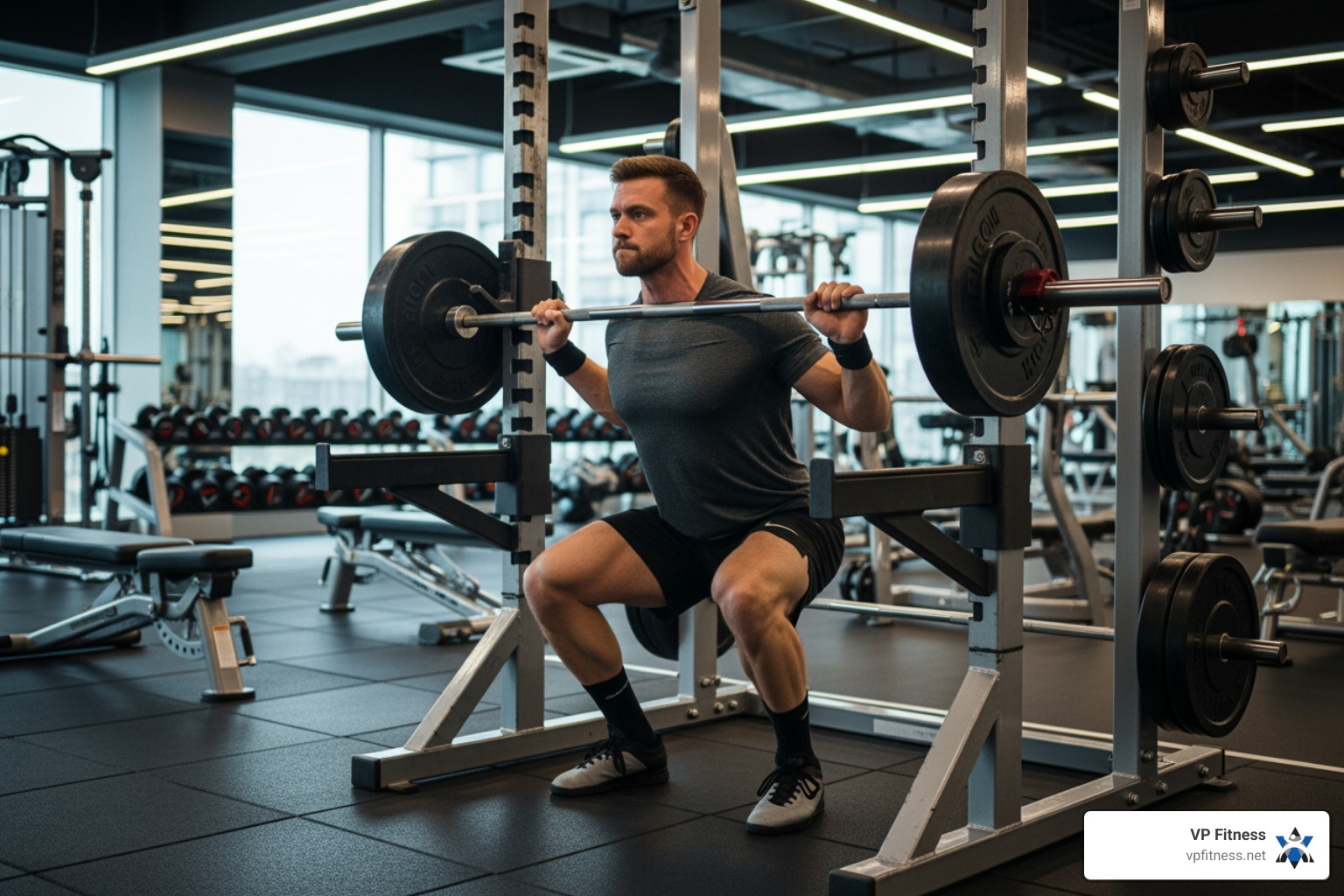
An effective ppl split workout plan is built on smart exercise selection. Prioritize compound movements (squats, deadlifts, bench press) that recruit multiple muscle groups for building overall strength and mass. Add isolation exercises (bicep curls, leg extensions) to address weak points and add volume. For muscle growth, a good guideline is 3-5 sets of 5-8 reps for compound lifts and 3-4 sets of 8-15 reps for isolation lifts.
Beginner PPL Split Workout Plan
Focus on learning proper form with lower volume. A 3-day split is recommended.
- Push Day: Barbell Bench Press (3×6-8), Dumbbell Overhead Press (3×8-10), Dumbbell Incline Press (3×8-10), Lateral Raises (2×10-12), Triceps Pushdowns (2×10-12).
- Pull Day: Barbell Rows (3×6-8), Lat Pulldowns (3×8-10), Seated Cable Rows (3×8-10), Face Pulls (2×12-15), Dumbbell Bicep Curls (2×10-12). For form tips, see our Deadlift Technique Tips.
- Leg Day: Barbell Squats (3×6-8), Leg Press (3×8-10), Romanian Deadlifts (3×8-10), Leg Curls (2×10-12), Calf Raises (2×15-20). Perfect your form with our Proper Squat Form guide.
A structured Beginner Fitness Program can help you start right.
Intermediate PPL Split Workout Plan
Increase volume and intensity on a 4-5 day split. Focus on progressive overload.
- Push Day: Barbell Bench Press (4×6-8), Barbell Overhead Press (3×6-8), Dumbbell Incline Press (3×8-10), Dips (3×8-12), Lateral Raises (3×12-15), Overhead Triceps Extension (3×10-12).
- Pull Day: Deadlifts (3-4×5-6), Pull-ups (3×6-10), Bent-Over Barbell Rows (3×8-10), Seated Cable Rows (3×10-12), Face Pulls (3×12-15), Hammer Curls (3×10-12), Barbell Bicep Curls (3×8-10).
- Leg Day: Barbell Squats (4×6-8), Leg Press (3×10-12), Bulgarian Split Squats (3×8-12 per leg), Leg Curls (3×10-12), Leg Extensions (3×12-15), Standing & Seated Calf Raises (3×15-20 each).
Advanced PPL Split Workout Plan
For advanced lifters on a 6-day split, use high volume and intensity techniques (supersets, drop sets).
- Push Day: Barbell Bench Press (4-5×5-8), Incline Dumbbell Press (3-4×8-10), Dumbbell Overhead Press (3-4×6-8), Weighted Dips (3x to failure), Cable Flyes (3×12-15). Superset Lateral Raises with Front Raises (3×12-15 each). Finish with Skull Crushers (3×10-12) and Triceps Rope Pushdowns (3×15-20, rest-pause).
- Pull Day: Heavy Deadlifts (1-2×3-5, plus back-off set), Weighted Pull-ups (4×6-10), T-Bar Rows (3-4×8-10), Single-Arm Dumbbell Rows (3×8-12 per arm). Superset Face Pulls with Reverse Pec Deck Flyes (3×15-20 each). Finish with Preacher Curls (3×8-10) and Incline Dumbbell Curls (3×10-12).
- Leg Day: Barbell Back Squats (4-5×5-8), Front Squats (3-4×6-8), Leg Press (3×10-12), Barbell Hip Thrusts (3×8-12), Walking Lunges (3×10-12 per leg), Glute Ham Raises (3×8-12). Use drop sets on Leg Extensions (3×12-15) and finish with Standing Calf Raises (4×15-20).
For more guidance, explore our Chest Workout Routine and guide on How to Build Muscle.
Maximizing Your Results: Progression, Nutrition, and Recovery
A well-designed ppl split workout plan is just one piece of the puzzle. To see real results, you must also focus on progressive overload, nutrition, and recovery.
The Role of Progressive Overload
Progressive overload is the engine for all gains. It means gradually increasing the demands on your muscles over time. If you don’t challenge your body, it has no reason to adapt and grow stronger. You can apply this by:
- Increasing the weight
- Increasing your reps or sets
- Decreasing rest times
- Improving your form
Track your workouts in a log to ensure you’re consistently pushing forward. This principle is fundamental to How to Build Muscle effectively.
Fueling Your Workouts: PPL Nutrition Basics
You can’t out-train a bad diet. To build muscle, you need the right fuel.
- Calorie Surplus: To build mass, you generally need to eat slightly more calories than you burn (a 200-500 calorie surplus is a good start).
- Protein: This is non-negotiable for muscle repair. Aim for 0.8 to 1 gram of protein per pound of body weight daily.
- Carbohydrates: Carbs are your body’s primary fuel source for intense training. They replenish muscle glycogen stores.
- Healthy Fats: These are crucial for hormone production, including testosterone.
- Hydration: Even mild dehydration can hurt performance and recovery. Drink water consistently.
For a deeper dive, explore our comprehensive guide on Nutrition for Muscle.
The Importance of Recovery
You don’t build muscle in the gym; you build it during recovery.
- Sleep: This is your most powerful recovery tool. Aim for 7-9 hours of quality sleep per night, when your body releases growth hormone and repairs muscle tissue.
- Rest Days: These are a strategic part of your plan. Consider active recovery like light walking or stretching to promote blood flow.
- Warm-ups & Cool-downs: A proper Warm-up Routine prepares your body and reduces injury risk. A cool-down can aid flexibility.
- Stress Management: Chronic stress raises cortisol, which can interfere with muscle growth. Find ways to unwind.
For more strategies to optimize your recovery, check out our guide on Post Workout Recovery.
Frequently Asked Questions about the PPL Split
Here are answers to the most common questions we hear about the ppl split workout plan.
Is a PPL split good for beginners?
Yes, a 3-day PPL split is an excellent starting point for beginners. It provides ample recovery time, which is crucial for learning proper movement patterns and building foundational strength. The simplicity of the structure (Push, Pull, Legs) eliminates confusion. As a beginner, your primary focus should always be on form over weight. For more guidance, our Beginner Fitness Program provides a structured path.
How long should I rest between sets?
Rest periods are a strategic tool. The general guidelines are:
- Compound Lifts (squats, bench press, deadlifts): Rest for 2-3 minutes. These multi-joint movements are demanding. Research on rest periods for hypertrophy shows longer rests can lead to better growth for these big lifts.
- Isolation Exercises (bicep curls, lateral raises): Rest for 60-90 seconds. These single-joint movements don’t tax your system as heavily, and shorter rests help maintain intensity.
Always listen to your body. If you need an extra 30 seconds to ensure quality reps, take it.
Can I do cardio on a PPL split?
Yes, and it’s encouraged. The key is to balance it so it supports, not undermines, your strength training.
- When to do it: The best time is on your rest days. Alternatively, 20-30 minutes of low-intensity cardio after lifting is a solid option. Avoid intense cardio before lifting, as it will drain your energy.
- What kind to do: Low-intensity steady-state (LISS) cardio like walking or easy cycling is great for recovery. High-intensity interval training (HIIT) is more demanding and should be used sparingly, perhaps once a week, to avoid overtraining.
The goal is to make cardio work with your strength training. Learn more in our guide on Cardio vs Strength Training.
Conclusion
The ppl split workout plan is one of the most effective and logical training frameworks available. By grouping muscles that work together, you can train with intensity while ensuring every muscle gets the time it needs to recover and grow. Its flexibility means there’s a PPL structure that can fit your life, whether you’re a beginner or an advanced lifter.
What makes this split so powerful is its balance of intensity and recovery, backed by science that favors training muscle groups twice per week for optimal growth. The clear structure—Push, Pull, Legs—promotes consistency, and consistency is what builds real, lasting strength. Your success also depends on progressive overload, proper nutrition, and quality recovery.
If you’re ready for a truly personalized approach, a qualified fitness coach can design a Custom Workout Plan that aligns with your specific goals and lifestyle.
To explore other training structures, dive into our Workout Splits Ultimate Guide, where we break down various approaches to help you find the perfect fit. Your fitness journey is yours to own, and with the right plan, there’s no limit to what you can achieve.