

5 Clever Ways to Find Private Gyms You’ve Never Thought Of

Private Gyms: 5 Clever Ways to Find Your Perfect Sanctuary
Why Private Gyms Are Changing the Way We Work Out
Private gyms offer an exclusive fitness experience with limited membership, personalized training, and a distraction-free environment—perfect for busy professionals who want to avoid crowded commercial gyms and waiting for equipment.
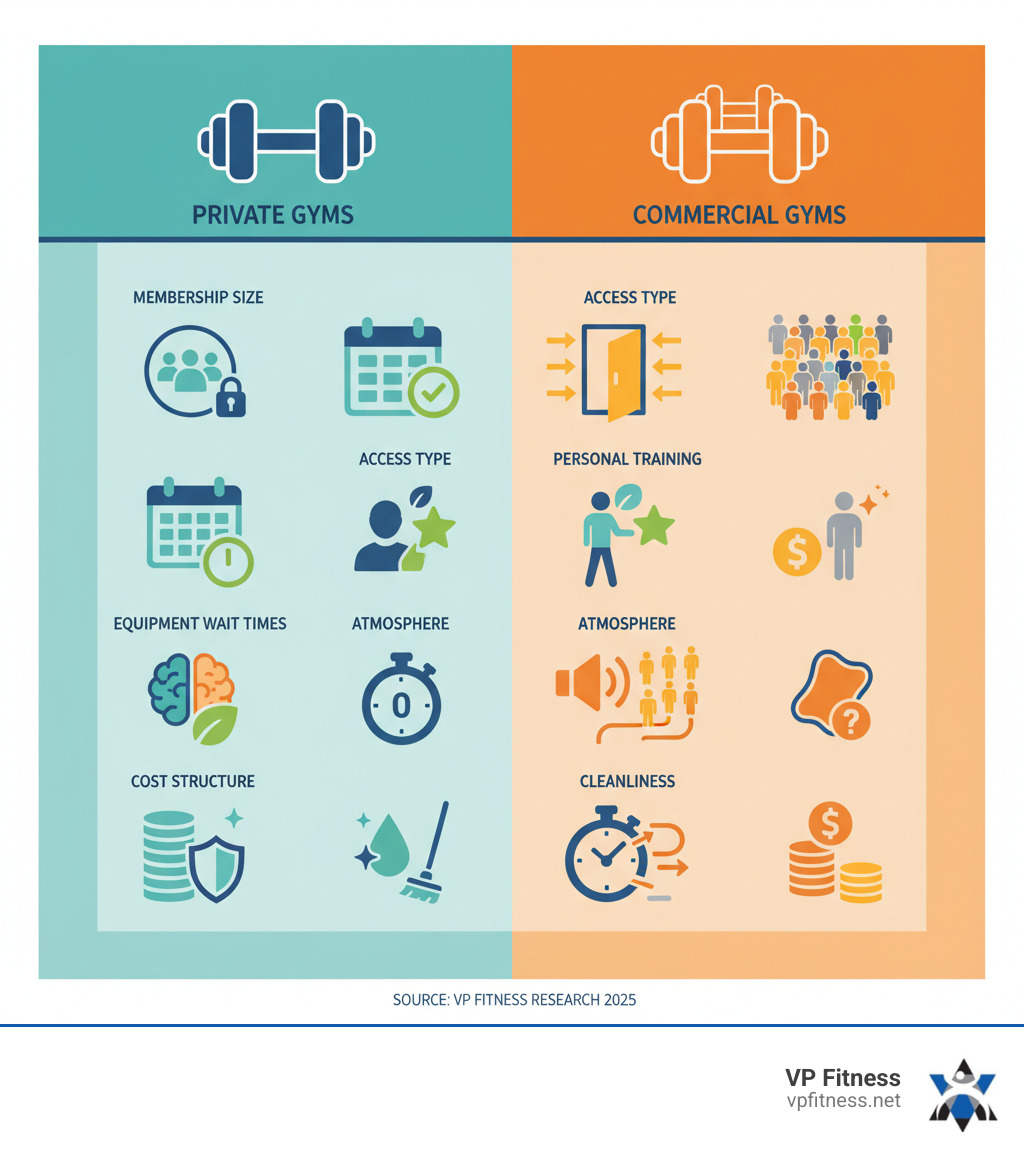
Key differences at a glance:
| Feature | Private Gyms | Commercial Gyms |
|---|---|---|
| Membership Size | Limited (often under 100 members) | Large (often 1,000-6,000+ members) |
| Access | Appointment-based or exclusive | Open access during business hours |
| Personal Training | Included or central to membership | Available at extra cost |
| Atmosphere | Calm, focused, private | Energetic, social, crowded |
| Equipment Wait Times | Minimal to none | Common during peak hours |
| Cost | Higher ($55-$300+/month) | Lower ($10-$45/month) |
You know the feeling. You rush to the gym after work, only to find every squat rack taken. The locker room smells like old socks. Someone’s blasting music you hate. You end up standing around for 20 minutes just to use the equipment you need.
Private gyms solve this problem. They limit membership to create a better experience. You get dedicated trainers, cleaner facilities, and the freedom to focus on your fitness goals without distractions.
These aren’t just for celebrities and athletes anymore. Private gyms now serve professionals who value their time, beginners who want expert guidance, and anyone seeking a more personalized approach to fitness. They focus on specialized training methods like functional fitness, rehabilitation exercises, and custom nutrition plans—all custom to your specific needs.
The challenge? Finding them. Private gyms don’t advertise like big chains. They operate quietly, often by referral or appointment only. Many busy professionals don’t even know they exist in their area.
As a fitness entrepreneur with over a decade of experience building and operating private gyms, I’ve helped hundreds of clients find the transformative power of personalized training in exclusive, supportive environments where they can truly focus on their goals.
In this guide, I’ll share five creative strategies for finding hidden private gyms near you—methods that go far beyond a simple Google search.
Understanding the Exclusive World of Private Gyms
Let’s talk about what makes private gyms so different from the big-box fitness centers you’re used to seeing.
It’s not just about size. It’s a completely different approach to fitness.
Think about your typical commercial gym experience. Hundreds—sometimes thousands—of members sharing the same space. Equipment that’s constantly in use. That feeling of being just another face in the crowd. Now flip that entirely on its head. That’s what private gyms offer.
A private gym operates on exclusivity. Instead of packing in as many memberships as possible, these facilities intentionally limit their numbers. They might serve 50 members instead of 5,000. The entire business model revolves around giving you more attention, more space, and more results.
This isn’t about being elite or snobby. It’s about creating an environment where your fitness goals actually matter. Where you’re not competing for equipment or feeling lost in the shuffle. Where someone knows your name, your goals, and exactly what you need to succeed.
The philosophy here is simple: quality over quantity. Every detail—from the equipment selection to the training programs—gets designed with a small, dedicated group in mind. This focus on personalized service is why more people are choosing private facilities even at premium prices.
What Makes a Gym ‘Private’?
So what actually defines a private gym? A few key factors set these spaces apart.
Limited membership is the foundation. While a typical commercial gym might have 6,000+ members creating constant crowds and equipment waits, private facilities keep their numbers deliberately small—often under 100 members. This isn’t an accident. It’s the entire point.
Appointment-based access often comes with that limited membership. You schedule your training time, show up, and the space is ready for you. No wondering if the squat rack will be available. No backup plan needed because someone’s camping on your favorite machine. The gym operates around your schedule, not the other way around.
The physical footprint tends to be smaller too. Commercial gyms typically need 3,000 to 4,000 square feet to accommodate their massive membership base. Private gyms work beautifully in 1,000 to 2,000 square feet because they’re not trying to fit everyone at once. That compact size actually becomes an advantage—every square foot gets optimized for function, not just filled with random equipment.
Niche specialization is another hallmark. Instead of trying to be everything to everyone, private facilities often focus on specific training methods. Maybe it’s personal training with custom workout plans. Maybe it’s functional fitness or rehabilitation exercises. This specialization means deeper expertise and better results for your particular goals.
Some ultra-exclusive facilities even vet potential members to ensure everyone shares similar values and commitment levels. This isn’t common everywhere, but it speaks to how seriously these gyms take their community culture.
The bottom line? A private gym prioritizes your experience over membership numbers. It’s a sanctuary where your fitness journey gets the attention it deserves.
The Top Benefits of a Private Training Environment
Now let’s talk about what this exclusivity actually means for your workouts.
No equipment waits. This alone changes everything. You walk in, and whatever you need is available. Want to do squats? The rack is open. Need the cable machine? It’s yours. Your workout flows naturally from one exercise to the next without those frustrating 10-minute waits that kill your momentum and waste your time.
Better focus and privacy come naturally in a quieter space. With fewer people around, you can concentrate fully on your form, your breathing, your mind-muscle connection. There’s no distraction from someone dropping weights loudly or having loud phone conversations three feet away. You get one-on-one attention from your trainer in an environment where you can actually hear their coaching cues.
Cleanliness and maintenance reach a different level when you’re not dealing with thousands of daily users. Equipment stays in better condition with limited use. The facilities get cleaned more thoroughly. Everything just feels fresher and more professional. You’re training in a space that actually feels like it’s taken care of.
Community feels different in a private setting. Yes, you’ll have fewer people around than a massive commercial gym. But the relationships you build go deeper. Your trainers know your story. Fellow members recognize you and cheer you on. A genuine partnership between client and trainer creates real results.
Personalized attention might be the biggest advantage of all. Your program gets designed specifically for you—your goals, your body, your schedule, your limitations. Trainers can adjust your form in real-time. Nutrition guidance gets custom to your lifestyle. Everything centers around what you need to succeed.
The tranquil atmosphere of private gyms helps you concentrate on your fitness goals without distractions. You’re not just working out—you’re training with purpose in an environment built to support that purpose.
This is what transforms exercise from something you dread into something you actually look forward to. When the environment works with you instead of against you, fitness becomes sustainable. And sustainable fitness is how you actually reach your goals.
5 Unconventional Methods for Finding Your Perfect Fitness Sanctuary
Finding the right private gym can feel like searching for a hidden gem. These aren’t the places you’ll typically see advertised on billboards or with aggressive online campaigns. Their exclusivity means they often rely on different channels for attracting clientele. But with a little creativity, you can uncover these fitness sanctuaries right in your area.

The truth is, most private gyms don’t need flashy marketing. They thrive on personal referrals and word-of-mouth. That’s actually good news for you—it means the quality speaks for itself. Here are five clever strategies to find the perfect private training environment that you might not have considered.
1. Tap into Professional and Niche Networks
Sometimes, the best recommendations come from people who already understand your health needs on a deeper level. Your physical therapist, doctor, or chiropractor might have insights into local private training studios that specialize in injury rehabilitation or specific health conditions. These healthcare providers work closely with fitness professionals and often know which trainers operate in more focused, private settings.
Many private gyms collaborate with healthcare professionals to ensure a holistic approach to their clients’ well-being. This kind of integrated care can make a huge difference in your results.
If your workplace offers corporate wellness programs, that’s another goldmine. Many businesses now partner with smaller fitness centers or independent trainers to provide exclusive benefits to their employees. A quick conversation with your HR department might reveal partnerships you didn’t know existed.
For those involved in sports, your coach can be an invaluable resource. Coaches frequently know trainers who specialize in athletic performance and operate in more focused, private environments where athletes can train without distractions.
And don’t underestimate the power of your personal network. Talk to friends, colleagues, or acquaintances who are serious about their fitness. They might be training in a private setting and can offer a direct referral. Word-of-mouth is often the most powerful driver for private gyms—people who love their training experience can’t help but share it.
2. Explore “Gym Space for Rent” Opportunities
This method flips the script a bit. Instead of looking for gyms directly, you’re finding the trainers, and through them, finding the private spaces they use. Many independent personal trainers choose to operate out of dedicated private studios or rent space within larger, more flexible fitness facilities.
These independent trainers are often highly qualified professionals who prefer the freedom of running their own business rather than working for a large chain. When you find the right trainer, they’ll introduce you to their preferred private training space.
Some modern fitness models allow trainers or even individuals to book an entire gym space for a specific period. These “gym space for rent” options offer complete privacy and access to equipment without shared use. Imagine booking a facility just for yourself or a small group, where you can workout without waiting and hesitation. Some private gyms even offer gym space rental for trainers looking for a professional environment.
There are also co-working fitness environments—similar to co-working offices—where multiple independent trainers share a space. While not entirely private during all hours, these often have a more boutique feel and can lead you to a trainer who offers one-on-one sessions in a dedicated area.
3. Search for Hyper-Specific Training Certifications
Instead of searching directly for a gym, search for the expertise you need. Highly specialized trainers often work in environments that match their niche. Trainers with advanced certifications in areas like corrective exercise, pre/post-natal fitness, strength and conditioning, or rehabilitation typically operate out of specialized private studios rather than general commercial gyms.
Organizations like the National Academy of Sports Medicine (NASM) or the American Council on Exercise (ACE) have directories where you can search for certified professionals. These trainers value the controlled environment of private gyms to deliver precise, high-quality coaching.
Elite trainers—particularly those with a strong reputation for achieving specific results—tend to operate in more private settings. They understand that a focused environment is essential for delivering changeal results. Look for trainers who emphasize precision-backed one-on-one personal training with certified coaches as a sign of this high-level expertise. These certified fitness coaches are dedicated to providing expert fitness coaching in exactly this kind of focused environment.
Some trainers also adhere to specific methodologies like functional movement systems or powerlifting. These specialized approaches often require a dedicated space and clientele, leading them to operate in private gyms that align with their philosophy. The best private gyms design programs specific to individual health and fitness goals, creating a space that supports that level of personalization.
4. Use Social Media Geotags and Hashtags Creatively
Social media can be a powerful, albeit indirect, tool for finding local private gyms or trainers operating in such spaces. Think of it as a digital scavenger hunt for your ideal fitness sanctuary.
Start by searching location tags on platforms like Instagram. Browse posts related to fitness in your area or specific neighborhoods. You might find smaller studios or trainers whose posts showcase a private or semi-private training environment. The photos and videos will give you a real sense of the atmosphere before you even reach out.
Following local fitness influencers or personal trainers in your area can also be revealing. They often tag their training locations or feature the facilities they use, which could be a private studio. Pay attention to the backgrounds in their posts—you can learn a lot about the training environment.
Go beyond generic tags like #gym. Try more specific hashtags that reflect what you’re actually looking for: think along the lines of personal training, fitness coaching, boutique fitness, or private training combined with your location. These targeted searches can lead you to smaller, more specialized operations that prioritize a focused training experience.
5. Look for “By-Appointment-Only” Wellness Centers
Many holistic health and wellness centers integrate fitness into their broader services, and these often operate on an appointment-only basis, creating a naturally private environment. These facilities understand that a serene, focused atmosphere is crucial for both physical and mental well-being.
Integrated health centers often offer a combination of services like chiropractic care, physical therapy, massage, nutrition counseling, and personal training. Their fitness components are typically delivered in private or semi-private settings. This aligns with the private gym model, which often includes individualized training and nutrition guidance in a professional, clean environment.
Holistic wellness studios that focus on overall well-being—including yoga, Pilates, and meditation—sometimes also offer private personal training sessions. The atmosphere in such places is inherently calmer and more focused than a typical commercial gym.
Centers that specialize in recovery and personalized programs are excellent candidates for private gym experiences. They recognize that recovery is vital to a healthy lifestyle, and they’ve designed their spaces accordingly. These types of facilities often provide the kind of custom support that helps you achieve profound, lasting change.
The key is to look for places that prioritize appointment-based access and individualized attention. When a facility requires you to book your time, it’s a strong indicator that they’re committed to providing a private, focused experience rather than packing as many people through the door as possible.
What to Expect from High-Quality Private Gyms
So you’ve finded a potential private gym using those creative search methods. Now comes the exciting part—understanding what you’re actually walking into. A high-quality private gym isn’t just a smaller version of a commercial facility. It’s a completely different experience, designed around your individual needs and goals.
The first thing you’ll notice is the space itself. These gyms typically feature carefully selected, adjustable fitness equipment that’s chosen for a reason, not just to fill square footage. Many private gyms focus on specialized training methods like functional fitness or rehabilitation exercises, which means the equipment serves a specific purpose in your program. Everything from the layout to the lighting is intentional, creating an environment where you can truly focus on your workout.
| Feature | Private Gyms | Commercial Gyms |
|---|---|---|
| Cost | Higher monthly investment ($55-$300+) with personal training often included | Lower base price ($10-$45/month) with personal training as expensive add-on |
| Access | Appointment-based or scheduled sessions ensuring availability | Open access during business hours, often crowded during peak times |
| Equipment | High-quality, specialized equipment always available | Wide variety but often occupied, varying maintenance quality |
| Training | One-on-one or small group coaching central to experience | Self-directed workouts with optional paid training sessions |
| Atmosphere | Quiet, focused, personalized attention | Energetic, social, minimal individual attention |
The Central Role of Personal Training in Private Gyms
Here’s something important to understand: in a private gym, personal training isn’t something extra you pay for on top of your membership. It’s the foundation of the entire experience. This is where these facilities truly shine.
One-on-one coaching transforms your fitness journey from guesswork into a science. Your trainer designs a program specific to your health and fitness goals, providing guidance and support throughout the training process. Whether you’re recovering from an injury, training for a specific sport, or simply want to feel stronger and healthier, this intimate setting allows for constant feedback, form correction, and motivation that’s impossible in a crowded commercial gym.
The custom workout plans you receive aren’t pulled from a template or copied from someone else’s program. They’re built around you—your current fitness level, any past injuries, your schedule, and what you’re trying to achieve. Whether you’re new to exercising or a fitness pro, a good trainer provides personalized coaching that meets you exactly where you are. If you’re working on specific strength goals, your trainer might use progressive training, which is ideal for specific goals or past injuries. This approach begins with lower repetition ranges and focuses on building strength through focused coaching and more advanced exercises as you progress.
Accountability might be the secret ingredient that makes private training so effective. It’s easy to skip a workout when you’re just another face in a crowded gym. But when a certified personal trainer is expecting you and has designed a session specifically for that day? That changes everything. Your trainer keeps you accountable to achieving your goals and sets new ones to keep you challenged. This powerful partnership between client and trainer is a key to success.
Many private gyms also integrate nutrition guidance into their programs. While personal trainers aren’t nutritionists, they understand how crucial diet is to your results. They can provide guidance on a personalized eating program about the right foods to eat to support your workout efforts. This holistic approach ensures your nutrition complements your training for optimal results.
The value of expert support in reaching your fitness goals simply cannot be overstated. With a dedicated trainer, you’re not just exercising—you’re investing in a personalized roadmap to becoming a healthier, stronger version of yourself.
What to Look for When Evaluating Private Gyms
Finding a private gym is one thing. Choosing the right one? That requires a bit more thought. Here’s what matters when you’re making this important decision.
Start with trainer qualifications. Always ask about credentials. Look for professionals with degrees in exercise-science-related fields, certifications from recognized organizations like ACE, NASM, or ACSM, and years of actual experience working with clients. This ensures you’re receiving expert, science-backed guidance rather than advice from someone who just completed a weekend certification course.
Client testimonials and success stories tell you what really happens inside those walls. Look for testimonials that speak to the quality of coaching, the atmosphere, and the actual results people achieved. A gym that fosters a positive culture and community often leads to happier, more successful members. Don’t be shy about asking for references or examples of clients who had goals similar to yours.
Facility cleanliness and equipment maintenance should be immediately obvious when you walk through the door. One of the key benefits of private gyms is their superior cleanliness—a cleaner environment with better-maintained equipment due to limited use and fewer members sharing the space. High-quality private gyms pride themselves on maintaining a clean gym because they know it matters to your health and your workout experience.
Take time to understand the contract terms and flexibility before signing anything. Many private gyms offer various agreements, from month-to-month to longer-term commitments. Clarify cancellation policies and whether personal training agreements can be frozen if life gets in the way. You want a gym that’s confident enough in their service to offer reasonable terms.
Trial sessions are your best friend when evaluating a private gym. Many quality facilities offer introductory offers like a free personal training session or a day pass. This is your chance to experience the atmosphere, meet the trainers, and assess if it’s the right fit for you before making any commitment. If a gym won’t let you try before you buy, that’s a red flag.
Finally, and perhaps most importantly, look for alignment with your specific goals. The best private gym is one that matches what you’re actually trying to achieve. Are you looking to build muscle, improve endurance, recover from an injury, or simply enjoy a quiet, focused workout without distractions? Make sure the gym’s philosophy and offerings match your aspirations. The best private gyms offer personalized exercise routines custom to your needs because they understand that everyone’s fitness journey is unique.
By carefully considering these factors, you can ensure you choose a private gym that truly transforms your fitness journey and helps you achieve the results you’re looking for. It’s not just about finding a place to work out—it’s about finding your fitness sanctuary.