

Sculpt Your Core: Top Abdominal Muscle Exercises

Sculpt Your Core: Top Abdominal Muscle Exercises
Why Building Strong Abdominal Muscles Matters for Your Daily Life
Abdominal muscle exercises are strength movements that target the muscles in your midsection—commonly known as your abs or core. These exercises range from basic planks and crunches to advanced movements like hanging leg raises and ab wheel rollouts.
Quick Reference: Essential Abdominal Exercises by Level
| Level | Exercises | Benefits |
|---|---|---|
| Beginner | Pelvic tilts, modified planks, bridges, bird-dog | Build foundational strength and proper form |
| Intermediate | Mountain climbers, bicycle crunches, leg raises, Russian twists | Improve stability and endurance |
| Advanced | Hanging leg raises, ab wheel rollouts, V-sits, weighted planks | Maximize definition and functional power |
A strong core does far more than help you look good at the beach. Research shows that core endurance directly relates to athletic performance and everyday function—even in people who don’t exercise regularly. Your abdominal muscles work together with your back, diaphragm, and pelvic floor to support your spine, improve your posture, and prevent injuries during everything from lifting groceries to competing in a triathlon.
The most important thing to understand is this: abdominal exercises build strength and endurance, but they don’t reduce belly fat on their own. Studies confirm that you can’t spot-reduce fat through targeted exercises. Visible abs require both core training and a caloric deficit achieved through proper nutrition and overall activity.
I’m Joseph DePena, founder of VP Fitness in Providence, Rhode Island, and I’ve spent over a decade helping clients build functional core strength through personalized training programs that combine effective abdominal muscle exercises with proper nutrition guidance. In this guide, I’ll walk you through the most effective movements for every fitness level, proper form to prevent injury, and realistic expectations for your core training journey.
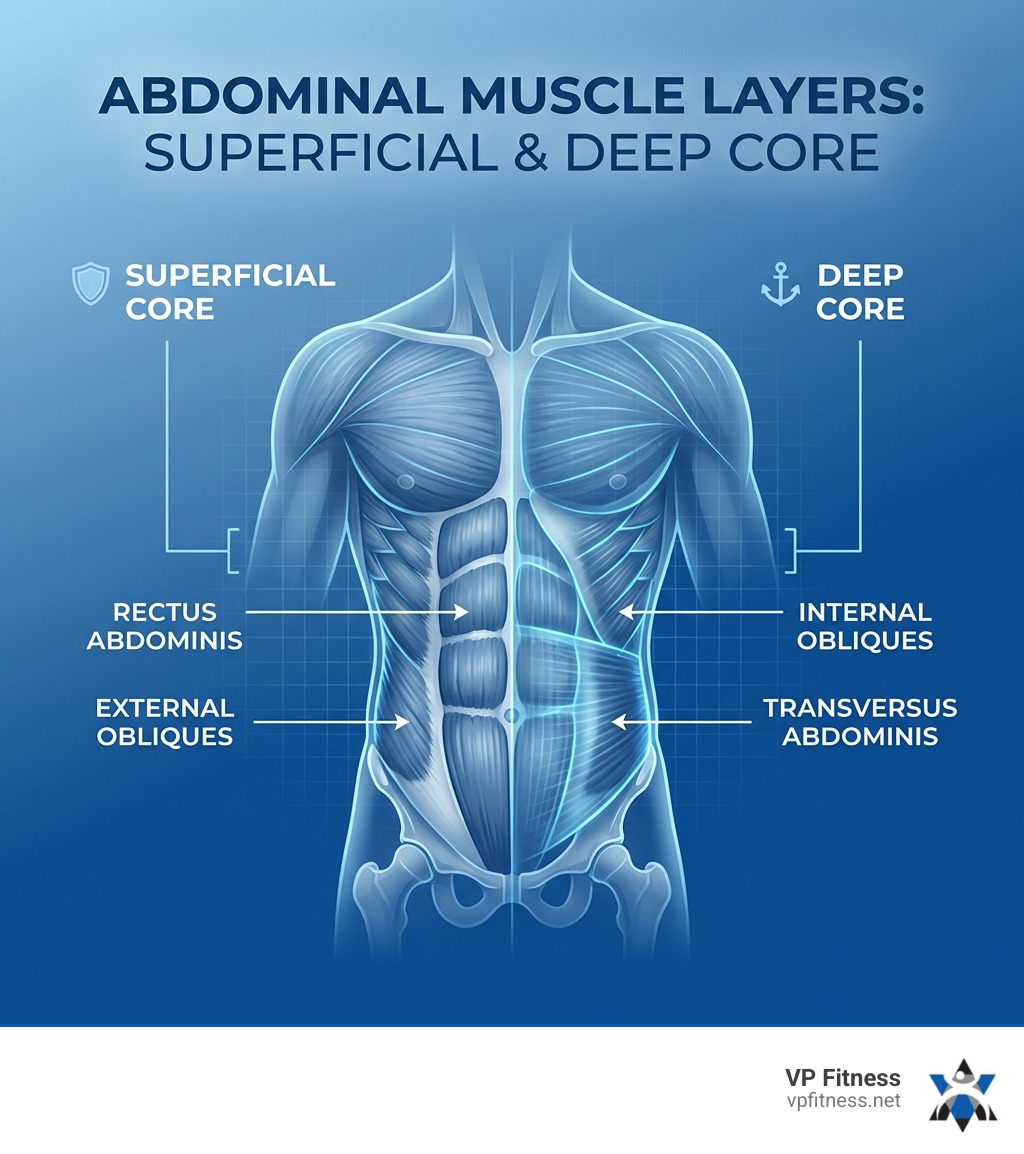
Simple guide to Abdominal muscle exercises:
The Anatomy and Function of Your Core
To truly master Abdominal muscle exercises, we first need to look under the hood. Most people think of “abs” as just the “six-pack” muscle, but your core is actually a complex, integrated system. At VP Fitness, we view the core as a natural corset that protects your internal organs and stabilizes your spine.
According to a report in JAMA Surgery, we are now understanding that the components of the abdominal core are related and work together. This system includes:
- Rectus Abdominis: This is the famous “six-pack.” Its primary job is to flex your spine (think of a crunch) and help with breathing.
- External and Internal Obliques: Located on the sides of your torso, these muscles allow you to twist and bend sideways. They also help stabilize the spine during heavy lifts.
- Transversus Abdominis (TVA): This is the deepest abdominal muscle. It wraps around your midsection like a weight belt. You can feel it working when you cough or brace your stomach.
- Diaphragm and Pelvic Floor: These often-overlooked parts of the core are essential for breathing mechanics and internal pressure regulation.
When these muscles work in harmony, they create a stable base for all movement. Whether you are walking along the beach in Rhode Island or lifting a heavy box, a strong core ensures your spine stays protected. For a deeper dive into how these muscles interact with the rest of your body, check out our Best Core Exercises Complete Guide.
Superficial vs. Deep Core Muscles
There is a big difference between training for aesthetics and training for function. Superficial ab exercises, like traditional crunches, primarily target the outer muscles for that “sculpted” look. However, true stability comes from the deep core.
Deep core exercises focus on the inner stabilizers, including the TVA, pelvic floor, and the multifidus muscles along the spine. These muscles are responsible for isometric contractions—holding your body still against gravity. Using Deep core exercises for resilience helps build a foundation that prevents chronic lower back pain and improves balance.
At our Providence gym, we often integrate these stabilizers into a Sculpt Your Body the Power of Core Cardio Fitness routine. By combining deep core activation with cardio, you build a body that is as strong as it looks.
The Most Effective Abdominal muscle exercises for Every Level
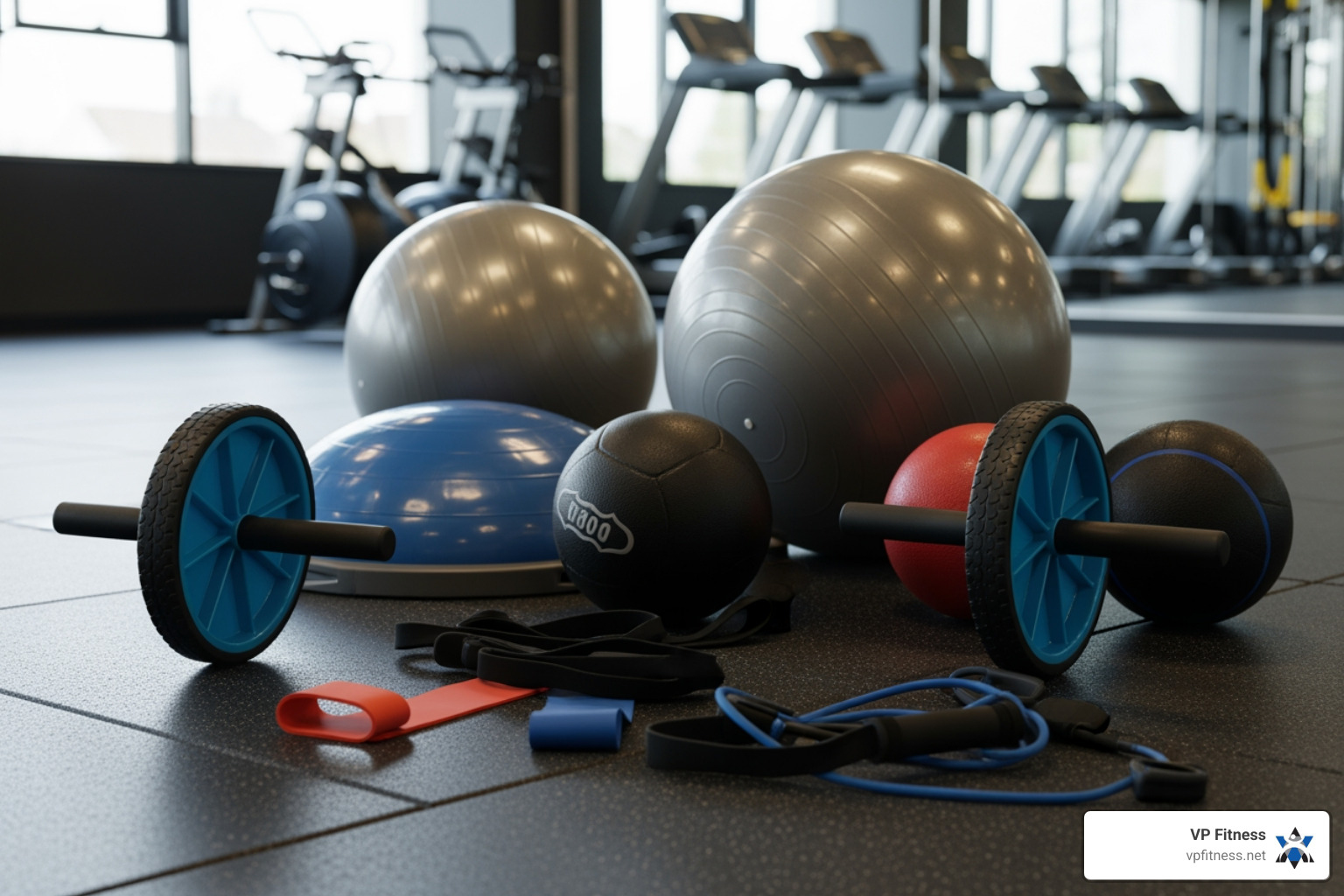
Not all Abdominal muscle exercises are created equal. To see progress, you must apply the principle of progressive overload—gradually increasing the difficulty of your workouts. A 2019 study on core endurance and performance found that core endurance is strongly related to athletic and functional performance in inactive people, meaning it’s never too late to start.
When selecting exercises, we look at Electromyography (EMG) activity, which measures how much a muscle is “firing” during a movement.
EMG Activity Comparison of Popular Movements
| Exercise | Rectus Abdominis Activity | Oblique Activity |
|---|---|---|
| Traditional Crunch | 100% (Baseline) | 100% (Baseline) |
| Bicycle Crunch | 248% | 290% |
| Captain’s Chair | 212% | 310% |
| Plank | High Stability | Moderate |
Beginner Abdominal muscle exercises to Build a Foundation
If you’re just starting your fitness journey in Providence, don’t rush into high-intensity movements. You need to “wake up” your muscles first.
- Pelvic Tilts: Lie on your back with knees bent. Gently press your lower back into the floor by tightening your abs. This teaches you how to engage your deep core.
- Modified Planks: Instead of being on your toes, drop to your knees. Keep a straight line from your head to your knees.
- Bird-Dog: On all fours, extend your opposite arm and leg. This improves spinal stability and balance.
- Bridges: Lie on your back and lift your hips toward the ceiling. This strengthens the “posterior chain,” which supports the back of your core.
- Dead Bugs: Lie on your back with arms and legs in the air (like a bug on its back). Slowly lower the opposite arm and leg while keeping your lower back pressed into the mat.
For those with specific health concerns, the Mayo Clinic guide to core-strength basics suggests starting with one set of 12 to 15 repetitions to build a safe foundation.
Intermediate Movements for Stability
Once you’ve mastered the basics, it’s time to add movement and instability.
- Mountain Climbers: From a plank position, drive your knees toward your chest. This adds a cardio element while testing your core’s ability to stay still while your legs move.
- Bicycle Crunches: As noted in the EMG table, this is one of the most effective Abdominal muscle exercises for hitting both the “six-pack” and the obliques.
- Leg Raises: Lie on your back and lift your legs to 90 degrees, then lower them slowly. Pro tip: only go as low as you can without your back arching off the floor.
- Russian Twists: Sit with your knees bent and feet slightly off the ground. Twist your torso from side to side.
- Flutter Kicks: Lie on your back and kick your legs in a small, rapid scissoring motion.
Strengthening these muscles is a key component of our Back Strength Training Complete Guide, as a strong front supports a healthy back.
Advanced Abdominal muscle exercises for Maximum Definition
For the seasoned athletes at VP Fitness, we turn up the heat. These movements require significant baseline strength to perform safely.
- Hanging Leg Raises: Hanging from a pull-up bar, lift your legs to at least waist height without using momentum.
- Ab Wheel Rollouts: This is often cited as more effective than traditional crunches. It requires immense eccentric strength (strength while the muscle is lengthening).
- Suspension Trainer Challenges: Using tools like a TRX, you can perform Suspension trainer core challenges that leverage gravity to make your body work harder.
- V-Sits: Sit on the floor and lift your legs and torso simultaneously to form a “V” shape, holding the position isometrically.
- Weighted Planks: Once a standard plank is too easy, have a partner carefully place a weight plate on your back to increase the resistance.
How to Safely Perform Key Core Movements
Safety is our number one priority. Performing Abdominal muscle exercises with poor form is a fast track to back pain. The most common error we see is the “pelvic tilt” in the wrong direction—letting the lower back arch during a plank or leg raise.
To stay safe, follow these 12 tips for exercising safely:
- Maintain a Neutral Spine: Your back shouldn’t be excessively arched or rounded.
- Breathe: Never hold your breath. Exhale during the “work” phase of the movement.
- Control the Tempo: Speed often relies on momentum. Slow, controlled movements engage more muscle fibers.
- Tuck the Pelvis: Imagine pulling your belly button toward your spine to keep your lower back protected.
Common Mistakes to Avoid
- Pulling the Neck: In crunches, your hands should support your head, not pull it. Imagine holding an orange between your chin and chest.
- Over-reliance on Hip Flexors: If you feel your hip creases burning more than your abs during leg raises, you’re likely using your hip flexors to do the work.
- Arching the Back: This puts immense pressure on the spinal discs. If your back arches, the exercise is too difficult—scale back to a beginner version.
Understanding the mechanics of muscle growth is also vital. In our guide on Building Blocks Understanding Muscle Hypertrophy, we explain how rest and proper form are just as important as the workout itself.
Frequency, Nutrition, and the Myth of Spot Reduction
We hear it every day in Providence: “How many crunches do I need to do to lose my belly fat?” The answer is always the same: Zero.
Abdominal exercises increase the strength and endurance of the muscles, but they do not burn the fat covering them. A 2011 study published in the Journal of Strength and Conditioning Research showed that six weeks of abdominal exercise alone did not reduce abdominal fat.
To see your abs, you need three things:
- A Caloric Deficit: You must burn more calories than you consume.
- Protein Intake: High protein helps preserve Lean Muscle Mass while you lose fat.
- Total Body Activity: The CDC recommends at least 150 minutes of moderate-intensity activity per week.
Interestingly, moderate exercise can actually change the “stubbornness” of fat. One study found that 20 weeks of moderate exercise reduced the size of subcutaneous abdominal fat cells by about 18% in obese women. For a tailored approach to eating for your goals, see our resource on Nutrition for Muscle.
How Often Should You Train? While smaller core muscles recover faster than your legs or chest, they still need rest. Aim for 2 to 3 dedicated core sessions per week, or integrate 5-10 minutes of core work into your daily routine.
When to Seek Professional Help for Core Health
Sometimes, core issues go beyond what a gym workout can fix. If you experience sharp pain, bulging, or persistent discomfort, you may need a medical evaluation.
Common issues include:
- Hernias: A gap in the abdominal wall where tissue pokes through.
- Diastasis Recti: A separation of the “six-pack” muscles, common after pregnancy.
- Chronic Lower Back Pain: Often a sign of severe core weakness or imbalance.
Specialized centers, like the Center for Abdominal Core Health at Ohio State, focus on maximizing core strength to prevent injury and improve breathing. At VP Fitness, we offer physical therapy services to help bridge the gap between injury and peak performance. Understanding the relationship between muscle and fat is also crucial, which we explore in Beyond the Burn Understanding How Muscle Mass Impacts Fat Loss.
Frequently Asked Questions about Abdominal Training
Do ab exercises reduce belly fat?
No. As Joseph mentioned earlier, “spot reduction” is a myth. You lose fat from your whole body through a caloric deficit, not just the area you are exercising.
How often should I train my abs?
For most people, 2-4 times a week is ideal. Because your core is involved in almost every other lift (squats, deadlifts, overhead presses), it gets a lot of “indirect” work already.
Are crunches bad for your back?
Not necessarily, but they are often performed poorly. If you have existing disc issues, planks and “dead bugs” are much safer alternatives because they stabilize the spine rather than flexing it repeatedly.
Conclusion
Building a strong core is about more than just a summer body; it’s about longevity, balance, and moving through life without pain. By incorporating a variety of Abdominal muscle exercises—from foundational bird-dogs to advanced suspension training—you can protect your spine and improve your overall athletic performance.
At VP Fitness in Providence, we don’t just give you a list of exercises; we provide a comprehensive lifestyle plan. From our valet parking and smoothie bar to our individualized nutrition guidance and physical therapy, we ensure every aspect of your health is covered.
Ready to take your core training to the next level? Whether you’re looking for a personal trainer in Rhode Island or interested in our Boutique Fitness Franchise Opportunity, we’re here to help you sculpt a stronger, healthier you. Join us today and let’s get to work!