

Should You Lift or Run to Reach Your Peak Performance

Should You Lift or Run to Reach Your Peak Performance
Should You Lift or Run? The Case for Doing Both
When it comes to strength vs endurance training, most people feel like they have to pick a side. Lifters stay in the weight room. Runners stick to the track. But the real question is: which one actually gets you to peak performance — and do you really have to choose?
Here’s the short answer:
| Goal | Best Training Type |
|---|---|
| Build muscle and power | Strength training |
| Improve cardiovascular fitness | Endurance training |
| Burn calories long-term | Strength training (via EPOC and muscle mass) |
| Burn calories during a session | Endurance training |
| Preserve muscle as you age | Strength training |
| Protect neuromuscular health | Both |
| Reduce all-cause mortality | Both (strength training: 10–17% reduction) |
| Optimal athletic performance | Combination of both |
The truth is, strength and endurance training develop different physical qualities — but they’re not rivals. They’re teammates. Understanding how each one works, and how to combine them smartly, is what separates athletes who plateau from those who keep improving.
This guide breaks down the science in plain language, so you can stop guessing and start training with a purpose.
I’m Joseph DePena, a master trainer with over a decade of experience helping clients navigate the strength vs endurance training debate to build programs that actually stick. I’ve seen what happens when people lean too hard into one style — and how powerful it is when they find the right balance.
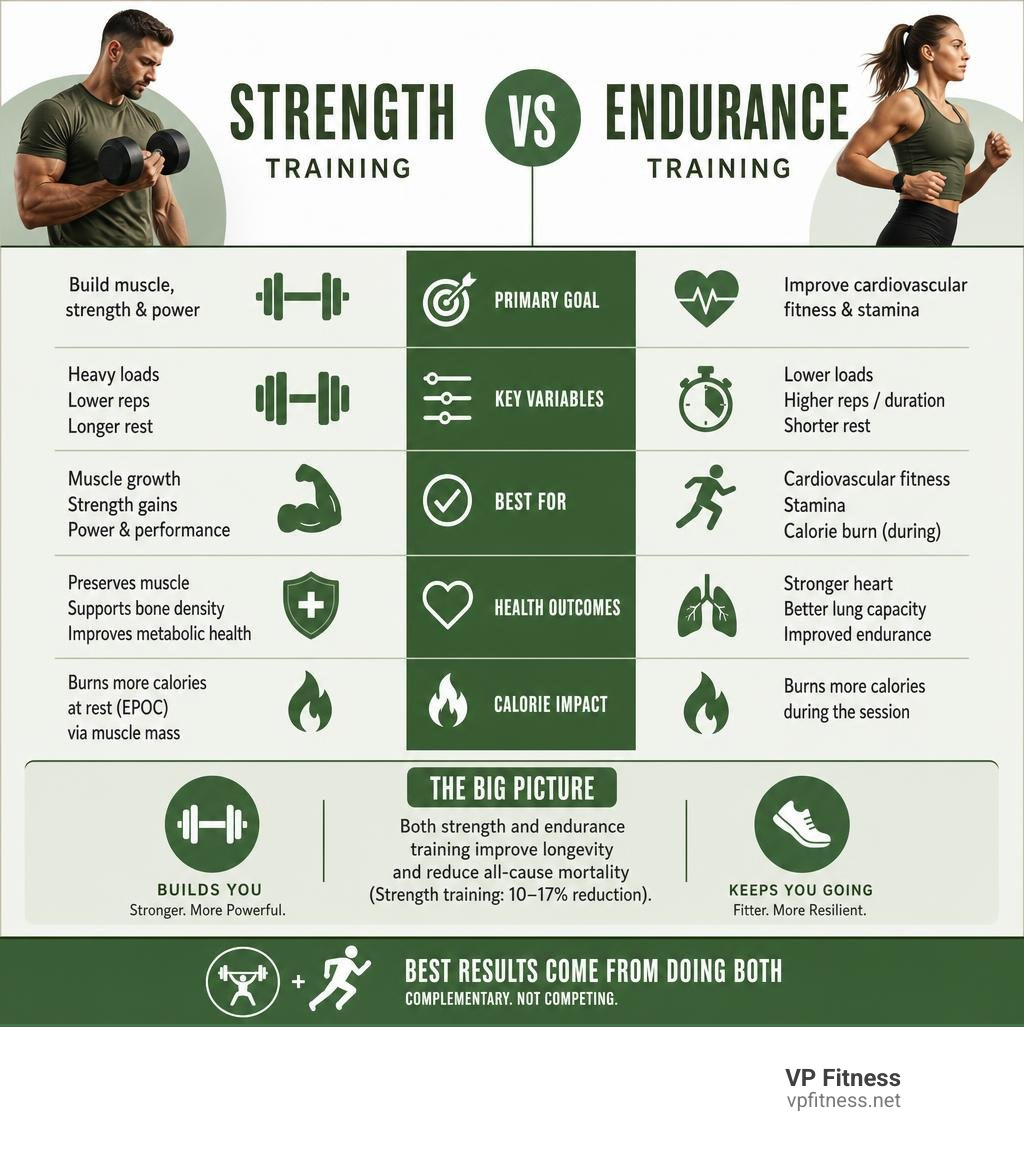
Strength vs endurance training terms to remember:
Physiological Differences: Strength vs Endurance Training
To truly grasp the debate of strength vs endurance training, we must look beneath the skin. The human body is incredibly adaptive, but it responds to the specific demands we place on it. When we lift a heavy barbell, we send a completely different biological memo to our cells than when we go for a five-mile run.

At the cellular level, these two modalities trigger distinct biochemical pathways. Strength training primarily stimulates myofibrillar hypertrophy. This is the biological process where mechanical tension and muscle damage signal the body to synthesize more contractile proteins (actin and myosin), thickening individual muscle fibers and increasing overall muscle cross-sectional area.
On the flip side, endurance training triggers mitochondrial biogenesis. Instead of making the muscles larger, endurance work signals our cells to produce more mitochondria—the powerhouses of the cell. This adaptation increases our muscles’ ability to generate adenosine triphosphate (ATP) through aerobic pathways, allowing us to sustain submaximal physical effort for much longer periods. For a deep dive into how these cellular shifts occur, you can read the Scientific research on training adaptations.
Muscle Fiber Recruitment and Neuromuscular Adaptations
The way our brain communicates with our muscles also differs dramatically between these two training types.
Our muscles are made up of motor units, which consist of a single motor neuron and the muscle fibers it innervates. When we perform high-resistance, low-repetition strength work (typically 1–5 reps at ~80–90% of our 1-repetition maximum, or 1RM), our brain increases its neural drive. This means it recruits high-threshold motor units that control Type II (fast-twitch) muscle fibers. These fibers are built for explosive, high-force production but fatigue very quickly.
Conversely, endurance training relies heavily on Type I (slow-twitch) muscle fibers. These fibers are highly resistant to fatigue and packed with capillaries, making them incredibly efficient at utilizing oxygen. When we run or cycle, our nervous system optimizes motor unit synchronization to rotate the workload among slow-twitch fibers, allowing us to keep moving for hours. If you want to explore how these neural pathways coordinate, check out More details on cardio and strength.
Energy Systems and Cardiovascular Capacity
The fuel our body uses depends entirely on the intensity and duration of the exercise.
- The Strength System (Anaerobic): During a heavy lift, the demand for energy is immediate and intense. Our body utilizes the ATP-PCr (phosphagen) system and anaerobic glycolysis. These pathways burn stored creatine phosphate and glucose without requiring oxygen, producing rapid energy but also generating metabolic byproducts (like hydrogen ions) that cause that familiar muscular burn.
- The Endurance System (Aerobic): During sustained cardio, our body relies on oxidative metabolism. This system uses oxygen to break down carbohydrates and fats into a steady stream of ATP.
Over time, consistent endurance training increases capillary density around our muscle fibers. This means more tiny blood vessels are constructed to deliver oxygen and sweep away lactic acid, shifting our lactate threshold so we can run faster and longer before fatiguing.
Athletic Performance and Body Composition Benefits
How do these physiological changes translate to real-world performance? Neither training style is inherently superior; rather, they serve different athletic functions.
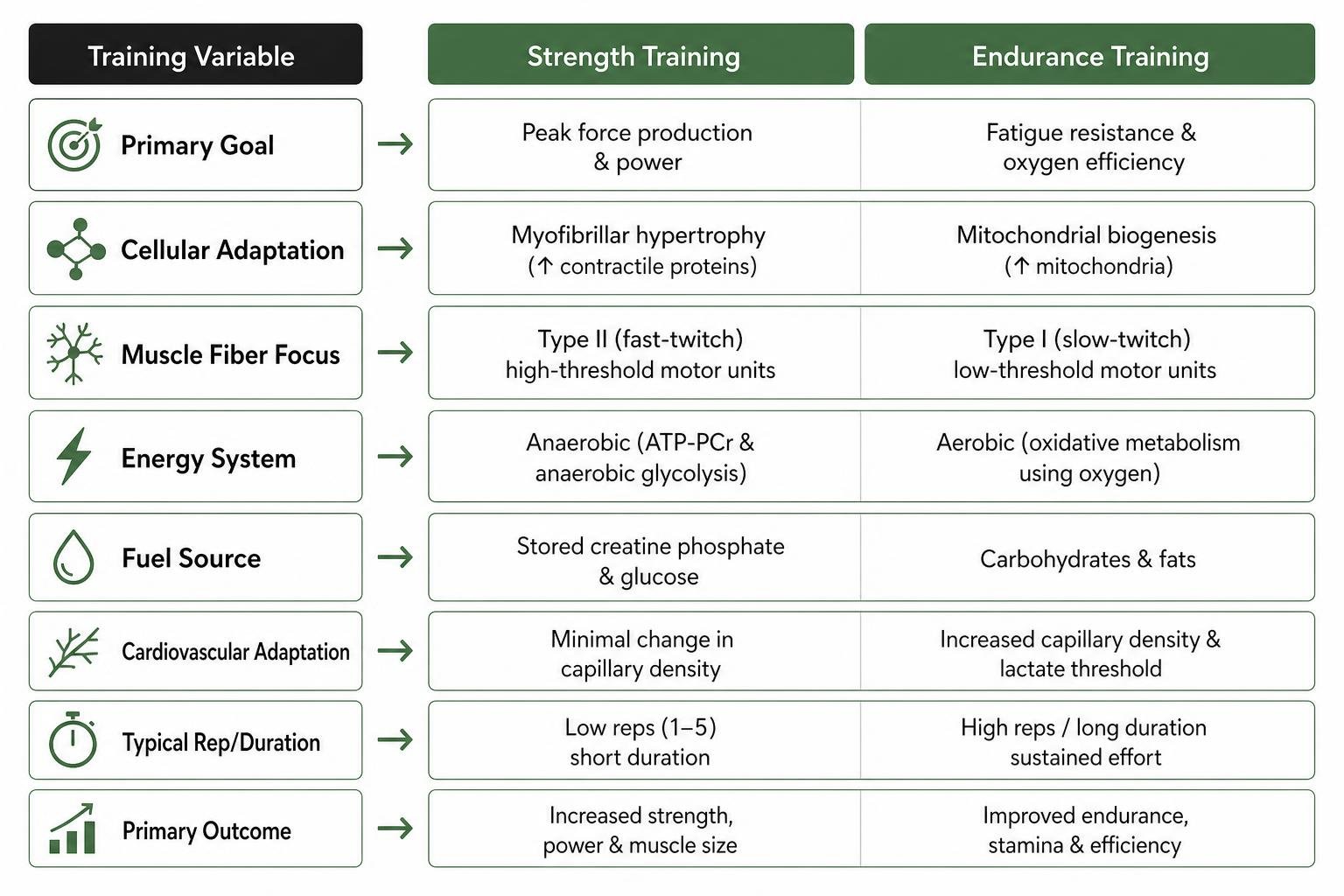
To compare the practical training variables of each modality:
| Training Variable | Strength Training | Endurance Training |
|---|---|---|
| Primary Goal | Peak force production & power | Fatigue resistance & oxygen efficiency |
| Typical Rep Range | 1–5 reps (Strength) / 6–12 (Hypertrophy) | 12–20+ reps or continuous activity |
| Intensity (% of 1RM) | 80–90% 1RM | <60% 1RM |
| Rest Intervals | 2–3 minutes (or up to 5 minutes) | 30–60 seconds (or continuous) |
| Key Performance Metric | 1RM, rate of force development | VO2 max, lactate threshold, critical speed |
For endurance athletes, incorporating strength work isn’t about building bulky muscle—it is about improving running economy and joint stability. Stronger muscles and stiffer tendons store and release elastic energy more efficiently, meaning a strong runner uses less oxygen at the same pace than a weaker runner. For strength athletes, a baseline of aerobic fitness improves recovery between heavy lifting sets by speeding up the replenishment of phosphocreatine stores.
How Strength vs Endurance Training Shapes Body Composition
If your goal is to change how your body looks and functions, both tools play vital roles, but they go about it in different ways.
Endurance training is a highly effective way to burn calories during the workout itself. However, once you stop running, your calorie burn quickly returns to baseline.
Strength training, on the other hand, is a long-term investment in your metabolism. First, building lean muscle mass increases your resting metabolic rate (RMR), meaning your body burns more calories 24/7 just to maintain that active tissue. Second, intense strength sessions trigger excess post-exercise oxygen consumption (EPOC). This “after-burn” effect can keep your metabolic rate elevated for up to 48 hours after your workout as your body works to repair muscle microtears. To see how these metabolic engines compare, read our Cardio vs strength training comparison.
Impact on Sleep, Stress, and Longevity
Beyond performance and aesthetics, your training choices directly dictate your healthspan.
Regular physical activity is a cornerstone of longevity, but combining resistance and aerobic work yields the best outcomes. Research indicates that strength training can reduce all-cause mortality by 10–17%, particularly in midlife and older populations.
When it comes to daily lifestyle markers:
- Sleep: While both exercise types improve rest, a 2022 study gave a slight edge to resistance training over cardio for improving sleep duration and overall sleep quality.
- Stress: Cardiovascular exercise is incredibly effective at burning off cortisol and delivering immediate stress relief, while strength training provides a massive boost to self-esteem and functional confidence.
To understand why a balanced approach is your best defense against chronic disease, read the Cleveland Clinic insights on cardio and strength as well as our guide on the Importance of strength for long-term health.
Designing a Periodized Program: Combining Both Safely
If both modalities are so beneficial, why not just lift heavy and run long every single day?
Because of a physiological roadblock known as the interference effect.

When we try to maximize both strength and endurance simultaneously without a plan, our body receives conflicting signals. This is called concurrent training, and without proper periodization, it can result in plateaued progress or overtraining.
Managing the Interference Effect in Concurrent Training
At the molecular level, strength training activates the mTOR pathway, which promotes protein synthesis and muscle growth. Endurance training, however, activates the AMPK pathway, which focuses on energy conservation and mitochondrial growth. AMPK can actually inhibit mTOR, meaning excessive cardio can blunt your muscle-building signals if not managed correctly.
To minimize this interference, we must be smart about session sequencing and recovery timelines:
- Separate High-Intensity Sessions: Try to keep intense strength workouts and heavy cardio sessions on separate days. If you must do them on the same day, separate them by at least six hours.
- Prioritize Your Main Goal: If you are training both in one session, perform your primary focus first. If your goal is strength, lift weights first while your nervous system is fresh. If your goal is cardiovascular conditioning, do your run first.
- Keep Easy Cardio Easy: Perform the majority of your endurance work at a low intensity (Zone 2) to build your aerobic base without generating excessive muscular fatigue.
To understand how to balance these high-intensity demands, read up on Strength training vs high-intensity cardio and explore the latest Research on training sequence.
Seasonal Prioritization and Weekly Scheduling
The most effective way to avoid the interference effect over the course of a year is through periodization. Instead of trying to peak in both qualities at once, athletes shift their focus depending on the season.
- Off-Season: Prioritize building maximum strength, correcting muscle imbalances, and increasing hypertrophy. Keep endurance training to a baseline maintenance level.
- Mid-Season / Pre-Competition: Shift focus toward sport-specific endurance and metabolic conditioning while dialing back the lifting volume to a maintenance routine.
- In-Season: Focus on performance recovery and maintaining the baselines built during the off-season.
For general fitness enthusiasts, a balanced weekly hybrid routine might look like this:
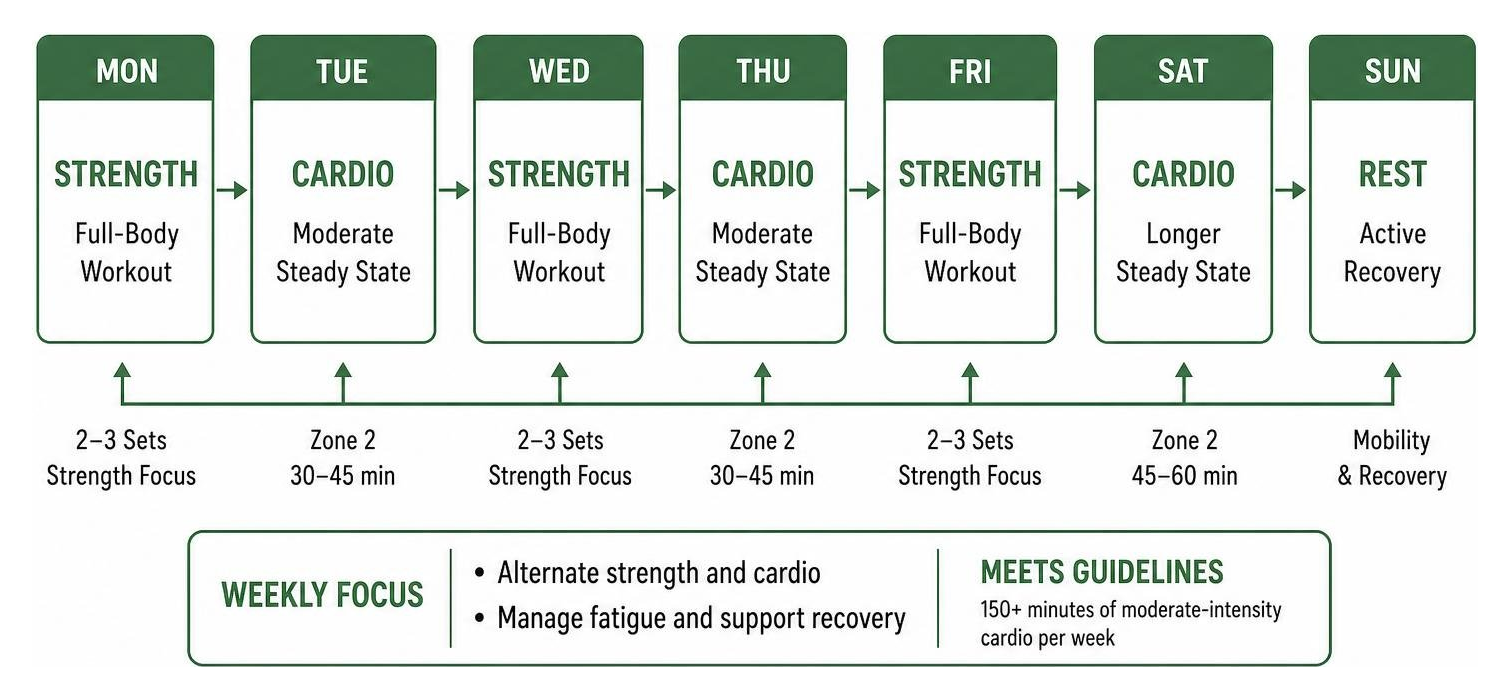
This structure easily meets the public health guidelines of at least 150 minutes of moderate-intensity cardio per week, paired with two full-body strength sessions.
Preserving Muscle Function and Neuromuscular Health in Older Adults
As we age, our physical priorities naturally shift from setting personal records to maintaining independence, mobility, and metabolic health. Here, the choice of strength vs endurance training becomes a vital health decision.
Aging brings a natural decline in muscle mass, a condition known as sarcopenia, alongside a drop in cardiorespiratory capacity. To combat these declines, we must look at how different exercise modalities preserve our physical structure. For a deeper look at this, read about Longevity and training benefits.
Combating Sarcopenia with Strength vs Endurance Training
The loss of muscle tissue during aging does not happen uniformly. Sarcopenia primarily targets our Type II (fast-twitch) muscle fibers—the very fibers responsible for explosive power, balance recovery, and quick reactions.
A landmark study evaluating masters athletes highlighted the powerful role of mechanical loading in halting this decline. Older adults who engaged in consistent strength training preserved a significantly higher percentage of Type II muscle fibers (41%) compared to their endurance-trained peers (34%) and recreationally active older controls (30%).
This means that while running keeps your heart healthy, it cannot prevent the age-related loss of muscle power. Mechanical loading through resistance training is absolutely essential to maintain bone density, preserve joint integrity, and prevent falls. To read the full breakdown of this research, check out the Study on muscle longevity in aging.
Neuromuscular Connectivity and VO2 Max in Aging
While strength training takes the crown for muscle preservation, endurance training is the undisputed king of cardiovascular longevity.
Our VO2 max—the maximum amount of oxygen our body can use during intense exercise—is one of the strongest predictors of all-cause mortality. In the same study of older adults:
- Older Endurance Athletes: Achieved an average VO2 max of 47.5 ml/kg/min, vastly outperforming their strength-trained peers (33.2 ml/kg/min) and active controls (35.2 ml/kg/min).
- The Age Gap: For context, younger, moderately active adults averaged 63.1 ml/kg/min, showing that while aging does decrease cardiovascular capacity, consistent endurance training keeps your heart decades younger.
Furthermore, endurance training helps preserve the nervous system. Older endurance athletes show a lower presence of “nuclear clumps” (markers of neuromuscular denervation), suggesting that steady-state cardio protects the neural pathways connecting our brain to our muscles.
Testing, Tracking, and Common Mistakes to Avoid
To ensure your hybrid training program is actually working, you need reliable ways to track progress and avoid common training traps.
Methods for Testing Progress
You cannot manage what you do not measure. Use these simple, evidence-based methods to track both sides of your fitness:
- Strength Metrics: Avoid testing your absolute 1RM too often, as it places high stress on your joints. Instead, use a 3RM or 5RM test and use a standard calculator to estimate your 1RM. Alternatively, track your working weight for a specific rep range (e.g., if your 8-rep squat increases from 135 lbs to 155 lbs, you have gotten stronger).
- Endurance Metrics: Track your resting heart rate (a lower resting heart rate indicates a stronger, more efficient heart). For performance, use a timed 3 km or 5 km run to calculate your critical speed, or use a wearable fitness tracker to estimate your VO2 max over time.
Common Pitfalls in Hybrid Routines
When trying to master both worlds, watch out for these four common mistakes:
- Overtraining and Under-recovering: Trying to run high weekly mileage while lifting heavy four days a week is a recipe for burnout. You must balance your training volume.
- Neglecting Nutrition: Strength adaptations require adequate protein (~1.6 to 2.2 grams of protein per kilogram of body weight daily) to repair muscle microtears, while long endurance sessions require plenty of carbohydrates to replenish glycogen stores.
- Poor Sequencing: Doing a grueling lower-body leg day immediately before a hard interval run will ruin your running form and increase your risk of injury.
- Ignoring Joint Mobilization: Both heavy lifting and repetitive running can tighten muscles and stiffen joints. Dedicate time to mobility work to keep your movement patterns clean.
Frequently Asked Questions about Strength and Endurance
Does cardio kill my strength gains?
Only if you program it poorly. While excessive, high-volume endurance work can interfere with muscle growth (the interference effect), moderate cardio (2–3 sessions of 20–30 minutes per week) will actually support your lifting by improving your aerobic recovery capacity and heart health.
Which is better for fat loss: lifting or running?
A combination of both is ideal. Running burns more calories minute-for-minute during the workout. However, lifting weights builds muscle mass, which raises your resting metabolic rate, and triggers a post-workout calorie burn (EPOC) that lasts for up to 48 hours. For the best results, use a hybrid approach.
How long does it take to see adaptations from each training style?
Neural adaptations—such as your brain becoming more efficient at recruiting muscle fibers—can make you feel stronger within just a few weeks of starting a strength routine. Muscular hypertrophy (actual muscle growth) and endurance-based mitochondrial adaptations typically take about six weeks of consistent training to become physically noticeable.
Conclusion
At the end of the day, the strength vs endurance training debate shouldn’t be about choosing one over the other. To achieve true peak performance, protect your joints, keep your heart healthy, and live a long, active life, you need a smart combination of both.
By taking the guesswork out of this balance, you can design a personalized fitness and nutrition plan tailored to your unique goals, lifestyle, and structural needs.
Ready to stop guessing and start performing at your absolute best? Schedule a personal training session today, and let’s build your ultimate hybrid routine.