

Pill Power: Unlocking Your Muscle Potential with Supplements

Why a Supplement for Muscle Growth Makes Sense (But Isn’t Magic)
Supplement for muscle growth can give you an edge, but they’re not miracle pills. Here are the most effective options backed by science:
Top 5 Muscle-Building Supplements:
- Creatine Monohydrate – Increases strength and muscle mass by 2-4 pounds in 4-12 weeks
- Protein Powder – Provides essential amino acids for muscle repair and growth
- Beta-Alanine – May help increase muscle mass when combined with exercise
- HMB – Reduces muscle breakdown, especially beneficial for beginners
- Complex Carbohydrates – Fuel workouts and support muscle glycogen stores
Walk into any supplement store and you’ll see countless products promising ripped muscles and god-like physiques. The truth? Most of your results come from consistent training and proper nutrition. But the right supplements can absolutely accelerate your progress when used strategically.
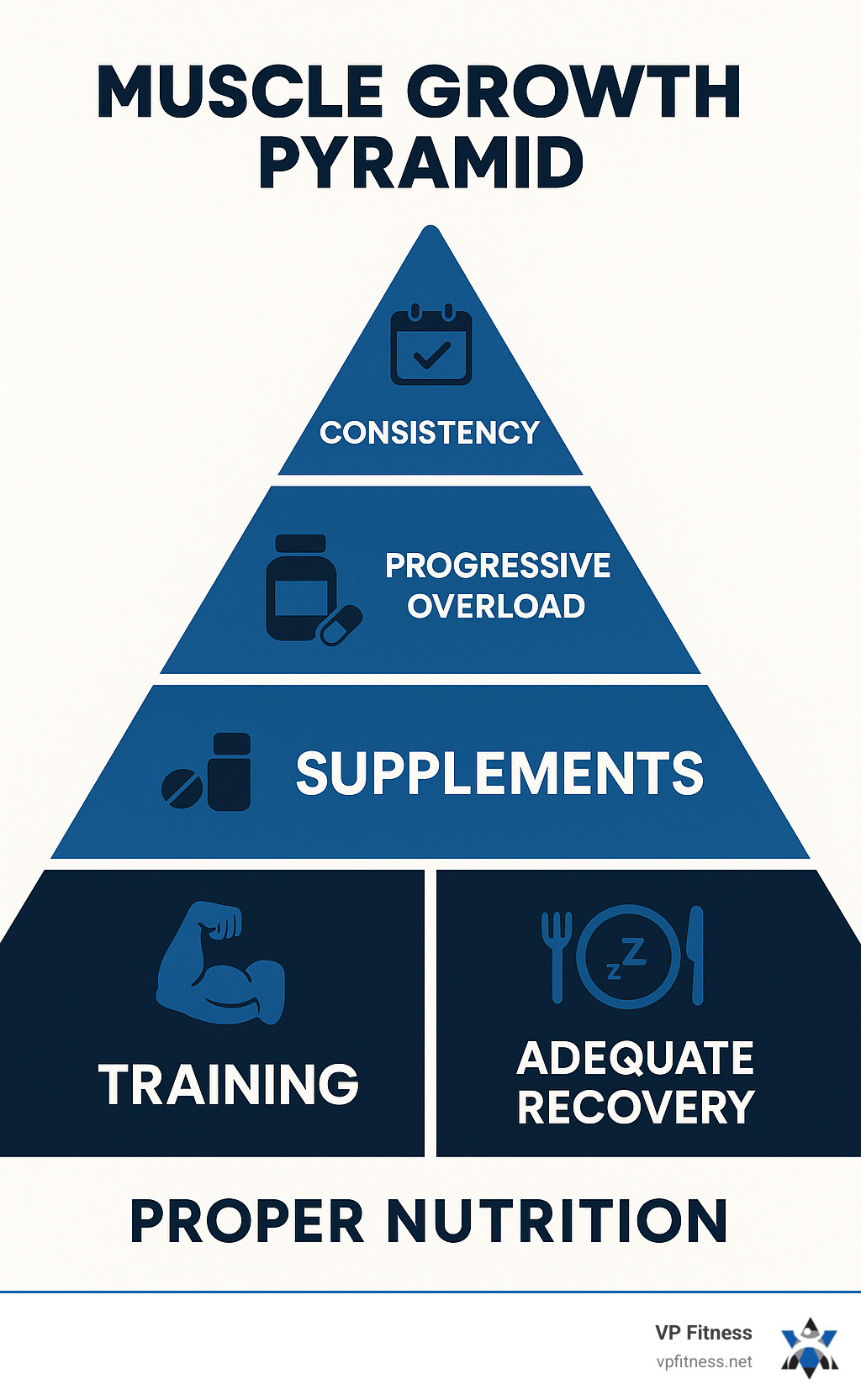
Supplements work best when you’ve got the basics covered first. That means eating enough protein (at least 1.7g per kg of body weight for strength athletes), following a challenging exercise program, and getting adequate recovery. Think of supplements as the cherry on top, not the foundation.
The research is clear on a few key players. Creatine can help you gain an extra 2-4 pounds of muscle mass during 12 weeks of regular exercise compared to training alone. Protein powder makes hitting your daily targets convenient. And emerging evidence suggests compounds like beta-alanine and HMB may offer additional benefits for specific populations.
I’m Joseph DePena, a fitness entrepreneur who’s been helping clients optimize their supplement for muscle growth strategies since 2011. Through years of hands-on experience with athletes and busy professionals, I’ve learned which supplements actually move the needle and which ones are just expensive marketing hype.
The “Big Three”: Foundational Supplements for Muscle Growth
When it comes to building muscle, you’re essentially trying to create a process called muscle hypertrophy – where your muscle cells actually grow bigger. This happens when your body builds new muscle protein faster than it breaks down the old stuff. It’s like having a construction crew working overtime while the demolition team takes a coffee break.
To make this magic happen, you need to create what we call an anabolic state – basically putting your body in “growth mode.” While resistance training is what kicks this whole process into gear, the right supplement for muscle growth acts as high-quality fuel that works hand-in-hand with your workouts.
Think of it this way: you can build a house with basic tools, but having the right equipment makes the job faster and the results better. That’s exactly what these three foundational supplements do for your muscles.
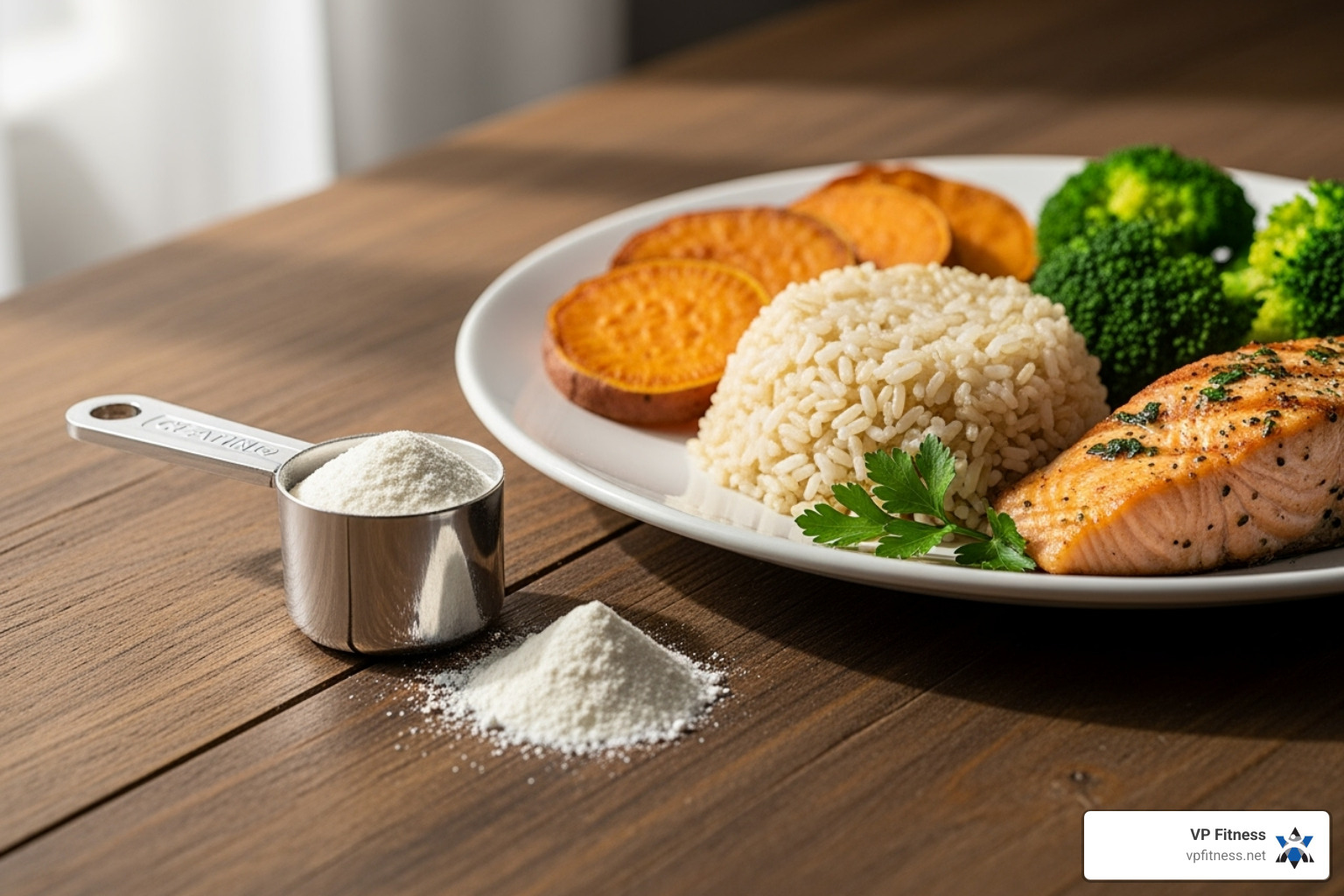
Protein Powder: The Essential Building Blocks
If your muscles were a house under construction, protein would be the bricks. Without enough bricks, you’re not building much of anything, no matter how motivated your construction crew is.
Here’s what happens during your workout: you create tiny tears in your muscle fibers (don’t worry, this is good!). Your body then uses amino acids – the smaller building blocks that make up protein – to repair these tears. But here’s the kicker: your body doesn’t just patch things up. It actually builds the muscle back bigger and stronger than before.
Whey protein is like the speed demon of the protein world. It digests fast and gets to work quickly, making it perfect right after your workout. Casein protein is more like the night shift worker – it digests slowly and keeps feeding your muscles while you sleep. And if you’re plant-based, don’t worry – plant-based proteins from pea, rice, or hemp can do the job just as well.
You can get all your protein from chicken, fish, eggs, and other whole foods. But let’s be honest – sometimes you need convenience. After a tough workout, blending up a protein shake is a lot easier than cooking a full meal.
For muscle repair and growth, aim for about 1.7 grams of protein per kilogram of body weight daily if you’re serious about strength training. That’s roughly 0.8 grams per pound. Try to get 20-40 grams within an hour after your workout to really kickstart that recovery process.
Creatine Monohydrate: The Power and Performance King
If protein is your bricks, then creatine is like having a turbocharged power drill instead of a manual screwdriver. It makes everything work faster and more efficiently.
Your body already makes creatine naturally, and you get some from red meat. But supplementing gives you a serious edge. Creatine works with your ATP energy system – think of ATP as your muscles’ immediate energy currency. When you lift heavy or sprint hard, creatine helps regenerate this energy super quickly.
The benefits are pretty impressive. Increased strength is usually the first thing people notice – you might add an extra rep or two to your sets within the first week. Creatine also pulls water into your muscle cells, which isn’t just “water weight” – this cellular swelling actually signals growth and gives you that fuller, more pumped look.
There’s also some cool science showing creatine might boost IGF-1, a hormone that plays a role in muscle growth. Plus, it speeds up recovery between sets and between workouts, so you can train harder more often.
The research on creatine is rock solid. People typically gain an extra 2-4 pounds of muscle during 12 weeks of training compared to those not taking it. It’s also incredibly safe – the most common “side effect” is gaining a few pounds from water retention, which is actually a sign it’s working. You can dive deeper into the scientific research on creatine’s safety and efficacy if you’re curious.
Five grams daily is the sweet spot for most people. And since creatine pulls water into your muscles, make sure you’re drinking plenty of water throughout the day.
Carbohydrates: The Overlooked Anabolic Fuel
While everyone obsesses over protein, carbohydrates are quietly doing some heavy lifting in the muscle-building department. They’re like the fuel truck that keeps your construction site running.
After a hard workout, your glycogen stores (that’s stored carbs in your muscles) are basically empty. Refilling these tanks isn’t just about having energy for tomorrow’s workout – it’s crucial for recovery today.
Carbs also trigger an insulin response, and while insulin gets a bad rap sometimes, it’s actually your friend when building muscle. Insulin helps shuttle nutrients into your muscle cells and puts the brakes on muscle breakdown. It creates a more anabolic environment where growth can happen.
For serious lifters, you’ll want about 3-5 grams of carbs per kilogram of body weight daily. If you’re really pushing hard or trying to bulk up, that might go as high as 7 grams per kilogram. Don’t fall for the anti-carb hype – your muscles need this fuel to perform and grow.
The key is choosing quality sources most of the time: oats, rice, sweet potatoes, fruits, and vegetables. These give you steady energy and support your training goals. For more ideas on fueling your workouts effectively, check out these best foods to fuel your workout.
The best supplement for muscle growth is the one you actually use consistently alongside proper training and nutrition. These three form the foundation that everything else builds on.
The Supporting Cast: Other Effective Muscle-Building Aids
Once you’ve got your foundation solid with protein, creatine, and carbs, you might wonder what else could give you an edge. Think of these next supplements as your supporting actors – they’re not the stars of the show, but they can definitely help you perform better and recover faster.
The good news? There are some promising options backed by real research. The reality check? Most of these work best when you’ve already nailed the basics we covered earlier.
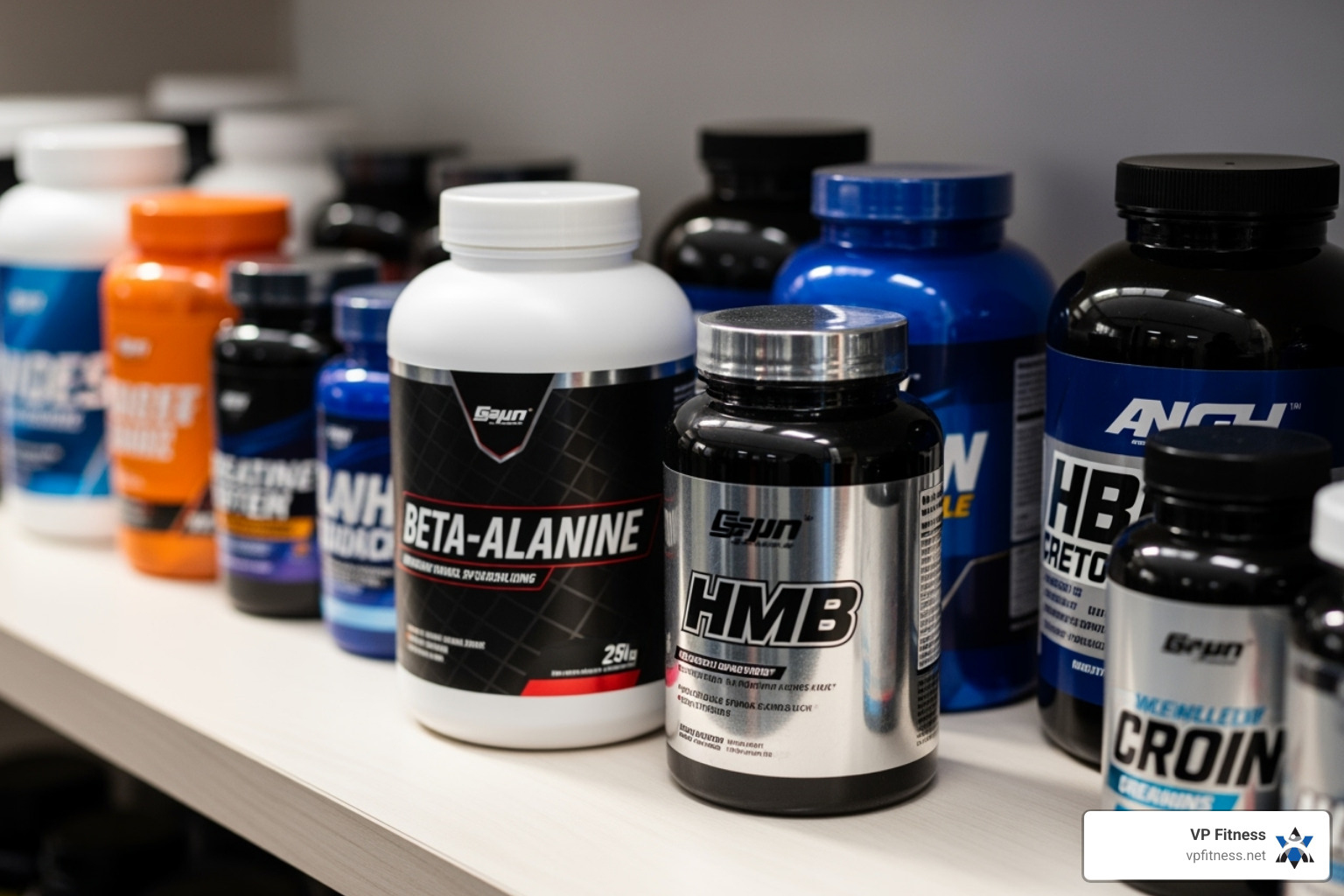
Beta-Alanine: For Pushing Past the Burn
You know that burning feeling when you’re grinding through your final reps? That’s your muscles screaming about lactic acid buildup. Beta-alanine might just be your secret weapon against that burn.
Here’s how it works: Beta-alanine boosts carnosine levels in your muscles. Carnosine acts like a buffer, soaking up that lactic acid and helping you push through when your muscles want to quit. It’s especially helpful during those brutal 60-second to 4-minute sets that really test your limits.
Now, beta-alanine won’t directly pack on muscle mass like protein does. But it can help you squeeze out those extra reps and extend your training volume – and that extra work is what builds muscle over time. Some research even suggests it may help increase muscle mass when combined with a solid exercise program.
The catch? The research on body composition changes is still mixed. If you’re someone who consistently hits failure during high-intensity training, beta-alanine could be worth trying. For a deeper look at what the science says, check out this conflicting research on body composition.
HMB (Beta-Hydroxy Beta-Methylbutyrate): Best for Beginners?
HMB has an interesting backstory – it’s actually a byproduct that your body makes when it breaks down leucine, one of those crucial amino acids we talked about earlier. But unlike other muscle-building supplements that focus on building new tissue, HMB’s main job is playing defense. It helps reduce muscle protein breakdown.
This makes HMB particularly interesting if you’re just starting your fitness journey. Research shows that HMB as a supplement for muscle growth works best for people who are new to weight training or dramatically ramping up their workout intensity. For beginners, it can help protect the muscle you have while you’re building new muscle.
But here’s the honest truth: if you’re already an experienced lifter making consistent gains, HMB probably won’t move the needle much for you. Your body has already adapted to training stress, so the protective benefits aren’t as pronounced.
Think of HMB as training wheels for your muscles – really helpful when you’re learning to ride, but less necessary once you’ve got your balance.
Differentiating Your Supplement for Muscle Growth vs. Pain Relief
This is where things get confusing for a lot of people. There’s a big difference between supplements that actually help you build muscle and those that help you feel better while training. Both have their place, but they serve completely different purposes.
True muscle-building supplements work on the anabolic side – they either provide raw materials for growth (like protein), fuel your performance (like creatine), or help you train harder (like beta-alanine). These directly impact your ability to grow muscle tissue.
Recovery and pain relief supplements work on the anti-inflammatory side. They help manage soreness, reduce joint pain, and keep you moving comfortably. While this indirectly supports your training by keeping you consistent, they’re not directly building muscle.
Turmeric is a perfect example of the recovery category. Its active compound, curcumin, is fantastic for reducing inflammation and helping you bounce back from tough workouts. But it won’t add muscle mass the way creatine does.
Fish oil falls into the same camp. Those omega-3 fatty acids are incredible for joint health and reducing exercise-induced inflammation, but they’re not going to show up as extra muscle in the mirror.
Collagen is another popular choice that people often misunderstand. It’s great for joint health and may help with muscle soreness, but research shows it doesn’t pack on muscle mass like whey protein does. You can read more about collagen for joint pain and muscle soreness to understand its specific benefits.
The key is knowing what you’re trying to achieve. If your joints are screaming and keeping you out of the gym, anti-inflammatory supplements might be exactly what you need. But if your goal is adding muscle mass, stick with the proven muscle builders we’ve discussed.
Both types of supplements can absolutely have a place in your routine – just make sure you understand what each one actually does for you.
Your Personal Guide to Choosing a Supplement for Muscle
Walking into the supplement aisle can feel overwhelming. Rows of colorful bottles make bold promises about instant gains and superhuman strength. But here’s the truth: choosing the right supplement for muscle growth doesn’t require a PhD in biochemistry. It just takes some smart detective work and honest self-reflection.
How to Choose the Right Supplements for Your Fitness Goals
Before you spend a penny, get crystal clear on what you want to achieve. Are you chasing mass gains where you want to see the scale move up and your shirts get tighter? Or are you more focused on pure strength where you want to hit new personal records in the gym? Maybe you’re somewhere in between. Your goals completely change which supplements deserve your money.
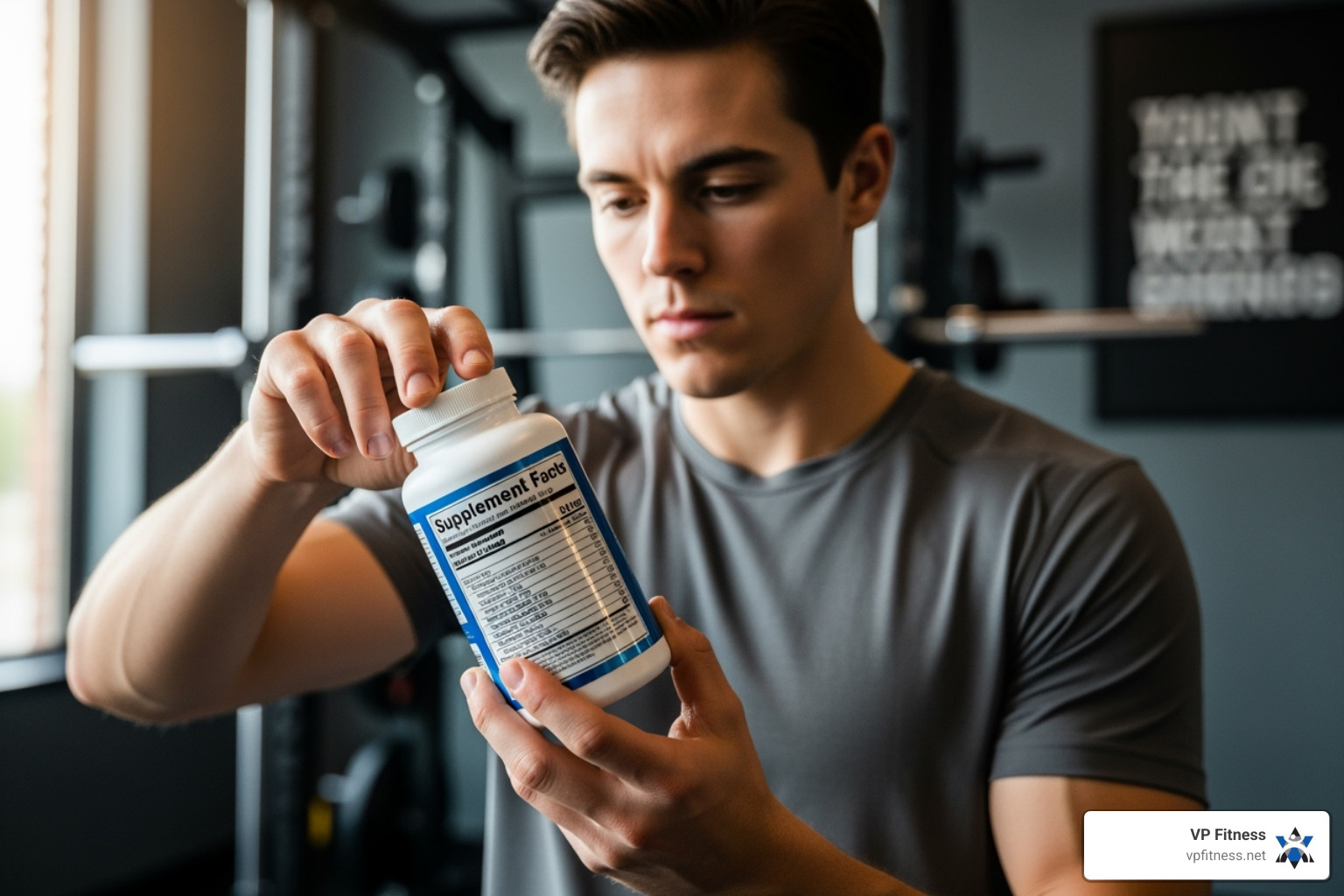
Once you know where you’re headed, it’s time to become a label-reading detective. The supplement facts panel tells the real story, not the flashy marketing on the front. Look for transparency first. If a company won’t tell you exactly what’s in their product and how much, that’s a red flag. Those mysterious “proprietary blends” are often code for “we put in the cheapest possible amounts.”
What you really want are clinically effective doses. This isn’t just fancy marketing talk. It means the ingredients are present in amounts that actual scientific studies have shown to work. Too many supplements contain what we call “pixie dust” amounts – just enough to list the ingredient but nowhere near enough to do anything useful.
Third-party testing is your safety net. Since the FDA doesn’t regulate supplements like prescription drugs, quality can be all over the map. Look for seals from independent testing companies like NSF Certified for Sport or Informed-Sport. These verify that what’s on the label is actually in the bottle, and that it’s free from harmful contaminants or banned substances. For research-based information on supplements, the NCCIH resources for checking efficacy provide unbiased, science-backed guidance.
Here’s something I always tell my clients: never start a new supplement without talking to a healthcare provider first. They can spot potential interactions with medications you might be taking and make sure the supplement makes sense for your individual health situation.
Special Considerations: A Supplement for Muscle in Women and Older Adults
Muscle building isn’t just for twenty-something guys trying to get jacked. As we age, maintaining muscle becomes crucial for staying independent, preventing falls, and just feeling strong in our daily lives. This process of age-related muscle loss, called sarcopenia, can start as early as our thirties.
Women often get shortchanged in supplement research, but the data we do have is encouraging. Creatine for women is particularly interesting because females typically have much lower natural creatine stores – about 70% to 80% lower than men. This means women might actually see bigger improvements from supplementation. Beyond muscle gains, creatine may help with bone density, mood, and even sleep quality, especially during hormonal changes.
For older adults, creatine offers benefits that go way beyond the gym. Studies suggest it might help with brain function, improving short-term memory and reasoning in people over 60. It may even benefit those dealing with neurodegenerative diseases, osteoarthritis, or fibromyalgia.
Leucine supplementation deserves special mention for older adults. This amino acid is like a key that open ups muscle protein synthesis. As we age, our bodies become less responsive to protein, so ensuring adequate leucine intake becomes even more important. Research on the Safety of Leucine in the elderly shows it’s generally safe and effective for maintaining muscle mass.
The key is that dosage adjustments matter. What works for a 25-year-old athlete might be too much or too little for a 55-year-old getting back into fitness. This is why a personalized approach is so important – your supplement strategy should be as unique as you are.
Understanding Potential Benefits and Risks
Let’s cut through the fear-mongering and the hype to talk honestly about safety. Most common muscle-building supplements are remarkably safe when used properly, but like anything, they’re not risk-free.
Creatine is probably the most studied supplement on the planet, and it’s consistently shown to be safe for healthy people. Yet myths persist – like the idea that it destroys your kidneys. For people with normal kidney function, decades of research show this simply isn’t true. However, if you have pre-existing kidney disease, liver problems, or other medical conditions, you absolutely need to check with your doctor first.
One real consideration with creatine is dehydration risk. Since it pulls water into your muscles (which is part of how it works), you need to drink more water when you’re using it. This isn’t complicated – just pay attention to your thirst and keep a water bottle handy.
Proper dosage matters more than you might think. More isn’t always better. Taking excessive amounts of protein powder, for example, can cause digestive issues. In extreme cases with ridiculously high intake over long periods, it could stress your kidneys or liver. But we’re talking about amounts way beyond what any reasonable person would take.
Here’s the reality about FDA regulation: supplements aren’t held to the same standards as prescription drugs. This puts the responsibility on you to choose wisely. Stick with reputable brands that voluntarily submit to third-party testing. This protects you from contamination issues like heavy metals in cheap protein powders or undisclosed stimulants in pre-workout formulas.
The goal isn’t to avoid all risk – it’s to make informed decisions that maximize benefits while keeping risks minimal. That’s exactly why professional guidance makes such a difference in your supplement strategy.
Frequently Asked Questions about Muscle Supplements
The world of muscle supplements can feel overwhelming, and that’s completely normal! We field questions about supplement for muscle growth every single day. Let’s clear up the confusion with straight answers to the questions we hear most often.
Are muscle-building supplements necessary to see results?
Here’s the truth that might surprise you: absolutely not! You can build impressive muscle without ever opening a supplement bottle. The real magic happens in the gym with consistent resistance training, in the kitchen with proper nutrition, and in your bedroom with quality sleep.
That said, a well-chosen supplement for muscle growth can give you a meaningful edge. Think of supplements as the difference between a good car and one with premium upgrades – you’ll reach your destination either way, but the improved version might get you there faster and more comfortably.
The convenience factor alone makes supplements valuable for many people. Hitting your daily protein targets becomes much easier when you can blend up a quick shake instead of cooking another chicken breast. Plus, supplements can help you push harder in workouts, recover faster between sessions, and maintain consistency when life gets hectic.
Diet and training are your foundation. Supplements are the support system that helps you build higher on that foundation.
How long does it take for muscle supplements to work?
This question always makes me smile because everyone wants to know when they’ll see their biceps magically grow overnight. The reality is much more nuanced, and understanding the timeline helps set proper expectations.
Creatine delivers the fastest results you’ll notice. Within the first week, you might feel stronger during your workouts. Those extra reps you couldn’t squeeze out before? Suddenly they’re possible. Research shows measurable muscle mass gains of 2-4 pounds typically occur within 4-12 weeks of consistent creatine use.
Protein powder works differently. It’s not about immediate effects – it’s about providing your muscles with consistent building blocks day after day. You won’t wake up bigger tomorrow, but over weeks and months, that steady supply of amino acids supports the muscle repair and growth process.
Other supplements have their own timelines. HMB might take a few weeks to show benefits, especially if you’re new to training. Beta-alanine’s effects on endurance can become noticeable within 2-4 weeks of consistent use.
The golden rule? Consistency beats everything. Supplements work best when they’re part of a steady routine, not used sporadically when you remember.
Can I take multiple supplements at once?
Yes, and many people do this successfully! Supplement stacking is incredibly common, and certain combinations work beautifully together. Protein powder and creatine make an excellent foundational pair – one provides the building blocks while the other improves your ability to build with them.
Smart stacking requires attention to detail. Always check labels to avoid getting too much of the same ingredient from multiple products. Introduce new supplements one at a time so you can see how your body responds. And remember, more isn’t automatically better – stick to recommended dosages.
Some supplements benefit from cycling. While you can take protein powder and basic creatine indefinitely, certain performance improvers work best when used in cycles (like 8-12 weeks on, 4 weeks off) to maintain their effectiveness.
The most important advice? Consult with a healthcare professional before combining multiple supplements, especially if you have health conditions or take medications. They can help you create a safe, effective combination custom to your specific needs and goals.
Personalized nutrition guidance can help you steer these decisions, ensuring every supplement for muscle choice supports your individual fitness journey.
Conclusion: Open uping Your Potential with a Smart Strategy
Building muscle isn’t about finding a magic bullet or chasing the latest fad. It’s about taking a holistic approach where every piece works together like a well-oiled machine. Think of it this way: your training program is the engine, proper nutrition is the fuel, and recovery is the maintenance that keeps everything running smoothly. A thoughtfully chosen supplement for muscle growth? That’s your turbo boost – giving you that extra edge to push harder, bounce back faster, and build more efficiently.
Here’s what we’ve learned: training and nutrition come first, always. No supplement can replace consistent workouts or a balanced diet rich in protein. But when you’ve got those fundamentals locked down, the right supplements can absolutely accelerate your progress. Whether it’s creatine helping you squeeze out those last few reps, protein powder making it easier to hit your daily targets, or beta-alanine helping you push through the burn, these tools can make a real difference.
We’ve seen how powerful this approach can be. We believe in making smart choices rather than throwing money at every shiny bottle on the shelf. That’s why the focus should be on individualized training and nutrition guidance – because what works for your gym buddy might not be the best fit for you. We’re here to help you cut through the marketing noise, understand which supplements actually make sense for your goals, and show you how to use them safely as part of a bigger picture.
The truth is, your muscle-building potential is already inside you. It just needs the right strategy to open up it. Don’t just train hard; train smart. Fuel your body with intention, prioritize your recovery like it’s part of your workout, and consider supplements as the strategic finishing touch they’re meant to be.
Ready to take your fitness journey to the next level? Consider personalized nutrition and training plans to help you build not just the physique you want, but the knowledge and habits that will keep you strong for life. Because at the end of the day, the best supplement for muscle growth is a plan that works for you – and the guidance to make it happen.