

The Secret Sauce: Decoding the Private Gym Phenomenon

The Secret Sauce: Decoding the Private Gym Phenomenon
What Makes a Gym “Private” — and Why It Matters for Your Fitness
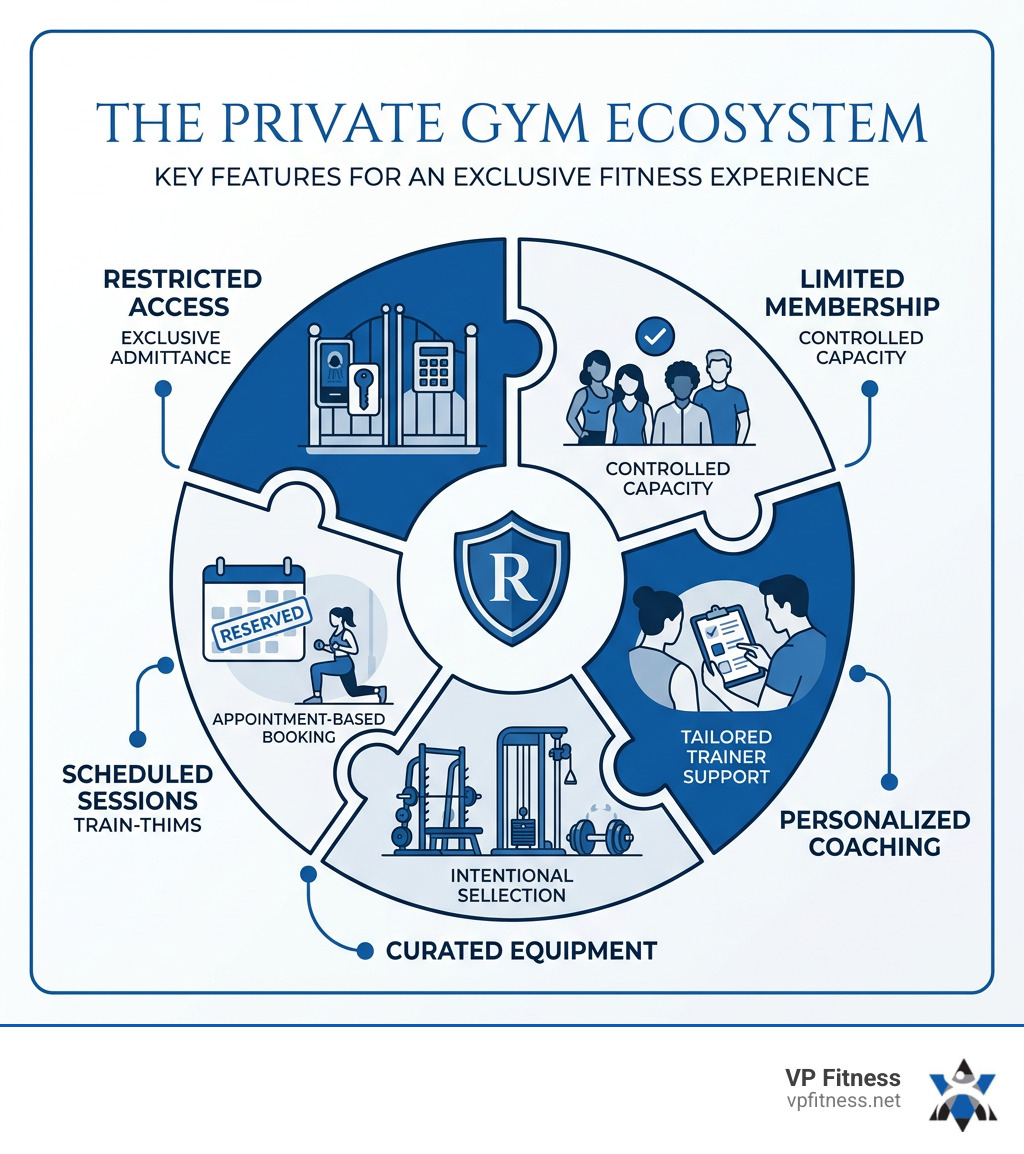
What makes a gym private comes down to a few core features that separate it from the typical commercial fitness center:
| Feature | What It Means |
|---|---|
| Restricted access | Not open to the general public; requires membership, invitation, or vetting |
| Limited membership | Fewer members means less crowding and more equipment availability |
| Personalized coaching | Trainers know your name, goals, and program — not a one-size-fits-all approach |
| Curated environment | Intentional equipment selection, clean spaces, and distraction-free design |
| Appointment-based or capped sessions | Scheduled access ensures you never wait for a machine |
In short, a private gym is a fitness facility designed around quality of experience rather than volume of members.
If you’ve ever fought for a bench during the 5pm post-work rush, or waited 20 minutes for a single piece of equipment, you already understand the problem private gyms are built to solve. The frustration is real — and it’s one of the main reasons more fitness-focused professionals are making the switch to more exclusive training environments.
I’m Joseph DePena, a master trainer with over a decade of experience helping clients understand what makes a gym private — and how the right environment directly impacts results. That experience shapes everything you’ll read in this guide.
What makes a gym private definitions:
Defining the Experience: What Makes a Gym Private?
When we talk about what makes a gym private, we aren’t just talking about a locked door. It is an entire business philosophy that inverts the traditional “big-box” model. In a commercial gym, the goal is often to sign up as many people as possible, banking on the fact that most won’t show up. In a private facility, the goal is to have a small, highly engaged group of members who use the space consistently.

One of the primary drivers of this experience is membership caps. By strictly limiting the number of active members, we ensure that the floor never feels like a “circus.” This exclusivity is often maintained through vetting processes or tours. We want to ensure that every member respects the equipment and the environment, creating a culture of mutual accountability.
Furthermore, many private facilities utilize appointment-based scheduling. This doesn’t mean you can’t work out; it means the facility tracks how many people are on the floor at any given time to prevent overcrowding. This level of intentionality is reflected in gym industry statistics, which show a massive rise in boutique and private centers as people flee the frustrations of public facilities. For a deeper dive into these specifics, you can find more info about private gyms on our dedicated guide.
The Core Elements of What Makes a Gym Private
At its heart, what makes a gym private is the feeling of entering a “sanctuary.” It is a boutique atmosphere where the staff knows your name, your fitness history, and even your favorite post-workout smoothie flavor.
- Restricted Access: You won’t find “day pass” crowds or large groups of teenagers hovering around the machines. Access is reserved for those committed to their long-term health.
- Invitation or Referral Only: Some of the most exclusive spaces operate on a referral basis, ensuring a high standard of gym etiquette.
- Boutique Atmosphere: The design is often warmer and more professional than a warehouse-style public gym.
This curated approach is why many people are looking for more info on private health clubs in the Providence area. They want an environment that mirrors their professional life: organized, efficient, and high-performing.
Specialized Equipment and Facility Design
In a massive commercial gym, you might see 20 treadmills but only one squat rack. In a private setting, the equipment is chosen with intention. We focus on functional trainers, high-quality free weights, and specialized machines that provide the best ROI for your time.
You will also find a heavy emphasis on recovery tools. Private gyms often integrate things like saunas, cold tubs, or dedicated stretching zones that aren’t overcrowded. This design philosophy is backed by research on fitness equipment types, which suggests that a diverse range of high-quality tools leads to better adherence and fewer injuries.
Private vs. Commercial: A Comparative Look
Choosing between a public and private gym is often a choice between “cost” and “value.” While a public gym might have a lower monthly fee, the “hidden costs” include wasted time waiting for equipment and a lack of professional guidance.
| Feature | Private Gym | Commercial Gym |
|---|---|---|
| Wait Times | Near Zero | High (especially 5pm-8pm) |
| Cleanliness | Meticulous/Hospital Grade | Variable/Crowd Dependent |
| Coaching | Integrated & Personalized | Often an expensive “add-on” |
| Atmosphere | Focused & Quiet | Loud & Distracting |
| Equipment | Specialized & Maintained | Mass-market & Frequently broken |
The volume of members in a public gym often leads to a “you’re on your own” feeling. This is exactly why big box gyms fall short for individuals who are serious about seeing body composition changes or recovering from an injury.
Why Personalization is What Makes a Gym Private
You can’t have a truly private experience without personalization. A workout isn’t just a list of exercises; it’s a tailored program designed for your specific biomechanics. This includes nutrition guidance and regular progress tracking.
When the gym is private, your coach isn’t just watching you lift; they are managing your entire wellness journey. This level of care is a cornerstone of the private gym difference, where we bridge the gap between “working out” and “achieving results.”
Hygiene and Maintenance Standards
Let’s be honest: public gyms can be a bit gross. With hundreds of people cycling through every hour, it’s impossible for staff to keep up. What makes a gym private is the ability to maintain hospital-grade cleanliness. Fewer users mean less wear and tear on the equipment and a much lower risk of encountering a “sweaty bench” left behind by a stranger.
We also prioritize amenities that respect your privacy. This includes high-end locker rooms and private showers, allowing you to transition from a workout to a business meeting without the “locker room awkwardness” of a public facility.
The Benefits of an Exclusive Training Environment
There is a psychological component to what makes a gym private. When you remove the crowds, you remove the “gym anxiety” that many people feel. You don’t have to worry about influencers filming in the background or feeling judged by others. This creates a mental focus that allows you to push harder during your sessions.
In a private setting, the “community vibes” are built on mutual respect. You are surrounded by like-minded professionals who are there for the same reason you are. This is why smaller is smarter; it fosters a sense of belonging that keeps you coming back.
Professional Coaching and Accountability
The trainer-to-member ratio in a private gym is significantly higher than in a public one. This means your form is constantly being monitored, which is crucial for injury prevention. Whether you are looking for private fitness clubs near me or just a better way to train, the accountability of a private coach is the number one predictor of long-term success.
Building Muscle in a Distraction-Free Zone
If your goal is hypertrophy (building muscle), distractions are your enemy. You need to focus on progressive overload and maintaining high intensity. In a private gym, you have the space to perform complex compound movements—like squats, deadlifts, and presses—without someone asking “how many sets you have left” every two minutes. This allows for a shorter, more intense, and more effective workout.
Is the Investment Worth It?
People often ask us if the higher price tag of a private gym is justified. To answer that, you have to look at your ROI (Return on Investment). If you pay $30 a month for a gym you never go to because it’s too crowded, that’s $30 wasted. If you pay a premium for a private gym where you actually achieve your goals in half the time, that is a high-value investment.
Our private gym guide 2026 highlights that members of private facilities tend to stay active for much longer periods than those at commercial chains. The lack of friction—no waiting, no crowds, no mess—makes exercise a part of your lifestyle rather than a chore.
Cost Structures and Membership Fees
What makes a gym private also involves a different financial model. Most private gyms charge a monthly premium that covers not just the space, but the expertise.
- Initiation Fees: Often used to cover the initial assessment and program design.
- Monthly Premiums: Typically higher than public gyms to maintain low member volume.
- Value Proposition: Includes personalized attention, nutrition advice, and high-end amenities like our smoothie bar or valet parking.
Understanding what makes a private gym different helps you see that you aren’t just paying for “renting equipment”—you are paying for a managed result.
Frequently Asked Questions about Private Gyms
How do I find a private gym in my area?
The best way to find a private gym is to look for “boutique fitness” or “personal training studios” rather than “health clubs.” Search for facilities that mention membership caps or appointment-based training. In Providence, we recommend stopping by for a tour to feel the environment firsthand.
Are private gyms more expensive than commercial chains?
Yes, typically. Private gyms prioritize a low member-to-space ratio. To keep the facility uncrowded and the equipment in top shape while providing expert coaching, the fees are higher. However, for many, the time saved and the results gained far outweigh the monthly difference.
Do private gyms offer better results for beginners?
Absolutely. Beginners are the most likely to feel overwhelmed in a big-box gym. In a private setting, a beginner receives the one-on-one guidance necessary to learn proper form, preventing injuries and building confidence much faster than they would on their own.
Conclusion
At the end of the day, what makes a gym private is the commitment to the individual. We’ve built a space in Providence that rejects the “circus” atmosphere of big-box gyms in favor of a professional, clean, and results-driven environment. Between our individualized training, physical therapy integration, and luxury amenities like valet parking, we ensure that your hour with us is the best hour of your day.
Ready to see the difference for yourself? Start your journey at a private health club and experience fitness the way it was meant to be.