

The Top Services for a Routine Tailored to You

The Top Services for a Routine Tailored to You
Why a Personalized Workout Routine Outperforms Generic Plans
A personalized workout routine is one of the most effective ways to reach your fitness goals faster — and the data backs it up. Here’s a quick look at the top services to consider:
| Service | Best For | Key Feature |
|---|---|---|
| Professional 1-on-1 Coaching | Hands-on, expert-led coaching | 1:1 trainer with custom programming |
| Peloton Personalized Plans | App-based cardio + strength | AI + instructor expertise |
| JEFIT | Self-guided gym training | Advanced tracking and elite plans |
| Arvo AI | Budget-friendly AI planning | MEV/MRV volume optimization |
| WorkoutPlanAI | All-in-one digital coaching | Workouts + meal plans combined |
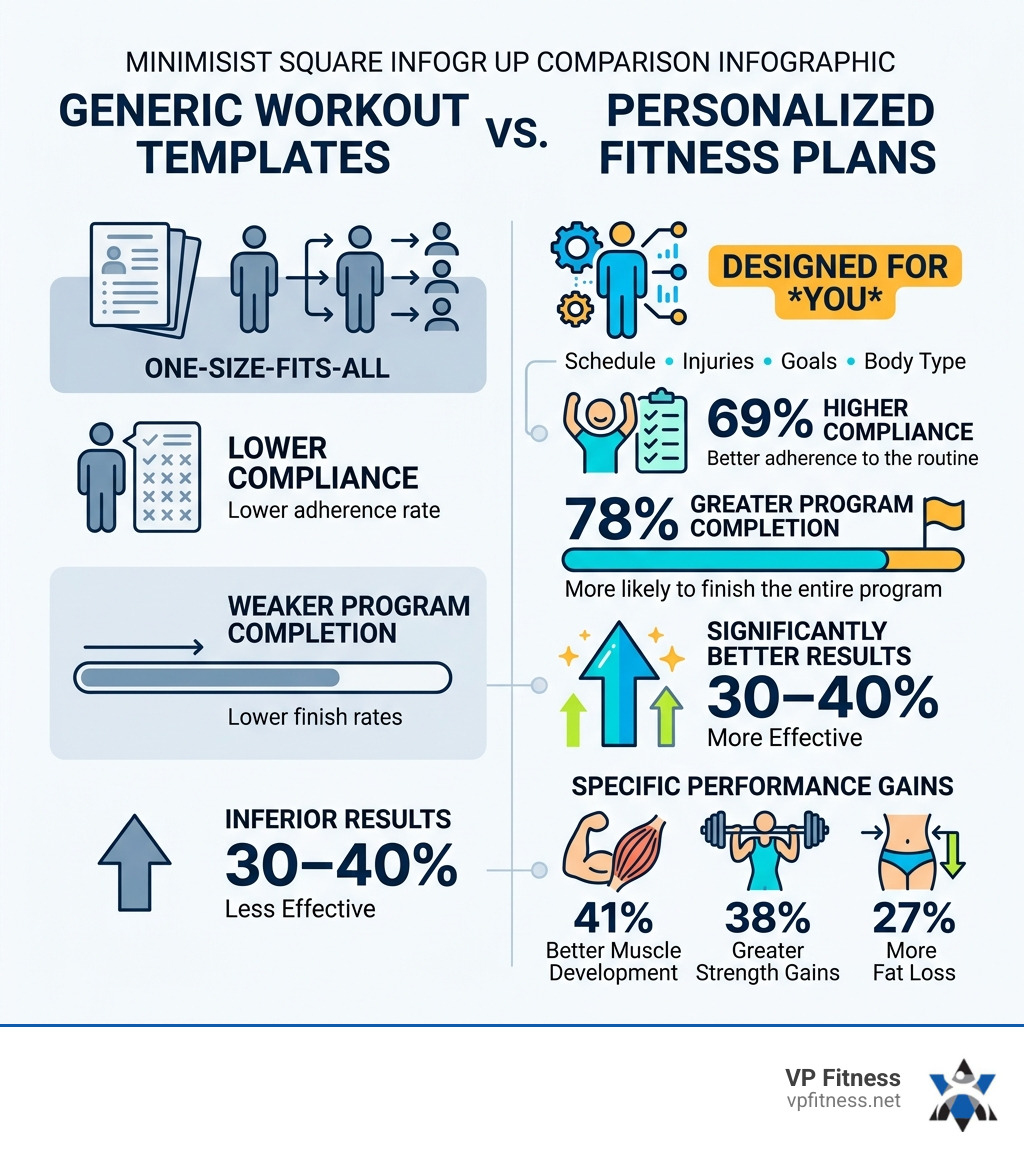
Research shows personalized plans deliver 30–40% better results than generic programs. They also produce 41% better muscle development, 38% greater strength gains, and 27% more fat loss. And people actually stick to them — with a 69% better compliance rate and a 78% program completion rate.
Why? Because a plan built for a million people is really built for no one. Generic routines ignore your schedule, your injuries, your goals, and your body.
A truly custom approach changes all of that.
I’m Joseph DePena, a master trainer with over a decade of experience building personalized workout routines for clients across all fitness levels. As someone who has seen what separates real, lasting results from short-lived progress, I’ll walk you through the best services to help you train smarter — not just harder.
What Defines a Personalized Workout Routine?
When we talk about a personalized workout routine, we aren’t just talking about a list of exercises. We are talking about a strategy designed specifically for your biology and lifestyle. Generic plans are like a one-size-fits-all suit; they might cover you, but they won’t look or feel right. They often fail because they ignore your unique history and physical starting point.
A true Personalized Exercise Routine begins with your data. This includes calculating your Basal Metabolic Rate (BMR) using your age, weight, height, and gender. This calculation is vital because it determines the intensity and caloric expenditure required to see results. Furthermore, men and women have physiological differences—such as hormonal profiles and muscle fiber distribution—that a Custom Workout Plan must account for to be effective.
Generic plans often lead to “square peg, round hole” syndrome. If a plan calls for heavy squats but you have chronic knee issues, or if it demands five days a week when you work sixty hours, you are going to quit. Personalization removes these barriers by fitting the fitness plan into your life, rather than forcing you to change your entire life to fit the plan.
Key Components of a Personalized Workout Routine
To build a routine that actually works, we look at five critical pillars:
- Fitness Level: Are you a complete beginner or an experienced lifter? Being honest here prevents injury and ensures the “on-ramp” is appropriate.
- Equipment Availability: Whether you are training at a fully equipped fitness facility or using a few dumbbells at home, your plan must match your tools.
- Schedule Constraints: A plan you can’t finish is a plan that fails. We need to know if you have 20 minutes or 60.
- Injury History: Disclosing past surgeries or joint pain allows for exercise modifications that keep you safe.
- Body Focus Areas: Everyone has different “priority zones,” whether it’s building a stronger back, improving cardiovascular endurance, or toning specific muscle groups.
The Science-Backed Benefits of Custom Training
The reason we advocate so strongly for individualized programs isn’t just because they feel better—it’s because the science is undeniable. Clinical studies show that personalized programs yield significantly higher improvements across every major health metric.
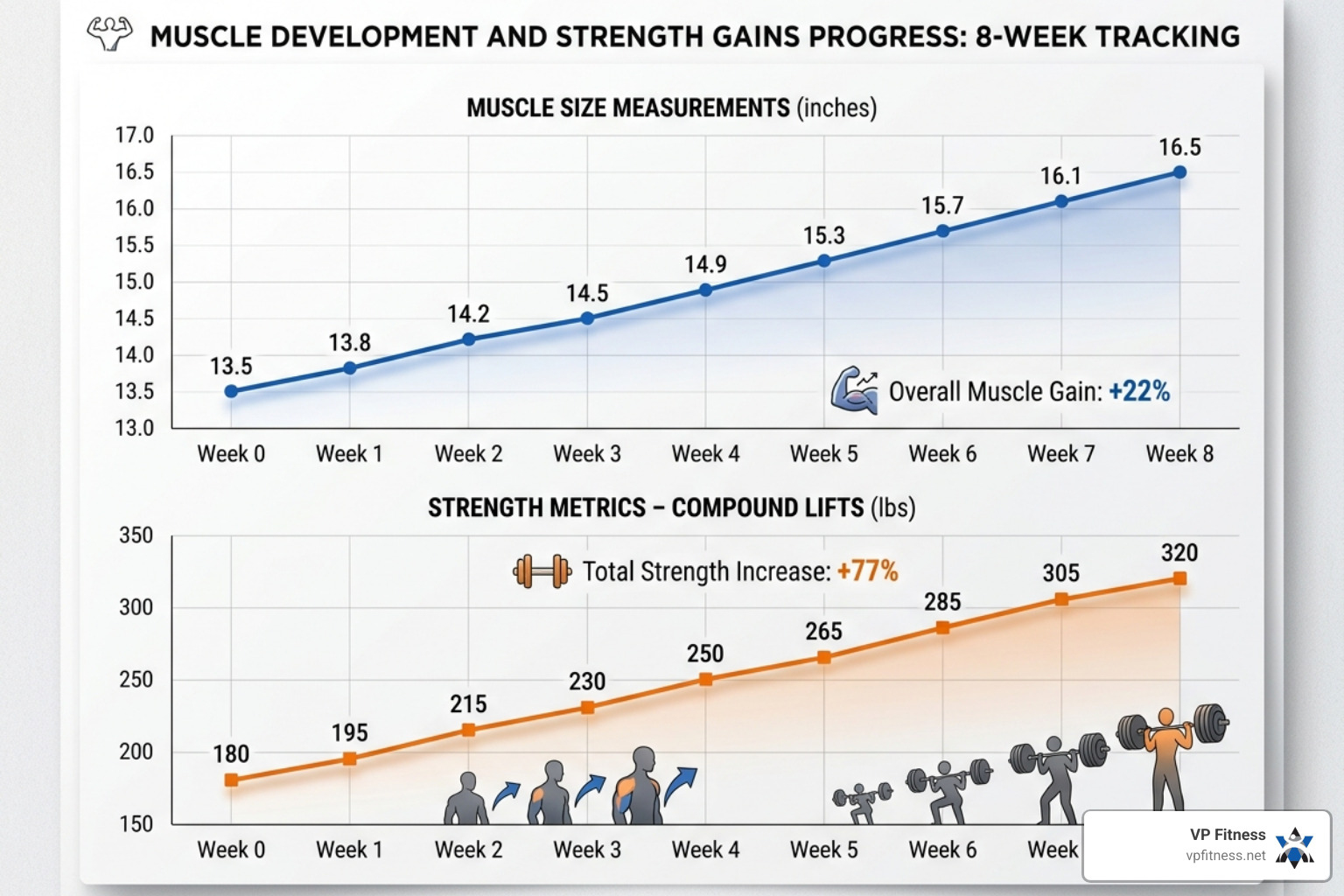
When you follow a plan tailored to your specific needs, you aren’t just guessing; you are applying a targeted stimulus to your muscles. This leads to:
- 41% better muscle development compared to generic templates.
- 38% improved strength gains, often seeing a 12-18% increase in total strength after just 8 weeks.
- 27% greater fat loss, with many users seeing a 7-11% reduction in body fat percentage over a two-month period.
Beyond the physical changes, the psychological impact is massive. There is a 69% better program compliance rate with a personalized workout routine. When you know a plan was made specifically for you, you feel a greater sense of ownership and accountability. Understanding the Benefits Of Personalized Fitness Plans is the first step toward realizing Why A Tailored Fitness Program Is Your Secret Weapon in a world of fad diets and “influencer” workouts that don’t translate to real-world results.
How Expert Guidance Builds Your Personalized Workout Routine
While AI and apps have come a long way, there is still no substitute for the human element in fitness. Expert guidance provides a level of nuance that algorithms often miss. We believe a Customized Fitness Coaching Complete Guide should always start with a comprehensive client assessment.
A professional trainer doesn’t just look at your goals; they look at how you move. They identify muscle imbalances, postural issues, and mobility restrictions. From there, we integrate your preferences—like your favorite types of music or whether you prefer high-intensity bursts over steady lifting—to match you with the right expert.
We also use advanced performance tracking. Tracking your “1RM” (One-Rep Max) isn’t just for powerlifters; it’s a data point that helps us ensure you are lifting enough weight to trigger change without overtaxing your central nervous system. This level of analysis ensures that every set and rep has a purpose.
Data-Driven Adaptation and Progression
Modern personalization often utilizes algorithm-driven principles to supplement human expertise. One of the most effective methods involves monitoring your MEV (Minimum Effective Volume) and MRV (Maximum Recoverable Volume).
- MEV: The least amount of training you need to do to see progress.
- MRV: The most training your body can recover from before you start moving backward.
By staying within this “sweet spot,” your personalized workout routine can adapt in real-time. If you had a bad night’s sleep or are under high stress, a smart plan will trigger an “automatic deload”—a temporary reduction in intensity to allow for recovery. This performance-based progression ensures you are always moving forward, even on your off days.
Designing Your Ideal Training Split and Schedule
How you organize your week depends entirely on your goals and how many days you can realistically commit. There is no “perfect” split, only the split that you can stick to consistently.
To maximize results, we focus on progressive overload—the gradual increase of stress placed upon the body during exercise. This is usually achieved by increasing weight, adding reps, or decreasing rest time. For those looking to build muscle (hypertrophy), we generally stay in the 6-12 rep range.
We also prioritize compound movements. Exercises like squats, deadlifts, presses, and rows are the “biggest mass-builders” because they recruit multiple muscle groups at once. Once you’ve mastered these, we layer in isolation exercises to fine-tune your physique. For a deeper dive into these concepts, check out our resources on Beyond The Basics Designing An Individualized Fitness Plan That Works For You and Fitness Program Design.
Recovery and Nutrition Integration
A personalized workout routine is only half of the equation. You don’t get stronger in the gym; you get stronger while you sleep. Recovery is when your body repairs the microscopic tears in your muscle fibers, making them thicker and stronger.
- Active Recovery: On rest days, we recommend light movement like walking or mobility work to keep blood flowing without adding stress.
- Nutrition Synergy: Your diet must match your training. If you want to build muscle, you generally need a caloric surplus and about 1 gram of protein per pound of body weight. If fat loss is the goal, a caloric deficit is required, though protein must remain high to preserve lean muscle.
- Meal Planning: Integrating your meal plan with your workouts ensures you have the energy to perform and the nutrients to recover.
Frequently Asked Questions about Personalized Training
How often should a personalized workout routine be updated?
We generally recommend updating your program every 4-6 weeks. This timeframe is long enough to see measurable progress but short enough to prevent a plateau. As your body adapts to the stress of a specific routine, it becomes more efficient, meaning you burn fewer calories and see fewer strength gains. By evolving the routine—changing exercises, rep schemes, or rest intervals—we keep the body guessing and the results coming.
Can I follow a personalized plan with no equipment?
Absolutely. Many effective routines are built around bodyweight exercises and “minimalist” setups. High-Intensity Interval Training (HIIT) is particularly effective for those with limited equipment, as it uses your own body mass to drive up your heart rate and build functional strength. Studies show that home-based routines, when structured with progressive overload, can be just as effective for body composition as gym-based plans.
How many days per week should I work out?
For most people, a 2-4 day minimum is required to see significant changes.
- Beginners: 3 days a week (Full Body) is often optimal to allow for 48 hours of recovery between sessions.
- Intermediate/Advanced: 4-5 days a week allows for more specific “splits” (like Upper/Lower or Push/Pull/Legs), ensuring each muscle group is hit twice per week, which research suggests is the “gold standard” for muscle growth.
Conclusion
At the end of the day, fitness is a long-game. A personalized workout routine isn’t just about looking better for a vacation; it’s about creating a sustainable lifestyle that keeps you healthy, strong, and energized for years to come. By moving away from generic templates and embracing a plan designed for your body, you eliminate the guesswork and the frustration of stalled progress.
Whether you are looking for the high-tech adaptation of AI or the expert touch of a dedicated trainer, the path to your best self is a personal one. We are committed to providing that individualized roadmap in a clean, professional environment—complete with the support you need to cross the finish line.
Start your journey with professional personal training and experience the difference that a truly tailored approach can make.