

Goal Getter: Your Blueprint for Fitness Achievement

Why Your Fitness Success Depends on a Strategic Approach
To achieve fitness goals, you need more than just a gym membership—you need a strategic plan. While millions start a fitness journey each year, research shows that those who set specific goals are far more likely to exercise consistently and see measurable results.
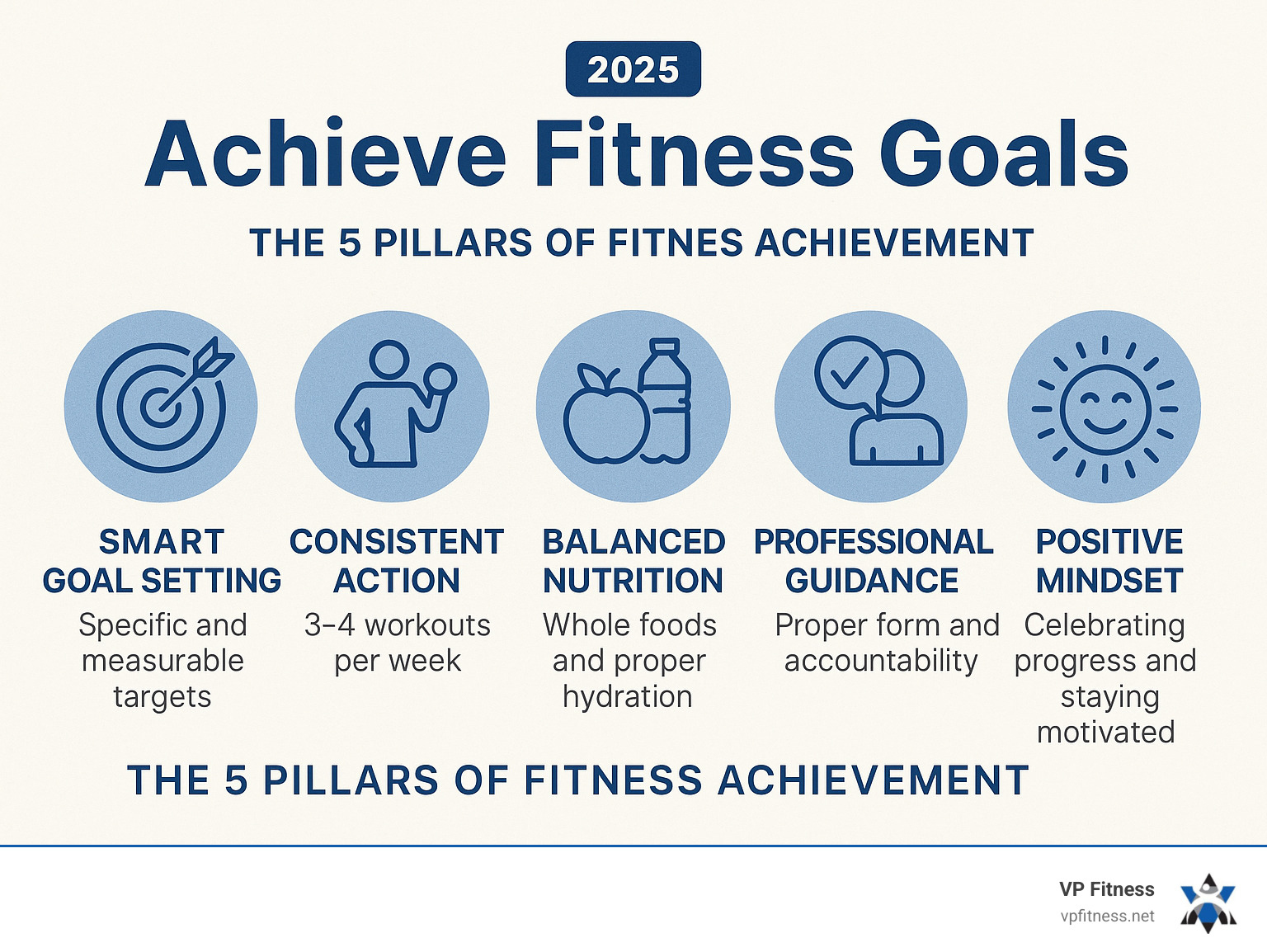
Here’s what you need to achieve fitness goals successfully:
- Set SMART Goals – Specific, Measurable, Achievable, Relevant, Time-bound objectives
- Build Consistency – Exercise 3-4 times per week with scheduled workouts
- Combine Exercise Types – Mix cardio and strength training for optimal results
- Fuel Your Body – Focus on proper nutrition and hydration
- Track Progress – Monitor metrics beyond just weight loss
- Stay Motivated – Maintain a positive attitude and celebrate small wins
- Get Professional Help – Work with trainers for proper form and accountability
The truth is, most fitness goals fail due to a lack of structure and realistic expectations. Success, whether it’s losing 20 pounds or running a 5K, comes from breaking big goals into smaller steps and staying consistent.
The good news? With the right blueprint, achieving your fitness goals becomes predictable and sustainable.
With over a decade of experience in personalized training, I’ve learned that the most effective approach combines goal-setting science with practical, real-world strategies. This guide provides a blueprint that busy professionals can actually stick to.
The Foundation: Setting SMART Fitness Goals
How many times have you said, “I’m going to get in shape,” only to be back on the couch weeks later? The difference between those who achieve fitness goals and those who don’t isn’t willpower—it’s having the right foundation. That foundation is SMART goals, a game-changer that turns vague wishes into concrete action plans.
Specific goals cut through confusion. Instead of “I want to exercise more,” try “I’ll strength train twice a week and walk 30 minutes on weekends.” Clarity helps your brain understand the target.
Measurable progress keeps you motivated. “Lose weight” becomes “lose 12 pounds in 3 months.” Numbers provide concrete milestones to celebrate.
Achievable means realistic for your starting point. If you haven’t exercised in years, daily two-hour workouts are a recipe for failure. Committing to three 45-minute sessions per week is challenging yet doable.
Relevant goals connect to what matters to you. Want to keep up with your kids? Focus on functional fitness. When goals align with your life, motivation comes naturally.
Time-bound goals create urgency. Most effective fitness goals span 1-3 months, giving you enough time to see progress while maintaining focus. Research shows goal-setting improves consistency, and deadlines are a key reason why.
Without this structure, even the best intentions fail. Understanding why fitness resolutions fail helps you avoid common traps.

How to break down large fitness goals
Many people get stuck because their SMART goal still feels too big. A marathon goal can feel more intimidating than inspiring if you’re currently winded walking up stairs.
The secret is creating stepping stones. For a marathon goal, your steps might be: first, walk briskly for 30 minutes. Next, alternate walking and jogging. Then, run a full mile continuously. Each mini-goal builds momentum and confidence.
This approach focuses on process-oriented goals over outcomes. Instead of fixating on a finish line months away, you celebrate running for 10 minutes straight today. These quick wins keep motivation high.
The famous Couch to 5K program is a perfect example of this strategy, gradually building ability over 9 weeks without causing burnout. This step-by-step method is why personalized fitness plans are so effective—they meet you where you are.
Tracking your progress to stay on course
Tracking your fitness progress is like a GPS, keeping you moving in the right direction. A fitness journal or app is your most valuable tool, but don’t just track big numbers like weight. The real magic is in tracking the full picture.
Log your workouts and note how you felt. Did you have more energy? Sleep better? Feel stronger? These key metrics often show progress weeks before the scale moves.
Celebrating small wins reinforces positive behaviors. Adding 5 pounds to your deadlift or taking the stairs instead of the elevator are moments that build the habits for bigger victories.
There are fitness metrics that matter more than weight that give a clearer picture of your progress. Tracking them keeps you motivated, providing proof that you’re on the right path.
How to Achieve Fitness Goals with a Bulletproof Action Plan
Setting SMART goals is the start. To truly achieve fitness goals, you need a comprehensive action plan that covers your entire fitness journey. A bulletproof plan eliminates guesswork and creates a systematic approach that combines smart workouts, proper nutrition, and expert guidance.
Many people approach fitness haphazardly and wonder why they don’t see results. This holistic approach is what separates those who achieve lasting results from those who struggle. By focusing on proven strategies, you can avoid common mistakes, including many common fitness myths.

Combining Cardio and Strength Training
Doing only cardio or only strength training is an incomplete approach. A balanced routine provides stability and power for optimal results.
Improved heart health is a key benefit of cardio. Regular cardiovascular exercise strengthens your heart and reduces the risk of heart disease. The CDC recommends at least 150 minutes of moderate-intensity cardio per week, which can include dancing, hiking, or swimming.
Increased metabolism and lean muscle mass come from strength training. Muscle burns more calories at rest than fat does. The CDC suggests two strength-training sessions per week, using weights, resistance bands, or bodyweight exercises.
Bone density benefits from both types of exercise, reducing the risk of osteoporosis. The combination leads to improved overall well-being, including better coordination and increased energy. Understanding the benefits of each helps you build lean muscle mass effectively.
Fueling Your Body: The Crucial Role of a Healthy Diet
The saying “abs are made in the kitchen” is true—you cannot out-exercise a poor diet. Food is the premium fuel that powers your fitness goals.
Energy for workouts comes from complex carbohydrates like oats and sweet potatoes. Healthy fats from avocados and nuts support hormone production.
Muscle recovery and growth depend on protein. Your muscles need protein’s building blocks to repair themselves after a workout. Aim to consume protein within 45 minutes of finishing your session. This is crucial for muscle retention.
Hydration is critical; even mild dehydration can sabotage performance. A good rule is to drink half your body weight in ounces of water daily.
Avoiding processed foods by making whole foods the foundation of your diet will dramatically improve how you feel. Research shows high sugar intake can negatively impact mental health. Focusing on fruits, vegetables, and lean proteins supports both physical and mental well-being.
The Power of Professional Guidance
Starting a fitness journey can be overwhelming. Working with a personal trainer is invaluable for those serious about achieving their goals.
Accountability is a huge benefit. Knowing a trainer expects you to show up makes you far more likely to follow through.
Proper form and injury prevention can make or break your journey. A qualified trainer corrects your form, teaches you to engage the right muscles, and helps you avoid painful setbacks.
Personalized plans take the guesswork out of your workouts. A custom program considers your fitness level, limitations, and goals, making it more effective than a generic online plan.
Motivation and progression are easier with an expert. A trainer knows how to adjust your program to break through plateaus and ensure continuous improvement through progressive overload.
Choosing the right professional is key. A good personal training program provides expert guidance to move you closer to your goals safely and effectively.
Building Unshakeable Consistency and Motivation
We’ve all started a fitness routine with enthusiasm, only to make excuses weeks later. Initial motivation is great, but it’s not what helps you achieve fitness goals long-term. The secret is building consistency that doesn’t depend on your mood.
Motivation is fleeting, but discipline is reliable. What separates successful people from those who struggle is understanding that discipline beats motivation every time. It’s about showing up even when you don’t feel like it.
This mindset shift is crucial for staying motivated. Instead of waiting for motivation, create systems and habits that make consistency automatic.
Creating a Sustainable and Consistent Gym Routine
Building a routine that sticks is about smart planning, not just willpower. The key is to integrate workouts into your life so skipping them feels unnatural.
Start slow and build gradually. Jumping into five workouts a week often leads to burnout. If you’re new, commit to two sessions per week, then add a third day once that feels natural.
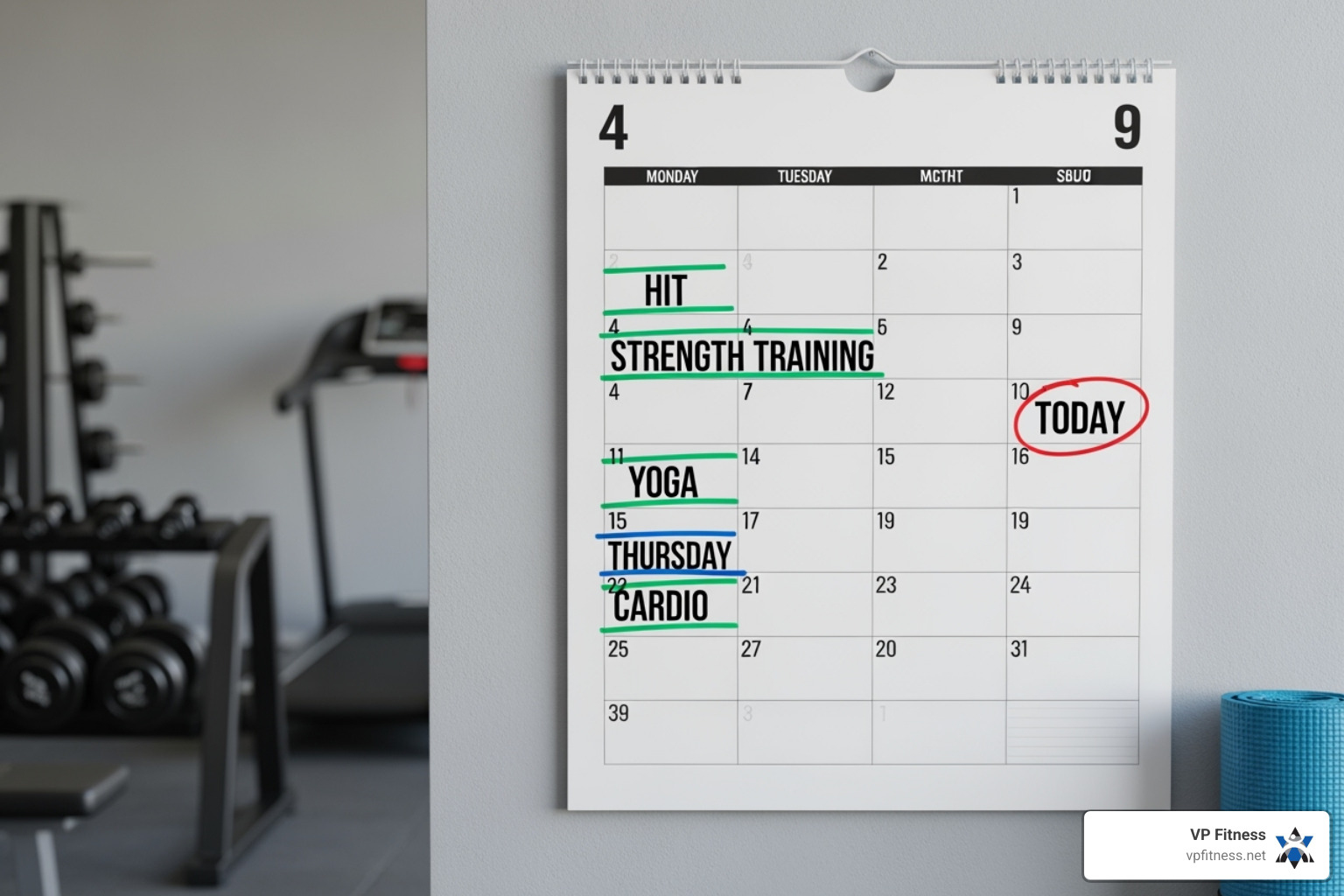
Schedule your workouts like important meetings. Put them in your calendar and treat them as non-negotiable appointments with your health.
Find your workout buddy or community. Having someone else counting on you adds accountability and makes exercise more enjoyable.
Make it genuinely fun. If you dread every workout, you won’t stick with it. Experiment with different activities like dancing, hiking, or new fitness classes to find what you love.
Listen to your body and stay flexible. Some days you’ll be tired or sore. A shorter workout is infinitely better than no workout. The goal is consistency over perfection.
For busy professionals, creating a sustainable fitness routine is vital. The key is a consistent gym routine that works with your life.
The Importance of Rest, Recovery, and a Positive Attitude
Rest isn’t the opposite of progress—it’s an essential part of it. Your body gets stronger during recovery when muscles repair and rebuild.
Your muscles need time to repair and grow. Strength training creates tiny tears in muscle fibers. During rest, your body repairs these tears, making the muscle stronger. Aim for at least two full rest days per week.
Rest prevents burnout. Pushing too hard without breaks leads to physical and mental exhaustion. Recovery days keep you energized and excited for your next workout.
Active recovery is beneficial. Light activities like walking or gentle stretching can help your body recover faster by increasing blood flow. Stretching increases flexibility and reduces inflammation, which is crucial for injury prevention. Hold each stretch for 15-45 seconds. Research shows the advantages of flexibility are significant.
Quality sleep is your secret weapon. During sleep, your body releases growth hormone and regulates important hormones. Aim for 7-9 hours of quality sleep.
Your inner voice matters. Positive self-talk can boost motivation and make exercise more enjoyable. When you have a rough workout, acknowledge that fitness is a journey with ups and downs, and trust that consistency will pay off.
Building unshakeable consistency is about being persistent, not perfect. The goal is a sustainable approach for the long term.
Frequently Asked Questions about Achieving Fitness Goals
Starting a fitness journey can be overwhelming. Here are answers to the most common questions we hear from people working to achieve fitness goals.
How long does it take to see results from a new fitness routine?
The timeline for results varies based on your starting point, consistency, diet, and genetics. However, you’ll likely feel different before you look different. Within a few weeks, many people notice better sleep quality and increased energy levels.
For visible changes like muscle definition or weight loss, patience is key. Most people see noticeable differences around the 4-6 week mark, with more significant changes after 3-4 months of consistent effort. For strength gains, you might be able to safely increase weights by up to 10 percent each week with proper form.
Consistency is crucial. You need to stick with a program for at least four to six weeks to start seeing tangible results.
What are the most common pitfalls to avoid when trying to achieve fitness goals?
After years of helping people, I’ve seen the same stumbling blocks trip people up. The good news is they’re all avoidable.
- Setting unrealistic goals: Deciding to work out seven days a week from day one often leads to burnout. Stick to SMART goals.
- Poor nutrition: You can’t out-train a bad diet. Your body needs proper fuel for energy and recovery.
- Overtraining: Pushing too hard without adequate rest leads to exhaustion, injury, and burnout. Rest is when your body rebuilds.
- Lack of a clear plan: Wandering aimlessly in the gym is inefficient. A roadmap is essential for measuring progress and staying motivated.
- Giving up after a setback: Life happens. One bad week doesn’t erase your progress. Consistency over perfection is what matters.
Is it better to work out in the morning or at night?
The simple answer is: the best time to work out is whenever you can do it consistently. Your personal preference and schedule matter far more than any small physiological advantages of morning versus evening exercise.
Morning workouts can kickstart your metabolism and ensure your exercise gets done before life gets in the way. Many people love the feeling of accomplishment it provides.
Evening workouts can be a great way to de-stress. Your body temperature is also naturally higher later in the day, which can improve flexibility and performance.
Your body will adapt to whatever schedule you choose. Consistency trumps timing every single time. Pick a time that works for you and stick with it.
Your Next Step to Fitness Achievement
Your journey to achieve fitness goals doesn’t end here. We’ve explored the building blocks that transform fitness dreams into reality. The path forward is clear: start with SMART goals for direction, build consistency with a sustainable routine, create a balanced plan combining cardio and strength, and maintain a positive mindset that celebrates progress.
The benefits of fitness extend beyond physical change to improved confidence and energy in every area of your life. The strategies we’ve discussed provide your roadmap to success, whether you’re aiming to lose 20 pounds, run a 5K, or simply feel stronger.
Achieving fitness goals is rarely a solo endeavor. The most successful people have support, guidance, and accountability. This is where professional expertise makes all the difference.
A supportive community and expert trainers can provide the perfect environment to turn your goals into reality. Individualized training and nutrition guidance in a professional, clean environment offers everything you need to succeed.
You’ve taken the most important step by educating yourself. Now it’s time to put that knowledge into action. Your future self—stronger, healthier, and more confident—is waiting.