

Unlock Comfort: How to Treat and Manage Your Knee Pain

Unlock Comfort: How to Treat and Manage Your Knee Pain
Why Knee Pain Therapy Matters More Than Ever
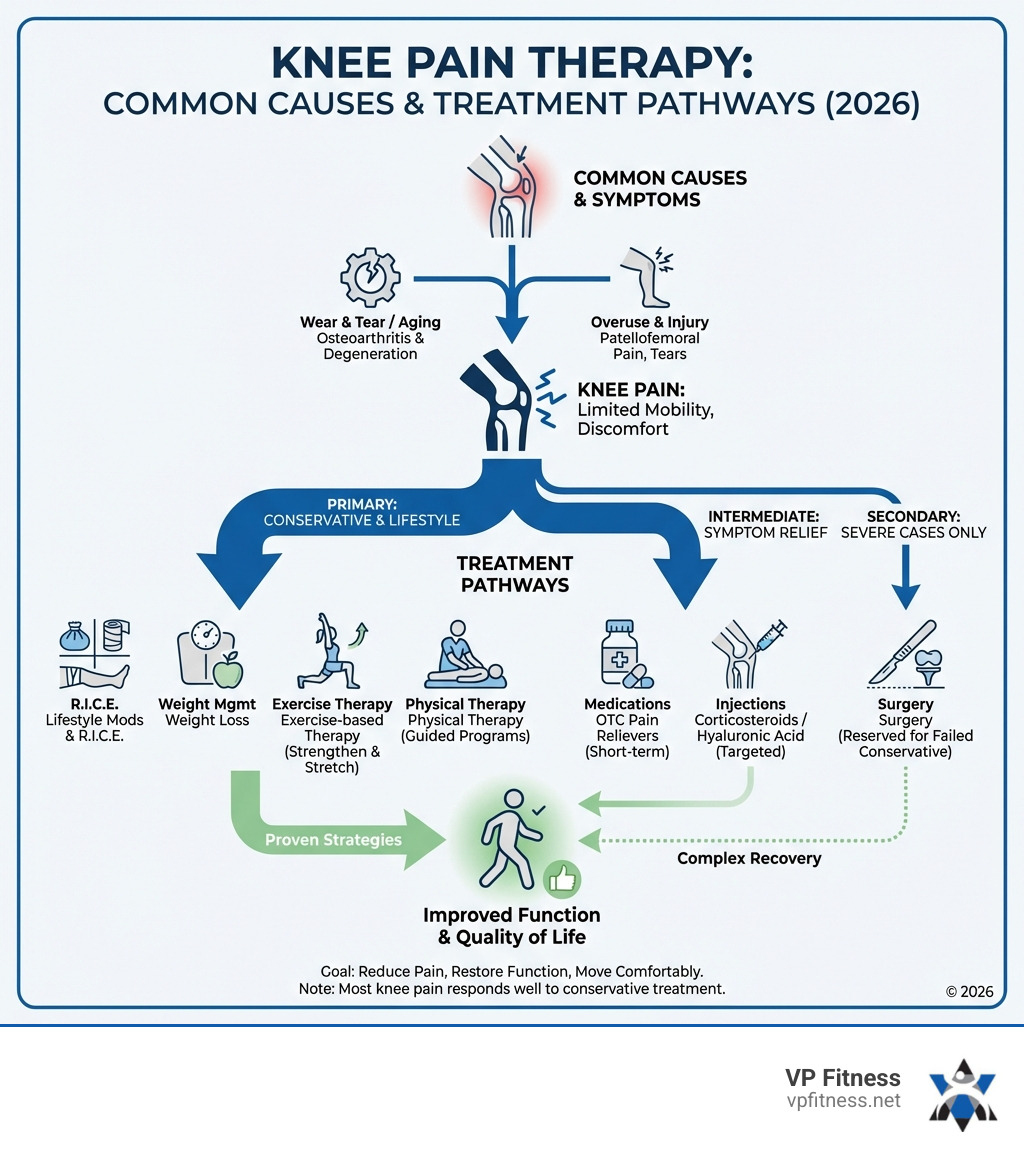
Knee pain therapy includes treatments designed to reduce pain, restore function, and improve your quality of life. Here’s what you need to know:
Primary Treatment Options:
- Exercise-based therapy – First-line treatment including strengthening and stretching exercises
- Physical therapy – Structured programs with professional guidance to improve mobility and correct movement patterns
- Medications – Over-the-counter pain relievers (acetaminophen, NSAIDs) for short-term relief
- Injections – Corticosteroids or hyaluronic acid for targeted pain management
- Lifestyle modifications – Weight loss, rest, ice, compression, and elevation (R.I.C.E. method)
- Surgery – Reserved for severe cases when conservative treatments fail
With 25% of adults experiencing knee pain, you’re not alone. Its prevalence has jumped 65% over the past 20 years, making it a top reason for doctor visits. This pain can limit your ability to exercise, climb stairs, or enjoy daily activities.
The good news? Most knee pain responds well to conservative treatment. Research shows that exercise-based therapy, physical therapy, and lifestyle modifications can dramatically reduce pain and improve function—often without surgery. Whether you’re dealing with osteoarthritis, patellofemoral pain syndrome, or a meniscal tear, proven strategies can help you move comfortably again.
Understanding Your Knee Pain: Causes and Diagnosis
The knee is a complex joint designed for movement and support, but its structure makes it susceptible to pain. Understanding the root cause of your knee pain is the first step toward effective knee pain therapy.
Common causes of knee pain include:
- Acute Injuries: Sudden, trauma-related injuries.
- Ligament Injuries: Tears in ligaments like the ACL, PCL, MCL, or LCL, often from sudden twists or impacts.
- Meniscal Tears: Tears in the menisci (cartilage pads that cushion the knee) can occur from twisting or degeneration.
- Fractures: Breaks in the patella, femur, or tibia from falls or high-impact incidents.
- Tendon Injuries: Patellar tendinitis (jumper’s knee) or quadriceps tendinitis involve inflammation or tears in the tendons.
- Overuse Conditions: These develop gradually from repetitive stress.
- Patellofemoral Pain Syndrome (PFPS): Often called “runner’s knee,” this causes pain around the kneecap, linked to muscle imbalances or poor mechanics.
- Iliotibial Band (IT band) Syndrome: Pain on the outside of the knee, common in runners, from friction of the IT band.
- Medical Conditions: Underlying health issues can cause knee pain.
- Osteoarthritis (OA): The most common arthritis, where knee cartilage wears away, causing pain, stiffness, and swelling.
- Rheumatoid Arthritis: An autoimmune disease causing inflammation and pain in the knees and other joints.
- Gout: Arthritis caused by uric acid crystal buildup, leading to sudden, severe pain.
- Bursitis: Inflammation of the bursae (fluid-filled sacs) that cushion the knee joint.
When to See a Doctor
While minor knee pain can be managed at home, some symptoms require immediate medical attention to prevent further damage and ensure proper knee pain therapy. See a doctor if you experience:
- Severe swelling or redness.
- Inability to bear weight or a feeling that your knee will “give out.”
- A visible deformity in your leg or knee.
- Locking of the knee (inability to bend or straighten it).
- Numbness or tingling below the knee.
- Fever with knee pain, which could signal an infection.
- Pain that worsens with activity or wakes you at night.
- Pain that doesn’t improve after a few days of self-care.
To prepare for your appointment, write down answers to questions like:
- When did your symptoms begin?
- Did a specific injury cause the pain?
- Is the pain constant or occasional?
- How severe is the pain (1-10)?
- What makes the pain better or worse?
- What medications and supplements are you taking?
- Do you exercise or play sports?
- Have you had knee pain before?
- Are other areas of your body affected?
This information helps your doctor guide the diagnostic process for effective knee pain therapy.
The Diagnostic Process
Your doctor will perform a thorough evaluation, starting with a physical exam and possibly using diagnostic tools to find the cause of your pain.
During the physical exam, your doctor will:
- Inspect your knee for swelling, pain, tenderness, and bruising.
- Check your range of motion.
- Push or pull on the joint to evaluate the integrity of your ligaments and tendons.
Your doctor may also recommend imaging tests:
- X-rays: To detect fractures, bone spurs, and degenerative joint disease.
- Magnetic Resonance Imaging (MRI): For detailed images of soft tissues like ligaments, tendons, and cartilage.
- Computed Tomography (CT) scans: To reveal subtle bone problems or fractures.
- Ultrasound: For real-time images of soft tissues during movement.
If an infection or inflammatory condition is suspected, lab tests like blood tests or arthrocentesis (joint fluid analysis) may be performed.
For more details, review the information from the Knee pain – Diagnosis and treatment – Mayo Clinic. This ensures your knee pain therapy is custom to your condition.
The Foundation of Recovery: Strengthening and Stretching
Strong muscles are your knee’s best friends and a cornerstone of effective knee pain therapy. They act as natural shock absorbers, providing crucial support and reducing stress on the knee joint.
Strengthening the quadriceps, hamstrings, glutes, and hip muscles is vital. Strong, balanced muscles maintain proper knee alignment, improve stability, and prevent strain. This alleviates existing pain and helps prevent future issues, improving overall knee health.
Recommended Strengthening Exercises
Here are some excellent exercises for strengthening the muscles around your knee. Proper form is key to getting the most out of these movements and avoiding further injury. Aim for controlled, smooth motions.
-
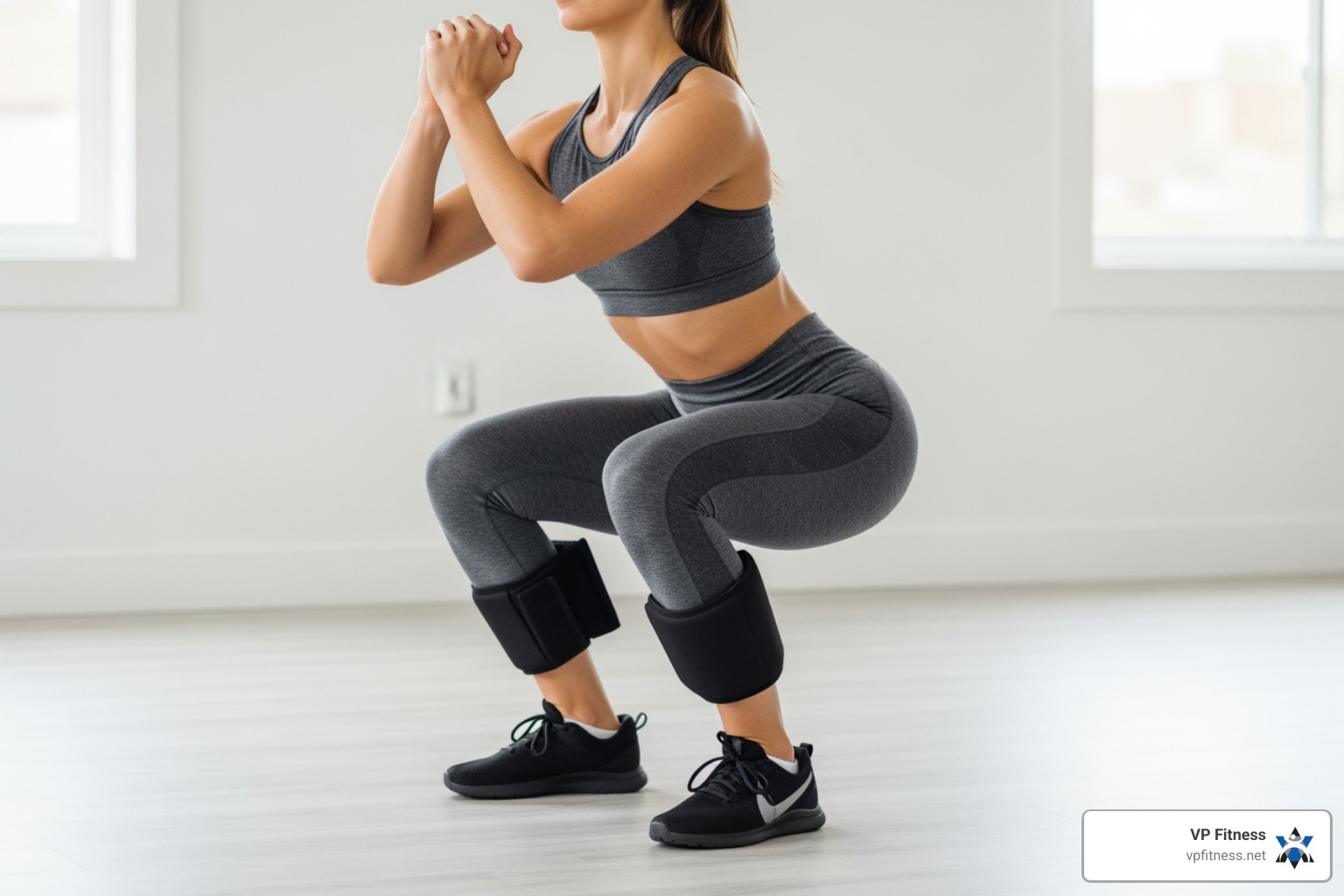
Half Squats:
- How to: Stand with feet shoulder-width apart. Slowly lower your hips about 10 inches, as if sitting in a chair. Keep your chest up and core engaged. Push through your heels to return to the start.
- Why: Strengthens quadriceps, hamstrings, and glutes without deep knee flexion.
- Sets/Reps: 2-3 sets of 10 repetitions, 4-5 days a week.
-
Calf Raises:
- How to: Stand holding a wall or chair for balance. Lift both heels off the ground, rising onto the balls of your feet. Slowly lower your heels.
- Why: Strengthens calf muscles, which aid ankle and knee stability.
- Sets/Reps: 2-3 sets of 10 repetitions, 6-7 days a week.
-
Hamstring Curls (Standing):
- How to: Stand facing a wall for support. Lift one foot and bend your knee, bringing your heel toward your buttocks. Keep your hips stable. Hold for 5-10 seconds, then slowly lower.
- Why: Isolates and strengthens the hamstrings.
- Sets/Reps: 2-3 sets of 10 repetitions per leg, 4-5 days a week.
-
Leg Extensions (Bodyweight):
- How to: Sit tall in a chair. Contract your thigh muscles and slowly extend one leg straight out. Pause, then slowly lower.
- Why: Strengthens the quadriceps. Bodyweight is preferred to reduce direct knee pressure.
- Sets/Reps: 2-3 sets of 10 repetitions per leg, 4-5 days a week.
-
Straight Leg Raises:
- How to: Lie on your back with one leg bent and the other straight. Contract the quadriceps of the straight leg and slowly lift it to the height of your bent knee. Hold for 5 seconds, then slowly lower.
- Why: Strengthens quadriceps and hip flexors.
- Sets/Reps: 2-3 sets of 10 repetitions per leg, 4-5 days a week.

-
Side Leg Raises:
- How to: Lie on your side with legs stacked and straight. Lift your top leg toward the ceiling, keeping your hips stable. Pause, then slowly lower.
- Why: Strengthens hip abductors, crucial for knee stability.
- Sets/Reps: 2-3 sets of 10 repetitions per leg, 4-5 days a week.
-
Prone Leg Raises:
- How to: Lie on your stomach with legs straight. Engage your glutes and hamstrings to lift one leg straight up without arching your back. Hold for 5 seconds, then lower.
- Why: Strengthens glutes and hamstrings.
- Sets/Reps: 2-3 sets of 10 repetitions per leg, 4-5 days a week.
Remember to listen to your body and never push into pain. If an exercise causes discomfort, stop and consult a professional. As these become easier, you can gradually increase reps or add light resistance, always prioritizing good form.
The Importance of Stretching
Stretching is just as important as strengthening for effective knee pain therapy. It improves flexibility, range of motion, and reduces muscle tightness that can contribute to knee pain.
Here are 3 key stretches for knee health:
-
Hamstring Stretch:
- How to: Lie on your back with knees bent. Loop a towel around one foot and gently pull to straighten that leg toward the ceiling until you feel a stretch.
- Why: Lengthens tight hamstrings, which can pull on the knee.
- Hold: 30-60 seconds, 2-3 repetitions, 4-5 days a week.
-
Quadriceps Stretch:
- How to (Standing): Stand next to a wall for balance. Grasp your ankle and gently pull your heel toward your buttocks, keeping your knees together.
- Why: Stretches tight quadriceps, which can pull the kneecap out of alignment.
- Hold: 30-60 seconds, 2-3 repetitions, 4-5 days a week.
-
Iliotibial Band (IT Band) Stretch:
- How to: Stand and cross your right leg behind your left. Lean to your left, pushing your right hip out to feel a stretch along your outer right thigh.
- Why: The IT band can become tight, causing pain on the outside of the knee.
- Hold: 30-60 seconds, 2-3 repetitions per side, 4-5 days a week.
Warm up with 5-10 minutes of low-impact activity (like walking) before exercising. Perform your stretches, then strengthening, and finish with another round of gentle stretches.
Comprehensive Knee Pain Therapy: From Home Remedies to Medical Treatments
A multi-faceted approach to knee pain therapy often yields the best results, starting with the least invasive options like lifestyle adjustments at home.
Lifestyle modifications and home remedies can significantly help manage knee pain:
- Weight Management: If your BMI is over 25, losing weight is highly encouraged. Reducing excess weight directly lessens the load on your knee joints, which is crucial for conditions like osteoarthritis.
- R.I.C.E. Method: This is effective for acute injuries and flare-ups:
- Rest: Avoid activities that worsen your pain.
- Ice: Apply ice packs for 15-20 minutes several times a day to reduce pain and swelling.
- Compression: Use an elastic bandage for support and to prevent fluid buildup.
- Elevation: Keep your leg lifted above your heart to reduce swelling.
- Heat Application: For chronic stiffness, heat can provide temporary relief.
- Braces and Orthoses: Arch supports or knee braces can shift pressure and offer support.
For a deeper dive into non-surgical options, explore the Nonsurgical Management of Knee Pain in Adults article.
The Role of Physical Therapy in Knee Pain Therapy
Physical therapy is a cornerstone of effective knee pain therapy, offering a structured, personalized approach to restore function and reduce pain. A physical therapist will assess your condition and design a custom program that may include:
- Structured Exercise Programs: Targeted strengthening and stretching exercises customized to your needs.
- Manual Therapy: Hands-on techniques like massage and mobilization to improve joint movement.
- Correcting Movement Patterns: Learning proper body mechanics for daily activities to reduce stress on your knees.
- Balance Training: Improving stability and proprioception (your body’s sense of its position) to prevent falls.
- Modalities: Using tools like ultrasound or electrical stimulation to manage pain.
Evidence strongly supports physical therapy. It’s the first-line treatment for knee osteoarthritis and patellofemoral pain syndrome. Even for degenerative meniscal tears, active rehabilitation can be as effective as surgery. The APTA provides extensive guidelines, emphasizing evidence-based practice for knee pain therapy.
Medications and Injections
When lifestyle changes and physical therapy aren’t enough, medications and injections can help manage pain and inflammation as part of a comprehensive knee pain therapy plan.
Medications:
- Over-the-Counter (OTC) Pain Relievers: Acetaminophen is often a first-line choice, while NSAIDs (ibuprofen, naproxen) are effective for short-term relief of pain and swelling.
- Topical Creams: Creams with lidocaine or capsaicin can provide localized pain relief.
- Prescription Medications: Your doctor may prescribe stronger medications for severe pain or inflammatory conditions.
Injections: These deliver medication directly to the knee joint for targeted relief.
- Corticosteroid Injections: These deliver powerful anti-inflammatory medication, providing significant short-term pain relief, especially during arthritis flares.
- Hyaluronic Acid Injections: These aim to lubricate the joint and ease pain, particularly for osteoarthritis.
- Platelet-Rich Plasma (PRP) Injections: This emerging option uses your own blood platelets to reduce inflammation and promote healing.
- Benefits and Risks: Injections offer targeted pain relief and improved mobility but carry risks like infection or temporary pain increase. Discuss these with your doctor.
When Is Surgery Necessary? Exploring Surgical Options
While conservative knee pain therapy is often effective, surgery may be necessary when severe pain persists, a significant injury needs repair, or non-surgical treatments fail.
Deciding on surgery is a major step. Discuss the pros and cons with your orthopedic surgeon, considering your age, activity level, and health. While it’s a last resort, surgery can be the best path to restoring function for some.
Types of Surgical Interventions
When conservative knee pain therapy options are exhausted, several surgical interventions are available:
- Arthroscopy: A minimally invasive procedure using a small camera to visualize and repair the inside of the knee. Surgeons can repair torn cartilage, remove loose fragments, or reconstruct ligaments.
- Partial Knee Replacement: If only one part of your knee is damaged by arthritis, a surgeon replaces just that portion, preserving healthy tissue and often allowing for a quicker recovery.
- Total Knee Replacement: For extensive damage from severe osteoarthritis, the entire joint surface is replaced with artificial components to relieve pain and restore function.
- Osteotomy: This procedure involves cutting and reshaping bone to shift weight away from the damaged part of the knee, often recommended for younger patients to delay a total knee replacement.
Post-surgical rehabilitation, including physical therapy, is crucial for regaining strength and mobility.
Advanced Knee Pain Therapy: Surgical Interventions
Advanced surgical interventions aim to repair significant joint damage, remove impediments, or realign the knee structure when conservative methods are not enough.
- Repairing Joint Damage: Arthroscopy can repair or clean up damaged cartilage and menisci.
- Removing Loose Bodies: Surgery can remove bone or cartilage fragments that cause pain and locking.
- Realigning the Knee: An osteotomy can correct the leg’s alignment to distribute weight more evenly across the joint.
For individuals with severe pain or irreparable damage, surgery can dramatically improve quality of life by alleviating pain and restoring movement.
Conclusion: Your Path to Pain-Free Movement
Navigating knee pain is a journey, but the right knee pain therapy makes comfort and mobility achievable. We’ve covered everything from diagnosis and the foundational role of strengthening and stretching to a full range of treatment options.
Conservative management, including lifestyle changes, home remedies, and physical therapy, is the most effective first-line defense. Medications and injections offer relief, while surgery is a powerful solution for severe cases.
Knee pain is a widespread challenge, but proactive management through exercise and professional guidance is powerful. Strengthening muscles, maintaining flexibility, and addressing root causes are investments in your long-term knee health.
Taking control of your knee health means listening to your body, seeking professional advice, and committing to a consistent approach.