

Why Your Company Wellness Challenge is the Secret to Happy Teams

Why Your Company Wellness Challenge is the Secret to Happy Teams
Why Company Wellness Challenges Are the Secret to Happier, Healthier Teams
A company wellness challenge is a structured program that encourages employees to adopt healthier habits through fun, time-bound activities—like step contests, hydration tracking, or mindfulness practices. These challenges boost morale, reduce healthcare costs, and create stronger team connections.
Quick Overview: What You Need to Know
- What it is: Time-limited activities (typically 2 weeks to 3 months) focused on physical, mental, or nutritional wellness
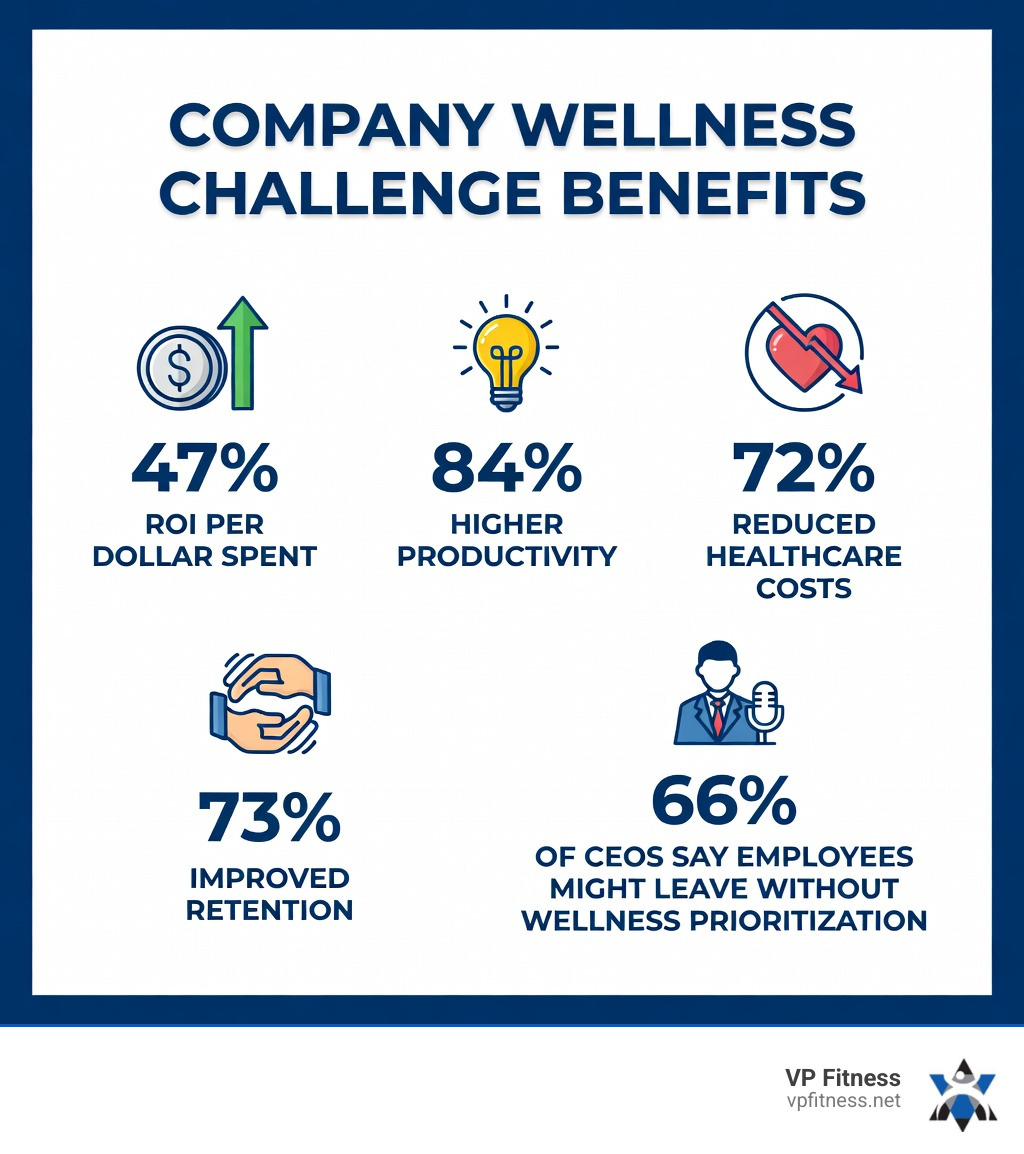
- Key benefits: 47% average ROI, 84% report higher productivity, 72% see reduced healthcare expenses
- Popular formats: Step challenges, hydration tracking, meditation sessions, team fitness competitions
- Best for: Companies of any size looking to improve employee engagement, retention, and overall well-being
Your team’s feeling drained. Stress levels are high, energy is low, and focus? Scattered. It doesn’t come as a surprise—74% of the workforce believes their company needs to do more to combat burnout. Meanwhile, nearly half of all employees say work stress is degrading their mental wellbeing.
Here’s the good news: workplace wellness challenges are one of the simplest, most effective tools you have to turn things around. They’re not just feel-good perks—they’re strategic investments that deliver measurable results. Companies report double-digit decreases in sick leave, hospital admissions, and workers’ compensation costs after implementing wellness programs. Better yet, every dollar spent returns about $1.47 in benefits, with some organizations seeing ROI as high as $4 per dollar invested.
But wellness challenges aren’t just about the bottom line. They transform boring routines into game-like activities that bring teams together. When employees participate in a steps challenge or swap healthy recipes, they’re building social connections that make work more enjoyable. When they see their colleagues prioritizing wellness, they feel valued—and 93% of workers who feel valued are driven to do their best work.
The challenge isn’t whether wellness programs work. The research is clear: they do. The real question is how to design challenges that your team will actually enjoy and participate in—ones that fit diverse needs, respect privacy, and create lasting habits rather than short-term compliance.
As Joseph Depena, founder of VP Fitness in Providence, Rhode Island, I’ve spent over a decade helping companies build wellness programs that actually work. Through our corporate wellness initiatives, I’ve seen how a well-designed company wellness challenge can transform workplace culture and give employees the energy and motivation they need to thrive.
Must-know company wellness challenge terms:
Why Workplace Wellness Challenges Matter for Business Outcomes
In the competitive business landscape of Providence and beyond, wellness isn’t just a “nice-to-have” HR initiative; it is a critical driver of business performance. When we look at the numbers, the study by Avalere Health reveals a staggering 47% average ROI. For every dollar we invest in our people’s health, we see $1.47 in return through improved efficiency and cost savings.
The business outcomes are undeniable:
- Productivity Gains: 84% of employers report higher productivity after implementing wellness plans. When employees are physically fit and mentally sharp, they get more done in less time.
- Healthcare Cost Reduction: Roughly 72% of companies observed a reduction in healthcare expenses. Considering that 70% of healthcare costs in the U.S. are preventable, a proactive company wellness challenge acts as a preventative shield for your bottom line.
- Reduced Absenteeism: Healthier employees take fewer sick days. In fact, wellness programs lead to double-digit decreases in disability days and workers’ compensation costs.
- Employee Retention: 73% of CEOs say wellness programs have improved retention. In an era where 66% of CEOs feel employees might leave if wellness isn’t prioritized, these challenges are your best defense against turnover.
To dive deeper into the mechanics of these programs, check out our corporate wellness page.
The Impact on Employee Well-being
Beyond the spreadsheets, the human impact is where the magic happens. A company wellness challenge addresses the 47% of employees who say work stress degrades their mental health. By providing a structured outlet for stress—such as mindfulness or group activity—we help employees return to a state of focus.
Physical health and job performance are inextricably linked. According to research, employees with healthy eating habits are 25% more likely to have better job performance. When we encourage our teams to eat better and move more, we aren’t just helping them fit into their jeans; we are fueling their brains for better decision-making and creativity.
Strengthening Employer Branding
Your company’s reputation is built on how you treat your people. A robust wellness culture sends a clear message to top talent in Rhode Island: “We care about you as a human, not just a resource.”
76% of CEOs report that wellness initiatives have a significant positive impact on brand perception. This employer branding strategy helps attract high-performers who prioritize work-life integration. When 41% of people say they enjoy their job specifically because of a good work-life balance, offering a wellness challenge becomes a powerful recruiting tool.
20 Actionable Ideas for Your Next Company Wellness Challenge

To make a challenge successful, it has to be fun, inclusive, and varied. We like to use “gamification”—using points, leaderboards, and badges—to keep the competitive spirit alive without making it feel like “work.”
Physical Activity Ideas for Your Company Wellness Challenge
- Step It Up: The classic 10,000 steps a day challenge. It’s inclusive for all fitness levels and easy to track with smartphones.
- 5K Training Club: Organize an 8-10 week “Couch to 5K” program. At VP Fitness, we’ve seen how training for a specific event builds incredible endurance and confidence.
- Desk Yoga & Stretching: Schedule “3 PM Plank Breaks” or 5-minute guided stretch sessions to combat the effects of extended sitting.
- Walking Meetings: If a meeting doesn’t require a screen, take it outside! It improves posture and sparks more creative conversations.
- Take the Stairs: Encourage employees to skip the elevator. You can even post motivational signs by the stairwell.
- 1,000 Reps Challenge: A two-week challenge to complete 1,000 repetitions of various exercises (squats, lunges, etc.).
- Zumba or Group HIIT: Bring in an expert for a high-energy session that gets everyone laughing and moving.
Nutrition and Mental Health Company Wellness Challenge Ideas
- Go for H2O: A 30-day hydration challenge. Provide reusable water bottles and track daily intake. Proper hydration is essential for avoiding the afternoon slump.
- Healthy Recipe Swap: Create a company digital cookbook. Employees share their favorite nutritious meals, and the team votes on the best one.
- Mindfulness Matters: A meditation challenge where employees log 10 minutes of mindfulness daily. This is huge for stress reduction—mindfulness is sweeping America’s workplaces for a reason.
- Gratitude Journaling: Ask employees to record three things they are grateful for each day. Psychologists have documented the positive effects of gratitude on emotional health.
- Digital Detox: Encourage “unplugging” after 6 PM or during lunch hours to combat burnout and constant connectivity anxiety.
- Sleep Hygiene Challenge: Use a sleep hygiene checklist to help employees get the 7-8 hours of rest they need to function optimally.
- No-Takeout Week: Encourage meal prepping and bringing lunch from home to reduce reliance on processed “fast” foods.
Holistic and Lifestyle Challenges
- Financial Wellness: Host a seminar on budgeting or retirement planning. Financial stress is a major contributor to workplace anxiety.
- Eco-Friendly Habits: A sustainability challenge to reduce plastic use or start a recycling competition.
- Random Acts of Kindness: Challenge people to log small gestures, like writing a thank-you note to a colleague. Kindness triggers “feel-good” neurotransmitters like serotonin.
- Professional Development: A “Learn a New Skill” challenge where employees spend an hour a week on a course unrelated to their daily tasks.
- Volunteering: Joining a cause brings people together. Track volunteer hours for a local Providence charity.
- Self-Love Session: Encourage employees to practice self-care, whether that’s taking a surprise day off or visiting a wellness retreat.
Comparison: Challenge Formats
| Feature | Individual Challenge | Team-Based Challenge |
|---|---|---|
| Primary Goal | Personal habit formation | Camaraderie and social bonding |
| Accountability | Self-tracking / Apps | Peer support / Group pressure |
| Pros | Flexible, low pressure | High engagement, builds culture |
| Cons | Can be lonely; easier to quit | Can become too competitive |
How to Design and Implement Impactful Initiatives
Designing a company wellness challenge that doesn’t feel like a chore requires intentionality. You don’t want to be the company that forces everyone to run a marathon when half the office has knee issues.
- Set Clear Goals: What are you trying to achieve? Lower stress? Better team bonding? Define this early.
- Survey Your Workforce: Don’t guess. Ask your team what they’re interested in. If they help build it, they’re more likely to participate.
- Secure Leadership Buy-in: If the CEO is seen taking the stairs or logging their water intake, the rest of the team feels “permitted” to prioritize their health.
- Use the Right Tools: Centralize your task management. Whether it’s a simple shared spreadsheet or sophisticated employee wellness software, make tracking easy.
Selecting the Right Duration and Format
Timing is everything. A 30-day challenge is a sweet spot—long enough to form a habit, but short enough to keep the excitement high. For higher intensity, try a “Weekly Sprint.”
We recommend mixing formats throughout the year. Maybe a team-based step contest in the spring and an individual mindfulness challenge during the busy year-end season. Always ensure your activities are inclusive; for example, if you run a steps challenge, provide a conversion chart for those who prefer swimming or cycling.
Choosing Effective Rewards and Incentives
While the health benefits are the real prize, a little extra motivation never hurts.
- PTO: A half-day off is often the most coveted reward.
- Wellness Swag: High-quality gym bags, yoga mats, or branded athletic wear.
- Recognition: Shout-outs in company meetings or a “Wellness Champion” badge on Slack.
- Charitable Donations: Let the winning team choose a local charity for a company donation.
Maximizing Participation and Measuring Success
A challenge is only as good as its participation rate. To avoid the “dread” factor, focus on social accountability. When employees feel they are part of a movement, they are less likely to drop out.
Strategies for High Engagement
- Bold Announcements: Don’t just bury it in an email. Use posters, Slack announcements, and video teasers.
- Identify Wellness Champions: These are your “influencers”—employees who are already passionate about health and can motivate their peers.
- Keep it Open: Allow late joiners. Life happens, and you don’t want someone to feel they missed the boat because they were on vacation during launch week.
- Host a Wrap-Up Party: Celebrate the wins! Whether it’s a healthy catered lunch or a digital awards ceremony, recognize the effort everyone put in.
Measuring Program ROI and Effectiveness
To prove the value of your company wellness challenge, you need data.
- Participation & Completion Rates: How many signed up vs. how many finished?
- Pre-and-Post Surveys: Ask employees about their stress levels and energy before and after the challenge.
- Healthcare Costs: Track your insurance premiums and claims over a 12-24 month period.
- ROI Calculators: Use industry-standard formulas to see the dollar impact on absenteeism and productivity.
Frequently Asked Questions about Wellness Challenges
How do you start a wellness challenge with no budget?
You don’t need fancy apps to start. A simple shared Google Sheet for tracking steps or a “Healthy Recipe Slack Channel” costs nothing. Use “bragging rights” or a “floating trophy” as the prize. The most important element is the social connection, not the price tag of the reward.
What are the best ways to include remote employees?
Virtual wellness challenges are essential for modern teams. Use video calls for group meditation, encourage “virtual walking meetings,” and use digital leaderboards so everyone can see progress regardless of their time zone. Shipping “wellness kits” (like a branded water bottle or resistance band) to remote workers’ homes also makes them feel included.
How often should a company run a wellness challenge?
We find that two major challenges per year (one every six months) work best to prevent “wellness fatigue.” You can supplement these with “micro-challenges”—like a one-week hydration push—to keep the momentum going between the larger events.
Conclusion
At VP Fitness in Providence, we believe that a healthy team is a high-performing team. Our approach to corporate wellness isn’t about one-size-fits-all solutions; it’s about individualized training, nutrition guidance, and creating an environment where wellness is accessible and fun.
Whether you’re looking for personalized fitness plans for your executives or engaging group classes to build team morale, we provide a professional, clean environment equipped with everything from a smoothie bar to physical therapy.
Ready to transform your workplace? A company wellness challenge is the perfect first step. It builds the “weak ties” between departments, reduces the “passion tax” of burnout, and shows your employees that they truly matter.
Start your journey with our corporate wellness solutions today and see the difference a culture of health can make for your business.