

Your Ultimate Guide to Personal Training Locations

Your Ultimate Guide to Personal Training Locations
Navigating the World of Personal Training Locations
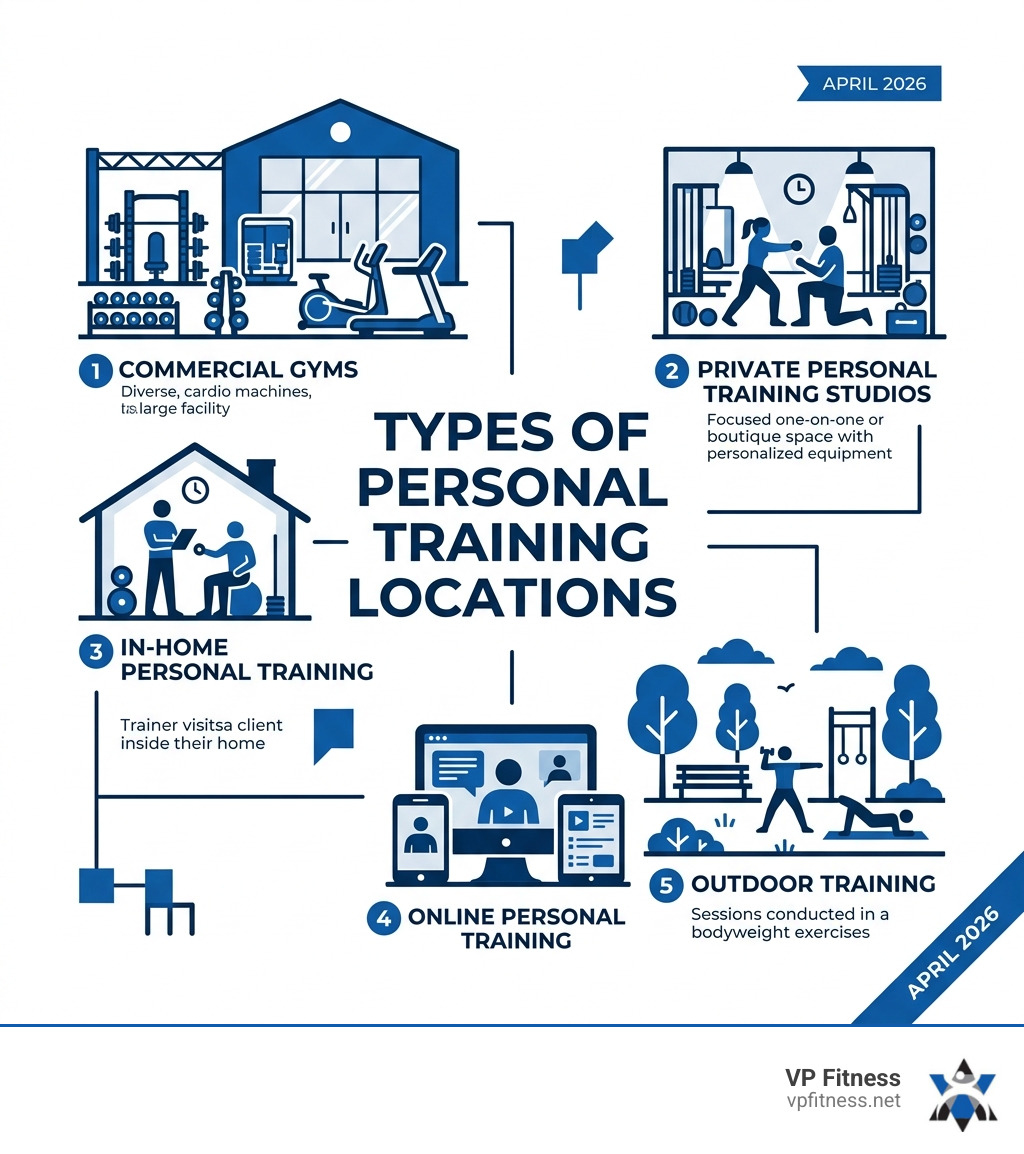
Finding the perfect personal training locations is essential for your fitness journey. With so many choices available in April 2026, it can feel overwhelming. To help you quickly identify the best fit, here are the most common types of personal training environments:
- Commercial Gyms: Large facilities offering extensive equipment and diverse classes.
- Private Personal Training Studios: Boutique spaces focused on one-on-one or small group training, often with a more personalized feel.
- In-Home Personal Training: Trainers come directly to your home, offering maximum convenience and privacy.
- Online Personal Training: Remote coaching through video calls and digital programs, ideal for flexible schedules.
- Outdoor Training: Sessions conducted in parks or other open spaces, embracing nature.
Finding the right environment can make all the difference in your commitment and results. It’s about matching your lifestyle and goals with the ideal support system. Whether you prioritize privacy, community, convenience, or specialized equipment, there’s a setting designed for you.
As a dedicated Franchise Owner & Fitness Entrepreneur in Providence, Rhode Island, Joseph DePena has experience in building supportive fitness communities and guiding clients to their goals across various personal training locations. This guide will help you understand your options and make an informed decision.
Explore more about personal training locations:
- private gyms
- private fitness clubs near me
- private gym rooms near me
Finding the Right Personal Training Locations for Your Fitness Journey
Selecting the right environment is the first step toward a healthier version of yourself. In the Rhode Island fitness landscape of 2026, the variety of personal training locations means you no longer have to settle for a “one size fits all” approach. When we look at the options, we see a clear shift toward specialized, high-end environments that prioritize the client’s comfort and specific needs.
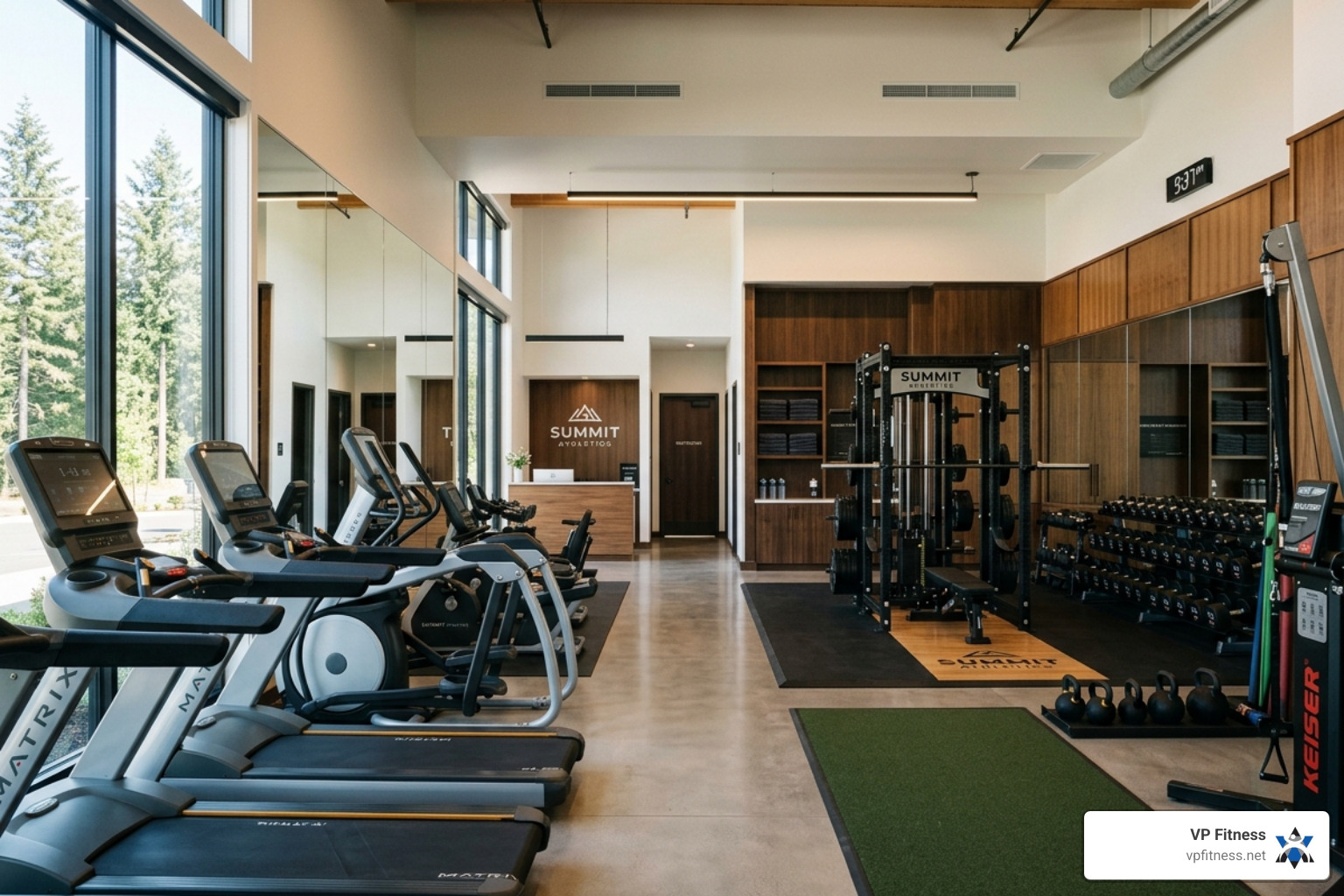
One-on-one training remains the gold standard for those seeking undivided attention. In these settings, every rep is watched, and every rest period is timed to optimize your metabolic response. However, small group sessions have gained massive popularity because they blend the expertise of a professional coach with the camaraderie of a supportive community. These boutique studios often provide a “third space”—a place between home and work where you feel known and supported.
The benefits of choosing a private gym over a massive, crowded commercial chain are numerous. In a private setting, you don’t have to wait for equipment, the environment is significantly cleaner, and the “gym timidity” that keeps many people away is virtually non-existent. We’ve found that when clients train in a focused, non-chaotic atmosphere, their intensity increases and their stress levels decrease.
Specialized Personal Training Locations for Weight Loss and Recovery
As we move through 2026, the fitness industry has evolved to support modern medical advancements. A significant number of our clients are now utilizing GLP-1 medications (like Ozempic or Wegovy) for weight loss or blood sugar management. While these medications are powerful tools, they carry a risk of muscle loss if not paired with the right exercise stimulus.
Specific personal training locations now specialize in “metabolic support” programming. A qualified trainer can help you preserve lean muscle mass and boost your resting metabolic rate while on these medications. This ensures that the weight you lose comes from fat, not functional muscle.
Furthermore, injury rehabilitation has become a cornerstone of high-quality personal training. Whether you are bridging the gap after physical therapy or managing chronic back pain, specialized locations offer the “pre-hab” and “rehab” expertise needed to keep you moving safely. For a deeper look at how to vet these professionals, check out our ultimate guide to finding a personal trainer.
Identifying Certified and Qualified Professionals
Not all trainers are created equal. In an industry where many people claim the title, it is vital to look for nationally recognized credentials. We recommend looking for certifications from organizations like the National Academy of Sports Medicine (NASM), the American Council on Exercise (ACE), or the International Sports Sciences Association (ISSA).
Beyond the paper certificate, experience and client retention are the true markers of a professional. In the fitness world, approximately 80% of trainers don’t make it past the two-year mark. When you find a location where the staff has a combined century of experience, you are paying for wisdom, not just a workout. You can also look toward academic institutions for high-level guidance, such as specialized collegiate fitness programs.
The Science-Backed Benefits of Professional Coaching
Why invest in a trainer at all? The data is quite clear. According to the Journal of Sports Science & Medicine, working with a personal trainer can increase the success rate of reaching your fitness goals by more than 30%. This isn’t just because they tell you what to do; it’s because they provide a level of accountability that is impossible to replicate on your own.

A professional coach acts as your personal data scientist. They track your progress, adjust your volume and intensity, and ensure you are hitting the “sweet spot” of training—hard enough to trigger change, but not so hard that you end up injured. This expert oversight is a primary feature of our personal training services.
| Feature | Solo Workout | Coached Session |
|---|---|---|
| Accountability | Low (Easy to skip) | High (Appointment based) |
| Injury Risk | Moderate to High | Low (Form correction) |
| Goal Achievement | 30% lower success rate | 30% higher success rate |
| Progression | Often plateaus | Scientifically adjusted |
| Motivation | Self-driven | Externally supported |
Optimizing Your Training Frequency
A common question we hear at our personal training locations is: “How often should I see you?” For beginners, we typically recommend 2 to 3 sessions per week. This frequency is the “Goldilocks zone” for learning proper form and establishing a neurological habit.
In 2026, the trend has shifted away from “smashing” yourself every day and toward sustainable, long-term consistency. As you become more experienced, you might drop to one session a week for a “tune-up” or program adjustment, but the initial foundation requires more frequent touchpoints. For those in the local area, our Providence personal trainer guide offers more insight into local scheduling and routines.
What to Expect During a Typical Session
If you’ve never stepped into one of our personal training locations, you might be nervous about what happens behind the doors. Let’s demystify the 60-minute session.
- The Dynamic Warm-Up: We don’t just sit on a bike for 10 minutes. We use “movement prep” to wake up your nervous system and lubricate your joints.
- The Main Event (Strength Training): This is where the magic happens. We focus on compound movements—squats, hinges, pushes, and pulls—tailored to your current ability.
- Cardiovascular Conditioning: Depending on your goals, we may include high-intensity intervals or steady-state work to improve heart health.
- The Cool-Down and Recovery: We finish with stretching or mobility work to kickstart the recovery process before you head back to your day.
To see how we organize these phases, you can explore our 2026 training area guide.
Evaluating Equipment at Different Personal Training Locations
The quality of your workout is often limited by the tools at your disposal. While a great trainer can give you a workout with a gallon of water and a towel, state-of-the-art machinery allows for much more precise targeting of muscle groups.
At premier locations, you should expect more than just treadmills. Look for:
- Functional Tools: Kettlebells, TRX suspension straps, and Bulgarian bags.
- Specialty Machines: Plate-loaded leg presses, jammer arms, and high-end cable systems.
- HIIT Equipment: Assault bikes and sprint treadmills for maximum metabolic impact.
If you are a trainer looking for the right space to host your clients, understanding gym space rental is crucial for providing this high-end experience.
Integrating Technology and Progress Tracking
In April 2026, “guessing” is no longer part of the fitness equation. We use technology to ensure you are moving in the right direction. This includes body composition scanners that show you exactly how much muscle you’ve gained and fat you’ve lost—far more accurate than a standard bathroom scale.
What to Bring to Your Session:
- Comfortable, breathable exercise clothing.
- Closed-toe athletic shoes with good support.
- A refillable water bottle (hydration is key!).
- A positive attitude and a willingness to work.
- A towel (though many boutique locations provide these).
Frequently Asked Questions about Personal Training Locations
How much does personal training typically cost in 2026?
Pricing varies based on the location’s prestige and the trainer’s experience. Generally, you can expect to pay anywhere from $60 to $150 per hour. Many locations offer “buddy sessions” or small group packages that can bring the per-person cost down significantly. Most studios also offer introductory specials—like a free consultation or a discounted first week—to ensure the fit is right before you commit to a larger package.
Can a trainer help me if I am on GLP-1 medications?
Absolutely. In fact, it’s highly recommended. These medications are excellent for weight loss, but they can lead to a loss of bone density and muscle mass. A trainer will design a resistance-heavy program to protect your lean tissue, ensuring your weight loss is healthy and sustainable. We also provide nutrition guidance to ensure you’re getting enough protein to support your workouts while your appetite is suppressed.
What certifications should I look for in a professional trainer?
At a minimum, your trainer should hold a certification from NASM, ISSA, ACSM, or ACE. If you have specific needs, look for “specializations.” For example, if you are an athlete, look for a Certified Strength and Conditioning Specialist (CSCS). If you are recovering from surgery, look for a trainer with a background in Corrective Exercise or Physical Therapy integration.
Conclusion
Choosing between various personal training locations is a significant decision for your health and longevity. While large commercial gyms have their place, the individualized attention, cleanliness, and expert guidance found in a boutique environment often lead to better long-term results.
In a professional, private setting, you aren’t just a membership number; you are a partner in a fitness journey. With amenities like valet parking and a smoothie bar, we aim to make the “hard work” of fitness feel like the best part of your day. If you’re ready to move beyond the chaos of traditional gyms, consider why smaller is smarter for your fitness goals.